Ctenanthe Repotting: When, How, and Mistakes to Avoid
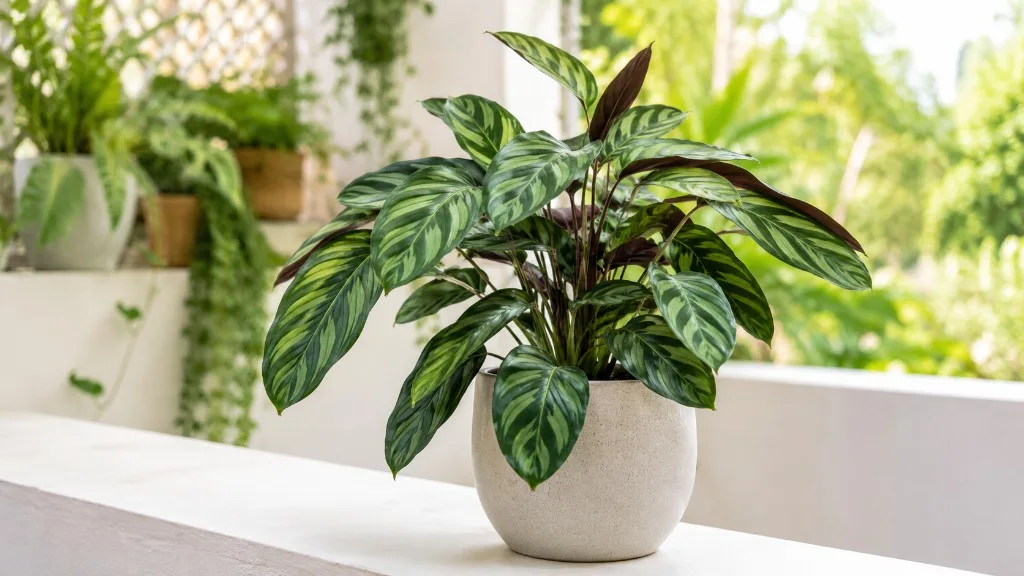
Ctenanthe Repotting: When, How, and Mistakes to Avoid
Ctenanthe Repotting: When, How, and Mistakes to Avoid
Ctenanthe repotting looks straightforward until you remember what kind of plant you are holding. The Never Never plant-most often Ctenanthe burle-marxii, the fishbone prayer plant-belongs to the Marantaceae family alongside Calathea, Maranta, and Stromanthe. It grows as a slow, clumping foliage plant with patterned leaves that fold at night through nyctinasty, and it expects steady moisture without a soggy root zone. Repot when the roots or mix clearly need attention, not because a calendar says so, and never treat the job like repotting a pothos. Get the timing, pot geometry, soil structure, and root handling right, and recovery is usually quiet. Jump two pot sizes, bare-root the clump, or fertilize before roots settle, and you can lose weeks of growth to transplant shock that shows up as curled, drooping, or yellowing leaves.
This guide covers when repotting is actually warranted, why prayer-plant roots change every decision, the best season to work, pot and mix rules that prevent rot, a full step-by-step routine, aftercare and division, and the mistakes that cause the most unnecessary damage.
Why Ctenanthe Repotting Follows Prayer-Plant Rules
Most beginner repotting advice assumes a fast colonizer: deeper is fine, a bigger pot speeds growth, and disturbing roots is harmless because the plant rebounds in days. Ctenanthe breaks those assumptions. NC State Extension recommends repotting annually, preferably in spring or early summer, though slower-growing specimens often stay comfortable for two to three years between full repots. That combination-slow, clumping, moisture-sensitive-means repotting is maintenance for root health and mix quality, not a growth hack. Many healthy specimens go two or three years between full repots if the substrate stays open and watering remains predictable. Treating Ctenanthe like a fast colonizer that wants maximum soil volume is one of the fastest routes to a wet, anaerobic root zone and stalled leaf production.
Marantaceae Root Habit and Horizontal Clumping Growth
In the wild, Ctenanthe species spread as horizontal clumps from rhizomes in the filtered light of Brazilian rainforest floors. The roots mirror that biology indoors: they spread wide and relatively shallow, probing the upper layers of mix for air and even moisture rather than drilling deep. Popular forms like Ctenanthe burle-marxii and Ctenanthe oppenheimiana produce fan-like clusters of shoots from a shared root mass, which is why the plant often looks fuller at the edges than at the center. Practical consequences follow directly. A deep, narrow pot holds a column of wet soil below the active root zone that the plant never uses but that stays anaerobic long enough to damage roots. A wide, shallow container matches the geometry of the clump and keeps the root mass closer to the surface where you can monitor moisture. When repotting, you tease circling roots at the bottom and outer edge; you do not scrub the plant bare like a succulent division. Fine root hairs absorb water and nutrients; stripping them extends shock by weeks.
The Marantaceae habit also explains why dense standard potting soil fails after repotting even when you chose the right pot size. Rainforest floor roots breathe in loose, organic material. Packed indoor mix suffocates them, holds moisture against rhizomes, and mimics the conditions that lead to root rot on Ctenanthe-the fastest way to kill a prayer-plant relative. Repotting is your chance to reset that air-to-moisture balance, not simply to add more volume. Ctenanthe is often described as more forgiving than the most delicate Calatheas, but it still reacts quickly when the root zone swings from too dry to too wet. Respect that sensitivity during every step of the repot.
Why Shallow Pots Beat Deep Ones for Never Never Plants
If you remember one geometry rule, make it this: choose a wide, shallow pot over a tall, narrow one whenever both options fit your space. Ctenanthe roots are not deep anchor roots; they are a spreading mat that colonizes the upper half of the container. A deep pot creates unused wet soil below the root ball, which slows drying, encourages fungal problems, and makes it harder to judge when the plant actually needs water. A shallow pot keeps the active root zone near the surface, aligns with the plant’s natural horizontal spread, and reduces the risk that freshly disturbed rhizomes sit in stagnant moisture while they heal.
Pot material matters after repotting too. Plastic retains moisture longer and suits growers who tend to underwater or live in dry homes. Terracotta breathes faster and can help heavy waterers in bright, warm rooms-but it also dries the mix quickly right after transplant, when roots are not yet exploring new soil. Match material to your habits, not only to aesthetics. Every pot needs drainage holes. If you use a decorative cachepot, never let the inner pot sit in drained water; standing runoff is a common post-repot rot trigger for Marantaceae plants.
When Ctenanthe Actually Needs Repotting
The right question is not “how long have I owned this pot?” but “what is the root zone doing?” Ctenanthe sends quieter signals than a pothos with roots bursting from every hole. Learn to read physical cues and mix condition together. Two or more signs at once mean you should plan a repot in the next active growth window-not necessarily today, unless the plant is actively declining from root problems.
Root-Bound Signs Worth Taking Seriously
Watch for these reliable indicators:
- Roots emerging from drainage holes or circling tightly at the soil surface
- Water running straight through the pot within seconds, leaving the core dry
- Soil drying much faster than it did last season-sometimes every two or three days after a thorough watering
- Top-heavy instability where the shallow root plate cannot hold the leaf mass upright
- Sour, compacted, or crusted mix that no longer absorbs water evenly
- Stalled new leaf production despite appropriate light and feeding during the growing season
- Pale or yellowing older leaves that correlate with root congestion rather than a sudden light or watering change
A single surface root is not an emergency. A plant that needs watering every other day in dim winter light, while sitting far from a window, is telling you the root mass has outgrown the soil volume-or the mix has collapsed. NC State Extension notes that when water runs through without rewetting the root ball or roots emerge from drainage holes, the plant is ready for repotting before severe binding sets in.
Do Ctenanthe like to be root bound? Mildly snug roots are acceptable for a slow clumper, but severe binding is a problem, not a goal. When roots displace most of the soil, water behavior becomes erratic: flood-through dry cores, salt buildup, and smaller new leaves. The useful middle ground is comfortably full, not desperately cramped.
Soil Refresh vs Full Repot With a Bigger Container
Not every soil problem requires a bigger pot. Top-dressing-removing the top 2–3 cm (1 in) of degraded mix and replacing it with fresh, airy substrate each spring-often suffices when the root ball still fits the container and drainage remains good. This refresh supplies new organic matter, reduces salt crust, and improves surface aeration without resetting the entire root environment. Old mix can become hydrophobic, shedding water down the sides while the core stays dry; fresh surface mix helps water penetrate evenly again.
Reserve full repotting-lifting the plant, inspecting roots, moving to a larger container-for when:
- The root ball is visibly dense and circling
- The pot is physically too small for stable growth
- Drainage has clearly failed despite surface refresh
- You are treating active root rot or sour, anaerobic mix
- You want to divide the clump for propagation
How often should you repot Ctenanthe? Young plants establishing in their first year or two benefit from more frequent attention because their root systems expand steadily even when leaf growth looks slow. Mature specimens in stable conditions typically need a full repot every two to three years, matching NC State Extension guidance for spring-or-early-summer timing. Calendar repotting every spring regardless of condition stresses stable plants and buys little benefit. Even when the plant is not obviously root-bound, a same-size repot into fresh mix every two years or so can restore nutrient availability and moisture behavior without increasing container volume.
Best Time of Year to Repot Ctenanthe
Season matters because Marantaceae roots regenerate fastest with warmth, Ctenanthe light guide, and active leaf production. Repotting during dormancy or low light forces the plant to sit in disturbed, moist mix while it cannot repair roots efficiently. Most Ctenanthe forms prefer 60–80°F (16–27°C) and steady humidity during recovery; work inside that comfort band whenever possible.
Spring and Early Summer: The Safest Window
Early spring through early summer is the default window in most homes-roughly when overnight temperatures stay consistently above 15°C (59°F) and you see new leaves unfurling from the clump. NC State Extension ties repotting directly to spring or early summer, when roots are actively growing and will benefit from fresh mix or modest upsizing. That is not decorative advice. New leaf emergence means vascular flow and root tip activity are ramping up, so the plant can seal damaged root surfaces and colonize fresh mix before dry winter air arrives.
If your Ctenanthe spent summer outdoors in shade, complete any repotting before moving it back indoors, or wait until the following spring. Bringing a freshly repotted plant into a heated, lower-humidity interior in fall stacks two stresses at once. If you must choose between repotting in late summer and waiting until March, late summer wins only when the plant is clearly root-bound and still actively growing; otherwise wait.
When Winter Repotting Is Justified
Avoid major repotting in late fall and winter unless the situation is urgent. Cold soil, shorter days, and reduced evaporation keep disturbed mix wet longer, which slows recovery and raises rot risk. The exceptions are worth naming because they are common:
- Active root rot with sour-smelling mix and mushy root tissue
- Severe root-binding where the plant cannot hold moisture at all
- Physical instability where the pot tips and stems tear
- Pest or disease contamination of old mix that requires full substrate replacement
If you must repot in winter, keep the plant warm (18–24°C / 65–75°F), in bright indirect light, and water more conservatively than you would in spring. Skip fertilizer entirely until new growth looks normal. Fall is reasonable for top-dressing only, not for upsizing, unless you live in a frost-free climate where the plant stays actively growing year-round.
Choosing Pot Size, Shape, and Soil Mix
Pot and soil choices do more work than the actual lifting and shifting. Ctenanthe needs drainage, shallow geometry, and modest volume increase-not the biggest decorative planter that fits the shelf.
The One-Pot-Size-Up Rule and Why Overpotting Fails
The safe rule: increase pot diameter by only 1–2 inches (2.5–5 cm)-one nursery pot size. A plant in a 15 cm (6 in) pot moves to 17–20 cm (7–8 in), not 25 cm (10 in). NC State Extension recommends a moist, well-drained mix in a container only one size larger - about 2 inches wider - when root-bound signs appear. Oversized containers retain moisture the shallow root system cannot absorb quickly, raising root rot risk before the plant fills the new space.
Shape matters as much as size. Choose a wide, shallow pot over a tall, narrow one. The clump spreads horizontally; roots follow that pattern. A shallow pot keeps rhizomes elevated relative to the water table in the mix and makes it easier to water thoroughly without creating a deep wet zone the roots ignore. Depth is only a problem when it creates unused wet soil below the root ball.
Every pot needs drainage holes. Decorative pots without holes are not safe long-term homes for Ctenanthe. If aesthetics require a cachepot, lift the planted container out after watering and empty standing water every time.
Soil Mix That Holds Moisture Without Going Soggy
Ctenanthe wants moisture-retentive but well-draining mix-the same principle as other prayer plants. A reliable starting blend:
- 2 parts peat moss or coco coir ( moisture retention and structure )
- 1 part perlite or pumice ( aeration )
- 1 part fine orchid bark or coarse horticultural charcoal ( long-term openness )
The exact recipe matters less than the behavior after watering: mix should absorb water evenly, drain freely from the holes within a minute or two, and stay lightly moist-not wet-for several days in a typical indoor environment. Avoid straight bagged “moisture control” mixes that stay soggy in plastic pots. Avoid garden soil, which compacts and invites pests.
When repotting, use fresh mix only. Reusing old substrate reintroduces compacted structure, salt buildup, and possible pathogens. If you are repotting into the same size pot to refresh soil, trim away no more than one-third of the outer root mass if it is circling heavily, then backfill with new mix rather than forcing the old root ball back into degraded soil.
Tools and Pre-Repot Checklist
Gather everything before you disturb the plant. Mid-repot hunting for scissors wastes time and lets exposed roots dry out.
You will need:
- A new pot 1–2 inches wider than the current one (or the same size for a refresh repot), with drainage holes
- Fresh potting mix prepared and slightly moistened-not dripping wet
- Clean scissors or pruning shears for dead roots
- A hand trowel, chopstick, or pencil for settling mix around the root ball
- Newspaper or a tray to contain spilled mix
- Optional: gloves if you prefer not to handle peat-heavy mix bare-handed
One to two days before repotting, water the plant lightly so the root ball holds together but is not saturated. A bone-dry root ball crumbles; a waterlogged one smears and tears fine roots. Inspect the plant for pests on leaf undersides before you bring it to the repot bench-spider mites on patterned foliage are easier to treat before you spread them to fresh mix. Sterilize cutting tools with rubbing alcohol if you trimmed diseased roots recently. Plan the aftercare spot in advance: bright indirect light, no direct sun, stable warmth, and humidity at 50–70% if you can manage it. Ctenanthe is listed among non-toxic prayer plants by the ASPCA, which makes repotting around pets less risky than with many houseplants-but nibbling still stresses the plant and can cause mild digestive upset in animals. (ASPCA)
Step-by-Step: How to Repot Ctenanthe
Work calmly. Marantaceae plants do not reward rushed handling. The goal is more space and fresh mix with minimal root trauma, not a perfectly bare root ball.
Removing, Inspecting, and Teasing the Root Ball
Step 1: Prepare the new pot. Add enough fresh mix to the bottom so the top of the root ball will sit 1–2 cm (0.5–1 in) below the pot rim after planting. This headspace prevents overflow when you water.
Step 2: Remove the plant. Tip the pot on its side and support the base of the stems with one hand. Gently squeeze or tap the pot to loosen the root ball. Slide the plant out rather than yanking stems-Ctenanthe leaves tear easily.
Step 3: Inspect roots. Healthy roots are white to light tan and firm. Mushy, black, or foul-smelling tissue is rot; trim it back to clean white tissue with sterilized scissors. If you remove more than one-third of the root mass due to rot, consider a same-size repot rather than upsizing, so the remaining roots are not swimming in empty wet mix.
Step 4: Loosen circling roots. Gently tease apart roots circling the bottom and outer edge with your fingers. You are encouraging outward growth, not dismantling the entire ball. Do not bare-root the plant unless rot forces you to wash away contaminated mix-and even then, keep as much of the healthy root mass intact as possible.
Step 5: Optional division. If the clump has several distinct shoots with their own root sections, you can separate one division for propagation now. Each section needs several stems and a healthy root mass. Weak divisions with one shoot and few roots often fail.
Planting Depth, Backfilling, and First Watering
Step 6: Position the plant. Set the root ball on the base layer of mix so the plant sits at the same depth it was growing before. Do not bury stems or rhizomes deeper than they were; buried crowns rot quickly in Marantaceae plants.
Step 7: Backfill. Add fresh mix around the sides in small increments, tapping the pot gently or using a chopstick to settle mix into gaps without packing it tight. Air pockets are less dangerous than compressed, waterlogged soil.
Step 8: First watering. Water thoroughly until excess drains from the holes, then empty the saucer or cachepot completely. If the mix settles and exposes roots, add a thin top layer of mix. Do not press the surface into a hard crust.
Step 9: Rest the plant. Move Ctenanthe to bright indirect light-not direct sun, which intensifies wilt on disturbed roots. Maintain steady humidity for the first two weeks. Hold all fertilizer for four to six weeks so tender new root tips are not burned while they establish.
Aftercare, Recovery Timeline, and Division at Repot Time
Transplant shock on Ctenanthe usually shows as slight wilting, leaf curl, or a pause in new growth for one to two weeks. That response is normal if light, temperature, and moisture stay stable. Full root re-establishment typically takes four to six weeks, signaled by new leaves unfurling at normal size and color. Damaged older leaves will not heal, but fresh growth is the clearest sign the plant is back on track.
Watering after repot: Keep the mix evenly lightly moist, not saturated. Check with a finger or chopstick an inch into the mix before each watering. Fresh mix often dries on a different schedule than the old compacted soil, so reset your mental calendar rather than watering on autopilot.
Humidity: If your home runs dry, a humidifier, pebble tray, or grouping with other plants helps for the first few weeks. Avoid misting as a primary fix-brief leaf wetness does little for root recovery and can encourage fungal spotting on damaged tissue.
Fertilizer: Resume at half strength only after you see confident new growth, usually four to six weeks post-repot. Feeding a stressed root system is one of the most common ways growers turn mild shock into yellowing and edge burn.
Division at repot time: Repotting is the natural window to propagate Ctenanthe by division. Separate sections with a clean knife only when each piece has adequate roots and multiple shoots. Pot divisions in small containers-often the same size as the parent was before upsizing-and treat them like freshly repotted plants: indirect light, steady moisture, no fertilizer for a month. Divisions often lag the parent plant by a few weeks; that is normal, not a sign of failure.
Common Ctenanthe Repotting Mistakes to Avoid
These errors cause most of the “my Never Never plant died after repotting” stories. They are all preventable.
Jumping two or more pot sizes. Bigger is not faster for Ctenanthe. Excess soil volume stays wet around a small root system and invites rot before the plant can colonize the space.
Bare-rooting or aggressively washing roots. Stripping fine root hairs removes the plant’s water uptake system. Tease circling roots; do not scrub the ball clean.
Repotting into dense, moisture-holding mix without amendments. Standard heavy potting soil suffocates Marantaceae roots. Always add perlite and bark for aeration.
Using a deep pot because it “looks balanced” with tall leaves. Unused depth becomes a wet sump. Go wide and relatively shallow.
Fertilizing immediately after repot. Fresh roots burn easily. Wait until new growth confirms recovery.
Watering on the old schedule without checking mix moisture. Fresh mix dries differently; overwatering on Ctenanthe during shock is a common rot trigger.
Repotting in dim, cold winter without urgency. Disturbed roots sit in wet mix while the plant cannot repair them. Wait for spring unless rot or severe binding forces your hand.
Ignoring mushy roots and simply upsizing. Rot spreads in fresh mix. Trim diseased tissue, refresh soil, and sometimes downsize the pot until healthy roots return.
Dividing weak sections with one shoot and few roots. Propagation enthusiasm kills more plants than patience. Only divide robust clumps.
Conclusion
Ctenanthe repotting succeeds when you treat it as root-zone maintenance for a slow Marantaceae clumper, not as a generic upsizing chore. Repot when two or more root-bound or mix-failure signs appear, during spring or early summer whenever possible, into a wide, shallow pot only one size larger (or the same size with fresh mix), using airy, moisture-retentive soil and minimal root disturbance. After the move, prioritize bright indirect light, steady humidity, careful watering, and a fertilizer pause until new leaves tell you the plant has settled. Avoid overpotting, bare-rooting, and winter repots without cause-the three mistakes that turn a routine refresh into weeks of wilted, patterned foliage. Get those decisions right, and your Never Never plant will reward you with the unhurried, rhythmic leaf growth that makes this genus worth keeping for years in the same bright corner.
When to use this page vs other Ctenanthe guides
- Ctenanthe overview - Start here for whole-plant context before deep-diving this topic.
- Ctenanthe problems hub - Jump to symptom-specific fix guides when this care topic does not resolve the issue.
- Root Rot on Ctenanthe - Escalate here when repotting adjustments are not enough.