Root Rot on Ctenanthe: Causes, Checks & Fixes
Quick answer
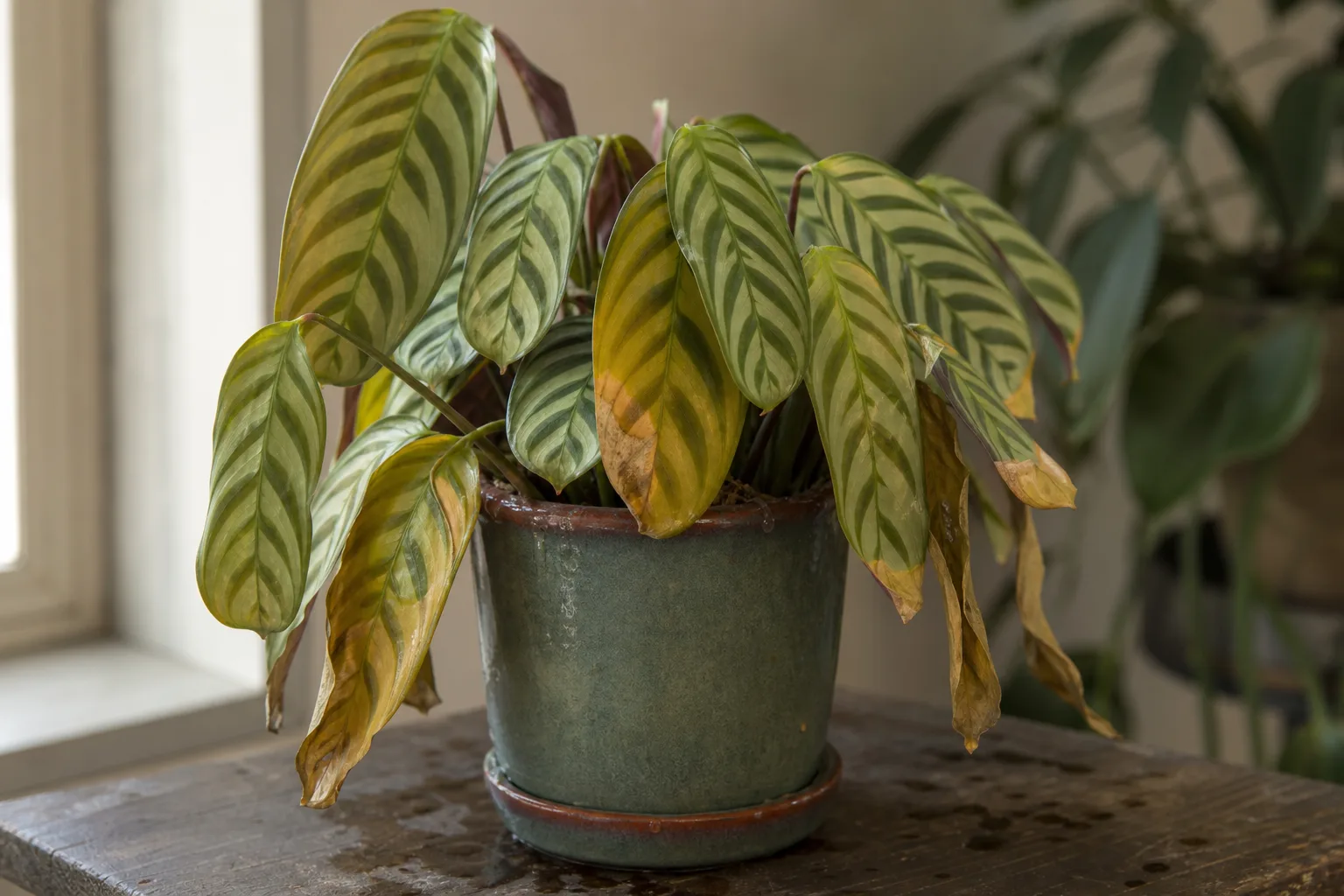
Root rot on Ctenanthe follows saturated mix in a Marantaceae plant that needs steady moisture-not a swamp. Limp or curled leaves on a heavy wet pot are the classic trap. First step: stop watering, lift the pot, and unpot to inspect roots before you repot or fertilize.
Root Rot on Ctenanthe: Causes, Checks & Fixes
This guide covers root rot on Ctenanthe. See also the general Root Rot guide, watering, and light pages for this plant.
Root Rot on Ctenanthe: Causes, Checks & Fixes
Quick answer
Root rot on Ctenanthe (Ctenanthe burle-marxii, fishbone prayer plant, C. lubbersiana, never-never plant, and related Marantaceae types) is almost always a watering and drainage failure, not a mysterious disease. These prayer-plant relatives want steady root-zone moisture in airy mix-but when soil stays saturated, roots lose oxygen and decay while leaves limp, curl, or yellow on a heavy wet pot.
First step: stop watering immediately. Lift the pot. If the mix is wet and heavy, press your finger into the top inch near the pot wall. Wet clinging soil plus yellow lower leaves, a sour smell, or leaf curl on damp mix means treat root rot as likely. Unpot and inspect roots before you repot, trim, or fertilize.
This page is the emergency rescue deep-dive for failed roots. For watering rhythm, filtered water, and seasonal dry-down cues, use the Ctenanthe watering guide as your prevention hub. For wet-soil stress before roots fail, see overwatering on Ctenanthe.
Root rot vs. other Ctenanthe problems
The wet-soil curl trap separates root rot from thirst on Ctenanthe better than any single leaf symptom. underwatering on Ctenanthe Ctenanthe curls on a light, dry pot and often relaxes within hours after a thorough soak. Root rot produces the opposite: collapse or curl on heavy wet mix with no rebound after watering-wilting with moist soil often means roots cannot absorb water because they are decaying.
| Pattern | Pot weight | Soil at top inch | Stem / rhizome base | What it usually means |
|---|---|---|---|---|
| Root rot | Heavy | Wet, cool, clings to finger | Soft or blackening | Failed roots on saturated mix |
| Overwatering (early) | Heavy | Damp many days | Still firm | Root stress-dry-down may work; see overwatering |
| Underwatering | Light | Dry and crumbly | Firm | Tight inward curl, crisp edges |
| Low humidity | Moderate | Normal moisture | Firm | Newest leaves curl; see low humidity |
| Tap-water burn | Moderate | Moist but not soggy | Firm | Brown tips, white crust; see brown tips |
| Healthy nyctinasty | Normal | Dry on schedule | Firm | Leaves fold upward at night only |
Fungus gnats hovering over constantly wet surface soil often appear alongside chronic saturation-they are a nuisance and a clue that the top layer is not drying fast enough for healthy roots.
Why Ctenanthe gets root rot
Ctenanthe belongs to the Marantaceae prayer-plant family from Brazilian tropical forest floors. Indoors it needs moist, well-drained mix and watering when the top inch of soil feels dry-not a pot that never dries.
That creates a moisture paradox many growers misread. Advice to keep Ctenanthe “evenly moist” gets translated into calendar watering or daily top-ups when leaves curl. On Ctenanthe, curl can mean dry roots or rotting roots on wet mix-and adding water to already soggy soil accelerates decay. NC State Extension notes that yellowing leaves can signal overwatering while leaf curl or wilt can follow inadequate watering-which is why pot weight matters more than leaf posture alone.
Common Ctenanthe-specific rot triggers:
- Watering on a schedule instead of soil checks-especially in winter when growth slows and the same summer rhythm keeps mix wet for two weeks
- Oversized pots with excess peat or coir that stays saturated in the center while the surface looks dry
- Decorative cachepots holding runoff after top or bottom watering
- Low light and cool rooms where evaporation slows but watering frequency does not change
- Dense nursery mix without perlite or bark-water pools at the bottom while the top inch misleadingly dries first
- Misreading curl as thirst on soil that has stayed damp for seven or more days
Missouri Botanical Garden groups prayer plants among species that need evenly moist soil that does not dry out-but that does not mean constantly soggy. Ctenanthe prefers missing one watering by a day over sitting in wet soil for a week.
C. burle-marxii often tolerates brief dryness better than broad-leaved Calatheas, but it still rots quickly in saturated mix. C. lubbersiana clumps with larger root balls can hide wet centers longer-making skewer depth checks essential.
What root rot looks like on Ctenanthe
On this genus, rot rarely starts at the newest patterned spear. Dense clumping foliage and peat-heavy mix slow how fast the surface dries, so roots can decline while upper leaves still look acceptable.
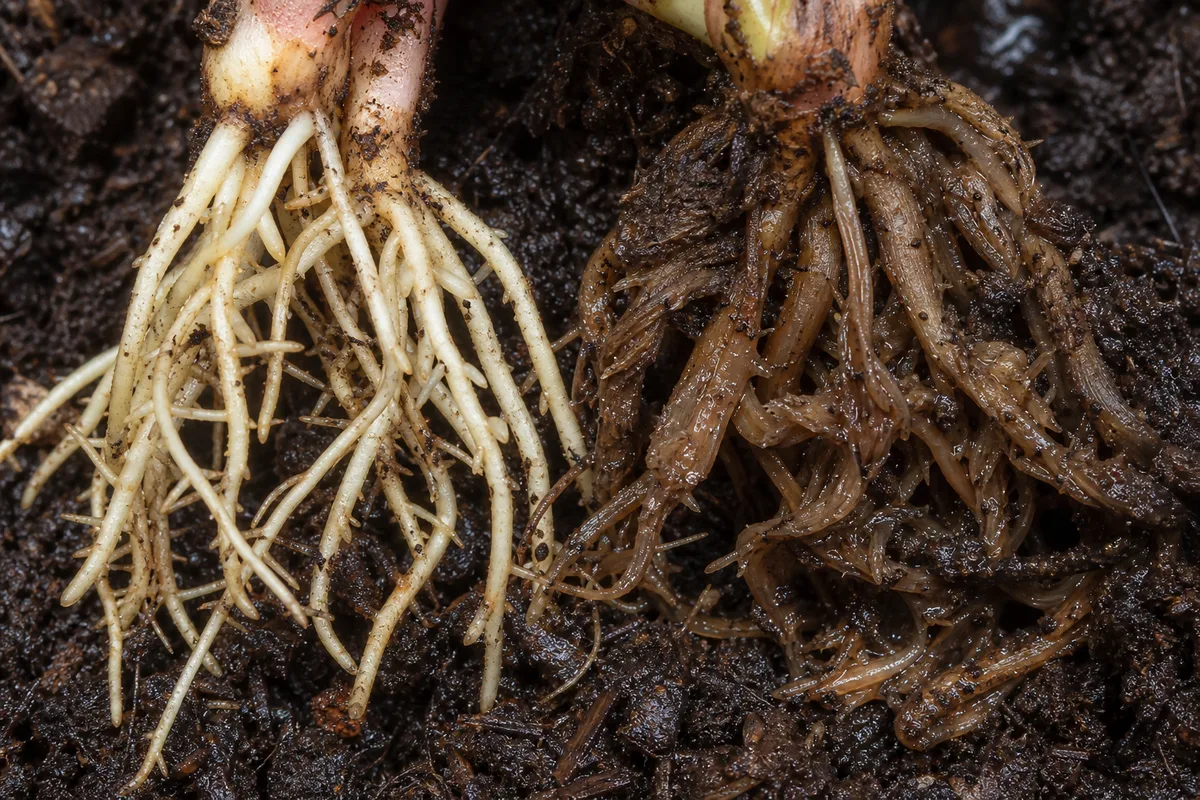
Root Rot symptoms on Ctenanthe - compare with healthy tissue on the same plant.
Early signs
- Yellow lower leaves while mix stays damp-not the gradual fade of a single old leaf aging out
- Limp or curled leaves on wet soil that do not firm up after you water
- Pot stays heavy for many days after the last watering
- Sour or musty smell when you lift the pot or press the surface
- Fungus gnats near the soil line in a pot that never dries down
- Slowed new growth-rolled prayer-leaves stall or emerge with brown edges
Advanced signs
- Soft, mushy rhizome or stem tissue at or just above the soil line
- Blackened tissue where stems meet wet mix
- Whole clump collapse with leaves turning brown and papery despite moisture
- Roots that slip off when touched-healthy Ctenanthe roots stay firm and pale or light tan
Compare with underwatering: a light dry pot, tight inward curl, and leaves that recover after a full soak point away from rot. Compare with wilting when you need the full dry-pot versus wet-pot workflow.
How to confirm root rot
Work through these checks in order before you repot. Each step narrows the diagnosis without stacking unnecessary treatments.
Soil moisture and pot weight
Press your finger one inch deep near the pot edge, not against the thickest stem cluster. Wet clinging soil on a heavy pot after days without watering strongly suggests chronic saturation. A wooden skewer inserted two to three inches down that comes out with damp particles clinging confirms moisture below the surface.
Lift the pot right after a known good watering to learn what “heavy” feels like, then compare when you suspect rot. Heavy plus wilt or curl equals trouble, not thirst.
Drainage and standing water
Confirm drainage holes are open-not sealed by roots, pebbles, or a glued-in liner. Pour a small amount of water and watch it exit within seconds. Check whether the inner nursery pot sits in standing water inside a cachepot.
Root and rhizome inspection
Gently unpot and rinse roots under lukewarm water. Healthy roots are firm, pale or light tan, and hold their shape when pressed. Rotted roots are brown to black, soft, slimy, or hollow-and they smell sour. Roots in saturated soil lose oxygen and function.
Follow each stem to the soil line. Rhizome tissue should feel firm, not squishy. Soft tissue at the base means rot has moved above the roots.
Lookalikes to rule out
- Overwatering without advanced rot - Wet mix and yellow edges but mostly firm pale roots; passive dry-down may be enough per the overwatering guide
- Underwatering - Light pot, dry mix at depth, recovery after soak
- Low humidity - Curl on newest leaves with moderate pot weight and acceptable soil moisture
- Tap-water mineral burn - Brown tips with white crust, firm roots on moist but not soggy mix
- Natural leaf aging - One or two old lower leaves yellow while the rest of the plant and roots look healthy
If the mix smells sour, the drainage hole was blocked, or more than half the root mass is mushy, treat root rot as confirmed.
First fix for Ctenanthe
Make one clear first move: stop watering and stabilize the plant in Ctenanthe light guide with good airflow-not hot direct sun. Do not fertilize. Do not repot on day one unless stems are already mushy and you need to trim immediately.
Once you have confirmed wet mix with failing roots, follow this numbered rescue workflow:
- Unpot and rinse roots so you can see color and texture clearly. Shake away sour, compacted mix from the root ball.
- Trim all mushy, brown, or hollow roots with clean scissors or pruners until only firm tissue remains. Sterilize blades between cuts if rot was advanced.
- Cut away soft rhizome tissue at the soil line. If rot climbed the base, cut back to firm tissue above the damage.
- Let cut surfaces air-dry for one to two hours on a paper towel in shade-not direct sun.
- Repot into fresh airy mix with perlite and orchid bark in a pot sized to the remaining root mass, not the former foliage volume. See the soil and repotting guides for mix ratios. NC State Extension recommends a moist, well-drained mix for this genus.
- Water once lightly after repotting, then let the top inch dry before the next cycle-do not drench daily hoping to perk limp leaves.
- If most roots are gone but firm clumps remain, divide healthy sections with intact rhizome and roots per the propagation guide. Division salvage is often more reliable than saving a bare mushy crown.
Keep the plant in bright indirect light during recovery. Avoid drafty cold windows below 60°F and hot AC blasts-NC State Extension lists cold drafts and temperatures below 60°F as intolerant conditions.
Recovery timeline
Recovery is judged by new prayer-leaves unfolding cleanly from the center, not by old yellow leaves re-greening. Damaged leaves rarely recover their color; they may drop while the plant stabilizes.
- Mild rot with mostly firm roots - Stabilization within one to two weeks after repot and corrected watering; first firm new growth in two to four weeks
- Moderate rot with heavy root trim - Four to six weeks before consistent new spear growth; expect some lower leaf loss
- Salvage via division - New root tips on divided clumps in two to four weeks when kept humid and in airy mix
- Advanced crown mush - Often fatal on the mother plant; prioritize propagation from the highest firm rhizome sections
Signs of improvement: firm rhizome at the soil line, new leaves unfurling with clean fishbone or stripe patterning, roots holding firm pale tips when you gently check after a month, and soil that dries down at the top inch between waterings.
Signs the problem is worsening: spreading black mush on the crown, wilt on wet soil after repot, sour smell returning within days, or no new growth after six weeks in good light.
What not to do
- Do not water because leaves look wilted or curled when soil is already wet-that deepens root failure.
- Do not fertilize until new growth resumes for two weeks; stressed roots cannot use nutrients safely.
- Do not repot into garden soil, a larger pot, or a container without drainage hoping it will dry faster.
- Do not leave the plant in the same sour mix without trimming damaged roots-the anaerobic conditions remain.
- Do not add water when leaves curl on damp soil-confirm the top inch is dry first.
- Do not prune heavily, repot, and fertilize the same week-pick one stressor at a time.
How to prevent root rot next time
Prevention on Ctenanthe is mostly watering rhythm and drainage, which the Ctenanthe watering guide covers in full-including filtered water, seasonal check cycles, and cachepot rules.
Genus-specific habits that matter here:
- Water when the top inch dries and the pot feels lighter-not on a fixed calendar
- Use airy, well-drained mix with perlite or bark and a pot matched to the root ball
- Empty saucers within 30 minutes of every watering; lift cachepots so runoff cannot pool
- Match watering to light-low-light winter placements need longer dry-down intervals
- Probe depth with a skewer-surface-only checks fail when peat-coir mix dries on top while the center stays saturated
- Use filtered or distilled water if tap minerals already stress foliage-burned leaves do not cause rot, but they distract from soil checks
When to worry / salvage vs. discard
Escalate immediately if:
- Stem or rhizome base feels soft on wet soil-crown rot may be advancing
- Several leaves collapse at once while the mix is still damp
- Black, mushy roots fill most of the ball when you unpot
- Musty smell returns within days of repotting into fresh mix
Salvage decision: If at least one firm clump with healthy rhizome and some roots remains, division and repot often work. If the entire crown is mushy and no firm tissue exists above the rot line, discard the center and propagate only from firm peripheral sections-or start fresh if nothing firm remains.
For overlapping symptoms, see yellow leaves, wilting, drooping leaves, and fungus gnats on Ctenanthe. Return to the Ctenanthe overview for the full care hub.
When to use this page vs other Ctenanthe guides
- Ctenanthe watering guide - Use for routine moisture checks before assuming root rot is the main issue.
- Ctenanthe problems hub - Browse all 17 common issues on this species.
- Overwatering on Ctenanthe - Different entry point when symptoms overlap with root rot.
- Yellow Leaves on Ctenanthe - Different entry point when symptoms overlap with root rot.
- Wilting on Ctenanthe - Different entry point when symptoms overlap with root rot.