Underwatering on Ctenanthe: Causes, Checks & Fixes
Quick answer
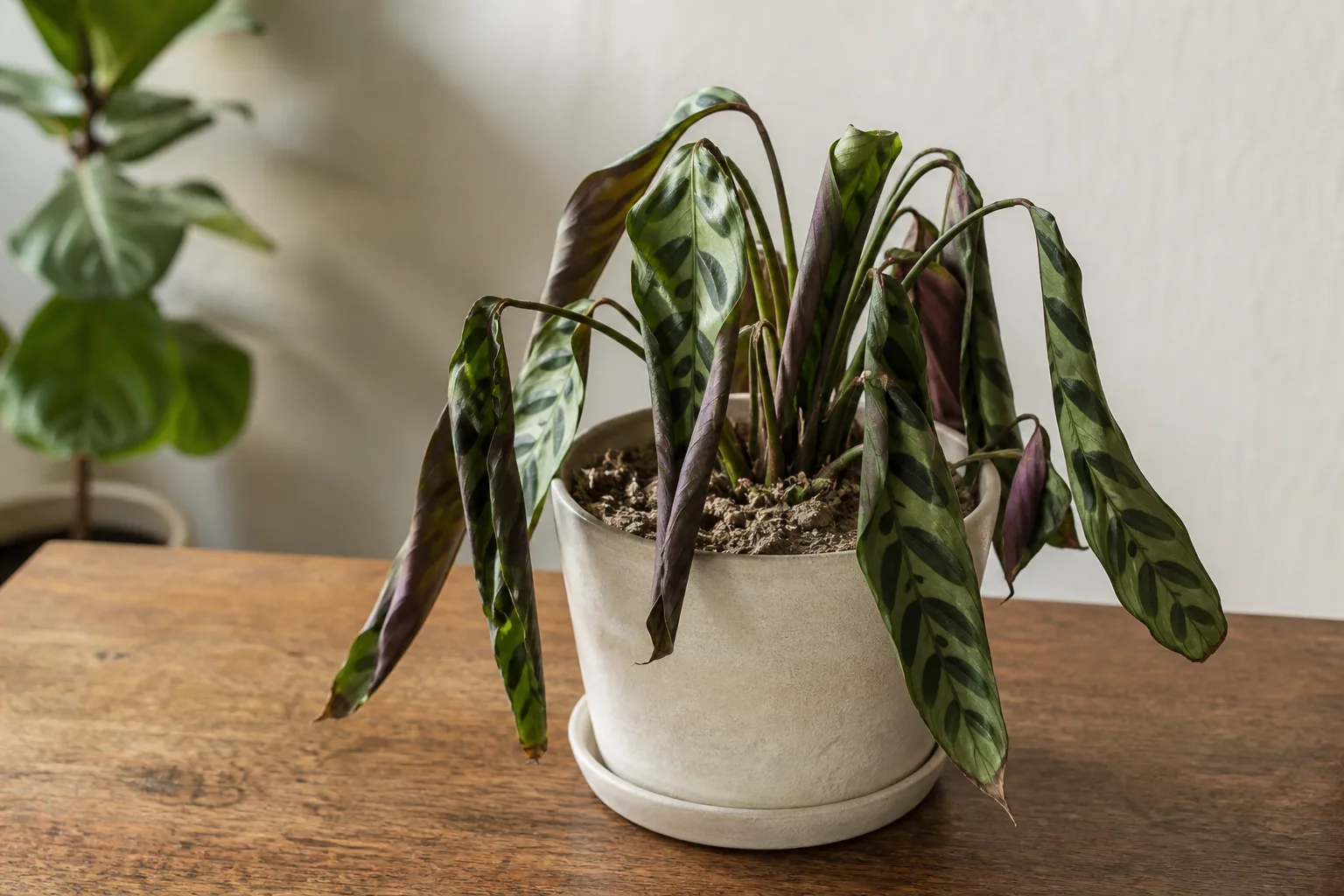
Underwatered Ctenanthe shows a light pot, dry mix, and leaves that curl or droop by afternoon. First step: bottom-water thoroughly until the surface moistens, then drain completely before changing anything else.
Underwatering on Ctenanthe: Causes, Checks & Fixes
This guide covers underwatering on Ctenanthe. See also the general Underwatering guide, watering, and light pages for this plant.
Underwatering on Ctenanthe: Causes, Checks & Fixes
Quick answer
Underwatered Ctenanthe (Ctenanthe burle-marxii, fishbone prayer plant, and related never never types) loses turgor fast because this genus evolved on damp tropical forest floors - not in soil that swings from wet to bone dry. The tell is a light pot, dusty dry mix, and foliage that curls inward, droops, or crisps at the edges while the root zone is genuinely dry.
First step: bottom-water thoroughly until the surface moistens, then drain completely. One deep soak that rewets the whole root ball beats repeated shallow sips that never reach the center. Do not repot, fertilize, or raise humidity as your opening move until you know the mix was actually dry - dry air and root rot on Ctenanthe both mimic thirst on prayer-plant relatives.
What underwatering looks like on Ctenanthe
Ctenanthe is a Marantaceae prayer-plant relative with rhythmic, patterned leaves that fold at night and reopen by morning. When roots run dry, that daily movement looks wrong: leaves stay partially rolled, hang limp by afternoon, or feel papery at the margins.
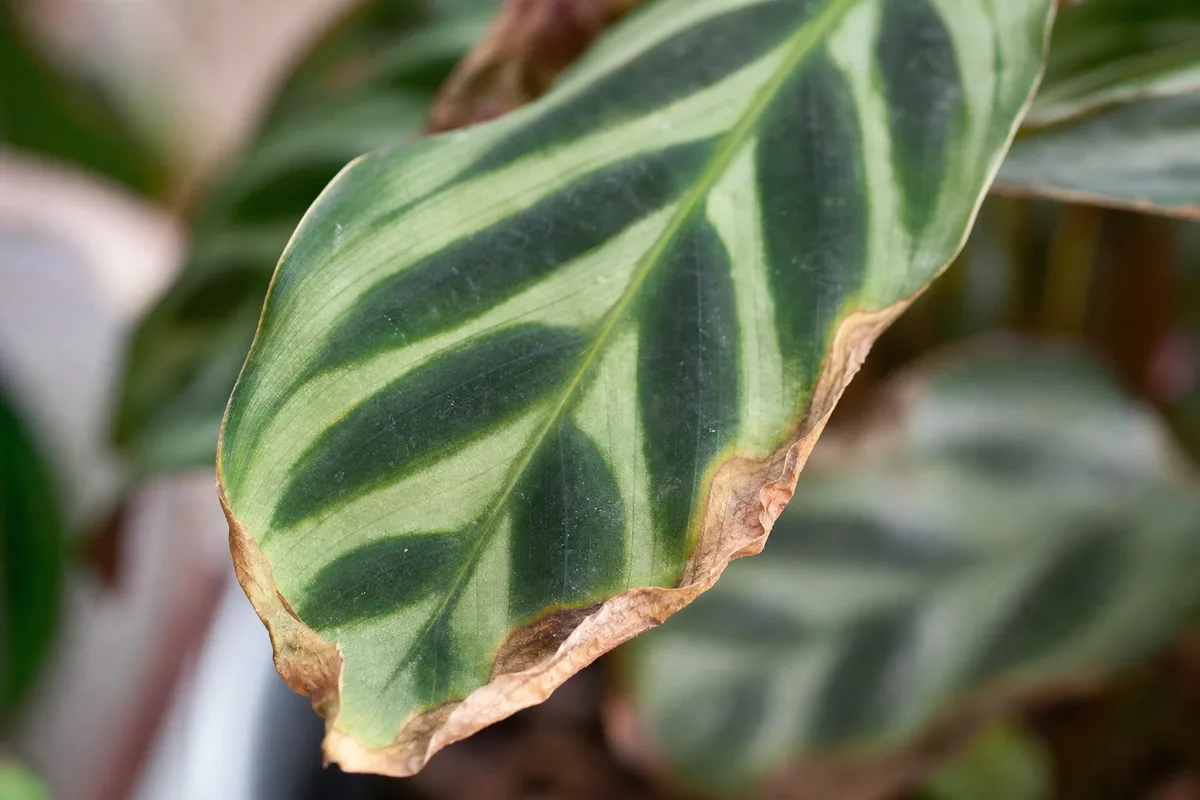
Underwatering symptoms on Ctenanthe - compare with healthy tissue on the same plant.
Typical underwatering signs on Ctenanthe:
- Pot feels very light compared with how it felt right after watering
- Top inch of mix is dry, and a skewer pushed deeper comes out dusty, not damp
- Soil pulls away from the pot edge, leaving a gap between mix and container
- Newest leaves curl inward or stay rolled longer than older foliage - a common Ctenanthe signal when the leaf blade rolls from thirst or dry air
- Leaf edges turn brown and crisp - especially on fishbone-patterned burle-marxii foliage
- Stems droop without the sour smell or persistent wetness that points to rot
- Water runs straight through the pot and out the drainage hole within seconds - a sign the soil ball has shrunk away from the pot sides and gone difficult to rewet
What you usually do not see with simple underwatering: yellow lower leaves on soggy soil, mushy stems at the crown, fungus gnats hovering over constantly wet surface mix, or wilt that persists even though the pot stays heavy for a week.
NC State Extension notes that leaf curl or wilt can occur if Ctenanthe has been inadequately watered. That matches what growers report on burle-marxii: the plant is somewhat more forgiving than the most delicate Calatheas, but it still punishes long dry spells faster than pothos or snake plant.
Why Ctenanthe gets underwatered
Ctenanthe wants steady root-zone moisture with a brief dry-down at the surface - not a calendar drink every Sunday regardless of season. NC State Extension recommends watering when the top inch of soil feels dry in a moist, well-drained mix. Miss that window repeatedly and fine roots die back, which makes the next watering less effective even when you finally pour.
Common Ctenanthe-specific triggers:
- Calendar watering in winter - growth slows and the pot stays wet longer, so many growers skip checks; then a hot spell or move to a brighter window dries the clump in days
- Small pots in bright light - Ctenanthe in a sunny bathroom or near a west window transpires actively; peat-coir mixes in 4-inch pots can dry through in three to four days during warm months
- Fear of overwatering on Ctenanthe after a rot scare - understandable on Marantaceae plants, but chronic under-watering produces the same curled, crisped leaves people were trying to avoid
- Shallow top watering on a dry root ball - water channels down the gap between shrunken soil and pot sides, leaving the center dry while the saucer fills
- Low humidity paired with dry soil - Ctenanthe needs medium to high humidity; dry air accelerates edge crisping and makes leaves curl even when soil is only slightly behind - but a light pot plus dry depth still means the roots need water first
- Heating vents and winter dry air - warm drafts pull moisture from leaves faster than roots can supply when the mix is already dry
- Root-bound pots - a crowded root ball in a small container dries unevenly; the outer edge may feel damp while the core stays dry
Missouri Botanical Garden lists prayer plants among species that like evenly moist soil that does not dry out. Ctenanthe sits in that group - closer to a fern or fittonia than to a succulent - even though it tolerates occasional dryness better than some Calathea cultivars.
How to confirm the cause
Wilting on any houseplant can mean too dry or too wet - rotting roots cannot move water upward, so leaves droop while soil stays damp. On Ctenanthe, the wrong guess often makes things worse: soaking a waterlogged plant accelerates rot; misting a bone-dry root ball only raises surface humidity briefly.
Work through these checks in order:
- Pot weight - Lift the container. A very light pot strongly suggests dry soil; a heavy pot that has stayed wet for many days points away from underwatering.
- Surface and depth moisture - Press a finger into the top inch. Push a wooden skewer two to three inches down. Dry at both levels supports thirst; damp deep mix with a light-looking plant suggests root damage instead.
- Soil gap test - Look for mix pulled away from the pot wall. That gap confirms prolonged dryness and explains why recent top watering may have failed.
- Newest leaf behavior - On Ctenanthe, watch the youngest rolled leaves. Tight inward curl on fresh growth while soil is dry fits underwatering or low humidity. Curl with wet, cool soil for a week fits overwatering.
- Smell and roots (if unsure) - If the pot is light and dry but leaves keep declining after a thorough soak, tip the plant out gently. Underwatering leaves roots firm and pale; rot shows brown, mushy tissue and sour odor.
- Recent care history - Did you travel, switch to a brighter window, repot into a smaller container, or stop watering because leaves yellowed? Yellow on wet soil is not drought; yellow on repeatedly dry cycles often is.
If the pot is light, the skewer is dusty deep down, and roots are firm when inspected, you have enough to treat underwatering - proceed to the first fix below.
Lookalike symptoms on Ctenanthe
Low humidity without dry soil: Dry indoor air above 60% deficit makes Ctenanthe edges crisp and can curl leaves even when moisture is adequate. Check humidity and pot weight together. If the pot is heavy and the top inch is still damp, raise humidity before adding more water.
Overwatering and root rot: Wilted leaves may indicate soil that is too dry or too wet - rotting roots cannot take up water. Yellow lower leaves, limp foliage on soggy mix, and fungus gnats point to excess moisture, not drought.
Tap water mineral burn: Ctenanthe is sensitive to salts in tap water, which causes brown tips independent of watering frequency. NC State Extension notes tap water salts can cause leaf burn on Ctenanthe. If edges crisp while the pot stays appropriately moist and you see white crust on the soil, switch to filtered or rested water - but still verify the root ball is not dry before blaming minerals alone.
Normal prayer-plant movement: Leaves folding upward at night is healthy behavior. Underwatering shows as daytime limpness, persistent curl on new growth, or crisp margins that spread.
First fix for Ctenanthe
Bottom-water in a tray until the surface moistens, then drain completely.
Set the pot in a sink or basin with enough room-temperature water to reach halfway up the container. Let it absorb for 20 to 45 minutes until the top of the mix darkens. Lift the pot, let excess drain freely for 15 to 30 minutes, and empty any saucer. Do not leave the plant sitting submerged overnight.
This single step addresses the most common failure mode on Ctenanthe: a dry root ball that top watering never rewets. Missouri Botanical Garden advises soaking a pot when soil has shrunk away from the sides or water runs through immediately - light soilless mixes can become difficult to moisten once they go fully dry.
Do not follow the soak with daily drenches. Wait until the top inch begins to dry before the next drink - the same cue NC State Extension uses for Ctenanthe.
Step-by-step recovery
If one bottom-watering does not rehydrate the plant, work through these steps in order:
- Repeat the soak - Very dry peat-coir mix sometimes needs two bottom-water cycles on consecutive days before the center stays damp.
- Break hydrophobic surface crust - If water still channels through instantly, lightly scarify the top quarter-inch with a fork, then bottom-water again. Avoid digging deep and damaging shallow rhizomes.
- Move out of hot direct sun temporarily - Bright light on a dehydrated Ctenanthe increases transpiration. Shift to Ctenanthe light guide until turgor returns.
- Raise humidity after roots are wet - Once the root ball is moist, add a humidifier, pebble tray, or group plants to slow edge crisping. Humidity alone does not replace soil moisture.
- Trim only fully dead tissue - Snip leaves that are entirely brown and papery. Leave partially damaged fishbone leaves if the petiole is still firm - they often stabilize once watering is consistent.
- Hold fertilizer - Do not feed a drought-stressed Ctenanthe until new growth looks healthy for two weeks. Salts on dry roots burn easily.
- Repot only if roots are circling a tiny dry plug - If the root ball is solid, dry, and smaller than the pot, step up one size into fresh coir-peat mix after rehydration - not while the plant is collapsed.
Recovery timeline
Mild dehydration - Leaves that drooped yesterday often regain turgor within 24 to 48 hours after a full bottom-water, especially on burle-marxii, which rebounds faster than some Calatheas.
Moderate stress - Inward curl on new leaves may take one to two weeks to relax as the plant rebuilds fine root hairs. Old crisp edges remain; judge success by new leaves unfolding flat.
Severe or repeated dry cycles - If leaves keep collapsing after two proper soaks, or roots look shriveled and brown when you unpot, recovery may take several weeks or fail if too much root tissue died. Missouri Botanical Garden warns that once soil gets very dry, a plant may enter a spiraling decline and not recover even after thorough watering - catch Ctenanthe before that point.
Signs improvement is working:
- Pot weight stays moderate for several days after watering
- Newest leaves open without staying tightly rolled
- Stems feel firm, not floppy, by midday
- No spread of yellowing on lower leaves
Signs the problem is worsening:
- Wilt continues after two thorough soaks with a now-heavy pot
- Crown tissue softens or smells sour - switch diagnosis to rot
- New growth aborts or stays rolled for more than two weeks
Mistakes to avoid
- Misting instead of watering - Surface moisture does not rehydrate roots. Misting can help humidity after the soil is wet, not as a substitute for a dry root ball.
- Daily panic watering after one dry spell - Swinging from drought to soggy soil invites root rot on Ctenanthe. One soak, then return to top-inch dry checks.
- Assuming droop always means overwatering - Environmental problems guides note that wilted plants are sometimes dry, sometimes waterlogged. Lift the pot before you pour.
- Cold tap water on stressed foliage - Use room-temperature filtered or rested water to avoid shock on sensitive Marantaceae leaves.
- Fertilizing to ” perk it up” - Nutrients do not fix thirst and can burn roots on dry mix.
- Ctenanthe repotting guide on day one into a much larger pot - Extra wet soil volume around a small dry root ball slows drying unevenly and raises rot risk.
How to prevent underwatering on Ctenanthe
Build a check habit, not a calendar:
- Water when the top inch dries - the same threshold NC State Extension gives for Ctenanthe - and only then give a thorough drink until water exits the drainage holes.
- Lift the pot every time you walk past - Missouri Botanical Garden recommends pot weight as one of the best quick gauges of soil moisture.
- Adjust for season - Many indoor Ctenanthe plants need checks every five to seven days in warm bright months and every ten to fourteen days in cooler low-light winter, but only when the soil confirms readiness.
- Maintain high humidity in dry rooms - pair with consistent soil moisture so leaves are not fighting dry air and dry roots at once.
- Use filtered or rested water if you already see mineral edge burn - it keeps symptom reads clearer.
- Size the pot to the clump - an oversized pot stays wet too long; an undersized one dries in days. Match container to root mass with good drainage holes.
- Bottom-water periodically if you tend to under-soak - especially on dense coir-peat mixes that channel when dry.
When to worry
Treat underwatering as urgent when the whole clump is collapsed, soil has shrunken away from the pot, or water runs through without wetting anything - rehydrate today.
Consider the plant may not fully recover if you find extensive dead root tissue after repeated drought, the crown goes soft, or new growth stops for more than three weeks despite correct moisture and humidity. Ctenanthe can survive losing many fine roots if the rhizome and firm stems remain, but a hollow dry root ball with no new shoots is a honest stopping point.
When underwatering is confirmed and corrected early, this genus usually rewards you with fresh fishbone-patterned leaves - proof that steady moisture, not dramatic rescue cycles, is what Ctenanthe wanted all along.
When to use this page vs other Ctenanthe guides
- Ctenanthe watering guide - Use for routine moisture checks before assuming underwatering is the main issue.
- Ctenanthe problems hub - Browse all 17 common issues on this species.
- Wilting on Ctenanthe - Different entry point when symptoms overlap with underwatering.
- Brown Tips on Ctenanthe - Different entry point when symptoms overlap with underwatering.
- Yellow Leaves on Ctenanthe - Different entry point when symptoms overlap with underwatering.