Drooping Leaves on Ctenanthe: Causes, Checks & Fixes
Quick answer
Ctenanthe leaves that hang limply during daylight hours usually mean underwatering, low humidity, or wet-soil root stress-not normal evening folding. First step: note the time of day, then lift the pot and feel the top inch of mix before you water.
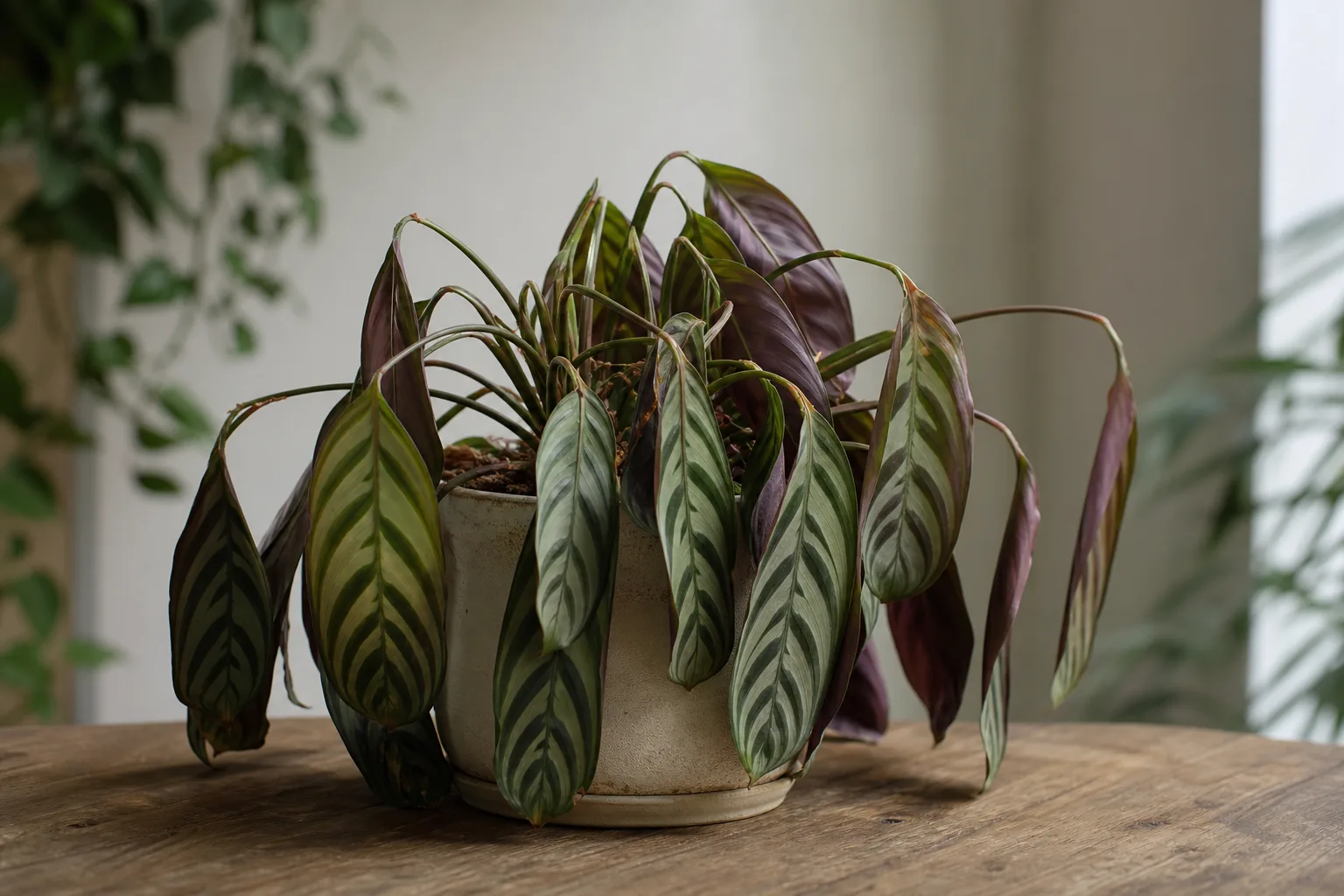
Drooping Leaves on Ctenanthe: Causes, Checks & Fixes
This guide covers drooping leaves on Ctenanthe. See also the general Drooping Leaves guide, watering, and light pages for this plant.
Drooping Leaves on Ctenanthe: Causes, Checks & Fixes
Quick answer
Ctenanthe drooping during daylight hours means the leaf blades or petioles are hanging lower than they should-not the normal upward fold at night that prayer-plant relatives show through nyctinasty. The most common daytime triggers are dry root zone, low humidity, soggy mix starving roots of oxygen, or cold draft on wet soil.
First step: check the clock, then lift the pot. If leaves stand vertically after dark but slump by noon, wait until mid-morning before treating-you may be seeing healthy movement. If leaves hang limply at 2 p.m. on a normal indoor day, push your finger into the top inch of mix and compare pot weight to how it felt right after your last watering. A light, dry pot needs a measured drink. A heavy, wet pot with limp leaves means stop watering and inspect drainage and roots-not another soak.
Is it normal? Nyctinasty vs. real drooping
Ctenanthe belongs to the Marantaceae family alongside Maranta and Calathea. Like other prayer plants, it folds leaves upward in the evening and opens them again as light returns. NC State Extension notes that Ctenanthe leaves fold in the evening and re-open in the morning-behavior owners often mistake for wilting the first time they see it.
Normal nyctinasty looks like: leaves angling more vertically after sunset, colorful undersides visible, stems still firm, soil moisture in the usual range, and leaves flattening again by late morning without intervention.
Distress drooping looks like: leaves hanging downward or sagging from the petiole during the day, sometimes with curling, crisp edges, yellow lower foliage, or a pot that feels wrong for the symptom-very light when you expected moisture, or very heavy when you expected dryness.
The timing check saves you from watering a plant that is simply folding for the night-or from ignoring a thirsty Ctenanthe because you only looked at it after dinner.
What drooping leaves look like on Ctenanthe
On a healthy Ctenanthe-whether fishbone C. burle-marxii, silver-banded C. oppenheimiana, or golden C. lubbersiana-leaves sit at a relaxed angle on firm petioles and move visibly over 24 hours. Drooping changes that posture in patterns that point to different causes.
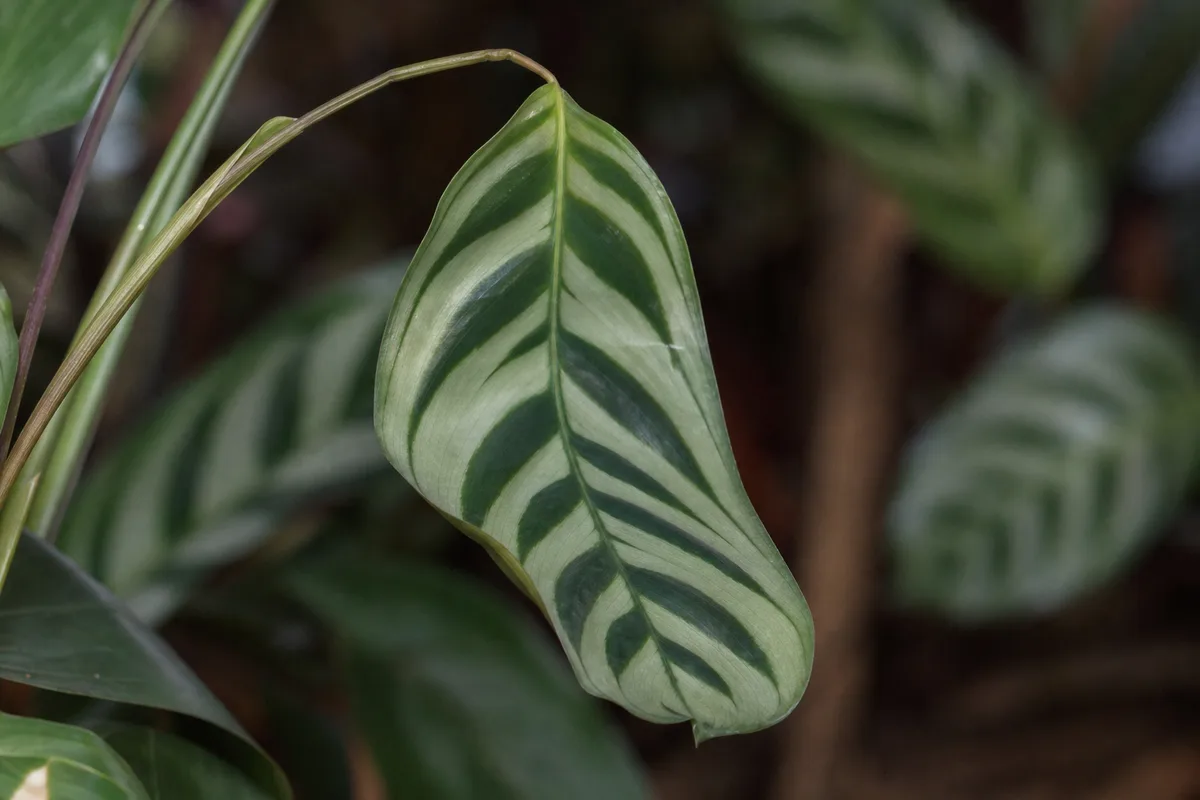
Drooping Leaves symptoms on Ctenanthe - compare with healthy tissue on the same plant.
Dry-soil droop shows leaves hanging or slightly rolled along the length, often with dry, pale surface mix and a noticeably light pot. Edges may crisp before the whole leaf sags. Fishbone types often droop faster than larger lubbersiana clumps because the root ball is smaller and dries quicker in bright light.
Low-humidity droop can appear while soil moisture is still acceptable. Leaves soften and hang, sometimes with brown tips or margins on older foliage while newer leaves look thin. This pattern is common in winter when furnace heat runs and humidity drops below what tropical foliage expects. NC State Extension lists medium to high humidity as a requirement, with a humidifier often needed indoors.
Wet-soil droop is the dangerous misread. Lower leaves hang limp while mix stays dark, cool, and heavy. Yellowing often starts from the bottom up. You may smell sourness from drain holes or see fungus gnats. The plant looks thirsty, but roots in waterlogged mix cannot take up water even when the pot is full.
Cold-draft droop can hit overnight: an otherwise healthy plant near an AC vent or cold windowpane wakes with limp foliage while soil moisture looked fine yesterday. NC State Extension notes intolerance of drafts and temperatures below 60°F (16°C).
Gradual all-over sag in a dim corner with moist soil may reflect insufficient light weakening petioles-not drought. Ctenanthe wants bright, indirect light; stems stretch and leaves soften when the plant cannot photosynthesize enough to hold firm foliage.
Why Ctenanthe leaves droop
Ctenanthe spreads by rhizomes and fine roots that need steady moisture with air in the mix. When that balance breaks, leaves droop before stems collapse entirely.
Underwatering is the most common daytime cause. NC State Extension states that leaf curl or wilt can occur if the plant has been inadequately watered. Ctenanthe is not drought-tolerant; repeated dry cycles stress fine roots. C. burle-marxii tolerates brief dryness better than broad Calathea cultivars, but it still droops visibly when the top inch goes dry too long-especially in warm, bright rooms.
Low humidity pulls moisture from thin leaf tissue faster than roots replace it. Even adequately watered plants droop in dry winter air unless humidity stays in a comfortable tropical range.
Overwatering and root oxygen loss saturate rhizome tissue. Decaying roots fail to move water upward, producing limp leaves on wet soil-the classic prayer-plant trap where owners add more water.
Cold stress plus wet soil slows root function and damages leaf cells quickly. A plant beside a heating vent that dries the air while the inner pot stays cool and damp is a frequent winter combination.
Tap-water mineral stress rarely causes sudden droop alone, but NC State Extension notes sensitivity to salts in tap water that cause leaf burn or spots. Chronic edge damage weakens leaves so they hang more easily under any additional stress. Filtered or distilled water helps long-term, especially if crisp tips already appeared.
Pest pressure is less common but possible. Mealybugs, spider mites, or aphids on stems and leaf undersides weaken vascular flow. Inspect before you assume water stress only.
Lookalike symptoms to rule out
| Pattern | What you see | Likely cause | First check |
|---|---|---|---|
| Vertical leaves after dark, flat by morning | Firm stems, normal soil | Normal nyctinasty | None-observe mid-day |
| Daytime hang + light pot + dry top inch | Crisp edges possible | Underwatering | Weight, then soak |
| Daytime hang + moist soil + yellow lowers | Heavy pot, sour smell | Overwatering / root stress | Stop water, inspect roots |
| Soft hang + moist soil + no yellow yet | Cool room, draft path | Cold + wet combo | Move plant, reduce water |
| Hang + firm soil + crisp tips | Winter heat, low mist | Low humidity | Humidifier, not flood |
| Slow sag in dim spot | Long petioles, faded pattern | Low light | Brighten placement |
| Rolled tube leaves midday | Dry or humid stress overlap | See curling leaves | Soil + humidity together |
| Thin floppy collapse all over | Fast progression on wet soil | Wilting / rot | See wilting or root rot |
Drooping vs. wilting on Ctenanthe: drooping is often posture change-you may still feel slight leaf firmness, and the plant perks after one correct care fix. Wilting is broader turgor loss where leaves feel thin and floppy across the clump, especially when roots have failed. Use the wilting guide if the whole plant collapsed within days on damp mix.
How to confirm the cause
Work through these checks in order so you do not water a rotting rhizome or repot a plant that only needs humidity.
- Time of day - Note whether drooping appears only after sunset. If yes, recheck at late morning before any treatment.
- Top-inch moisture - Press a finger into the surface near the pot wall. Dry confirms thirst branch; damp or wet with limp leaves suggests root failure. Water when the top inch feels dry is the baseline-not a calendar.
- Pot weight - Lift the container. Light plus daytime droop equals dry. Heavy, cool pot plus droop equals oversaturated mix or dead roots.
- Leaf pattern - Yellowing from the bottom on wet soil points to overwatering. Even droop across all leaves on dry soil points to drought.
- Humidity context - Furnace season, crisp edges, and moist soil together suggest air too dry. A hygrometer reading below 50% near the canopy supports that branch.
- Temperature and placement - AC vents, single-pane windows, and outer doors within a few feet explain overnight droop on otherwise correct watering.
- Recent history - Missed vacation watering, repot within two weeks, switch to a much larger pot, or move to a brighter window all narrow the cause quickly.
- Root peek - If wet droop persists after stopping water for several days, slide the plant out. Healthy Ctenanthe roots are firm and pale; rotted roots are brown, translucent, or slimy.
Confirmed dry droop: dry top inch, light pot, firm rhizome at the surface. Confirmed wet droop: moist mix, yellow lower leaves, mushy roots, or sour smell. Confirmed humidity droop: acceptable soil moisture, crisp margins, dry room air.
First fix for Ctenanthe
Apply one branch based on what you confirmed-not every fix at once.
If the top inch is dry and the pot is light: water thoroughly until a little runs from the drain hole, then empty the saucer within 30 minutes. Use room-temperature filtered or distilled water if tap minerals have already crisped edges. Wait 24 hours before judging-Marantaceae leaves often recover slowly. See the underwatering guide if the root ball had shrunk away from the pot sides.
If soil is wet and leaves droop: stop watering immediately. Move the plant to bright indirect light with good air movement-not direct sun. Check that the inner pot drains and no cachepot holds standing water. If lower leaves are yellowing or the mix smells sour, inspect roots and follow the overwatering or root rot path before the rhizome softens.
If soil moisture is fine but air is dry: run a humidifier or place the pot on a pebble tray so humidity stays above 50 to 60% near the foliage. Grouping with other tropicals helps. Do not flood the soil to compensate for dry air-that creates wet-soil droop on top of humidity stress. See low humidity.
If cold draft is the trigger: move the plant away from vents and cold glass, keep room temperature in the 60 to 85°F range, and avoid watering with cold water. Firm leaves often return within 24 to 48 hours if the rhizome stayed solid.
If dim light weakened stems: shift to brighter indirect exposure over one to two weeks-east window or several feet back from south or west glass with a sheer curtain. Do not jump from a dim shelf to harsh afternoon sun; acclimated leaves burn easily.
Recovery timeline
Mild dry-soil droop often shows firmer, more upright leaves within 12 to 48 hours after one proper drink. Severe drought may need two to three watering cycles over a week before all petioles stiffen.
Low-humidity droop improves over two to five days once humidity stays consistently higher. Crisped edges on old leaves usually stay brown; watch new unfolding leaves for clean margins.
Overwatering or root stress recovery spans one to three weeks when the rhizome is still firm and enough healthy root remains. Yellow lower leaves rarely green up again-new upright growth is the benchmark.
Cold shock on an otherwise healthy plant often resolves within 24 to 48 hours after warmth returns. Rhizome softness on wet soil after cold exposure still warrants a root inspection.
Light-stress recovery may take two to four weeks after brighter placement as new leaves open with stronger petioles.
What not to do
Do not pour more water onto a drooping Ctenanthe when the mix is already wet-that converts reversible stress into rhizome rot faster than almost any other mistake. Do not treat normal evening nyctinasty as underwatering and soak the plant every night. Do not move a drooping plant into direct midday sun to perk it up; thin Marantaceae leaves scorch within hours. Do not fertilize a stressed plant before you know roots are healthy. Do not repot on day one unless root rot, failed nursery peat, or severe compaction is confirmed. Do not stack repotting, pruning, misting, and pesticide on the same day-make one care correction at a time so you can read the plant’s response.
How to prevent drooping leaves next time
Run the top-inch check from the Ctenanthe watering guide before every drink-finger, skewer, and pot weight together beat a calendar. Keep bright indirect light without direct scorch. Maintain medium to high humidity in heated rooms; a small humidifier near the canopy is more reliable than occasional mist. Use filtered or distilled water if tap minerals crisp edges. Keep temperatures steady between 60 and 85°F and away from AC blasts. Size pots to the rhizome clump with drain holes, and empty saucers after watering. Many growers find Ctenanthe somewhat more forgiving than the fussiest Calatheas, but it still punishes long dry spells and soggy mix-prevention is steady rhythm, not perfection.
When to worry
Act immediately if the rhizome or stem base feels soft, mix stays wet while the whole clump collapses, or roots are brown and mushy on inspection-those signs mean rot may be reaching the growth point and drying alone may not be enough. Sudden all-over collapse on wet soil within a few days is urgent even if leaf tips still look green.
You can wait and observe if only outer leaves droop, the rhizome is firm, and you have already corrected a clear dry-soil, humidity, or draft mistake. Improvement shows as new leaves opening upright within one to two weeks.
Ctenanthe care cross-check
| Check | Healthy baseline | Drooping red flag |
|---|---|---|
| Daytime posture | Leaves open and angled naturally | Limply hanging at midday |
| Night posture | Vertical fold (nyctinasty) | Rolled or limp and dry/wet mismatch |
| Top inch of mix | Dry before next drink | Wet 7+ days while leaves sag |
| Pot weight | Light when dry, moderate after water | Stays heavy and cool between waterings |
| Humidity | 50%+ near canopy in winter | Crisp tips + soft hang on moist soil |
| Temperature | 60–85°F, no cold drafts | Below 60°F or direct AC blast |
| New growth | Unfolding leaves firm and patterned | Aborted tubes or smaller pale leaves |
Related Ctenanthe guides
- Ctenanthe overview - species IDs, nyctinasty, and baseline care
- Watering - top-inch checks and filtered-water tips
- Overwatering - wet-soil droop branch
- Underwatering - dry pot branch
- Low humidity - crisp edges and soft hang
- Curling leaves - rolled foliage overlap
- Wilting - full turgor collapse
- Root rot - wet soil escalation