Low Humidity on Ctenanthe: Causes, Checks & Fixes
Quick answer
Ctenanthe needs medium to high humidity - aim for 60% RH or higher and act when room air drops below about 50%. First step: place a hygrometer at leaf height, move the pot off heating vents, radiators, and AC drafts, then add a humidifier or group it with other Marantaceae plants.
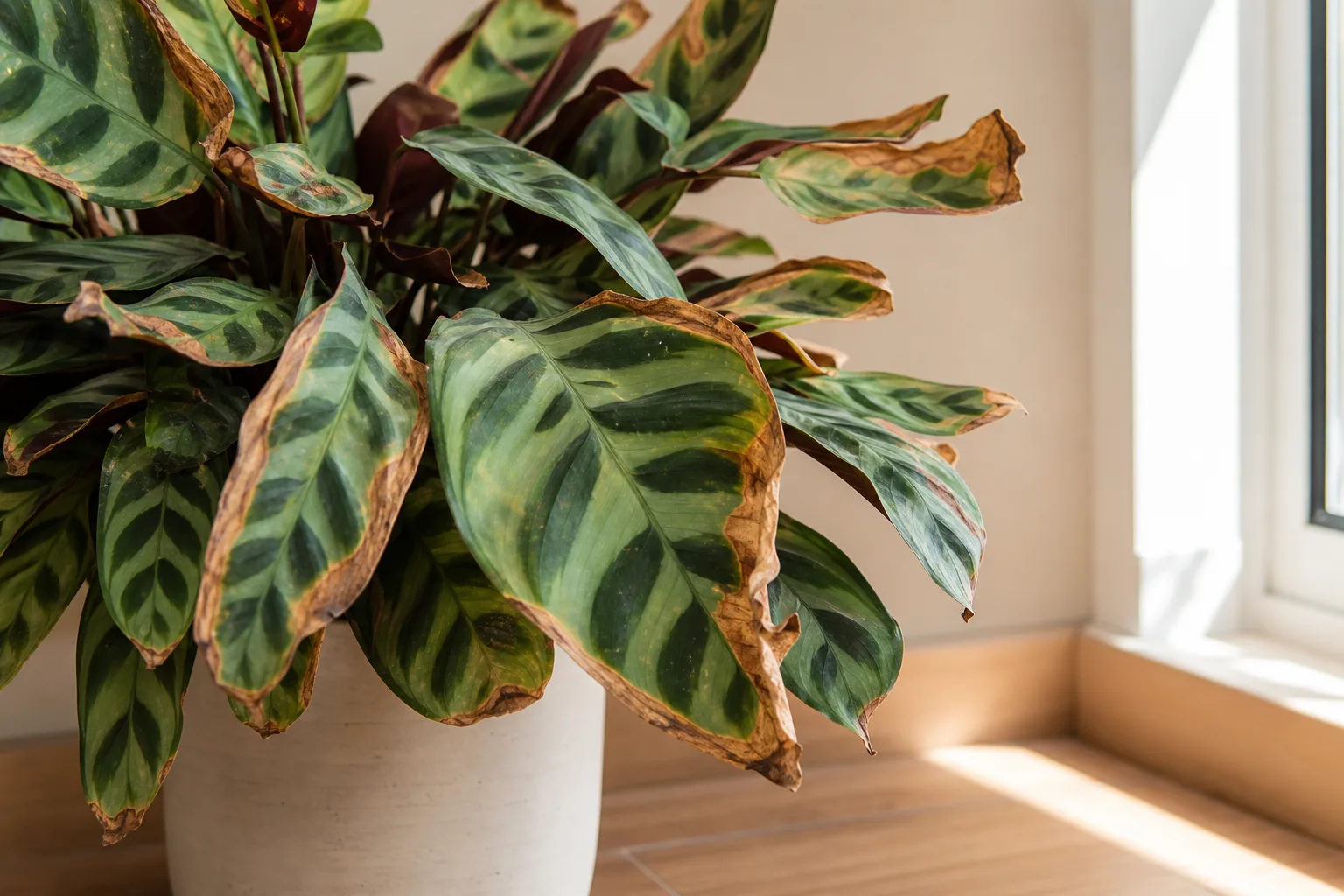
Low Humidity on Ctenanthe: Causes, Checks & Fixes
This guide covers low humidity on Ctenanthe. See also the general Low Humidity guide, watering, and light pages for this plant.
Low Humidity on Ctenanthe: Causes, Checks & Fixes
Quick answer
Ctenanthe (Ctenanthe burle-marxii and related never never / fishbone prayer plants) evolved on humid tropical forest floors in the Marantaceae family. Indoors, it needs medium to high humidity - treat 60% relative humidity (RH) or higher as your working target and intervene when room air drops below about 50%. NC State Extension lists medium to high humidity for Ctenanthe and notes that a humidifier may be required in typical home conditions.
Dry air shows up fast on fishbone-patterned leaves: tight daytime curl on new rolled spears, crisp brown margins on fresh growth, and stalling unfurl near heating vents or winter windows - even when watering has been reasonable. Daytime roll that is not normal nyctinasty is covered in depth on the curling leaves guide when you need to separate six curl causes.
First step: place a hygrometer at leaf height and move the pot off forced-air paths - heating vents, radiators, AC registers, and drafty doors - before you buy gear or change your water routine. Once placement is safe, add a humidifier or Marantaceae grouping to raise local RH. Verify soil moisture separately; dry-air curl often tempts owners to overwater.
Does Ctenanthe need high humidity?
Yes - more than pothos or snake plant, and closer to Calathea and Maranta in the same prayer-plant family. Royal Horticultural Society cultivation advice for Ctenanthe burle-marxii calls for high humidity, including standing the container on a tray of moist gravel. The RHS calathea growing guide - which covers Ctenanthe, Goeppertia, and Stromanthe - describes these plants as enjoying high levels of humidity and recommends kitchens or bathrooms when light allows, or pebble trays, grouping, and regular misting elsewhere.
Ctenanthe is somewhat more forgiving than the fussiest Calatheas, but it is still a humidity-aware foliage plant. Missouri Botanical Garden notes that related Marantaceae prayer plants do not thrive in low humidity, where leaves may roll or turn brown. Many homes sit at 40–60% RH in summer but fall to 20–30% once furnaces run; University of New Hampshire Extension notes that tropical species often prefer 70–80%, while general houseplants target 40–60%.
For Ctenanthe, 60%+ is the practical indoor goal. Below 50%, expect edge crisping on new fishbone leaves unless you supplement moisture. NC State also warns that Ctenanthe is intolerant of drafts alongside its humidity needs - cold AC blasts and hot furnace paths both strip leaf moisture faster than roots can replace it.
What low humidity looks like on Ctenanthe
Ctenanthe signals dry air on new growth first. Older fishbone leaves may keep stable margins while the youngest rolled spears tell the truth.
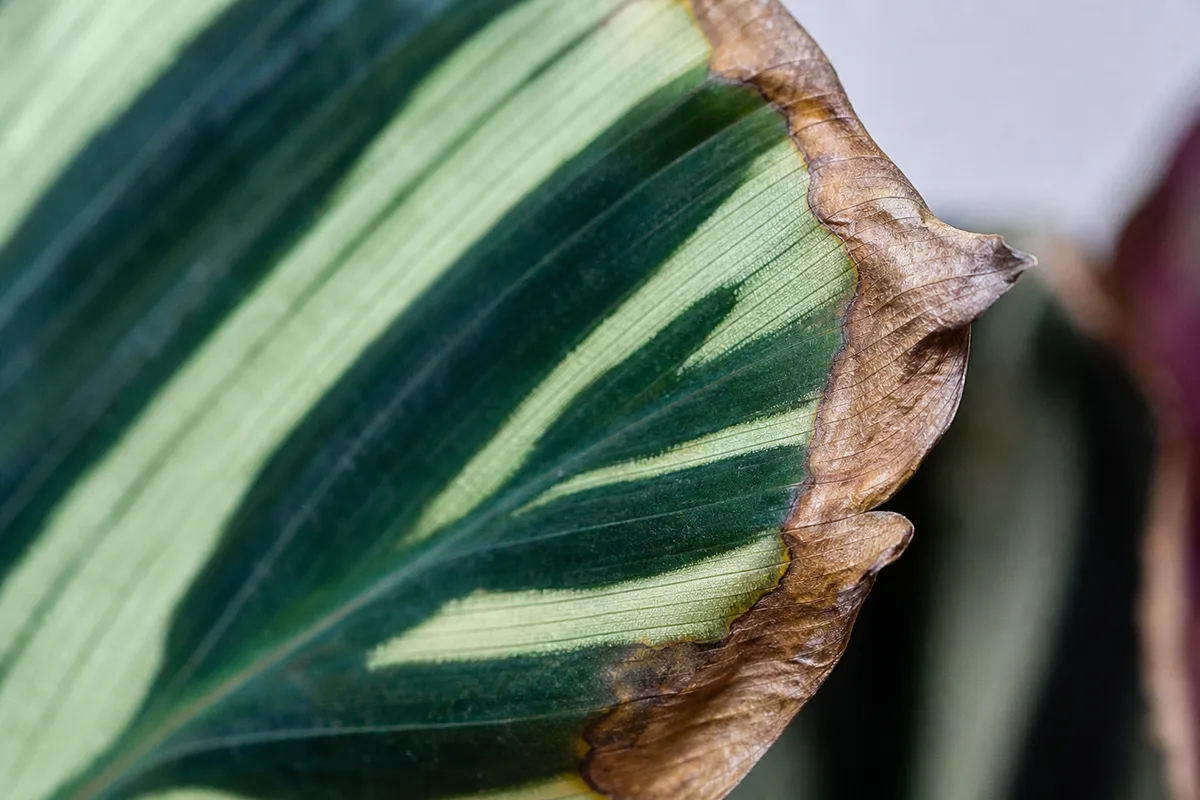
Low Humidity symptoms on Ctenanthe - compare with healthy tissue on the same plant.
Typical low-humidity signs on Ctenanthe:
- Newest leaves stay tightly rolled through the day - not the normal night-time fold that reopens by morning (nyctinasty)
- Fishbone-patterned edges turn brown and papery on fresh unfurling blades, often starting at the leaf tip or margin
- Rolled central spears stall - new leaves open slowly, stay narrow, or abort if RH stays low for weeks
- Damage clusters on one side of the clump - the side facing a vent, radiator, or single-pane window
- Pot weight stays moderate - mix is not bone dry (underwatering) and not soggy for days (overwatering on Ctenanthe)
- No fine webbing or stippling on leaf undersides - that pattern fits spider mites in dry heat, but confirm with a loupe before treating pests
What you usually do not see with humidity stress alone: yellow lower leaves on constantly wet soil, mushy rhizomes at the crown, or uniform pale bleaching across the whole plant from too little light - see not enough light on Ctenanthe when pattern loss is even and growth is stretched.
Why Ctenanthe gets low humidity
Ctenanthe transpires actively through thin fishbone leaves. When ambient RH drops, the plant curls foliage to reduce water loss - the same stress response Missouri Botanical Garden describes for Marantaceae plants in low humidity.
Common Ctenanthe-specific dry-air triggers:
- Winter forced-air heating - furnaces drop indoor RH sharply while Ctenanthe still grows slowly near windows
- Placement on or above heat vents and radiators - hot air blowing from a furnace vent dries leaves faster than roots can supply moisture
- AC and ceiling-fan drafts in summer - cold dry airflow mimics winter stress; NC State lists draft intolerance for Ctenanthe
- Single-room dehumidifiers or very dry bedrooms - fine for humans, harsh for Marantaceae clumps
- New plant acclimation - greenhouse humidity to a dry apartment shock shows on the next two spears
- Low humidity plus correct watering - soil can be appropriately moist while air still crisping edges; humidity fixes air, not roots
Pair humidity work with steady moisture from the Ctenanthe watering guide - dry roots and dry air together produce the dramatic curl people associate with “prayer plant drama.”
How to confirm dry air vs. other causes
Low humidity is a diagnosis of placement and RH, not a guess from crispy tips alone. Brown margins also appear with tap-water minerals and drought.
Work through these checks in order:
- Hygrometer reading - Place a digital hygrometer near the pot at leaf height. Sustained below 50% RH with curling new growth strongly supports dry air. UNH Extension recommends pairing a humidifier with a hygrometer to track progress.
- Vent and draft scan - Trace heating vents, radiators, AC registers, and frequently opened doors within 3 to 5 feet of the pot. Leaves on the exposed side crisp first.
- Pot weight and soil depth - Lift the container. Light and dusty deep mix points to underwatering - water roots first. Heavy, wet soil for a week points away from humidity-only diagnosis.
- Newest vs. oldest leaf pattern - Dry air hits young spears and margins while older leaves may look fine. Underwatering often collapses the whole clump by afternoon. Tap-water burn shows symmetric tip browning on many ages with white crust on soil - see brown tips on Ctenanthe.
- Time of day - Leaves folded only at night are normal Marantaceae behavior. Daytime roll on new growth fits stress - use the curling leaves guide when nyctinasty and stress curl overlap.
- Pest check - In dry rooms, spider mites thrive. Look for stippling, webbing, and gritty leaf undersides; humidity helps prevention but does not replace pest treatment if mites are present.
Vent, radiator, and AC draft check
Walk a slow circle around the pot:
- Hold your hand at leaf height near suspected vents - noticeable warm or cold airflow confirms a problem
- Check upper shelves above radiators and window sills where rising heat or cold glass creates microclimates
- Note return-air paths from HVAC that pull moisture away from foliage clusters
- Move the plant at least 3 to 5 feet from direct forced-air paths before evaluating humidifier need - UNH Extension advises keeping plants away from heat vents and radiators unless you add supplemental moisture
Symptom lookalike table
| What you see | Dry air (low humidity) | Underwatering | Tap-water / fluoride burn | Spider mites |
|---|---|---|---|---|
| Pot weight | Moderate - not bone light | Very light | Moderate | Moderate |
| Soil depth | Top inch dries on normal schedule | Dry 1–2+ inches; gap at pot edge | Moist on schedule | Often moist; mites like dry air, not dry soil |
| Leaf pattern | New spears curl; margins crisp on fresh fishbone leaves | Whole clump limp by afternoon; inward roll | Brown tips on old and new leaves; white soil crust | Stippling, webbing, gritty undersides |
| Location clue | Worse near vents, radiators, dry rooms | Anywhere mix dries out | Anywhere with hard tap water | Hot, dry spots; clustered damage |
| First fix | Move off vent; humidifier / grouping | Bottom-water thoroughly | Filtered or rested water + humidity | Isolate; rinse; treat pests |
If two columns match, fix both - dry air plus slightly dry soil is common in winter. Water roots only when the top inch is dry; do not soak because leaves look curled in a 35% RH room.
First fix for Ctenanthe
Move the pot off forced-air paths - heating vents, radiators, AC registers, and drafty doors - before any other intervention.
This single step stops active moisture stripping at the leaves. Missouri Botanical Garden warns that hot air from furnace vents and cold exposure can cause leaf drop and stress on indoor plants. Ctenanthe sits in that sensitive group.
After relocation, wait 48 to 72 hours and re-check spears at the same time of day. If curl persists and RH remains below 50%, proceed to humidity supplementation - not extra watering.
Raise local humidity on Ctenanthe
Work through these options in order of reliability:
Humidifier (most effective)
A small room humidifier run for several hours daily is the most reliable way to hold 50–60%+ RH in dry seasons. UNH Extension notes humidifiers near plants need to run multiple hours daily and work best with a hygrometer. Place the unit in the same room but not blowing directly onto foliage - raise ambient moisture, not constant wet leaves.
Humidifier sizing by room: A desktop or 0.5-gallon cool-mist unit is usually enough for a small bedroom or office where one Ctenanthe clump shares space with a few other tropicals. A medium 1–2 gallon evaporative or ultrasonic humidifier fits a standard living room with open floor plan and multiple vents - UNH Extension recommends placing the humidifier close to plants for the most benefit, especially in larger rooms. Size up if a hygrometer at leaf height still reads below 50% after several hours of runtime at the manufacturer’s medium setting.
Group with other Marantaceae plants
Cluster Ctenanthe with Calathea, Maranta, or other Ctenanthe pots so transpired moisture builds a shared microclimate. UNH Extension explains that grouping expands humidity benefits when several plants share a low-airflow space. One isolated pot in a large drafty room gains less from grouping alone.
Pebble tray (supplementary)
Stand the pot on a tray of pebbles with water below the pot base - the RHS calathea guide recommends gravel trays with water topped up regularly. Pebble trays help near the pot but rarely fix whole-room winter dryness without a humidifier.
Bathroom or kitchen placement (when light fits)
RHS notes kitchens and bathrooms tend to be the most humid rooms - viable for Ctenanthe only if Ctenanthe light guide is still adequate. Do not trade humidity for dark corners.
Misting (limited role)
Light misting can briefly raise leaf-surface moisture but does not replace ambient RH. Avoid heavy evening misting with hard tap water on crowded crowns - wet foliage overnight can invite spotting. Fix water quality and humidity structure first; see brown tips if minerals are involved.
Recovery timeline
After moving off vents and raising RH above 60%:
- Mild curl on new spears - Often relaxes within 3 to 7 days as blades refill and unfurl
- Established crisp margins - Dead tissue does not re-green; old brown edges remain even when new growth is clean
- Moderate winter stress - Expect one to two weeks before new fishbone leaves open flat consistently
- Severe or long-term dry air - Spears that stayed rolled for three or more weeks may abort; recovery depends on firm rhizomes and stable new shoots
Ctenanthe vs. Calathea recovery: Ctenanthe - especially burle-marxii - often bounces back from humidity stress faster than the most delicate Calatheas once RH holds above 60% and the plant is off vent paths. A Calathea in the same tray may still show crisped old leaves for weeks while Ctenanthe’s next spear unfolds cleanly. Judge each plant on its own new growth, not on a neighbor’s timeline.
Signs improvement is working:
- Hygrometer holds 55–65%+ near the clump
- Newest leaves unfold without staying tube-shaped through midday
- Edge damage stops advancing on fresh growth
- Night folding still occurs - healthy nyctinasty returns
Signs the problem is worsening:
- New spears keep aborting despite verified RH above 60%
- Crown softens or soil stays soggy after you increased watering for “thirsty” curl - pivot to rot diagnosis
- Stippling spreads with webbing - add mite treatment, not more mist
Trim fully brown, papery leaves at the rhizome if they clutter the crown - guidance in the Ctenanthe pruning guide - but wait until humidity is stable before heavy live-leaf removal in winter.
What not to do
- Do not overwater because leaves curl - Dry-air curl mimics thirst. A heavy wet pot in low RH invites root rot on Ctenanthe on Marantaceae plants. Confirm pot weight before soaking.
- Do not mist heavily as your only fix - Surface moisture evaporates in minutes in a 25% RH room. UNH Extension ranks humidifiers and grouping above pebble trays alone for consistent benefit.
- Do not leave the pot on the vent “because it likes warmth” - Warm dry air burns fishbone edges faster than cool stable air at proper RH.
- Do not stack Ctenanthe repotting guide, heavy pruning, and pesticide on the same week as a humidity rescue - see pruning guidance for seasonal limits.
- Do not fertilize stressed foliage - Nutrients do not replace atmospheric moisture and can burn roots if you overwatered in panic.
- Do not assume all curl is humidity - Run the lookalike table and the curling leaves guide; underwatering and mites both spike in dry winters.
How to prevent dry-air stress next winter
Build a humidity plan before heating season, not after every leaf crisps:
- Relocate pots in fall - Move Ctenanthe off vent lines and cold window sills before the first furnace cycle
- Set a hygrometer alarm near 50% RH - Start the humidifier when room air trends down, not when spears are already tube-shaped
- Run a humidifier on a schedule - Several hours daily in the plant room beats occasional bursts; NC State notes a humidifier may be required for Ctenanthe indoors
- Group tropicals - Keep Marantaceae pots together on a shared bench away from drafts
- Maintain watering rhythm separately - Follow top-inch dry checks from the watering guide; humidity and soil moisture are two dials, not one
- Use filtered or rested water if edges brown even at 60% RH - mineral burn overlaps humidity symptoms; details on brown tips
The Ctenanthe overview ties light, moisture, and humidity expectations together for the whole plant. When dry air is under control, Ctenanthe usually rewards you with cleanly unfurling fishbone leaves - proof that Marantaceae plants read the room, not just the watering can.
When to worry
Treat dry air as urgent when every new spear stays rolled for more than two weeks, multiple leaves brown at once while the plant sits in a vent path, or RH readings stay below 40% despite relocation.
Consider recovery unlikely without deeper intervention if the rhizome softens, soil stays waterlogged after you overcorrected watering, or new growth stops entirely for more than three weeks at verified 60%+ RH. At that point, inspect roots and pests - humidity alone will not fix rot or mite infestation.
When caught early, Ctenanthe is one of the more recoverable prayer-plant relatives: move it off the vent, hold 60%+ RH, and watch the next rolled spear open flat.
Related guides
- Curling leaves on Ctenanthe - daytime roll vs. nyctinasty and six-cause lookalike table
- Underwatering on Ctenanthe - when thirst, not dry air, drives curl
- Brown tips on Ctenanthe - mineral burn overlapping humidity margins
- Spider mites on Ctenanthe - dry-air companion pest
- Ctenanthe watering guide - soil moisture rhythm alongside RH
When to use this page vs other Ctenanthe guides
- Ctenanthe watering guide - Use for routine moisture checks before assuming low humidity is the main issue.
- Ctenanthe problems hub - Browse all 17 common issues on this species.
- Brown Tips on Ctenanthe - Different entry point when symptoms overlap with low humidity.
- Curling Leaves on Ctenanthe - Different entry point when symptoms overlap with low humidity.