Overwatering on Ctenanthe: Causes, Checks & Fixes
Quick answer
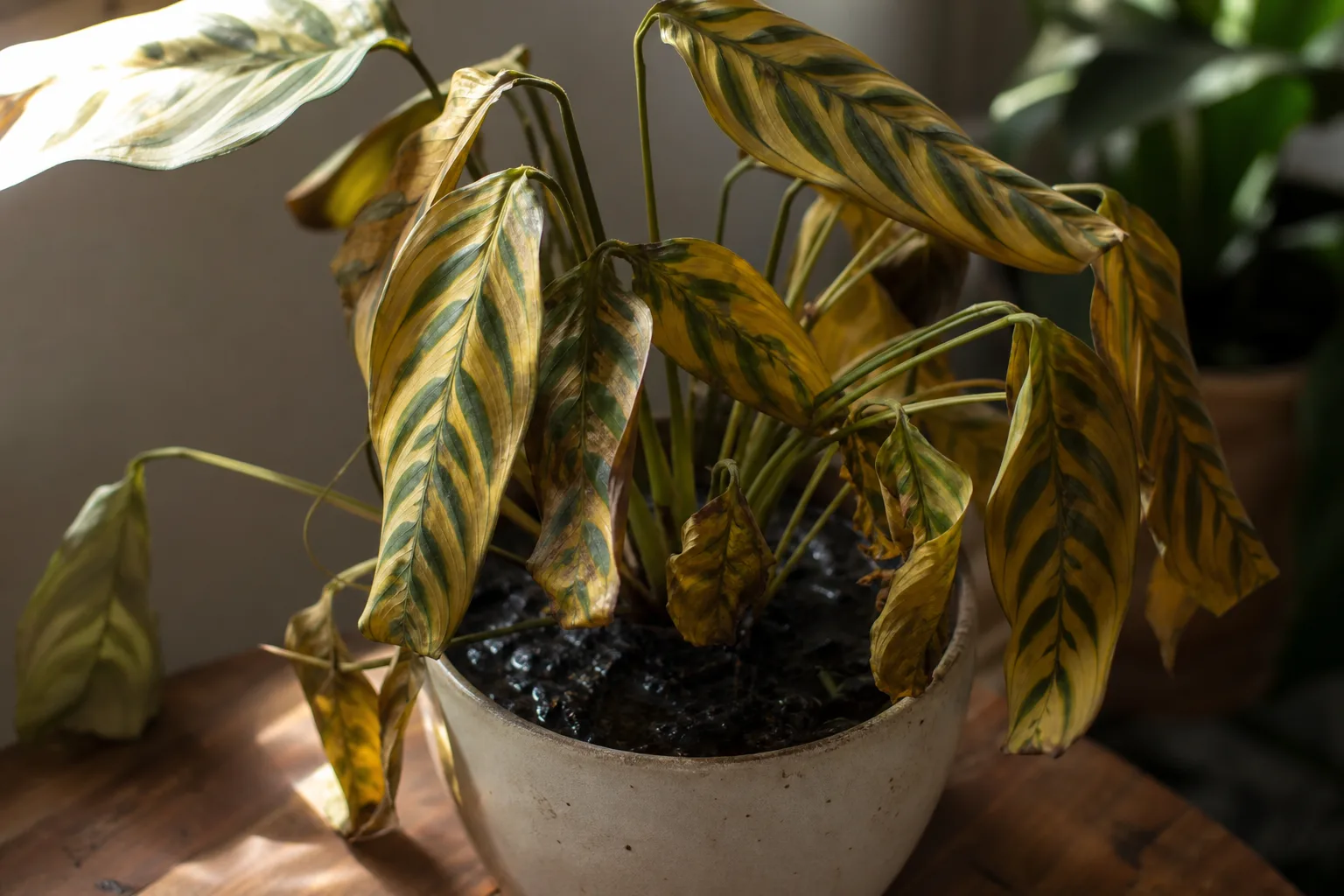
Overwatered Ctenanthe shows a heavy wet pot, limp or curled leaves, and yellow lower foliage while the mix stays damp. First step: stop watering, empty standing water, and let the top inch dry before you add another drink.
Overwatering on Ctenanthe: Causes, Checks & Fixes
This guide covers overwatering on Ctenanthe. See also the general Overwatering guide, watering, and light pages for this plant.
Overwatering on Ctenanthe: Causes, Checks & Fixes
Quick answer
Overwatered Ctenanthe (Ctenanthe burle-marxii, fishbone prayer plant, and related never-never types) keeps a heavy, wet pot while leaves limp, curl, or yellow - the classic Marantaceae trap where damaged roots cannot absorb water, so the plant looks thirsty on soil that is already saturated.
First step: stop watering, empty every saucer and cachepot, and let the top inch of mix dry before the next drink. This page is a diagnostic deep-dive for wet-soil stress. For watering rhythm, filtered water, and seasonal schedules, use the Ctenanthe watering guide as your prevention hub.
Why Ctenanthe gets overwatered
Ctenanthe sits in an awkward middle ground among houseplants. It is a Marantaceae prayer-plant relative that evolved on damp tropical forest floors - it wants steady root-zone moisture, not the drought cycles a succulent tolerates. But it also needs airy, well-drained mix; roots in saturated soil lose oxygen and function.
That moisture paradox pushes many growers toward calendar watering or daily top-ups when leaves curl. On Ctenanthe, curl can mean dry roots or rotting roots on wet mix - and the wrong response (adding water to already soggy soil) accelerates damage. NC State Extension recommends watering when the top inch of soil feels dry in a moist, well-drained mix - not keeping the pot permanently wet.
Common Ctenanthe-specific triggers:
- Watering on a schedule instead of checking soil - especially in winter when growth slows and the same summer rhythm keeps mix wet for two weeks
- Oversized pots with excess moisture-retentive peat or coir that stays saturated in the center while the surface looks dry
- Decorative cachepots that hold runoff after top watering - the inner nursery pot sits in standing water
- Low light and cool rooms where evaporation slows but watering frequency does not change
- Misreading curl as thirst - adding water when leaves roll on soil that is already damp for many days
- Dense, compacted mix without perlite or bark - water pools at the bottom while the top inch misleadingly dries first
Missouri Botanical Garden groups prayer plants among species that need evenly moist soil that does not dry out - but that does not mean constantly soggy. Ctenanthe prefers missing one watering by a day over sitting in wet soil for a week.
What overwatering looks like on Ctenanthe
Ctenanthe foliage is narrow and patterned, with rhythmic fishbone striping on burle-marxii and cream-streaked stems on lubbersiana. When roots suffocate, the leaves tell a confusing story because the plant cannot move water even though the mix is wet.
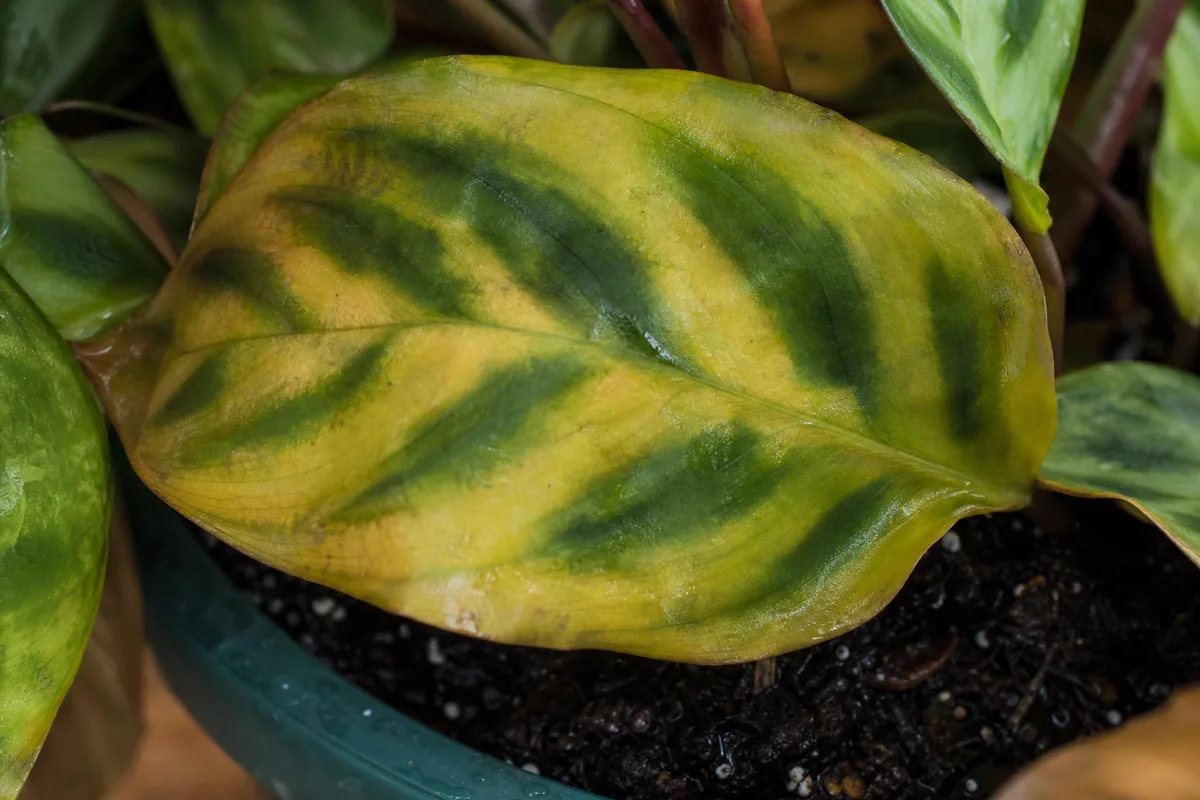
Overwatering symptoms on Ctenanthe - compare with healthy tissue on the same plant.
Typical overwatering signs on Ctenanthe:
- Pot stays heavy for many days after the last watering - surface mix cool, dark, and clingy
- Limp or drooping leaves while soil is damp - not the light, dry pot of underwatering
- Yellow lower leaves, often on older foliage first, with wet mix below
- Leaf curl or wilt on saturated soil - roots fail to absorb; the plant mimics thirst
- Soft stem tissue at the soil line in advanced cases
- Musty or sour smell from anaerobic mix
- Fungus gnats hovering over constantly wet surface soil
- White mold on the soil surface that returns after scraping
What you usually do not see with simple overwatering alone: a very light pot, dusty dry skewer deep in the mix, or crisp brown edges on a genuinely dry root ball - those patterns fit underwatering or low humidity instead.
NC State Extension notes that yellowing leaves can signal overwatering on Ctenanthe, while leaf curl or wilt can follow inadequate watering - which is exactly why pot weight and depth moisture matter more than leaf posture alone.
Lookalike symptoms on Ctenanthe
| What you see | Soil / pot | Likely cause | First check |
|---|---|---|---|
| Limp leaves, yellow lowers | Heavy, wet many days | Overwatering / root damage | Stop watering; inspect roots if decline continues |
| Tight inward curl, crisp edges | Light, dry top and depth | Underwatering | Bottom-water once; see underwatering guide |
| Curl on newest leaves, pot moderate weight | Top dry, humidity below 50% | Low humidity | Humidifier; see low humidity |
| Brown tips, white soil crust | Moist but not soggy | Tap-water mineral burn | Filtered water; see brown tips |
| Leaves fold upward at night only | Normal moisture | Healthy nyctinasty | No fix needed - Marantaceae night movement |
| Limp clump, sour smell, mushy crown | Wet, black roots | Root rot escalation | Unpot immediately; see root rot |
The wet-soil curl trap: Ctenanthe owners often pour another drink when leaves curl, assuming thirst. If the pot is heavy and the top inch is still damp, more water makes root damage worse. Always check soil moisture before watering again - the same rule NC State Extension uses for this genus.
How to confirm overwatering
Work through these checks in order before you change anything else:
- Pot weight - Lift the container. A heavy pot that has not lightened for seven to ten days in a warm room strongly suggests excess moisture. Compare with how it felt right after your last thorough watering.
- Surface moisture - Press a finger into the top inch near the pot wall. Cool, dark, clingy soil means wait - do not water.
- Depth probe - Push a wooden skewer two to three inches down. If it comes out wet and clinging while leaves limp, roots may already be failing.
- Smell - Musty or sour odor from the drainage hole points to anaerobic soil, not simple thirst.
- Pest clues - Persistent fungus gnats on wet surface mix support overwatering; see fungus gnats on Ctenanthe if insects are the main concern.
- Recent care history - Did you bottom-water into a full cachepot, repot into a much larger container, or keep a winter watering schedule through a dim, cool room?
- Root spot-check (if unsure) - Tip the plant out gently. Overwatering shows brown, mushy roots and sometimes blackened rhizome tissue; underwatering leaves roots firm and pale on dry mix.
If the pot is heavy, the skewer is wet deep down, and lower leaves are yellowing, you have enough to treat overwatering - proceed to the first fix below.
First fix for Ctenanthe
Stop watering and remove all standing water from saucers and cachepots.
Lift the nursery pot out of any decorative outer container, pour out trapped runoff, and set the plant in Ctenanthe light guide with good air movement - not hot direct sun. Let the top inch of mix dry before the next drink. NC State Extension aligns on that top-inch dry-down as the standard cue for when Ctenanthe is ready to water again.
Do not fertilize, mist heavily, or repot into a larger pot as your opening move. Those steps stress a plant whose roots are already struggling in wet mix.
If leaves keep yellowing or the mix smells sour after the top layer dries, move to root inspection - do not simply wait longer on the same wet root ball.
Root inspection and repot branch
When decline continues after you stop watering and the surface has dried:
- Unpot gently - Slide the root ball out and shake away loose mix. Healthy Ctenanthe roots should be firm and pale or light tan, not black and mushy.
- Trim decay - Cut away soft, brown roots with clean scissors. If the rhizome base is mushy, salvage firm tissue above the rot line or treat as a propagation rescue.
- Repot one size up at most - Use fresh moist, well-drained coir-peat mix with perlite and orchid bark - the same structure NC State Extension recommends. See the Ctenanthe soil guide for mix ratios.
- Water once lightly after Ctenanthe repotting guide, then let the top inch dry before the next cycle - do not drench daily hoping to perk limp leaves.
- Hold fertilizer until new growth looks healthy for two weeks.
Advanced rot with a soft crown is urgent - follow the full root rot on Ctenanthe protocol rather than waiting for passive dry-down.
Recovery timeline
Mild overwatering - Once excess water drains and the top inch dries, leaves may regain turgor within a few days to a week if roots are mostly intact. Judge success by stable new growth, not by old yellow leaves re-greening.
Moderate root damage - Yellow lower leaves often stay yellow. New prayer-leaves unfolding cleanly over two to four weeks signal recovery. Limp foliage that persists on drying mix means roots still need repair or trim.
Severe rot - If mushy roots filled most of the ball, recovery may take several weeks or fail if too much tissue died. Missouri Botanical Garden notes that wilted appearance with moist soil can indicate damaged roots that cannot take up water - matching the slow rebound many Marantaceae show after rot scares.
What not to do
- Do not add water when leaves curl on damp soil - confirm dryness first
- Do not fertilize a waterlogged plant - salts on stressed roots burn easily
- Do not repot into a larger container hoping it dries faster - extra wet mix makes saturation worse
- Do not leave the pot in a full cachepot after watering
- Do not prune heavily and repot and fertilize the same week - pick one stressor at a time
How to prevent overwatering on Ctenanthe
Prevention is mostly watering rhythm and drainage, which the Ctenanthe watering guide covers in full - including filtered water, seasonal 5-to-7-day versus 10-to-14-day check cycles, and cachepot rules.
Genus-specific habits that matter here:
- Water when the top inch dries and the pot feels lighter - never because the calendar says so
- Empty saucers within 30 minutes of every watering
- Use a drainage hole; never grow Ctenanthe in a sealed decorative pot without an inner nursery container you can lift
- Match pot size to the root ball - oversized pots hold excess wet mix
- Slow winter watering when light drops and the same volume keeps soil wet longer
- Probe depth with a skewer - surface-only checks fail when peat-coir mix dries on top while the center stays saturated
When to worry
Escalate immediately if:
- Stem base feels soft on wet soil - crown rot may be advancing
- Several leaves collapse at once while the mix is still damp
- Black, mushy roots fill most of the ball when you unpot
- Musty smell returns within days of repotting into fresh mix
Those patterns need the root rot guide and possibly division of healthy rhizome sections - not another dry-down wait.
For overlapping symptoms, see also yellow leaves, wilting, and drooping leaves on Ctenanthe. Return to the Ctenanthe overview for the full care hub.
When to use this page vs other Ctenanthe guides
- Ctenanthe watering guide - Use for routine moisture checks before assuming overwatering is the main issue.
- Ctenanthe problems hub - Browse all 17 common issues on this species.
- Root Rot on Ctenanthe - Different entry point when symptoms overlap with overwatering.
- Yellow Leaves on Ctenanthe - Different entry point when symptoms overlap with overwatering.
- Wilting on Ctenanthe - Different entry point when symptoms overlap with overwatering.