Brown Tips on Ctenanthe: Causes, Checks & Fixes
Quick answer
Brown tips on Ctenanthe usually mean dry indoor air or salts and fluoride in tap water-not a fertilizer shortage. First step: measure humidity near the canopy and switch to filtered or rainwater while you confirm the pattern on newest leaves.
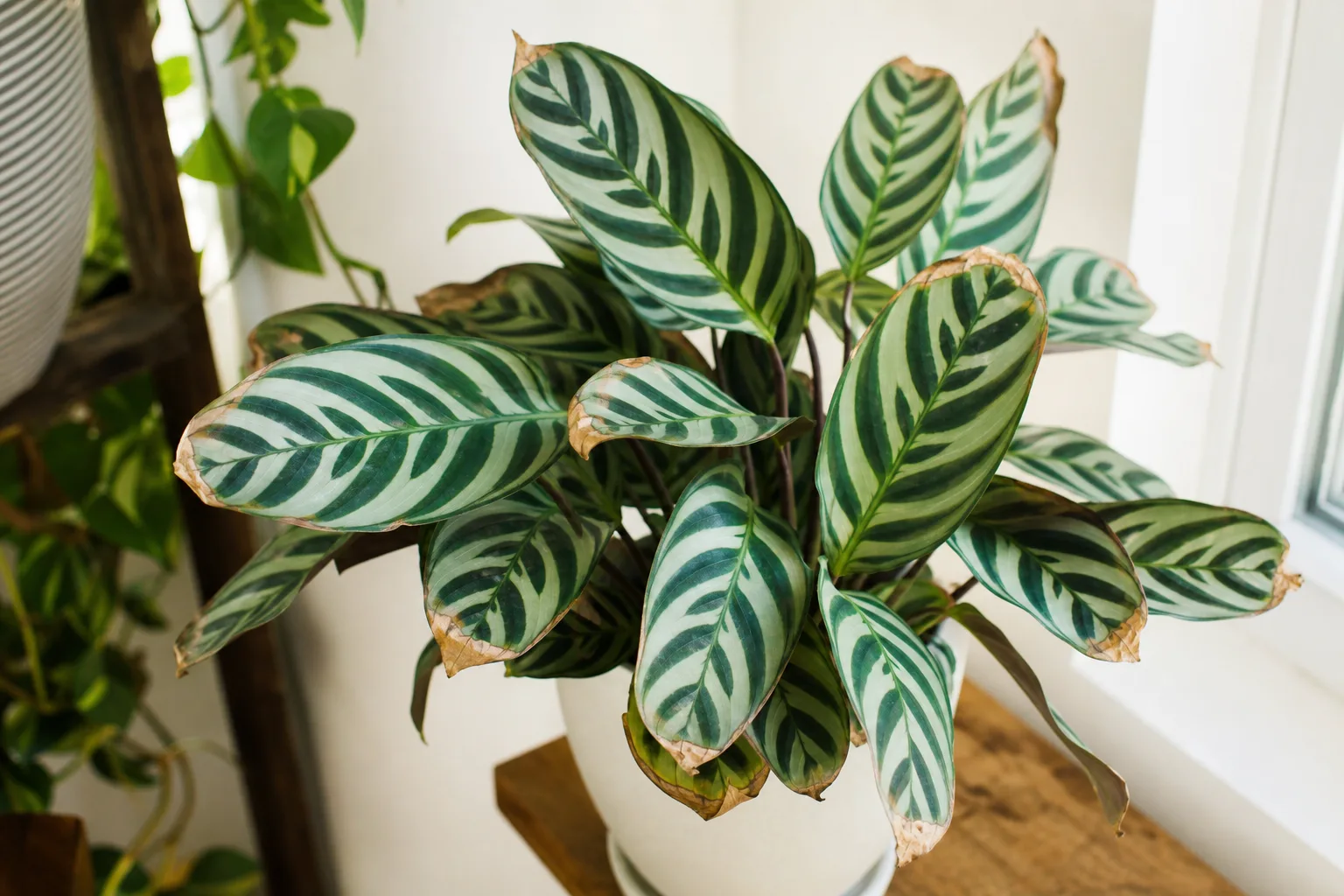
Brown Tips on Ctenanthe: Causes, Checks & Fixes
This guide covers brown tips on Ctenanthe. See also the general Brown Tips guide, watering, and light pages for this plant.
Brown Tips on Ctenanthe: Causes, Checks & Fixes
Quick answer
Brown tips on Ctenanthe-fishbone C. burle-marxii, silver-banded C. oppenheimiana, or gold-splashed C. lubbersiana-almost always trace to low humidity or minerals and fluoride in tap water, not missing fertilizer. These Marantaceae prayer plants evolved on humid Brazilian forest floors where thin leaf margins lose water fast when indoor air drops below comfortable tropical levels. NC State Extension notes that Ctenanthe is sensitive to salts in tap water that can cause leaf burn and needs medium to high humidity indoors.
First step: measure humidity near the canopy and review your water source before changing anything else. If a hygrometer reads below 50 percent, start a humidifier or grouping strategy. If you water with straight tap water-especially on C. oppenheimiana Tricolor or pale lubbersiana panels-switch to room-temperature filtered, distilled, or rainwater and watch the next new leaf. For baseline care rhythm, see the Ctenanthe overview and watering guide.
What brown tips look like on Ctenanthe
On healthy Ctenanthe, leaf edges stay clean while fishbone stripes, silver bands, or gold splashes stay crisp. Brown tips change that pattern in ways that help you narrow the cause.
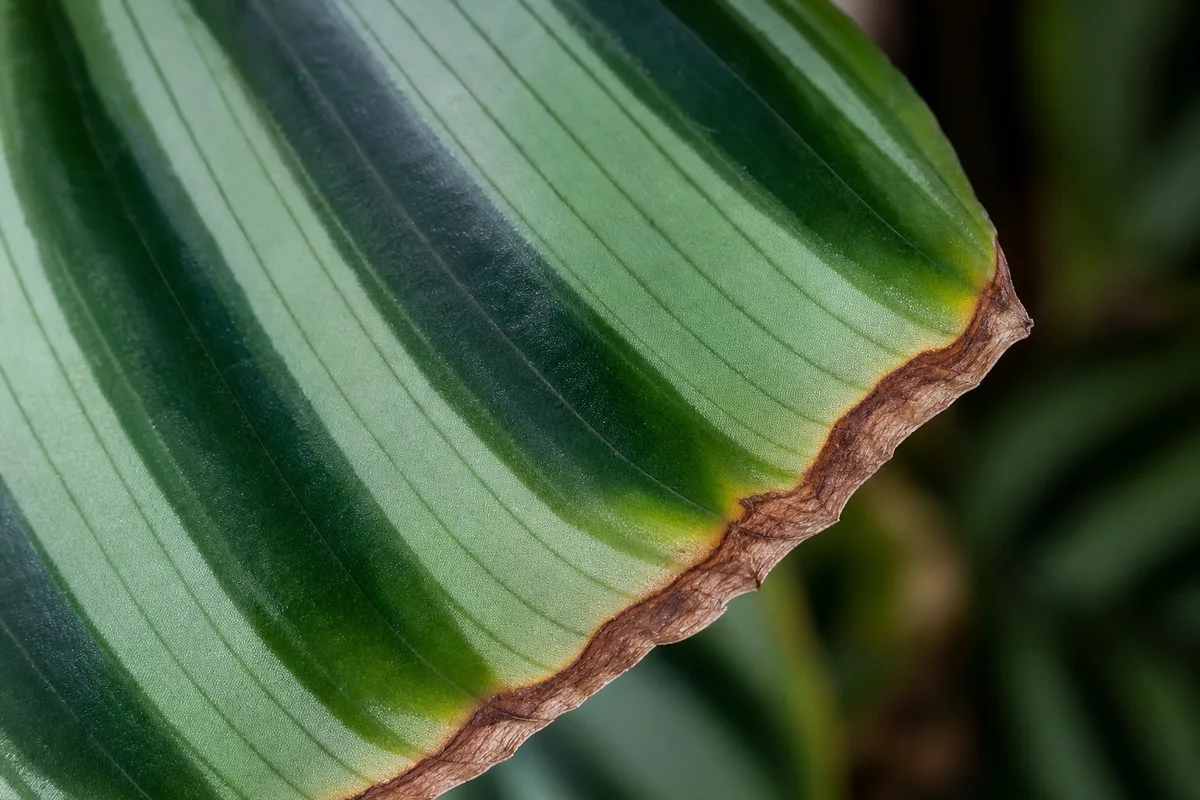
Brown Tips symptoms on Ctenanthe - compare with healthy tissue on the same plant.
Humidity-related burn usually appears as dry, papery brown or tan margins on multiple leaves at once-often after weeks of furnace heat or an AC vent nearby. The damage starts at the very tip and may extend a few millimeters inward along the margin. On C. burle-marxii, the herringbone pattern may still look sharp while only the thinnest edge tissue dies. Burgundy undersides stay their normal color; the problem is desiccation, not rot.
Tap-water and salt burn often tracks newest leaves that unfurled after a month of municipal water. Margins turn crisp while the rest of the blade looks otherwise healthy. You may see white or pale crust on the soil surface from mineral buildup. NC State lists C. oppenheimiana as intolerant to mineral and salt build-up from tap water, which may result in brown leaf tips.
Inconsistent watering can mimic tip burn: leaves curl into tight tubes when the mix goes bone dry, then show brown edges when stress repeats. That pattern differs from a single dry winter-check whether the top inch of mix dries on a predictable schedule.
Direct sun scorch hits the sun-facing side of pale or variegated panels first-bleached patches or brown patches in the middle of a leaf, not just the tip. NC State warns that exposure to bright sun can cause leaf scorch on Ctenanthe. If only leaves pressed against west glass show damage, light-not humidity-is the lead suspect.
Overwatering lookalike pairs brown tips with yellow lower leaves, limp petioles, and mix that stays wet for days. Sour smell from drain holes means pivot to overwatering and root checks-not a pebble tray alone.
Why Ctenanthe gets brown tips
Ctenanthe belongs to the prayer-plant family-same group as Calathea and Stromanthe-and shares their sensitivity at leaf margins. Ctenanthe is generally more forgiving than the fussiest Calatheas, but thin rainforest foliage still reports dry air and harsh water quickly.
Low humidity and dry indoor air
Ctenanthe needs medium to high humidity for clean leaf edges. NC State places never-never plants in that camp and notes a humidifier may be required in dry homes. When relative humidity drops below about 50 percent-common when heating runs-transpiration at leaf margins outpaces what roots can supply, and margin cells die. Winter is the peak season for tip burn even when watering is correct.
Missouri Botanical Garden notes that on C. burle-marxii, leaf edges may turn brown if ambient humidity is too low-cosmetically ugly before it threatens the whole plant, but a clear signal to raise air moisture.
Fluoride and minerals in tap water
Municipal tap water often carries fluoride, chlorine, and dissolved salts. As water evaporates from leaf margins, minerals concentrate and burn the tissue. Illinois Extension notes that tap water contains fluoride and causes leaf tip burn on many plants and recommends distilled water for sensitive tropicals. Ctenanthe fits that group: NC State recommends distilled or filtered water and documents salt sensitivity on both C. lubbersiana and C. oppenheimiana profiles.
Letting tap water sit overnight may reduce chlorine but does not remove fluoride-if tips keep appearing on new growth despite good humidity, change the water source.
Inconsistent watering
Ctenanthe wants moist, well-drained mix with a brief dry-down at the surface-not swings between dust-dry and soggy. Repeated dry cycles stress fine roots; the next leaves may show tip necrosis even after you resume watering. Brown leaf margins on C. oppenheimiana may indicate underwatering, which can overlap visually with humidity burn. Align with the top-inch check from the watering guide before blaming air alone.
Direct sun on pale or variegated panels
Pale cream, silver, or gold-splashed tissue scorches faster than dark green fishbone stripes. A C. oppenheimiana ‘Tricolor’ leaf with cream bands may show burn on the pale zones first. Too much direct exposure also increases water demand at the margins. If tips appeared after moving the pot to a sunny sill, soften light per the light requirements on the overview before adding humidity equipment.
How to confirm the cause
Work through these checks in order. One clear branch beats stacking humidifier, repot, and fertilizer on the same day.
- Humidity reading - Place a hygrometer near the canopy, not across the room. Below 50 percent strongly supports dry-air tip burn; 60 percent or higher makes humidity less likely as the sole cause.
- Newest leaf test - Inspect the leaf currently unfurling or the last one to open. Crisp tips on fresh growth after a dry month point to humidity or water quality active now; damage only on older leaves may be historical.
- Water source review - Note whether you use tap, filtered, distilled, or rainwater. Switch candidates if new leaves browned after consistent tap-water use or if white crust sits on the soil.
- Soil moisture pattern - Press the top inch of mix. Dusty and light with curled leaves suggests underwatering overlap-see curling leaves. Wet, heavy mix with yellow lower leaves suggests overwatering, not humidity trays alone.
- Light exposure - Check whether damaged leaves face unfiltered south or west glass. Middle-of-leaf bleaching or one-sided scorch implicates sun before you buy a humidifier.
Confirmed humidity burn: low hygrometer reading, several leaves with dry margins, firm rhizomes, mix moisture reasonable. Confirmed water-quality burn: good humidity, new leaves still crisping, tap water in use, possible salt crust. Suspected overwatering: wet mix, yellowing, sour smell-open the overwatering guide.
First fix for Ctenanthe
Raise humidity near the plant and switch to filtered or rainwater-make those two changes before fertilizer, repotting, or heavy pruning.
Run a humidifier within a few feet of the canopy or group Ctenanthe with other moisture-loving plants. Aim for 50 to 60 percent humidity minimum, with 60 percent or higher producing the cleanest margins in dry winters. A pebble tray with the pot elevated above the water line helps locally but rarely fixes a whole room running at 30 percent.
Water with room-temperature filtered, distilled, or rainwater on the next scheduled drink-not a calendar flood. NC State recommends watering when the top inch of soil feels dry using that softer water source. One thorough soak with drainage, then wait for the surface to begin drying again.
Change only these two variables for two to three weeks and judge the next new leaf-not old damaged tissue.
Step-by-step recovery
Humidity-first path
- Set a humidifier to maintain 55–65 percent near the plant; verify with a hygrometer.
- Move the pot away from heating vents, radiators, and cold draft paths that strip moisture from leaves.
- Keep watering on the top-inch schedule with filtered water-do not compensate for dry air by overwatering.
- Trim fully dead brown tips with clean scissors only after the next leaf opens cleaner; cut along the natural leaf shape without slicing into living green tissue on every leaf the same day.
Water-quality path
- Switch to filtered, distilled, or collected rainwater for every watering.
- If salt crust covers the soil surface, flush the pot once with soft water until a moderate amount drains, then discard runoff.
- Hold fertilizer until new growth looks stable-salts from feeding worsen margin burn on stressed roots.
- Watch the second and third new leaves; the first after a switch may still show old damage patterns.
When underwatering contributed
If the top inch was repeatedly bone dry and leaves curled tight, give one thorough drink with drainage after humidity is addressed-then resume the rhythm in the watering guide. Do not keep the mix soggy to “make up” for drought; Ctenanthe still needs oxygen at the roots.
When light scorch contributed
Pull the pot back from direct sun to bright indirect light. Rotate weekly so one side is not pressed against hot glass. Existing scorch marks will not heal; new leaves should open without bleached panels.
Recovery timeline
Mild tip burn on a few leaves often stabilizes within one to two watering cycles once humidity and water quality improve-you should see no new crisping on the next unfurling leaf within two to three weeks.
Moderate winter damage across many leaves may take four to six weeks before two consecutive new leaves open with clean edges. Old browned margins never re-green; they stay tan or get trimmed.
Severe burn plus wet-soil yellowing can take several months if roots were compromised-recovery tracks firm new growth from the rhizome, not old leaf repair.
Worsening signs: brown spreading into the center of unfurling leaves, rhizome softening, or tips continuing on every new leaf after four weeks of humidifier plus filtered water-re-run the confirmation list and inspect roots.
Lookalike symptoms
| Pattern | Most likely cause | Secondary check | First move |
|---|---|---|---|
| Dry crisp tips on many leaves, hygrometer below 50% | Low humidity | Dry winter heating | Humidifier; verify 55–60%+ |
| New leaves crisp after tap-water month | Fluoride / mineral burn | White soil crust | Filtered or rainwater |
| Tips plus tight leaf curl, light dry pot | Underwatering | Top inch dusty | Thorough drink; then rhythm |
| Tips plus yellow lower leaves, wet heavy pot | Overwatering / root stress | Sour smell | Stop water; see overwatering page |
| Bleached or brown patches mid-leaf, sun side only | Direct sun scorch | Near west/south glass | Move to indirect light |
| One old bottom leaf tip only | Natural aging | Firm new growth | Remove leaf if unsightly; no panic |
Nyctinasty confusion: Ctenanthe leaves folding upward at night is normal prayer-plant movement. Daytime curl with dry tips points to moisture stress-see curling leaves when roll persists after dark.
What not to do
Do not increase fertilizer to green up burned tips-salts accumulate at margins and stress roots already struggling with water quality. Do not mist heavily onto folded Marantaceae leaves in low light; trapped moisture can mark pale tissue without fixing structural humidity.
Avoid moving the plant into direct sun hoping faster growth will outrun damage-NC State lists Ctenanthe as intolerant of direct sunlight. Do not stack repotting, pruning, and pesticide on the same day as your humidity fix; change one major variable at a time so you can read the plant’s response.
Skip pebble trays alone in a room holding at 25 percent humidity-they rarely replace a humidifier in heated winter air. Do not assume misting substitutes for a humidifier; the effect is brief and can promote fungal spotting if leaves stay wet in dim corners.
If brown tips appear with sour wet soil, do not add a humidity tray and keep watering on schedule-that is a root-zone problem first.
How to prevent brown tips next time
Match everyday care to how Ctenanthe actually grows in your room-not a generic houseplant calendar.
- Humidity: maintain 50 to 60 percent or higher with a humidifier in winter; verify with a hygrometer near the canopy. See low humidity on Ctenanthe for full setup guidance.
- Water quality: use filtered, distilled, or rainwater year-round if your tap is hard or fluoridated.
- Watering: check the top 1 to 2 inches of mix and water when that layer begins to dry-the rhythm in the watering guide.
- Light: keep bright indirect exposure; avoid midday sun on pale cultivar panels.
- Weekly scan: inspect the newest leaf tip each week while problems are small-early crisping is cheaper to fix than a whole clump of damaged margins.
Compared with Calathea, Ctenanthe tolerates occasional dryness and moderate humidity better-especially C. burle-marxii-but chronic dry air and harsh water still win if you ignore margin signals.
When to worry
Escalate if unfurling leaves brown before they fully open, the rhizome feels soft, or lower leaves yellow while mix stays wet-those patterns suggest advancing root failure, not humidity alone. Immediate root inspection and the root rot page apply when sour smell and mushy roots appear.
Isolated tips on a few leaves in a dry apartment can wait for humidifier and water-quality correction over several weeks. One aging lower leaf with a dry tip and healthy new spears is low urgency.
Conclusion
Brown tips on Ctenanthe are a humidity and water-quality diagnosis before they are a mystery disease. Measure air moisture, soften your water, and watch the next new leaf-not the old crispy edges. Marantaceae margins do not heal backward; they heal forward through clean unfurling growth. Keep the nightly leaf fold working as your health check: if Ctenanthe still lifts leaves at dusk while new tips stay green, your fix is holding.