Ctenanthe Watering: Schedule, Soil Checks & Mistakes
Ctenanthe Watering: Schedule, Soil Checks & Mistakes
Ctenanthe Watering: Schedule, Soil Checks & Mistakes
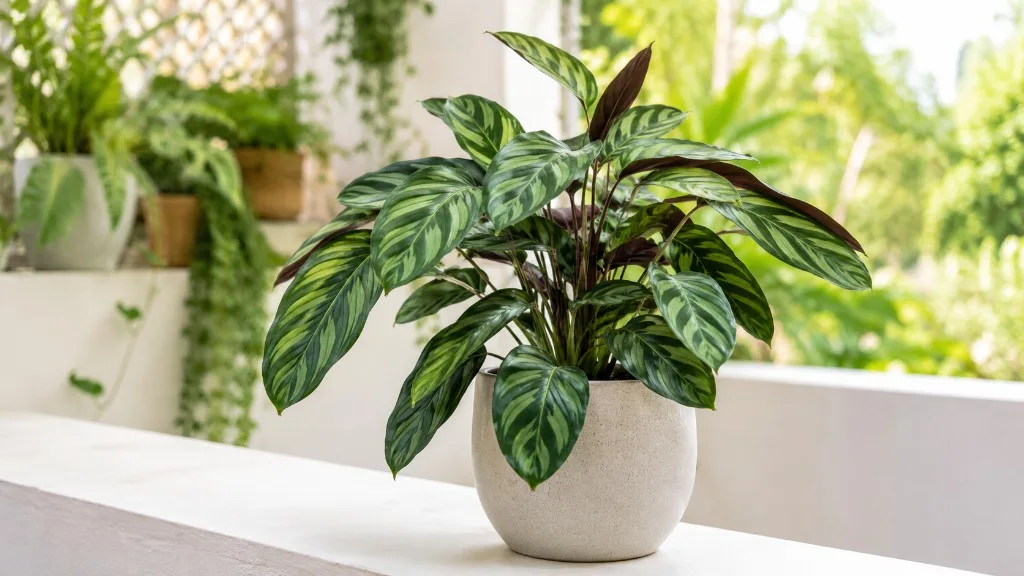
Ctenanthe is a prayer plant relative with rhythmic, patterned foliage that looks composed until watering drifts slightly off - and then the leaves tell the whole story. Crispy brown edges, dramatic curling by afternoon, yellow lower leaves, or a pot that stays heavy for ten days while the plant still looks thirsty. The problem is rarely that Ctenanthe is impossible indoors. It is that this genus wants steady root-zone moisture without soggy, airless soil, and most homes swing between those extremes when watering is tied to a calendar instead of what the pot actually needs.
Ctenanthe (Ctenanthe burle-marxii, the fishbone prayer plant, and Ctenanthe lubbersiana, the never never plant or bamburanta) comes from the shaded floor of Brazilian tropical forests, where the soil stays lightly damp, humidity runs high, and roots never sit in stagnant water. NC State Extension notes that Ctenanthe prefers Ctenanthe light guide, a moist well-drained mix, and watering when the top inch of soil feels dry, with distilled or filtered water recommended and temperatures between 60°F and 85°F. (NC State Extension) That combination - moisture without waterlogging, plus water quality that will not chemically scorch sensitive foliage - captures the whole indoor challenge.
Many growers find Ctenanthe somewhat more forgiving than the most delicate Calatheas, especially C. burle-marxii, which handles occasional dryness and moderate humidity better than broad-leaved Calathea cultivars. That relative tolerance makes the watering mistakes worse, because the plant keeps looking acceptable until root damage or chronic edge burn has already set in. This guide focuses on the practical side: how often to check, what “ready to water” actually feels like, which water to use, how to water cleanly, and the errors that turn a beautiful clump into a chronically crisped specimen.
Why Ctenanthe Watering Trips Up Even Experienced Growers
Ctenanthe is not a succulent. It will not tolerate drying to dust between drinks. It is also not a bog plant. It will not survive a pot that never dries even slightly at the surface. The sweet spot sits in the middle: moist, airy soil with a brief dry-down at the top before the next thorough watering. That is a narrower window than pothos or snake plant offer, which is why Ctenanthe lands in the “fussy foliage” group despite being easier than some Calatheas.
The leaves make the stakes visible quickly. Ctenanthe foliage is usually narrower and more rhythmic than the broad round Calathea types, with fishbone striping on burle-marxii and cream-streaked bamboo-like stems on lubbersiana. Those leaves still transpire actively in warm, bright, dry air. NC State Extension notes Ctenanthe needs a moist, well-drained mix and is vulnerable to problems when soil stays waterlogged - the ideal indoor setup balances water retention with drainage. Indoors, you are mimicking damp forest floor conditions, not a swamp.
Ctenanthe also gives overlapping symptoms. Brown edges can come from underwatering on Ctenanthe, low humidity, cold drafts, or tap water minerals. Curling can mean thirst or dry air. Yellow leaves can mean overwatering on Ctenanthe or natural aging of older foliage. Drooping with wet soil points to root damage, not thirst. That overlap pushes many growers toward calendar watering - “every Sunday” - which works until season, light, pot size, or a move to a brighter window changes how fast the mix dries. The fix is not a smarter calendar. It is a repeatable soil check you run before every watering decision.
How Often to Water Ctenanthe
There is no honest universal answer in days. A useful starting range for many indoor Ctenanthe plants is every 5 to 7 days during active warm growth and every 10 to 14 days in cooler, lower-light months, but only when the soil checks say the plant is ready. Treat those numbers as reminders to inspect the pot, not as permission to pour water on autopilot.
The most reliable rule: water when the top inch (about 2.5 cm) of potting mix has begun to dry and the pot feels lighter than it did right after the last thorough watering. NC State Extension recommends watering when the top inch is dry and using a pot with good drainage so the plant does not sit in soggy soil. NC State Extension aligns on the top-inch check rather than a fixed interval. If the surface is still cool and damp, or the pot still feels heavy, waiting one more day is almost always safer than adding another drink.
Ctenanthe prefers missing a watering by a day over sitting in wet soil for a week. root rot on Ctenanthe develops quietly when drainage is poor, the mix is too dense, or a decorative outer pot holds runoff. Chronic underwatering is also damaging - repeated dry cycles stress fine roots and produce the familiar crispy leaf margins - but a single slightly late watering is easier to recover from than rot. NC State Extension notes that leaf curl or wilt can follow inadequate watering, while yellowing leaves often signal overwatering - matching the pattern that slight underwatering is easier to recover from than saturated mix.
Growing Season vs. Dormant Season Timing
During spring and summer, longer days and warmer rooms usually increase water use. Ctenanthe may push new leaves that unfold from rolled tubes needing steady moisture behind them. In bright indirect light with warm air, many plants land near the 5-to-7-day check cycle, though some setups in hot, well-lit rooms need checks every 4 days - especially if the plant sits near a window or in a humid bathroom where light and warmth both run high.
During fall and winter, growth slows, light drops, and indoor heating can dry the air while paradoxically keeping soil wet longer because the plant is drinking less. Expect 10 to 14 days or longer between waterings in many homes, especially if the plant sits away from a window or the room runs cool. The mistake to avoid in winter is watering on the same summer schedule because “it is still Sunday.” The mistake in the opposite direction is letting the entire root ball go bone dry because growth looks paused - the plant is resting, not dead.
Track your own pattern for two weeks: note the date you water, how the top layer felt, and how heavy the pot was. After a short log, you will know whether your Ctenanthe behaves like a weekly plant or a ten-day plant in your specific room. That personal baseline beats any generic chart.
The Best Soil Moisture Checks Before You Water
Good Ctenanthe watering starts with three simple checks used together: surface feel, depth probe, and pot weight. Any one alone can mislead; together they are reliable.
Surface feel: Press a finger into the top inch of mix near the pot edge, not directly over the thickest stem cluster. Cool, dark, clingy soil means wait. A lightly dry, crumbly top layer with slightly cooler damp soil below often means ready.
Depth probe: Push a wooden skewer or chopstick 3 to 4 inches down near the pot wall. Pull it out after 30 seconds. Clinging mix and a dark skewer mean moisture remains. A clean, dry skewer deep down suggests the root zone has dried more than Ctenanthe prefers - water soon, but still drain fully.
Pot weight: Lift the pot right after a full watering and memorize the heft. As mix dries, weight drops noticeably in plastic and glazed pots. Weight is especially useful when peat- or coir-based mix looks dark on top but has actually dried below, or when the surface looks pale while the center stays wet.
Water only when these checks agree the plant is ready: top layer beginning to dry, skewer not showing deep saturation, pot feeling lighter than post-water weight.
Finger Test, Skewer Test, and Pot Weight
The finger test is the fastest daily tool. Use it at the same spot each time so you learn how your mix changes color and texture as it dries. Ctenanthe is often grown in peat- or coir-based blends that stay visually dark when slightly dry; feel matters more than appearance.
The skewer test protects you from surface-only judgment. It is the best low-tech way to see whether the middle of the root ball is still wet while the top looks ready. For a recently repotted plant in a much larger pot, the skewer is essential because outer mix can dry while the center stays saturated for weeks.
The pot weight test scales well if you keep several prayer plants. A plant that looked fine yesterday but feels distinctly lighter today is usually telling the truth even when the top layer still looks acceptable. Combine weight with a finger check before watering heavily.
Avoid watering because the calendar says so, because the leaves drooped once in afternoon sun, or because the surface looks lighter in strong light. Verify with at least two of the three checks.
Moisture Meters: When They Help and When They Mislead
A moisture meter can support your routine, but it should not replace touch and weight. Cheap pin meters often read inaccurately in chunky, airy mixes with bark and perlite, giving falsely low readings in dry pockets and falsely high readings against wet peat clumps. University of Missouri Extension lists prayer plants with evenly moist soil as the target - for Ctenanthe, that means watering when the top layer begins to dry while the deeper mix stays lightly damp, not permanently wet.
If you use a meter, insert near the pot edge at several depths, wipe the probe between tests, and treat the number as a clue rather than a verdict. Meters help most when you are learning what “ready” means for your setup - log meter readings alongside finger and weight notes for a few weeks, then rely on your hands once the pattern is clear. If the meter says “wet” but the pot feels light and the top inch is dry, trust the physical checks and investigate whether the mix has compacted or the probe hit a dry air pocket.
Best Water for Ctenanthe
Ctenanthe is sensitive to water quality in a way tougher foliage plants are not. NC State Extension recommends distilled or filtered water because the plant is sensitive to salts in tap water that cause leaf burn or spots. Many growers also report problems with heavily chlorinated water, salt-based water softeners, and very hard water that leaves mineral crust on pot rims and soil surfaces.
The best default for Ctenanthe is filtered, distilled, or rainwater at room temperature. Rainwater collected from clean surfaces is excellent if your climate allows it. Reverse-osmosis water works well. A simple charcoal filter improves many tap supplies enough for healthy growth, though plants with chronic edge burn despite good watering may need purer water.
If you must use tap water, let it sit overnight to reach room temperature and allow some chlorine to dissipate - note that chloramine does not evaporate as easily as chlorine, so standing alone is not a complete fix everywhere. Watch for white crust on the soil or pot, stiff leaves with browned tips, and new growth that emerges already damaged at the margins. Those patterns often trace back to water chemistry rather than humidity alone.
Ctenanthe leaf edges tell the truth about water quality and dry air. Repeated brown tips should change your routine - switch water sources before you chase humidity fixes alone. Old burned margins never green up; judge recovery by new leaves emerging clean.
How to Water Ctenanthe Properly
When checks say the plant is ready, water thoroughly and evenly until excess runs freely from the drainage holes. The goal is to wet the entire root ball, flush stale air from the mix, and replace the moisture Ctenanthe has used since the last cycle. Partial top splashes - a cup every day - leave dry pockets in the center and encourage shallow root growth.
Water slowly around the soil surface, not over the crown, to reduce foliar spotting. Ctenanthe leaves can hold droplets that leave cosmetic marks in low airflow. A narrow-spout watering can gives control. Avoid splashing crowns or delicate foliage if your plant is prone to spotting.
After watering, empty the saucer within 10 to 15 minutes. Never let the pot sit in a pool overnight. If the plant lives in a decorative cachepot, lift the inner nursery pot, water at the sink, drain completely, then return it - never pour water into the gap between pots.
Let the mix enter its next dry-down phase. Ctenanthe does not want permanently wet soil; it wants a rhythm of full hydration followed by a partial dry at the top before the next drink.
Top Watering vs. Bottom Watering
Top watering is the default for most growers because it lets you see drainage, flush salts, and verify that water reaches the whole mix. Use it for routine care when you can water at a sink or tub.
Bottom watering - setting the pot in shallow water until the surface moistens - can help when you want to avoid splashing leaves or when the mix has become slightly hydrophobic and needs gentle re-wetting from below. NC State Extension recommends a moist, well-drained mix - whether you top- or bottom-water, the goal is even moisture through the root ball without stagnant water at the bottom. The risk is stopping too early: the pot feels heavy on the outside while the top remains dry, giving a false sense of security. If you bottom water, still check that the top inch eventually moistens, or follow with a light top pass to ensure full saturation.
Bottom watering does not prevent overwatering. If you leave the pot in standing water for hours or repeat bottom sessions before the mix dries, roots still suffocate. Drain fully either way.
Signs You Are Overwatering Ctenanthe
Overwatering is the fastest way to lose a Ctenanthe. The plant shows stress while roots fail underground, which makes the problem easy to misread.
Watch for these overwatering signs:
- Yellowing leaves, often starting with lower, older foliage while the soil stays wet
- Limp or wilting leaves despite wet mix on Ctenanthe, because damaged roots cannot move water
- Soft, mushy stem bases near the soil line in advanced cases
- Musty or sour smell from the pot, indicating anaerobic soil
- White mold or fungus gnats persisting on the surface
- Black, mushy roots if you slip the plant out - healthy roots should be firm and pale
Overwatering rarely comes from one dramatic flood. It comes from watering before the top layer dries, using a pot without drainage, keeping a cachepot full of runoff, pairing a moisture-retentive mix with low light, or watering on a summer schedule all winter. NC State Extension lists yellowing leaves as a sign of overwatering and notes potential pests such as mealybugs, spider mites, and aphids when conditions stay too wet.
If several symptoms appear together, stop watering, empty standing water, move the plant to brighter indirect light with good airflow, and inspect roots if decline continues. Do not fertilize a stressed, wet plant hoping to perk it up.
Signs Ctenanthe Is Underwatered
Underwatering shows up as dry tension in the leaves and mix. Ctenanthe leaves may curl inward, droop dramatically, or develop crispy brown edges that progress from the margin inward. The soil pulls away from the pot sides, feels hard on top, and the pot becomes unusually light. New leaves may stall in rolled tubes or emerge smaller.
Curling is often the first visible signal. NC State Extension notes leaf curl or wilt when the plant has been inadequately watered - a thorough soak usually restores turgor, though damaged leaf margins may not green up again. Curling can also reflect low humidity, so check the soil before responding. If the skewer comes out dusty dry deep down and the pot is light, underwatering is the primary issue. If the soil is moist and the air is dry, humidity correction may matter more than additional water.
A single dry episode usually recovers with one deep, draining soak. Repeated drought cycles cause chronic edge burn and fine root damage that makes the plant react badly when water finally returns - leaves may yellow after a belated heavy watering because stressed roots cannot handle the sudden load.
Seasonal Watering Adjustments
Indoor Ctenanthe still responds to seasonal light and temperature even without outdoor weather. Adjust by checking more often in growth season and accepting longer dry-down in winter - not by keeping a fixed volume of water year-round.
In spring, as days lengthen, increase check frequency before you increase water blindly. New growth is a signal that the plant can use more moisture, but only if the pot actually dries faster.
In summer, heat and air conditioning create split conditions: hot sunny rooms dry pots quickly; AC-cooled rooms may stay humid but cool, slowing uptake. A plant in a bright bathroom may need water every 4 to 5 days; the same species across the room in lower light may need 8.
In fall, reduce water gradually as growth slows. Keep humidity from collapsing when heating starts - dry air increases transpiration even when soil stays wet, which confuses diagnosis.
In winter, prioritize drainage and wait time over volume. Many Ctenanthe plants need water roughly half as often as in midsummer. Cold windowsills below 60°F (15°C) slow metabolism further; NC State Extension lists 60°F as the lower tolerance and cautions against drafts and direct sun. (NC State Extension) Water in the morning so the mix is not cold and wet overnight against chilly glass.
How Pot Size, Soil Mix, and Drainage Change the Schedule
The same human watering on two different setups produces two different outcomes. Pot size, mix composition, and drainage hardware change dry time more than plant labels on a care tag.
A too-large pot holds excess wet mix around a modest root system. Outer soil dries while the center stays soggy - classic rot setup after Ctenanthe repotting guide “to give it room.” Ctenanthe likes enough space for roots but not a swimming pool of unused mix.
A tight, root-filled pot dries evenly and quickly; checks may move to every 4 to 5 days in growth season. Terracotta breathes and pulls moisture from mix faster than plastic or glazed ceramic; NC State Extension recommends a moist, well-drained mix - in very porous terracotta, that mix can dry faster than this moisture-loving genus prefers unless you check pots more often.
Ctenanthe needs moisture-retentive but well-draining soil. NC State Extension recommends a mix of humus or all-purpose potting mix with orchid bark and perlite. (NC State Extension) A workable indoor recipe is two to three parts peat-based potting mix or coco coir plus one part perlite or vermiculite. The mix should hold water without collapsing into mud.
Drainage holes are non-negotiable. At least one open hole, preferably more. If water does not exit, it is not a watering - it is a bath.
Decorative Pots and Cachepots
Cachepots are where many Ctenanthe plants actually die. The inner pot drains, but the outer shell collects an inch of water no one sees. Within days, the bottom third of the root ball is anaerobic.
Either remove the nursery pot to water and drain at the sink, or lift the inner pot after every watering and empty the outer shell completely. If your decorative pot has no inner liner, drill drainage holes or choose a different display strategy. Gravel at the bottom of a sealed pot does not create drainage; it creates a perched water table that keeps roots wetter, not drier.
How Humidity and Light Affect Watering Needs
Watering and humidity are separate dials, but they show similar symptoms when wrong. Ctenanthe prefers medium to high humidity; NC State Extension notes that a humidifier may be required in dry homes, and grouping plants or using a pebble tray can raise local humidity modestly.
In dry air below roughly 40%, leaves lose moisture faster, which can cause edge burn even when soil moisture is technically adequate. Increasing humidity with a humidifier, grouped plants, or a pebble tray reduces transpiration stress and can slightly extend the time between waterings - but it does not replace soil checks. Misting raises humidity briefly and helps rinse dust; it is not a substitute for watering or a humidifier in heated winter rooms.
Light drives water use. Ctenanthe wants bright to medium indirect light - never harsh direct sun, which scorches patterned leaves. A plant one meter from an east window uses less water than one in strong filtered south light. When you move a plant for aesthetics, recalibrate your check schedule instead of assuming the old rhythm still holds.
Think of Ctenanthe as a humidity-aware foliage plant rather than a drama-free low-light plant. Consistent moisture in the pot plus reasonable humidity in the air produces the steadiest clump with the cleanest new leaves.
Watering After Repotting or Buying a New Plant
Fresh potting mix holds moisture differently than aged, root-permeated soil. After repotting, expect slower dry-down until roots explore the new volume. Many growers overwater freshly repotted Ctenanthe because the top looks dry while the enlarged root zone stays wet - use the skewer and weight tests more aggressively for the first three weeks.
When you bring a new Ctenanthe home, wait 2 to 3 days before watering unless the nursery mix is clearly dry. Retail plants are often soaked before sale. Check weight, then water thoroughly if needed. Avoid repotting, moving to a cold window, and changing water type all in the same week; stabilize watering first.
If the plant arrives with crispy edges from transport, fix moisture rhythm before judging the cultivar. New leaves tell the truth older damaged foliage cannot. Buy for clean new growth and a firm crown - minor edge marks on older leaves are common, but new growth should not be heavily rolled or spotted.
Common Ctenanthe Watering Mistakes
These patterns cause most preventable Ctenanthe watering failures:
Watering on a calendar without checking soil. Sundays are fine as a reminder, not a rule.
Using icy tap water straight from the pipe. Cold shocks roots adapted to warm forest floors.
Shallow daily splashes instead of full cycles with dry-down. Creates wet surface, dry core.
Letting pots sit in saucers of runoff. The bottom roots drown first.
Assuming wilt always means thirst. Wilt with wet soil means root damage - add more water and you accelerate rot.
Ignoring water quality while chasing humidity fixes for edge burn that is partly mineral.
Repotting into huge containers “so you water less often.” You water less often because the plant dies.
Bottom watering repeatedly without verifying full saturation or drainage.
Treating Ctenanthe exactly like a Calathea without noting that some species tolerate slightly more dryness - then overcompensating with constant moisture and causing rot.
Each mistake is fixable once you adopt check-first watering and full drainage discipline.
Fixing Watering Damage Without Making It Worse
Recovery depends on which extreme caused the damage.
For overwatering, stop watering immediately, empty all standing water, and place the plant in warm, bright indirect light with airflow. If yellowing spreads or soil smells sour, unpot, trim black mushy roots with clean scissors, and repot into fresh, airy mix in a pot only slightly larger than the root ball. Remove severely damaged leaves only if they are fully brown - partial green still photosynthesizes. Do not fertilize until new growth appears.
For underwatering, rehydrate with a slow, thorough soak. If mix has shrunk away from the pot walls, water in passes: moisten lightly, wait ten minutes, then water until drainage. Bottom soaking for 20 to 30 minutes can help rewet hydrophobic peat, followed by drainage. Do not leave the pot submerged overnight.
For chronic edge burn with otherwise good moisture, switch to filtered or rainwater for two months, raise humidity above 50 to 60%, and avoid direct sun on wet leaves. Old burned margins never green up; judge recovery by new leaves.
Patience matters. Ctenanthe is slow to forgive repeated swings between bone-dry and soggy. Stable checks beat heroic rescues.
Conclusion
Ctenanthe watering works when you treat moisture as a question the pot answers, not a date on the calendar. Check the top inch of mix, confirm with a skewer or pot weight, water thoroughly with room-temperature filtered or rainwater until it drains, and empty every saucer and cachepot. Expect roughly 5 to 7 days between checks in warm growth season and 10 to 14 days or longer in winter - but let your soil, not a schedule, make the final call.
Ctenanthe asks for consistency more than complexity. Keep the root zone evenly moist without saturation, match water quality to its sensitivity, adjust for pot size and season, and separate watering stress from humidity stress when leaves curl or crisp. Get those habits steady, and the fishbone striping and rhythmic foliage stay worth the extra attention this prayer plant relative deserves.
When to use this page vs other Ctenanthe guides
- Ctenanthe overview - Start here for whole-plant context before deep-diving this topic.
- Ctenanthe problems hub - Jump to symptom-specific fix guides when this care topic does not resolve the issue.
- Overwatering on Ctenanthe - Escalate here when watering adjustments are not enough.
- Underwatering on Ctenanthe - Escalate here when watering adjustments are not enough.
- Root Rot on Ctenanthe - Escalate here when watering adjustments are not enough.