Mold on Soil on Ctenanthe: Causes, Checks & Fixes
Quick answer
White or gray fuzz on Ctenanthe's soil is usually harmless saprophytic mold feeding on wet organic mix-not a leaf disease. First step: scrape off the top layer and let the surface dry before you water again.
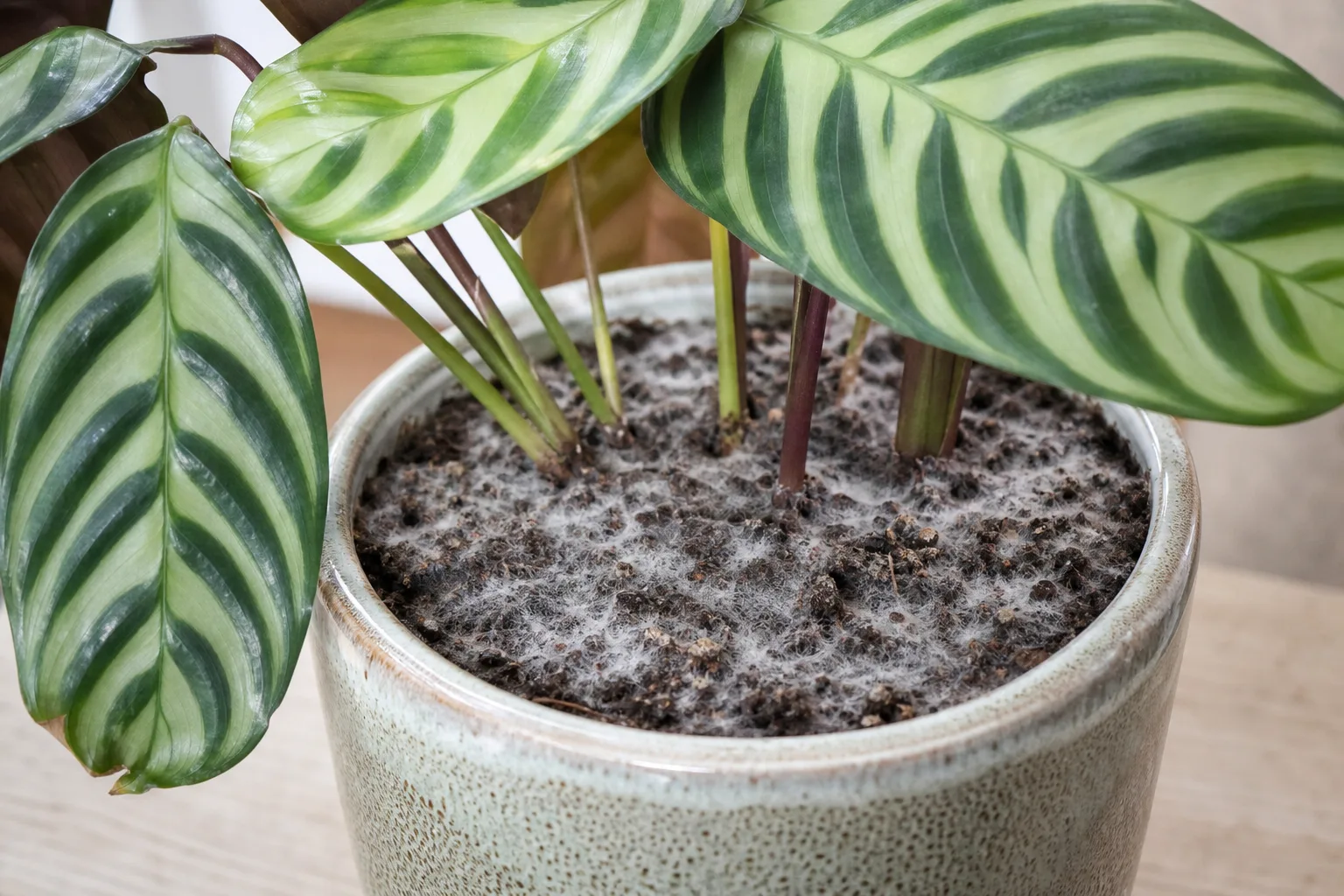
Mold on Soil on Ctenanthe: Causes, Checks & Fixes
This guide covers mold on soil on Ctenanthe. See also the general Mold on Soil guide, watering, and light pages for this plant.
Mold on Soil on Ctenanthe: Causes, Checks & Fixes
Quick answer
Mold on Ctenanthe - the fishbone prayer plant (Ctenanthe burle-marxii) and never never plant (Ctenanthe lubbersiana) - is almost always a moisture and hygiene signal, not a fungus attacking the patterned leaves. The white or gray fuzz you see is typically saprophytic fungus breaking down organic matter in peat- or coco-based mix that has stayed damp on the surface too long.
First step: scrape off the top 1–2 cm of affected soil and discard it, then pause watering until the surface feels beginning-dry at about 2.5 cm depth - the same dryness check in our Ctenanthe watering guide. Do not spray fungicide, repot, or drench the roots on day one. Most Ctenanthe plants look unchanged above the soil line; your job is to dry the surface and fix the watering rhythm that fed the mold.
This page covers cosmetic fungus on wet topsoil. If stems are mushy, the pot smells sour, or lower leaves yellow on saturated mix, route to overwatering and root rot - not scrape-only treatment. For baseline moisture rhythm, see the Ctenanthe overview and soil guide.
What mold on soil looks like on Ctenanthe
On a healthy Fishbone Prayer Plant, the narrow striped leaves may still fold at night and push new rolled shoots from the center while the soil tells a different story. Common patterns:
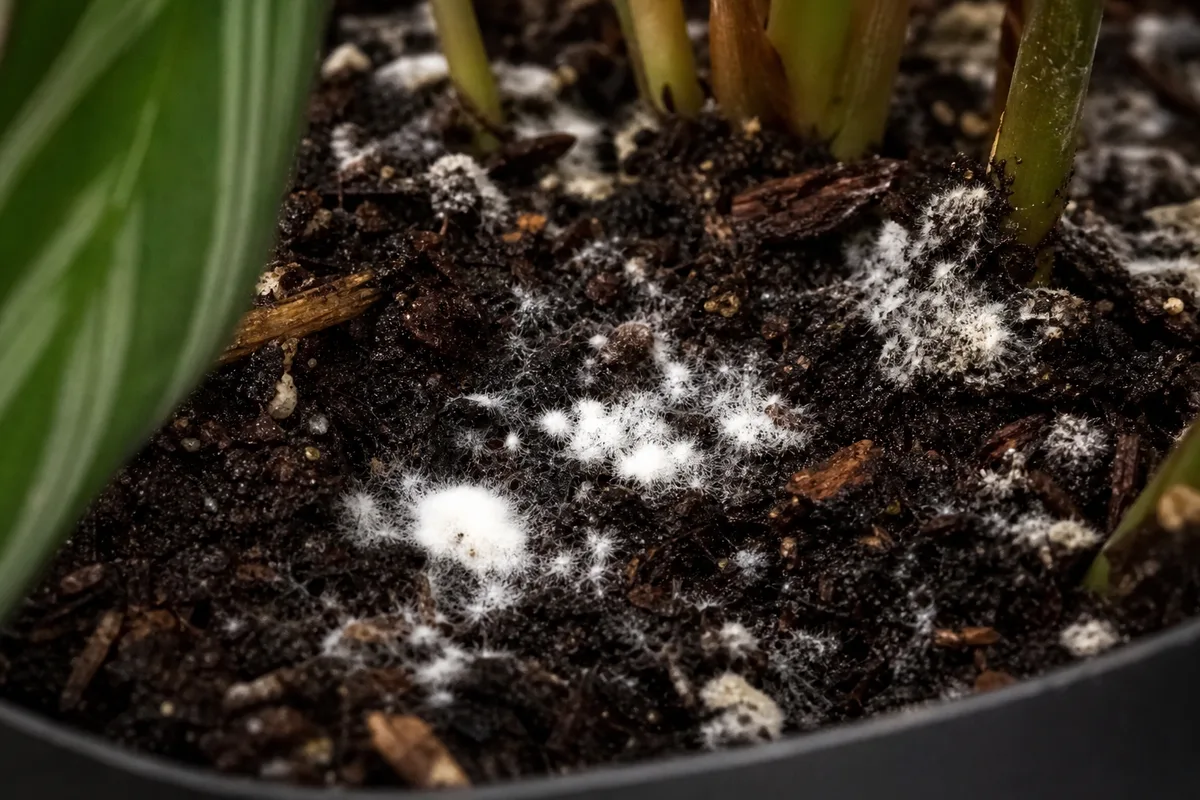
Mold on Soil symptoms on Ctenanthe - compare with healthy tissue on the same plant.
- White, gray, or occasionally yellow-green fuzz on the top of the mix, sometimes spreading to the pot rim or drainage hole openings
- Soil that stays dark and cool at the surface for many days after you water
- Thread-like mycelium that looks cottony when you poke it with a finger
- Decaying leaf bits from old outer leaves that dropped into the upright clump and now mold on the surface
- Small black fungus gnats associated with overwatered houseplants that fly up when you water or move the pot - see our fungus gnats guide when flies and fuzz appear together
The plant itself may still hold leaves upright, fold at night normally, and push new rolled leaves from the center. That is typical for surface mold. Worry more when lower leaves yellow while soil is wet, stems feel soft at the base, or the pot smells sour - those point past cosmetic mold toward root stress.
Not the same thing: green slick on the soil is usually algae, not white mold. Both mean a wet surface, but algae often needs even more constant moisture and low light. Powdery mildew on leaves is a separate issue and rarely starts on potting mix alone.
Why Ctenanthe gets mold on soil
Ctenanthe is a prayer-plant relative in the Marantaceae family that wants evenly moist, well-drained mix - not a swamp. NC State Extension’s genus pages for C. lubbersiana and related Ctenanthe species note that these plants prefer a moist, well-drained humus mix and should be watered when the top inch of soil feels dry - guidance that applies across common sold-as-Fishbone cultivars including C. burle-marxii, even though individual species pages may use different Latin names.
Several Ctenanthe-specific habits make surface mold more likely:
Overwatering from crisp-edge fear. Marantaceae growers often pour extra water when leaf edges brown in dry winter air. Ctenanthe is sensitive to low humidity and tap-water minerals, so the instinct to “keep it moist” is understandable - but a constantly wet surface feeds mold while roots still need oxygen. Humidity is air moisture, not a wet soil line 24/7. Pair a humidifier with airflow and the top-inch dry trigger from the watering guide, not more frequent shallow drinks.
Overhead watering on narrow leaves. Splashing from the top wets foliage and drops organic debris onto the soil. Fallen leaf tips and petiole bases decay quickly in a humid spot and become fungal food.
High humidity without airflow. Ctenanthe wants 50–60% humidity or more, but humidifiers, pebble trays, and grouped plant shelves slow evaporation from the pot surface. Humidity supports the leaves; it does not replace the need to allow the surface to dry between waterings.
Peaty, moisture-retentive mix in dim corners. Many Ctenanthe plants live in medium indirect light where the plant uses water slowly. Organic peat and coco coir hold surface moisture longer than the root zone needs, especially in winter when growth slows and Marantaceae relatives need reduced watering.
Oversized pots. A compact rhizome clump in a large pot means a wide ring of mix that stays wet while roots occupy only the center. Mold appears on that unused wet surface first. Missouri Botanical Garden notes that oversized pots can keep soil wet too long and cause root rot.
Decorative pot covers and cachepots. Outer sleeves that trap runoff keep the bottom of the mix soggy and can wick moisture back to the surface.
Surface fungi are usually not pathogenic to the plant - their growth isn’t usually detrimental to plants. The risk is indirect: a thick mat can crust over and slow water penetration, and the same wet conditions attract fungus gnats whose larvae can stress fine roots when populations explode.
How to confirm the cause
Work through these checks before repotting or spraying:
- Leaf and stem health - Are newest center leaves firm and opening normally? Is the stem base hard when you press near the soil line?
- Surface moisture - Does the top 2.5 cm stay cool and damp five or more days after watering? That confirms the environment mold needs.
- Smell - Musty surface odor fits harmless mold. Sour, swampy smell from deeper in the pot suggests anaerobic wet mix and possible root trouble.
- Debris scan - Lift or blow off fallen leaves on the soil. Mold often starts where decaying tissue meets wet peat.
- Gnat check - Tap the pot. If flies emerge, you have a shared wet-soil habitat; fix drying and hygiene together per the fungus gnats guide.
- Light and season - In low light or winter rest, the same watering schedule keeps the surface wet longer. Stretch intervals when growth slows.
If the plant is firm, leaves are stable, and only the top layer is fuzzy, treat as confirmed surface mold. If stems are mushy or yellowing spreads on wet soil, unpot and inspect roots before assuming the fuzz is cosmetic - see root rot.
First fix for Ctenanthe
Scrape off the top 1–2 cm of moldy mix and discard it in the trash - not the compost pile.
Use a spoon or fork, remove the fuzzy layer plus any visible decaying leaf bits, and expose fresh mix below. Then stop watering until the new surface feels beginning-dry at about 2.5 cm depth - the same threshold in our watering guide.
That single action removes active spores and starts drying the environment mold needs. Do not repot the whole plant, fertilize, or mist leaves on the same day.
Step-by-step recovery
After the first scrape and dry-down, work in this order if mold persists or gnats appear:
- Refresh the top layer - Replace scraped soil with a thin layer of dry, similar potting mix (same peat- or coco-based, well-drained blend per our soil guide). Do not pack it down hard.
- Adjust watering - Water thoroughly when the top inch begins to dry, then empty the saucer within 30 minutes. In winter, stretch intervals toward 10–14 days if the surface stays wet too long.
- Switch delivery if needed - Bottom-water from a saucer for 20–30 minutes so roots drink while the surface stays drier. Wipe the rim dry afterward.
- Remove debris weekly - Pull spent leaves from the pot before they mold. Ctenanthe sheds outer leaves normally; leaving them on wet soil feeds fungus.
- Improve airflow - Space pots slightly on the shelf, run a gentle fan in the room, or open a vent briefly so humid air does not stagnate over wet mix. A damp crowded crown invites spotting on prayer-plant relatives.
- Brighten indirect light slightly - If the plant sits in deep shade, move it toward medium indirect light so the pot dries more predictably. Avoid direct sun, which bleaches fishbone patterning.
- Address gnats if present - Yellow sticky traps catch adults; letting the top 1–2 inches dry breaks the egg-laying cycle. Treat larvae only if flies remain after two weeks of dry surface habits.
- Repot only when chronic - If mold returns within days after repeated scrapes, the whole mix may stay too wet. Repot in spring into fresh, well-drained mix in a pot sized to the root ball - not as a day-one response.
Skip cinnamon, hydrogen peroxide, and commercial fungicide unless mold keeps returning after moisture correction. Those treat symptoms; Ctenanthe needs a drier surface rhythm.
Recovery example (editorial observation)
February 2026, east-facing room with humidifier: A 14 cm C. burle-marxii in peat-coco mix showed white fuzz across the top inch four days after a top-water aimed at preventing crisp edges. Center leaves were still firm and folding at night; spent narrow leaves sat decaying on the surface. We scraped the layer, removed litter, paused watering for 11 days until the top inch felt dry, then bottom-watered 25 minutes with saucer emptied immediately. No new fuzz in three weeks; one new center roll opened firm in the second week. The pattern matches extension guidance - surface fungus retreats when the top layer dries - but your interval depends on light, pot size, and how aggressively the humidifier stalls rim evaporation.
Recovery timeline
Cosmetic mold should stop reappearing within one to two weeks once the top layer dries between waterings and debris is cleared.
Fungus gnat counts often drop over two to four weeks as overlapping generations fail without moist surface egg sites.
Plant recovery is judged by new center leaves, not old foliage. Expect stable or improving new rolls within two to three weeks after watering correction. Existing yellow or crisp edge damage from earlier overwatering will not reverse.
Worsening signs: mold returns within 48–72 hours of scraping, lower leaves yellow on wet soil, or stems soften - schedule a root inspection within the week and review overwatering.
Lookalike symptoms to rule out
| What you see | Likely cause | What to do |
|---|---|---|
| White or gray cottony fuzz on soil only; firm stems | Harmless surface mold | Scrape, dry surface, fix watering - stay on this page |
| Flat green slick on soil | Algae in low light + constant surface moisture | Dry surface; brighten indirect light slightly |
| Tiny flies, larvae in top inch; may or may not see fuzz | Fungus gnats on wet mix | Dry surface; see fungus gnats |
| White dust on leaf blades, not the pot | Powdery mildew | Improve airflow; avoid wetting foliage when watering |
| Hard white specks in dry mix | Mineral or perlite glare | Not fuzzy; does not spread when misted |
| Soft stem base, heavy wet pot, sour smell | Root rot / overwatering | See overwatering and root rot |
| Crisp leaf edges on a light dry pot | Underwatering or low humidity | See underwatering or low humidity |
Overwatering can kill roots and cause wilting despite wet soil - not solved by scraping alone.
What not to do
Do not keep soil constantly wet because the plant “likes humidity” - humidity is air moisture, not a wet surface 24/7. Avoid overhead soaking that leaves puddles on the mix. Do not repot into a larger container to fix mold; extra wet mix makes recurrence likely.
Do not fertilize a plant you are correcting for wet soil - salts on damp roots add stress. Skip heavy fungicide drenches for harmless white mold on healthy plants. Do not ignore gnats; they signal the same moisture mistake even when leaves look fine.
How to prevent mold on soil next time
Build habits that match how Ctenanthe actually dries in your home:
- Check before watering - Top inch beginning-dry in growth; slower in winter when growth slows per the watering guide.
- Use appropriate pot size - Roots should fill most of the container without a wide wet margin.
- Ensure drainage - Open holes, empty saucers, and no standing water in cachepots.
- Clean the surface - Remove fallen leaves promptly; wipe algae from rims.
- Pair humidity with airflow - Humidifier plus stagnant air equals mold; a light fan or spaced pots helps.
- Bottom-water when top mold is recurrent - Keeps roots hydrated while the surface stays drier between drinks.
When mold, gnats, and yellow lower leaves appear together, treat it as one wet-soil problem - not three separate crises.
Ctenanthe care cross-check
If mold keeps returning, compare your routine to what this species needs:
| Checkpoint | Target for Ctenanthe | Mold link if wrong |
|---|---|---|
| Water trigger | Top inch beginning-dry | Surface never dries → mold |
| Mix | Moisture-retentive but well-drained peat or coco blend | Heavy soggy peat → slow surface drying |
| Light | Medium to bright indirect; no direct sun | Deep shade → slow evaporation |
| Humidity | 50–60%+ with airflow | Stagnant humid air → surface stays wet |
| Pot | Sized to roots; drainage open | Oversized or blocked pot → chronic wet mix |
Fix the row that fails your home setup before buying new products.
When to worry
Surface mold on firm plants is low urgency. Escalate when:
- Mold returns within days after repeated scrapes and dry-down attempts
- Mix smells sour or fermented
- Stems soften at soil line or crown collapses
- Lower leaves yellow in batches while soil is wet
- Wilting happens despite moist mix - possible root damage from chronic saturation
In those cases, unpot, inspect roots, and treat as potential root rot alongside surface cleanup - not mold alone.
Related Ctenanthe guides
- Overview - species care hub: light, water, humidity, soil
- Watering - top-inch dry trigger and seasonal rhythm
- Soil - peat-coco blend for Marantaceae drainage
- Overwatering - yellow leaves on heavy wet pots
- Root rot - mushy stems and sour saturated mix
- Fungus gnats - flies plus damp surface habitat
- Underwatering - crisp edges on a light dry pot
- Low humidity - brown tips without wet soil
Conclusion
Mold on Ctenanthe soil looks alarming but is usually harmless saprophytic fungus telling you the surface has stayed wet too long. Scrape, dry, remove leaf litter, and adjust watering to match how fast your pot actually dries in your light and season. Reserve repotting and root inspection for cases where stems soften, gnats persist, or mold returns immediately. When escalation signs appear, switch to the root rot guide - on this Marantaceae plant, fixing moisture at the soil line prevents both the fuzzy surface and the root decline that follows if wet habits continue.