Best Soil for Ctenanthe: Mix, Drainage & Repotting
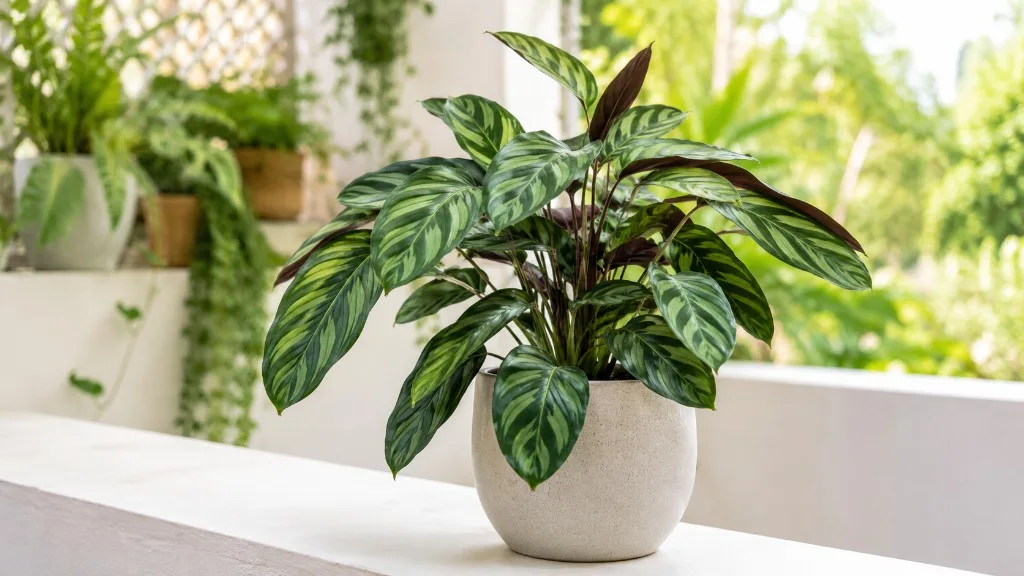
Best Soil for Ctenanthe: Mix, Drainage & Repotting
Best Soil for Ctenanthe: Mix, Drainage & Repotting
Best soil for Ctenanthe is not a single bag off the shelf - it is a balance between two demands that pull in opposite directions. Ctenanthe burle-marxii and its relatives in the Marantaceae family evolved on the forest floor of tropical Brazil, where the substrate stays humus-rich, lightly moist, and airy beneath a canopy that filters rain and sun. Indoors, you are trying to recreate that wrung-out-sponge feel: enough moisture for fine roots to drink steadily, enough air pockets for those same roots to breathe, and enough structure so the mix does not collapse into a dense, waterlogged block after six months of watering.
The practical default for most homes is a peat-based or coco coir base amended with perlite (and optionally orchid bark for extra aeration). A reliable starting ratio is 2 parts peat or coco coir, 1 part quality houseplant potting mix, and 1 part perlite by volume. Pair that with a pot that has a drainage hole, size it only 1–2 inches larger than the root ball at Ctenanthe repotting guide, and refresh the mix every one to two years before compaction and peat breakdown turn a good system into a root-stress trap.
This guide covers why that balance matters, exact mix recipes you can batch at home, how to test whether your current setup drains correctly, pot choice, repotting steps, and the soil mistakes that cause brown leaf edges long before you notice anything wrong underground.
Why Soil Quality Makes or Breaks Ctenanthe Care
Ctenanthe is often sold as a forgiving prayer plant - and compared with the most delicate Calatheas, that reputation is fair. The fishbone-patterned leaves of Ctenanthe burle-marxii and the silver-striped forms of Ctenanthe setosa tolerate a slightly wider margin of error on humidity and light. What they do not forgive is a root zone that swings between drought and saturation, or a mix that loses structure and traps stale water around rhizomes.
Soil is the control system for every other care decision. Light tells the plant how fast it photosynthesizes; water tells it when to drink; soil decides how long moisture stays available and how much oxygen reaches the roots between drinks. When the mix is wrong, watering becomes guesswork. You might water on a sensible schedule and still see yellow lower leaves, limp stems, or crisp brown edges because the pot holds water at the bottom while the surface looks dry - or because peat has compacted and water runs down the sides without rewetting the root ball.
Missouri Botanical Garden describes Ctenanthe burle-marxii as native to Espírito Santo in southeastern Brazil, growing as a rhizomatous perennial in tropical woodland understory. That habitat clue is the whole soil story: these are not desert plants, not epiphytes on bare bark, and not bog plants sitting in standing water. They want organic, moisture-retentive, well-drained forest floor - a combination indoor growers achieve by blending water-holding components with drainage amendments and choosing pots that let excess water escape.
Treat soil as infrastructure, not decoration. A good Ctenanthe mix should still feel slightly open when you squeeze a handful - not sandy, not mud.
What Ctenanthe Needs From Its Root Zone
Ctenanthe grows from rhizomes - horizontal underground stems that send up shoots and absorb moisture along their length. Rhizomes are less fragile than the finest hair roots of some Calatheas, but they still rot quickly when surrounded by anaerobic, soggy mix for days at a time. They also stress when the substrate dries hard enough to shrink away from the pot wall, leaving channels where water bypasses the root mass entirely.
The root zone should deliver four things consistently:
Even moisture without waterlogging. The top inch can dry slightly between waterings, but the deeper mix should stay lightly damp during active growth - not wet enough to squeeze water out, not dry enough to pull away from the pot.
Stable aeration. Air pockets let roots exchange gases. Compacted peat, fine silt-heavy garden soil, or a mix that has broken down for three years without refresh loses those pockets. Roots then behave as if they are overwatered even when you water less.
Gentle organic structure. Decomposed leaf litter and humus in the wild buffer moisture and supply slow nutrients. Indoors, peat or coco coir plus a small amount of compost or worm castings plays a similar role without turning the pot into a nutrient hot zone.
Room for rhizome spread. Ctenanthe clumps outward over time. A mix that is too dense or a pot that is too shallow restricts rhizome movement and slows new shoot production.
If you are deciding whether your current setup works, skip the label on the bag and watch the plant. Healthy Ctenanthe pushes firm new leaves with good pattern contrast, folds and unfolds on its daily prayer rhythm, and dries the pot on a predictable rhythm that matches your room - not in twelve hours one week and nine days the next.
The Best DIY Soil Mix for Ctenanthe
The best soil for Ctenanthe in most indoor setups is one you assemble or amend yourself. Pre-mixed “houseplant soil” alone is often too dense or too variable batch to batch. Pre-mixed “succulent and cactus” mix is too fast-draining for a plant that wilts when the root ball dries completely. The sweet spot sits between those categories: moisture-retentive base + drainage amendment + optional bark for longevity.
Two recipes cover most situations. Use the simple three-ingredient mix if you are new to blending soil or repotting for the first time. Use the amended houseplant version if you already have a bag of general potting mix and want to upgrade it without buying five separate components.
Simple Three-Ingredient Recipe for Beginners
This is the mix most experienced prayer-plant growers converge on, stated by volume:
- 2 parts peat moss or coco coir - moisture retention and organic structure
- 1 part perlite - drainage and aeration
- 1 part quality houseplant potting mix - baseline fertility and texture
Combine in a clean bucket or tub. Wear a dust mask when handling dry peat or perlite. Moisten slightly as you blend so dust stays down and you can feel whether the texture is even. The finished mix should look speckled with white perlite particles, crumble when you open your hand, and hold together only lightly when squeezed.
For a single 6-inch pot repot, “parts” can be literal scoops from a yogurt container or trowel - consistency within the batch matters more than absolute precision. For multiple plants, batch a full bucket so every pot gets the same ratio.
Optional fourth ingredient: 1 part fine orchid bark substituted for half the perlite if you run hot and dry indoors or use plastic pots that retain moisture longer. Bark breaks down slowly and keeps large air channels open. Skip bark if your home is already humid and the mix dries slowly.
Amended Houseplant Mix for Faster Drainage
If you already have a bag of all-purpose indoor potting soil, you do not need to throw it away. Amend it:
- 60% existing houseplant potting mix
- 20% perlite
- 20% peat moss or coco coir
That ratio lightens dense commercial mixes that often contain too much fine compost and not enough coarse material for Marantaceae roots. If the bag label mentions “moisture control” gel crystals, treat it as slightly wetter than normal and increase perlite to 30% instead of 20%.
Can you use regular potting soil for Ctenanthe? Yes - but rarely straight from the bag without perlite or bark. Unamended mix compacts within a season in a small pot, especially under a consistent watering routine. Amending costs less than replacing a stressed plant and takes five minutes.
Do not use straight cactus mix, pure orchid bark, or garden bed soil. Cactus mix dries too fast for even moisture. Pure bark lacks fine structure for rhizome contact. Garden soil introduces pests, compacts heavily, and drains unpredictably indoors.
Understanding Each Soil Ingredient
Knowing what each component does helps you adjust when your room differs from a generic care guide.
Peat moss holds water in small pores and resists compaction initially. It acidifies slightly over time, which suits Ctenanthe’s preferred pH range of roughly 5.5 to 6.5. Peat also decomposes - usually within one to two years in an actively watered pot - which is why refresh matters even when the plant is not root-bound.
Coco coir is the sustainable alternative with similar water retention. It rewets more easily than peat when it dries slightly, which helps if you occasionally let the top layer go dry. Coir is less acidic; most houseplant coir products work fine without pH adjustment for Ctenanthe.
Perlite is expanded volcanic glass - lightweight, sterile, and full of air pockets. It does not hold meaningful moisture itself; it creates pathways for water to drain and for oxygen to persist after watering. More perlite means faster dry-down. Less perlite means more forgiveness if you water heavily or use a cachepot.
Orchid bark adds chunkier structure. Useful in warm, bright setups where the plant drinks aggressively. Less critical in cool, dim winter rooms where drying already slows.
Vermiculite holds more water than perlite. Some growers swap half the perlite for vermiculite in very dry homes. In humid bathrooms or sealed terrarium-style setups, vermiculite can tip the mix toward staying wet too long - use sparingly.
Worm castings or compost - a handful per quart of mix, not a main ingredient - add gentle organic matter. More than 10–15% compost by volume increases compaction risk and salt buildup from repeated watering with hard tap water.
Drainage Requirements for Prayer Plant Relatives
“Well-draining” does not mean ” dries out in a day.” For Ctenanthe, drainage means water moves through the pot within minutes of a thorough watering, exits the drainage hole, and leaves behind evenly moist - not saturated - mix.
Prayer plants share Marantaceae biology: fine roots near the surface, rhizomes slightly deeper, and low tolerance for standing water at the pot bottom. Unlike true aroids grown in chunky bark-heavy mixes, Ctenanthe also punishes full dry-out because its native substrate never baked in direct sun. The drainage goal is fast exit of excess, not fast loss of all moisture.
Three factors control drainage speed together:
Mix texture - perlite and bark content, plus age of the mix.
Pot material and shape - terracotta breathes and dries faster; glazed ceramic and plastic retain moisture longer.
Pot size relative to root mass - oversized pots hold a large volume of wet mix the roots never reach, creating a permanent swamp zone below the active root ball.
A drainage hole is non-negotiable for long-term indoor Ctenanthe care. No hole means you are managing an invisible water table at the bottom of the pot. Even skilled growers lose rhizomes that way. Decorative cachepots are fine only if the inner nursery pot lifts out and you empty runoff every time.
The myth that gravel or pot shards in the bottom improve drainage has been debunked in University of Missouri Extension houseplant guidance: fix drainage in the mix and drainage hole, not with a coarse bottom layer that can create a perched water table. Skip the rock layer. Fix drainage in the mix and the hole instead.
How to Test Soil Drainage Before You Repot
Before you commit a Ctenanthe to a new mix, run a two-minute drainage check on a sample batch. This saves repotting into something that floats or turns to mud.
- Fill a small cup or spare pot with your blended mix, tamped lightly - not packed hard.
- Water until water runs freely from the bottom (use a pot with a hole) or until the surface is fully saturated (if testing in a cup, poke holes afterward).
- Time how long water sits on the surface before soaking in. More than 30–60 seconds of pooling on a fresh mix suggests too little perlite or too much fine compost.
- After drainage stops, squeeze a handful of mix from the middle. It should feel damp and crumbly, not dripping.
- Weigh or observe the sample after 24 hours at room temperature. It should be partially dry on top but not dust-dry throughout. If it is still soggy at depth, add perlite before repotting the plant.
For the plant already potted, a practical field test: water thoroughly, then lift the pot. Water should exit within a few minutes. If the saucer fills repeatedly or the pot feels heavy days later while the surface looks dry, the mix has likely compacted or the pot is too large. Inspect roots at the next repot rather than adding more water.
Another useful check after repotting: the first watering should sink in evenly, not race down the gap between root ball and pot wall. If water channels, break up the old root ball surface lightly or water in small passes until the mix swells against the sides.
pH, Minerals, and Water Quality
Ctenanthe prefers slightly acidic soil; NC State Extension lists acid to neutral pH (<6.0 to 8.0) as suitable for C. lubbersiana. Standard peat-based mixes land close enough that hobbyists rarely need to test or adjust pH with sulfur or lime. Coco coir mixes may sit slightly higher; they still work if drainage and moisture rhythm are correct.
What matters more day to day is soluble salt buildup from fertilizer and hard tap water. Ctenanthe leaf edges are sensitive - brown tips often trace to mineral-heavy water or accumulated salts in old mix, not necessarily wrong NPK fertilizer. If crust whitens the soil surface or pot rim, flush the pot with plain water until runoff runs clear, or refresh the mix at repotting instead of stacking more products on top.
Soft or filtered water reduces edge burn in homes with hard municipal supplies. Rainwater works well where collection is practical. If you must use tap water, let it sit overnight to off-gas chlorine - it will not remove minerals, but it removes one stress variable.
When refreshing mix, do not assume fertilizer replaces good substrate. A tired, compacted peat block cannot be saved with monthly feeding. New mix restores air; conservative feeding after repotting handles nutrition once roots recover.
Choosing the Right Pot for Ctenanthe Soil
Soil and pot work as a single system. The same mix behaves differently in terracotta versus plastic.
Drainage hole: Yes, always, for the pot the roots live in.
Size: Match pot volume to root mass, not leaf spread. Ctenanthe forms a clump that is wider than it is deep, but roots still need lateral room for rhizomes. At repotting, choose a pot 1–2 inches (2.5–5 cm) wider than the previous one - not a dramatic jump. An oversized pot holds excess wet mix and slows drying unevenly.
Depth: Standard nursery pot depth is fine. Avoid extremely shallow bowls unless you compensate with extra perlite and careful watering.
Material: Terracotta and unglazed ceramic dry faster - helpful in humid, low-light bathrooms where mix stays wet. Plastic and glazed pots retain moisture - helpful in dry, heated living rooms if you tend to underwater. Pick material based on which direction your mistakes usually go.
Cachepots: Display pots without holes are acceptable only as outer shells. Water the inner pot, drain completely, then return it to the cachepot dry. Never let the bottom sit in a permanent puddle.
Root-bound Ctenanthe shows roots circling the drainage holes or popping through surface cracks - but Marantaceae tolerate being slightly snug better than sitting in a ocean of fresh, unused mix. When in doubt, size up modestly.
When to Repot Ctenanthe
Repot when the soil system or root volume demands it - not on a fixed calendar alone. Healthy Ctenanthe in a good mix often needs refresh every 12–24 months, sometimes longer if growth is slow and the mix still drains well.
Repot when you see several of these signs together:
- Roots visible at drainage holes or circling the surface
- Water runs straight through without rewetting the root ball, or water sits on top indefinitely
- Mix has compacted, shrunk, or smells sour / stagnant
- Growth stalled during warm months despite adequate light and water
- Plant dries out unusually fast - often a sign roots fill the pot and have little mix left
- Salt crust or algae on the soil surface that flushing does not fix
Do not repot purely because of a few brown leaf tips if the mix drains well and roots look white and firm - fix water quality and humidity first. Do not repot a severely wilted plant until you know whether the cause is dry soil, rot, or shock - sometimes inspection through the drainage hole or gentle slip-out tells you which.
Best Timing in the Growing Season
The best time to repot Ctenanthe is spring through early summer, when active growth resumes and roots repair quickly. Longer days and warmer room temperatures support new shoot production within two to four weeks after a gentle repot.
Fall repotting is acceptable if the mix is clearly failing - sour smell, persistent soggy center, confirmed rot - because leaving a plant in dangerous soil is worse than a slightly off-season transplant. Avoid purely elective repotting in late fall and winter when growth slows and wet mix stays cold and stagnant longer.
After repotting, skip fertilizer for three to four weeks while roots settle. Keep light stable - no sudden move to a brighter window on the same day as repotting.
When the plant is not root-bound but the surface compacts or salts build, you can refresh the top 2–3 cm of mix without a full repot - remove the crusty layer, replace with fresh blended mix, water lightly to settle, and flush if salts were the main issue. That bridge tactic works for one season at most. If peat smells sour below the surface or water channels straight through the root ball, full repot into fresh mix is the safer call.
Step-by-Step Repotting for Healthy Roots
Repotting is straightforward when you prepare materials first: fresh mix, a appropriately sized pot, gloves, and space to work over newspaper or outdoors.
- Water lightly one day before if the root ball is bone dry - slightly moist roots flex; soggy roots tear. If the plant is already wet from overwatering on Ctenanthe, skip pre-watering and proceed carefully.
- Slip the plant out by tipping the pot and supporting the base. If stuck, run a knife around the inner rim - never yank by stems.
- Inspect roots. Healthy Ctenanthe roots are pale cream to light tan and firm; NC State Extension recommends a humus or all-purpose potting mix with orchid bark and perlite to keep that root zone airy. Mushy brown roots with a sour smell indicate rot - trim affected sections with clean scissors, dust cuts if you wish, and repot into fresh mix only (not reused material).
- Loosen the outer 1–2 cm of old mix if it is compacted, but avoid destroying the entire root ball. Ctenanthe recovers faster with a modest root disturbance than with a bare-root scrub unless rot forced full cleaning.
- Add fresh mix to the new pot so the crown sits at the same depth as before. Burying rhizomes too deep invites stem rot; sitting too high exposes roots to dry air.
- Fill around the sides, tapping the pot gently to settle mix without packing it brick-hard.
- Water thoroughly until runoff clears air pockets. Empty the saucer.
- Place back in the same light conditions for two weeks before optimizing placement.
Division optional: mature clumps with multiple shoots can be split at repotting for propagation. Each division needs roots and at least one healthy shoot. Plant divisions in the same mix ratio as the parent.
Signs Your Ctenanthe Soil Is Failing
Soil problems show up in leaves before roots are visible. Learn to read the pattern:
Yellow leaves with wet, heavy pot - often excess moisture, compacted mix, or no drainage. Check deeper than the dry surface.
Crisp brown leaf edges with dry, lightweight pot - underwatering on Ctenanthe or hydrophobic compacted peat that repels water. The plant dries even when you think you watered.
Sudden wilt with moist soil - possible root rot on Ctenanthe from anaerobic conditions. Inspect roots immediately.
Slow prayer movement or failure to fold at night - stress signal that can include root-zone issues alongside humidity and light. Do not ignore if Ctenanthe watering guide changed recently.
Mold or fungus gnats on the surface - mix staying wet too long or high organic content breaking down. Reduce watering frequency slightly, add perlite at repot, and improve airflow.
White mineral crust - salt buildup; flush or refresh mix.
When multiple leaves yellow at once in a previously healthy plant, suspect soil and roots before fertilizer. Prayer plants decline fast when the root zone loses oxygen.
Common Ctenanthe Soil Mistakes
Even experienced growers repeat a few errors with Marantaceae:
Using unamended bagged mix without perlite. It works for a few months, then compacts.
Oversized pots “so it can grow into it.” Excess wet mix rots rhizomes. Size up incrementally.
Rock layers in the bottom. Does not fix drainage; often worsens perched water.
Repotting into dry mix and flooding once. Water in stages so coir and peat hydrate evenly.
Reusing old mix from a rotted plant without sterilizing or replacing. Fungal pathogens persist in organic substrate.
Burying the crown too deep after repotting because the new mix settled. Check depth after the first watering.
Ignoring the cachepot. Runoff pools invisibly and the inner pot reabsorbs it.
Switching to chunky aroid mix because it worked for Monstera. Ctenanthe dries too fast and leaf edges crisp.
Repotting and fertilizing the same week. Fresh mix plus full-strength feed burns recovering roots.
Each mistake is fixable. Most start with replacing or amending the mix and correcting pot size or drainage.
Troubleshooting Soil-Related Leaf Problems
Use this as a decision guide - not a diagnosis for every pest or disease.
| Symptom | Likely soil-linked cause | First action |
|---|---|---|
| Lower yellow leaves, soft base | Overwatering, compacted mix, no drainage | Check roots; repot with perlite-heavy blend if rot present |
| Brown crispy edges, dry pot weight | Underwatering or hydrophobic old peat | Submerge pot briefly to rewet, then repot if mix won’t rehydrate |
| Yellowing across many leaves, sour smell | Root rot from soggy mix | Trim rot, fresh mix, smaller pot if roots reduced |
| Stunted new growth, water runs through | Root-bound or peat collapsed | Repot one size up with fresh mix |
| Brown tips only, otherwise healthy | Salts / hard water | Flush; consider filtered water; top-dress refresh |
| Wilting after repot | Root damage, wrong depth, dry mix | Shade slightly, maintain even moisture, no fertilizer |
If symptoms persist after soil correction, review light and humidity - Ctenanthe edges also burn in dry air independent of mix. Fix the root zone first because bad soil makes every other variable harder to interpret.
Seasonal Soil and Repotting Adjustments
Soil behavior changes with season even when the recipe stays the same. In warm, bright months, roots grow actively and the mix dries faster - your perlite-heavy blend may need slightly more frequent watering, not more organic matter. In cool, dim months, the same pot holds moisture longer. Reduce watering before you change the mix unless drainage has objectively failed.
Winter is a poor time for elective repotting, but it is a good time to plan mix batches and inspect whether last summer’s watering left salt crust. Spring repotting aligns with natural growth surge.
If you move Ctenanthe to a humid bathroom for winter, plastic pots and coir-heavy mix stay wet longer - consider backing off coir ratio or using terracotta. If you move to a dry heated room, a slightly richer moisture-retention blend (less perlite, not none) prevents rapid edge crisping.
Outdoor summer shade living is fine in warm climates if the pot drains and the mix is not garden soil. Bring indoors before cold nights; do not repot immediately after the stress move.
Ctenanthe vs Calathea and Maranta Soil Needs
All three belong to Marantaceae and share the moist-but-aerated principle. Differences are degree, not kind.
Calathea often demands tighter moisture consistency and reacts faster to fluoride and dry air. Many growers use similar peat-perlite blends but water Calatheas on a stricter even-moist schedule and avoid letting them dry as much between drinks.
Maranta (Maranta leuconeura) tolerates a similar mix; trailing habit means shallow pots dry fast on the surface - watch for that pattern.
Ctenanthe generally sits in the middle: more moisture retention than a chunky aroid mix, slightly more forgiveness than the fussiest Calatheas, but still vulnerable to swampy conditions. If your Calathea mix is 2:1 peat to perlite and works, Ctenanthe usually thrives in the same blend. If you grow Calathea in an ultra-chunky bark-heavy mix, add finer peat or coir for Ctenanthe so the root ball does not channel dry.
Do not assume one prayer plant’s success transfers without watching dry-down speed in your pots and rooms.
Conclusion
The best soil for Ctenanthe holds moisture like a damp sponge, drains like a functional houseplant mix, and gets refreshed before peat collapse turns good roots into stressed ones. Start with 2 parts peat or coco coir, 1 part houseplant mix, and 1 part perlite, adjust perlite up if your pots stay wet too long, and always pair the blend with a drained pot sized one to two inches up from the root ball. Repot in spring when roots crowd or mix fails the drainage test - not every time a leaf edge browns.
Soil is the foundation Ctenanthe builds on. When the root zone breathes and stays evenly moist, watering, humidity, and light adjustments become simpler and the plant’s daily prayer movement stays regular - the quiet sign that what is happening below the surface is working.
When to use this page vs other Ctenanthe guides
- Ctenanthe overview - Start here for whole-plant context before deep-diving this topic.
- Ctenanthe problems hub - Jump to symptom-specific fix guides when this care topic does not resolve the issue.
- Root Rot on Ctenanthe - Escalate here when soil adjustments are not enough.
- Mold on Soil on Ctenanthe - Escalate here when soil adjustments are not enough.