Yellow Leaves on Ctenanthe: Causes, Checks & Fixes
Quick answer
Yellow leaves on Ctenanthe usually mean the mix has stayed wet too long-especially in low light-or the plant is shedding older lower leaves on a healthy clump. First step: press into the top inch of mix and lift the pot; if soil is soggy and heavy, pause watering and check drainage before fertilizing or repotting.
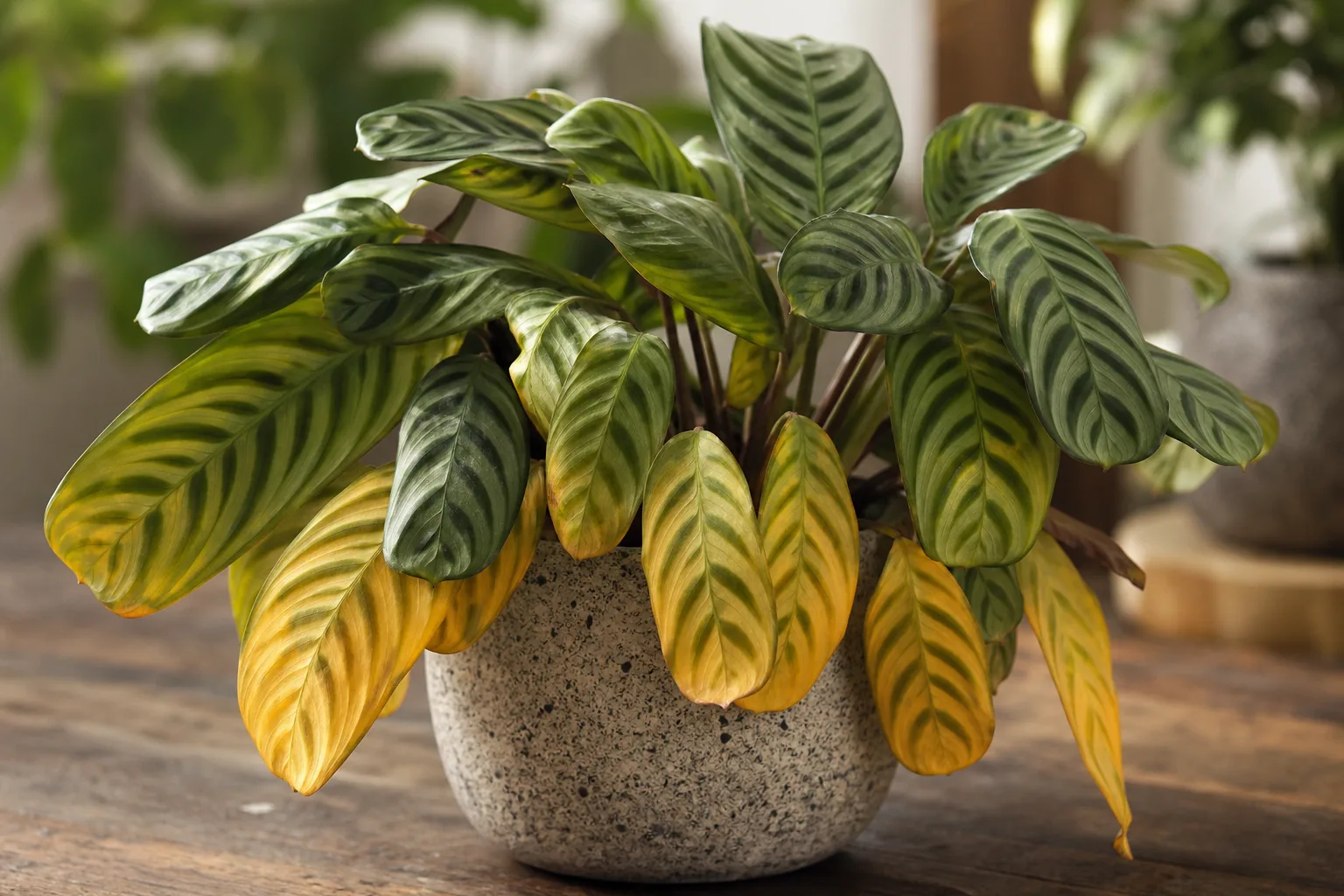
Yellow Leaves on Ctenanthe: Causes, Checks & Fixes
This guide covers yellow leaves on Ctenanthe. See also the general Yellow Leaves guide, watering, and light pages for this plant.
Yellow Leaves on Ctenanthe: Causes, Checks & Fixes
Quick answer
Yellow leaves on Ctenanthe-fishbone C. burle-marxii, silver-banded C. oppenheimiana, or gold-splashed C. lubbersiana-are a symptom, not one diagnosis. These Marantaceae prayer plants form upright clumps from rhizomes; the oldest leaves at the outside of the clump yellow and drop while new spears emerge from the center. Stress yellowing looks different: multiple leaves fading together, limp foliage on a heavy wet pot, or pale upper leaves on stretched stems in a dim corner.
First step: check the top inch of mix and pot weight before changing anything else. NC State Extension recommends watering Ctenanthe when the top inch of soil feels dry-the same depth check in the watering guide. If the surface is cool and clingy and the pot feels heavy for days, stop watering and confirm drainage. If the mix is dusty, the pot is light, and leaves curl by afternoon, the plant needs a thorough drink with full drainage-not more yellow-leaf fertilizer.
Do not repot, feed, or move into direct sun on day one. Match the fix to what you find. Baseline species context: Ctenanthe overview.
What yellow leaves look like on Ctenanthe
Healthy Ctenanthe keeps patterned blades crisp while fishbone stripes, silver bands, or gold splashes stay vivid. Yellowing changes that picture in ways that narrow the cause.
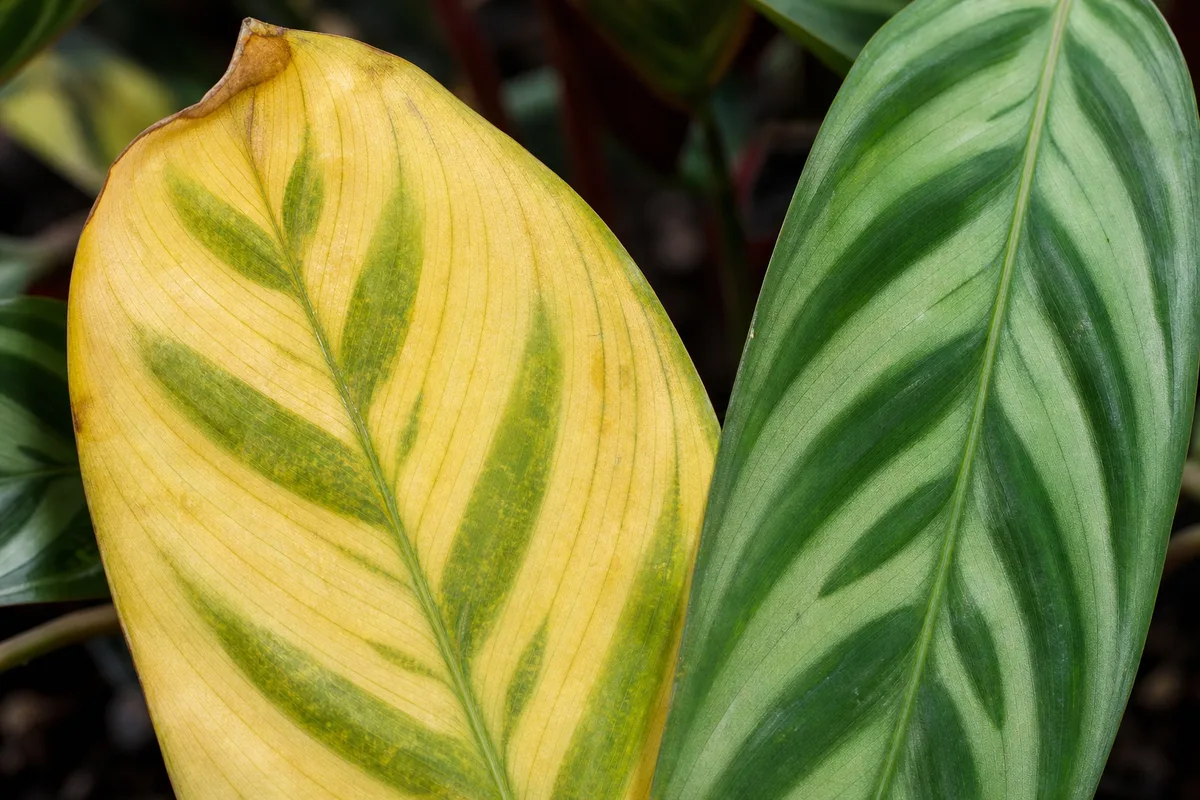
Yellow Leaves symptoms on Ctenanthe - compare with healthy tissue on the same plant.
Normal lower-leaf aging shows as one or two outermost leaves at the base of the clump turning evenly yellow over weeks or months. The rest of the plant stays firm; new center growth stays green. On compact C. burle-marxii, the clump may look like a small fountain-oldest blades at the bottom fade while newer upright leaves hold color. This is senescence, not crisis.
Overwatering and root stress-the most common stress pattern indoors-brings yellow lower leaves on a heavy, wet pot. Foliage may look limp even though soil is damp. Mix stays dark and cool at depth for 10+ days after the last drink. NC State notes that yellowing leaves may result from overwatering on Ctenanthe, especially when drainage is poor or the pot is oversized. Sour smell from drain holes, fungus gnats, or soft stems at the soil line mean escalate to overwatering and root rot checks.
Low light plus slow dry-down produces pale yellow-green wash on several leaves, smaller new blades, and longer gaps between new growth. The trap: you water on a summer calendar while the plant sits in a dim corner-metabolism slows, mix stays wet, and lower leaves yellow even though you think you are being careful. See not enough light when leggy pale growth dominates.
Underwatering yellows less often than on succulents but appears when repeated dry cycles stress fine roots: crisp margins may precede yellow patches, leaves curl tight by afternoon on a light, dusty pot, and the top inch stays bone dry for many days. Brown leaf margins on C. oppenheimiana may indicate underwatering alongside curl.
Low humidity more often drives brown tips before whole leaves yellow-but chronic dry winter air can dull foliage and weaken older leaves until they fade yellow-tan. Pair with a hygrometer reading below 50 percent and the low-humidity guide.
Nyctinasty confusion: Ctenanthe leaves folding upward at night is normal prayer-plant movement. Daytime yellowing with limp roll on wet soil is not nyctinasty-see curling leaves when roll persists after dark.
Why Ctenanthe gets yellow leaves
Ctenanthe evolved on humid Brazilian forest floors where roots sit in moist, airy soil under filtered light-not in soggy cachepots or bone-dry peat for weeks. The genus wants steady moisture with a brief dry-down at the surface, which is a narrower window than pothos offers and why yellow leaves often trace to water rhythm before mystery disease.
Overwatering in low light (most common indoor cause)
Ctenanthe in a dim spot dries slowly. Many growers keep a summer watering habit through winter or after moving the pot away from a window. Mix stays saturated; fine roots suffocate; lower leaves yellow first because the plant abandons older tissue when it cannot support the whole clump. NC State places Ctenanthe in a moist, well-drained mix and notes that yellowing leaves may result from overwatering when soil stays waterlogged. Oversized pots amplify the problem-extra mix holds water around a small root ball for weeks.
Natural aging on a clumping prayer plant
Unlike a single-stem foliage plant, Ctenanthe grows as an upright clump. Oldest petioles sit at the outside; they yellow and drop while rhizomes push new shoots from the center. Missouri Botanical Garden notes that when new leaves appear, old leaves often turn yellow and fall off as a normal balancing process-a pattern that confuses owners who expect every leaf to last indefinitely.
Underwatering and drought stress
Ctenanthe tolerates slight dryness better than the fussiest Calatheas, but repeated drought destroys fine roots. The next watering cycle may leave lower leaves yellow while new growth struggles. Species matter: large C. lubbersiana in a bright room drinks faster than tabletop C. burle-marxii-dry-down speed is not identical across tags that all say “Ctenanthe.”
Low humidity, tap water, and salt buildup
Mineral-heavy tap water accumulates in mix and can stress roots over months. NC State lists C. oppenheimiana as intolerant to mineral and salt build-up from tap water, which may show as tip burn before yellowing spreads. Chronic low humidity weakens margin tissue; combined with harsh water, older leaves may fade yellow-tan. Illinois Extension notes that fluoride in tap water causes leaf tip burn on sensitive tropicals-Ctenanthe fits that group.
Cold drafts and temperature swings
NC State recommends keeping Ctenanthe between 60 and 85°F. Sudden cold against a winter window or hot dry air from a heating vent can yellow leaves within days-often with translucent patches or crisp edges rather than uniform chlorosis.
Pests (less common but worth a glance)
Spider mites and thrips stress foliage in dry air. Fine webbing, stippled upper surfaces, or deformed new leaves warrant inspection before you change watering again. Yellow from pests usually spreads unevenly, not as a clean bottom-up queue on an otherwise clean clump.
How to confirm the cause
Work through these checks in order. One clear branch beats stacking repot, fertilizer, and humidifier on the same afternoon.
- Soil moisture and pot weight - Press a finger into the top inch near the pot edge. Cool, clingy soil plus a heavy pot for 7+ days strongly supports overwatering. Dusty, light soil with curled leaves supports underwatering. Use the three-check rhythm from the watering guide.
- Which leaves yellow - One or two bottom outer leaves only, firm new center growth: likely aging. Several lower leaves at once on wet soil: root stress. Pale upper leaves on long petioles: light deficit.
- Light exposure - Is the plant more than a few feet from a window, or still on a summer watering schedule after a fall move? Low light + wet mix is a combined diagnosis.
- Humidity and water quality - Hygrometer below 50 percent with crisp margins points to air moisture and possibly tap water-see brown tips. White crust on soil with yellow-tan older leaves suggests salt stress.
- Smell and stem firmness - Sour odor, mushy base, or gnats on constantly damp surface means stop watering and inspect roots before any other fix.
Confirmed overwatering: wet heavy pot, yellow lower leaves, limp texture, slow new growth. Confirmed aging: single bottom leaf, green center spears, reasonable moisture. Confirmed underwatering: light pot, dry top inch deep down, curl by afternoon. Confirmed low light: pale multi-leaf yellowing, stretched stems, slow dry-down.
First fix for Ctenanthe
Match one first action to what you confirmed-do not stack repot, feed, and prune the same day.
If soil is wet and the pot is heavy
Pause watering until the top inch begins to dry and you can lift the pot easily. Empty any saucer or cachepot runoff. Verify the drainage hole is open. Hold fertilizer. If yellowing spread over two weeks while soil never dried, slide the root ball out and sniff-firm white roots mean dry-down alone may work; brown mushy roots mean the overwatering and root rot paths.
If soil is bone dry and the pot is light
Give one thorough watering with room-temperature filtered or distilled water until a little drains, then discard runoff. NC State recommends distilled or filtered water for Ctenanthe. Resume the top-inch check-not a calendar flood every day to compensate.
If only one or two bottom leaves are yellow on a firm clump
Remove the spent blades at the base with clean scissors and keep your current rhythm. No repot or feed needed if center growth is green and moisture checks look normal.
If leaves are pale and stretched in a dim corner
Move the pot to bright indirect light-east window or several feet back from south or west glass-and reduce watering frequency to match slower dry-down. Acclimate over one to two weeks if the plant lived in deep shade. See light requirements on the overview.
If humidity is below 50 percent with dull foliage
Start a humidifier near the canopy targeting 55–60 percent minimum before blaming roots alone. Pair with softened water if margins also crisp.
Step-by-step recovery
Overwatering recovery path
- Stop watering; empty saucers; confirm drainage.
- Wait until the top inch feels dry-may take 7–14 days in a badly saturated pot.
- Water once thoroughly with drainage; then return to top-inch rhythm only when that layer dries again.
- Remove fully yellow, papery leaves at the base to reduce pest hiding spots.
- Watch for new green spears from the center within two to four weeks-old yellow blades will not re-green.
Underwatering recovery path
- Soak once until water runs from drainage holes; discard runoff.
- Run humidifier if air is dry-curl often pairs with thirst and low humidity.
- Do not keep mix soggy for a week to “make up” for drought; Ctenanthe still needs oxygen at roots.
Low-light correction path
- Move to brighter indirect exposure; avoid sudden midday sun on thin shade-grown leaves.
- Stretch watering interval until top inch dries on the new schedule-often 10–14 days in winter.
- Judge recovery by size and color of the next two new leaves, not old pale blades.
Recovery timeline
Single aging lower leaf may drop within days of yellowing fully-no further action if center growth stays firm.
Mild overwatering caught early often shows new green growth within two to three weeks after dry-down stabilizes. Old yellow tissue drops; it does not recover color.
Moderate root stress with several yellow lower leaves may need four to six weeks before two consecutive new leaves open cleanly. Severe rot can take a season-recovery tracks rhizome firmness and new shoots, not old blade repair.
Worsening signs: yellow climbing toward the crown, soft rhizome, sour smell continuing after dry-down, or every new leaf opening yellow-re-run confirmation and inspect roots.
Lookalike symptoms
| Pattern | Most likely cause | Secondary check | First move |
|---|---|---|---|
| One or two bottom outer leaves yellow, firm center | Natural aging | Months-long fade | Snip spent leaf; monitor |
| Several lower leaves yellow, heavy wet pot | Overwatering / root stress | Sour smell, gnats | Pause water; check roots |
| Pale yellow on many leaves, long stems, dim room | Low light + wet mix trap | Top inch wet 10+ days | Brighter indirect light; dry-down |
| Yellow with crisp margins, hygrometer below 50% | Humidity + water quality | Tap water crust | Humidifier; filtered water |
| Yellow with tight curl, light dry pot | Underwatering | Skewer dry deep down | Thorough soak; resume rhythm |
| Daytime roll + yellow on wet soil | Root damage, not nyctinasty | Wet mix days | Overwatering page |
| Yellow speckling, webbing, distorted new leaves | Spider mites / thrips | Dry air history | Isolate; inspect undersides |
What not to do
Do not fertilize yellow leaves hoping for re-greening-salts stress roots already struggling in wet or salty mix. Do not keep watering on a weekly calendar when the top inch has not dried; that is how Ctenanthe yellows in low light. Do not repot into a much larger pot to “fix” yellowing-extra soil holds water and worsens root stress.
Avoid confusing night folding with wilt-upright leaves at 9 p.m. are normal; limp yellow leaves at 2 p.m. on soggy soil are not. Do not move into direct sun to force recovery-NC State lists Ctenanthe as intolerant of direct sunlight; scorch adds injury.
If multiple leaves yellow with sour wet soil, do not raise humidity alone and keep watering-that is a root-zone emergency first.
How to prevent yellow leaves on Ctenanthe
Align everyday care with Marantaceae biology-not a generic houseplant calendar.
- Watering: check the top 1 to 2 inches and water when that layer begins to dry, using filtered or distilled water when tap is hard. Full rhythm: watering guide.
- Light: keep bright indirect exposure; reduce water when the plant moves to a dimmer spot. See light.
- Humidity: maintain 50 to 60 percent or higher in heated air-low humidity when margins crisp.
- Pot size: repot only one size up; oversized containers stay wet around small root balls.
- Seasonal adjustment: stretch intervals in October through February when growth slows-continuing summer frequency in low light is the classic yellow-leaf mistake.
- Weekly scan: note which leaf tier yellows-bottom-only usually means aging or overwatering at the base; widespread pale yellow means light or chronic wet roots.
Compared with Calathea, Ctenanthe-especially C. burle-marxii-often bounces back faster from a corrected dry-down, but chronic wet soil in a dark corner still wins if you ignore pot weight.
When to worry
Escalate if yellow leaves climb toward new growth, the rhizome feels soft, mix smells sour after two weeks of dry-down attempts, or wilting persists on wet soil. Those patterns suggest advancing root failure-inspect immediately and open root rot.
A single yellow bottom leaf on a green clump with normal moisture checks is low urgency. Rapid multi-leaf yellowing with a heavy pot needs action within days, not a month of observation.
Conclusion
Yellow leaves on Ctenanthe are usually water rhythm and light math, not a mystery nutrient deficiency. Check the top inch and pot weight first, separate one aging outer leaf from wet-soil stress, and remember that prayer plants heal through new center growth-not by re-greening spent blades. When nightly leaf lift still works and the next spear opens green, your fix is holding.