Not Enough Light on Ctenanthe: Causes, Checks & Fixes
Quick answer
Ctenanthe survives dim corners but loses its fishbone pattern and stretches toward windows. First step: move the pot to the brightest indirect spot in your home-an east window 2 to 4 feet from the glass-before changing water, fertilizer, or soil.
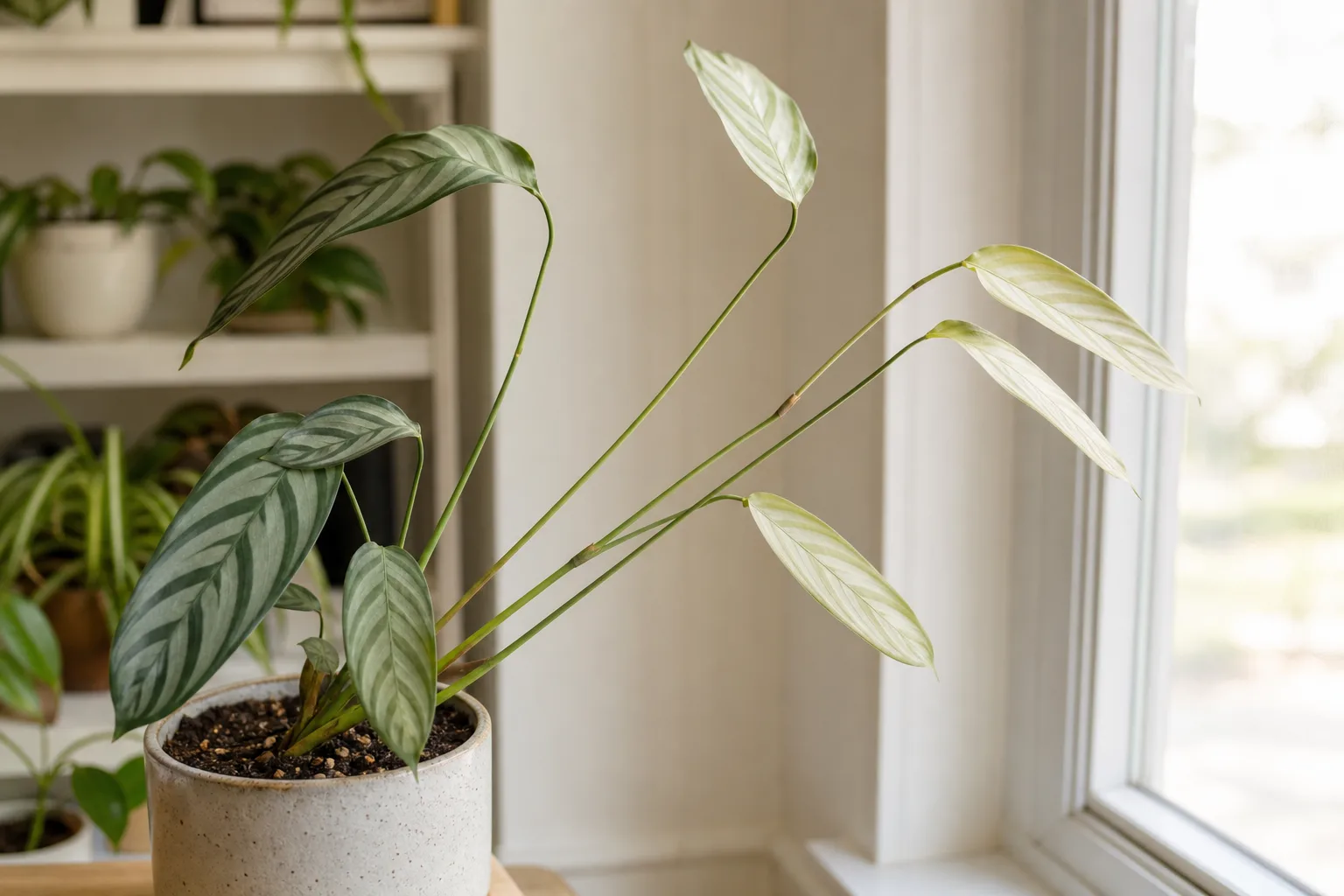
Not Enough Light on Ctenanthe: Causes, Checks & Fixes
This guide covers not enough light on Ctenanthe. See also the general Not Enough Light guide, watering, and light pages for this plant.
Not Enough Light on Ctenanthe: Causes, Checks & Fixes
Quick answer
Ctenanthe is sold as an easygoing prayer-plant cousin, but it is not a low-light plant. It evolved on the Brazilian rainforest floor where light arrives filtered and bright, not as deep shade or harsh direct sun. In a dim hallway, far from windows, or in a north room through winter, the fishbone pattern fades, stems stretch, and new leaves emerge small and pale.
First step: move the pot to the brightest safe indirect spot in your home-typically an east-facing window 2 to 4 feet from the glass, or a filtered south or west room set back 4 to 6 feet with a sheer curtain. Do not repot, fertilize, or overhaul watering until you have held that placement for two weeks and read the response on the newest unfolding leaf.
What not enough light looks like on Ctenanthe
Low light on Ctenanthe shows up on structure and new foliage before old leaves tell the whole story. The plant may still look vaguely green from reserves on mature leaves while the youngest growth reveals the problem.
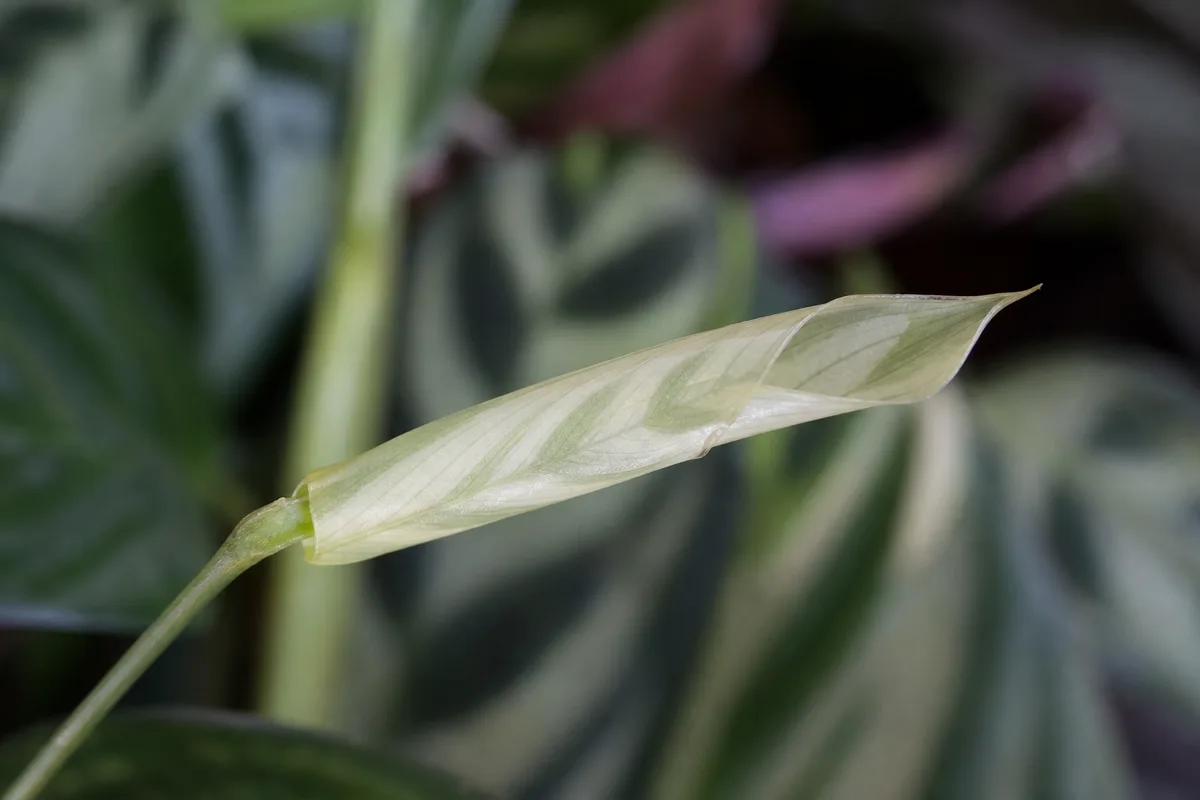
Not Enough Light symptoms on Ctenanthe - compare with healthy tissue on the same plant.
Typical signs:
- Long bare stem segments (internodes) between leaves-often 3 inches or more on an indoor shoot where well-lit plants hold 1 to 2 inches (leggy growth from insufficient light)
- Lean or asymmetrical growth toward the brightest corner or window
- Smaller, thinner new leaves that take longer to unfurl
- Faded or lost fishbone pattern on the youngest leaves-silver striping washes out or new foliage looks nearly solid green
- Slow or stalled growth, especially from late autumn through winter in the same spot that worked in summer
- Leaves that stay folded or fail to open fully during the day on prayer-plant types sensitive to day length
- Soil that stays wet longer than it did in brighter months, sometimes paired with yellow lower leaves
On Ctenanthe burle-marxii (Fishbone Prayer Plant), the compact clump form is especially telling. A healthy burle-marxii stays bushy with rhythmic short stems. In chronic dim light it looks like one tall section reaching away from the pot, often with purple undersides still visible but the patterned face dull on new leaves only.
Why Ctenanthe gets not enough light
Ctenanthe belongs to Marantaceae, the prayer plant family. These plants harvest moderate to Ctenanthe light guide efficiently but cannot build dense patterned foliage in true shade. NC State Extension lists bright, indirect light and dappled sunlight as the baseline for Ctenanthe, with direct sun causing scorch-a fact that leads many sellers and tags to call Ctenanthe “low light tolerant.” Tolerance is not the same as preference. The plant may linger in dim corners longer than a fussy Calathea, then stretch once stored energy runs low.
Common triggers in real homes:
- Placement for décor, not photons - on a bookshelf, bathroom without a window, or the center of a large room
- Distance from glass - light falls off quickly with distance; more than 6 feet from a window is often low light for Marantaceae
- Seasonal daylight drop - a spot that worked in August may fail by December without moving the pot or adding supplemental light
- Sheer curtains, tinted glass, or dirty windows that cut usable brightness more than expected
- Competing houseplants blocking the window side that fed the Ctenanthe
- Misreading “no direct sun” as “any shade will do” - Ctenanthe wants filtered brightness, not a dark corner
There is a compounding risk unique to this genus: low light slows water use. Owners who keep a bright-window Ctenanthe watering guide on a dim plant leave roots in moist mix too long. Yellow leaves plus wet soil in a dark room is often light-limited metabolism, not random overwatering on Ctenanthe-though you should still verify root firmness if the mix smells sour.
How to confirm the cause
Work through these checks before you change multiple care variables at once:
- Internode test - Mark the newest leaf with a small tie. Two weeks later, measure blank stem added below it. More than 2 inches of new bare stem indoors strongly suggests insufficient light.
- Pattern comparison - Compare the three youngest leaves to three older ones lower on the same shoot. Fade or loss of fishbone striping on new leaves only fits light limitation; uniform edge brown on older leaves points more to humidity or water quality.
- Lean direction - Strong tilt toward one window or lamp confirms the plant is vectoring for photons. Rotation fixes shape but not intensity.
- Shadow check at midday - Hold your hand between the window and the plant. A sharp dark shadow means direct sun (different problem). Soft, indistinct shadow is ideal. If you need overhead room lights to read at the plant’s location at noon, the spot is likely too dim for long-term health.
- Soil dry-down speed - Note how many days until the top inch feels dry. A sudden shift from drying in three days to seven without a weather change often tracks winter light drop, not a broken watering calendar.
- Rule out excess light - Bleached pattern on the sun-facing leaf half, crisp tan patches after a window move, or afternoon leaf curl mean too much light, not too little. Fixes move in opposite directions.
If the pot is light, mix is dry throughout, and leaves curl inward with crispy margins, underwatering on Ctenanthe or low humidity may explain the stress better than light alone. If roots are mushy and the pot smells sour in a dark wet room, inspect for root rot on Ctenanthe after you plan a light upgrade-both problems can coexist.
First fix for Ctenanthe
Move the pot to bright indirect light-start with an east window 2 to 4 feet from the glass.
That single relocation gives Ctenanthe the filtered brightness most foliage houseplants need to keep internodes short and fishbone pattern vivid, without the scorch risk of a south sill. If east is not available, choose the brightest indirectly lit spot you have: a north window in the bright half of the year, or a south or west room set back and sheered so no hot beam hits leaves.
Hold water, fertilizer, and Ctenanthe repotting guide steady for two weeks while the plant adjusts. After any light increase, re-check dry-down for ten days-brighter exposure may require water slightly sooner; dimmer retreat may require longer intervals.
If no window delivers enough brightness-common in apartments with one north exposure or interior offices-add a full-spectrum LED grow light as the second step, not a day-one stack with repotting. Position it 12 to 18 inches above the canopy on a 12 to 14 hour timer. Start at moderate intensity and read the next new leaf: compact and patterned means hold; continued stretch means add an hour or slight intensity; bleaching means raise the fixture.
Step-by-step recovery
After the initial move:
- Increase light gradually if coming from deep shade - Advance 6 to 12 inches toward the window per week, or add 15 to 30 minutes of gentle morning exposure weekly on east sills. Watch the leaf currently unfurling; it bleaches first if the jump is too fast.
- Rotate the pot weekly - Even growth prevents a permanent lean; it does not replace insufficient foot-candles.
- Wipe dust from leaves - Clean foliage intercepts more useful light without changing window direction.
- Adjust watering to the new dry-down - Do not keep watering on a calendar built for a dim corner. Let the top inch guide you.
- Optional trim - Once two compact new leaves open, cut back the worst stretched stem above a node if the shape bothers you. The plant branches from cuts; old internode length below the cut never shortens.
- Hold fertilizer until new growth looks firm and patterned for two weeks. Nitrogen cannot restore fishbone lines when photons are the limiting factor.
Do not “fix” stretch by placing the plant in unfiltered afternoon sun. Ctenanthe scorches quickly; burned pattern is permanent on affected tissue.
Recovery timeline
Expect to read improvement on the next one or two leaf sets, not on leaves already fully formed. Under better light, new internodes usually tighten within two to three weeks in active growth season. Winter recovery may take four to six weeks because day length and temperature also slow Marantaceae.
Signs the fix is working:
- Shorter stem gaps on the newest shoots
- Larger new leaves that unfurl at a normal pace
- Returning silver fishbone contrast on burle-marxii young foliage
- More even clump shape with less dramatic lean
- Faster, predictable soil dry-down matching the new brightness
Signs the problem is worsening or another issue is involved:
- Continued stretch after four weeks in a clearly brighter spot-verify the light is indirect, not blocked by new obstacles
- Yellowing spreads while mix stays wet and roots soften-address drainage and rot even after light improves
- New leaves bleach or crisp- you overshot into excess light; move back from glass
- No new growth at all for more than a month in warm conditions-check roots, pests on undersides, and whether the crown stayed too wet in the dark
Stretched stems and small old leaves do not revert (judge recovery by new growth). Success means the plant outgrows the ugly phase with compact new foliage.
Lookalike symptoms to rule out
Low humidity causes brown leaf margins and edge curl, often on older leaves first, while internodes may stay short if light is adequate. Boost humidity if edges crisp symmetrically without stretch.
Underwatering gives dry, light pot weight, curling leaves, and sometimes droop-but not long internodes on an otherwise moist schedule. Soil should read dry deep down.
Overwatering in dim light produces yellow lower leaves and soggy mix (overwatering in wet soil). Fix light and let the top layer dry before the next drink; do not assume every yellow leaf needs less water without checking moisture and roots.
Normal winter slowdown happens even in good light, but pattern fade on brand-new leaves still suggests photons, not season alone. Supplement or move closer before spring if new foliage stays dull.
Pests such as spider mites cause stippling and webbing on undersides, not classic internode stretch. Inspect patterned foliage with a hand lens if growth stalls without a clear light story.
Mistakes to avoid
Do not treat Ctenanthe as a snake plant or ZZ plant that thrives in shade. It will survive briefly, then stretch.
Do not jump from a dark corner to a south windowsill to “fix” legginess fast. Scorch arrives before compact growth returns.
Do not fertilize heavily to push growth in dim conditions. Soft, pale, stretched tissue is more vulnerable to pests and rot.
Do not overwater because the plant “looks thirsty” while standing in low light. Slow uptake plus frequent drinks is a common rot pathway.
Do not repot, divide, and relocate in the same week. Sequence light first, then reassess water rhythm, then other changes.
Do not judge success by oldest leaves at the base naturally aging. Read the youngest leaf only.
Ctenanthe care cross-check
Light sets the ceiling for everything else on Ctenanthe overview. Ctenanthe wants evenly moist but not waterlogged soil, high humidity (60%+) when possible, and filtered water if tap minerals crust the pot-but those factors cannot compensate for chronic shade.
In brighter indirect light, the plant uses water at a predictable rate and tolerates ordinary indoor humidity better than a starved, stretched specimen. If you improve light and brown tips persist on new leaves, shift to humidity and water quality next. If stretch persists in a spot you believe is bright, verify intensity with the shadow test or a grow light rather than adding fertilizer.
How to prevent not enough light next time
Place Ctenanthe where medium to bright indirect light is realistic for most of the day-not only where the pot photographs well. East windows remain the best default; north windows need a grow-light plan from October through March in many climates.
Calendar a seasonal check when clocks change. Slide the pot closer to glass or start supplemental LED hours before internodes stretch, not after the plant has reorganized into a leggy form that takes months to outgrow.
Keep windows clean and unobstructed seasonally. Rotate weekly for symmetry.
When buying, choose compact clumps with clean patterned new leaves, not one tall stretched section the nursery kept alive on greenhouse brightness you cannot replicate in a dim living room.
When to worry
Low light alone is rarely fatal quickly, but dim placement plus wet soil is urgent. If the mix stays soggy for more than a week, the base smells sour, or stems soften while the plant sits far from windows, unpot and inspect roots while you move to brighter indirect light.
Also treat as urgent if no new leaves appear through a full warm month despite moist soil and stable humidity-verify roots and pests, but do not leave the plant in a dark wet pocket while waiting.
Pure stretch without rot, smell, or pest coating can be corrected gradually. The plant is signaling, not dying overnight.
Conclusion
Not enough light on Ctenanthe is one of the most common-and most mislabeled-problems on this plant. It hates direct sun, so owners push it into shade that is darker than the filtered forest brightness it actually needs. Read internode length, new-leaf pattern, and lean before you change water or feed. Move to bright indirect light first, hold other variables steady, and judge recovery on the next compact, fishbone-striped leaf. When windows fall short, a timed full-spectrum LED keeps this prayer-plant cousin in the productive band without turning your room into a greenhouse.
When to use this page vs other Ctenanthe guides
- Ctenanthe watering guide - Use for routine moisture checks before assuming not enough light is the main issue.
- Ctenanthe problems hub - Browse all 17 common issues on this species.
- Leggy Growth on Ctenanthe - Different entry point when symptoms overlap with not enough light.
- Slow Growth on Ctenanthe - Different entry point when symptoms overlap with not enough light.
- Yellow Leaves on Ctenanthe - Different entry point when symptoms overlap with not enough light.