Slow Growth on Ctenanthe: Causes, Checks & Fixes
Quick answer
Ctenanthe grows at a moderate pace in bright indirect light; a winter pause with firm leaves is normal. First step: count new leaves from the last eight weeks, measure new leaf size against older ones, and check window distance before fertilizing or repotting.
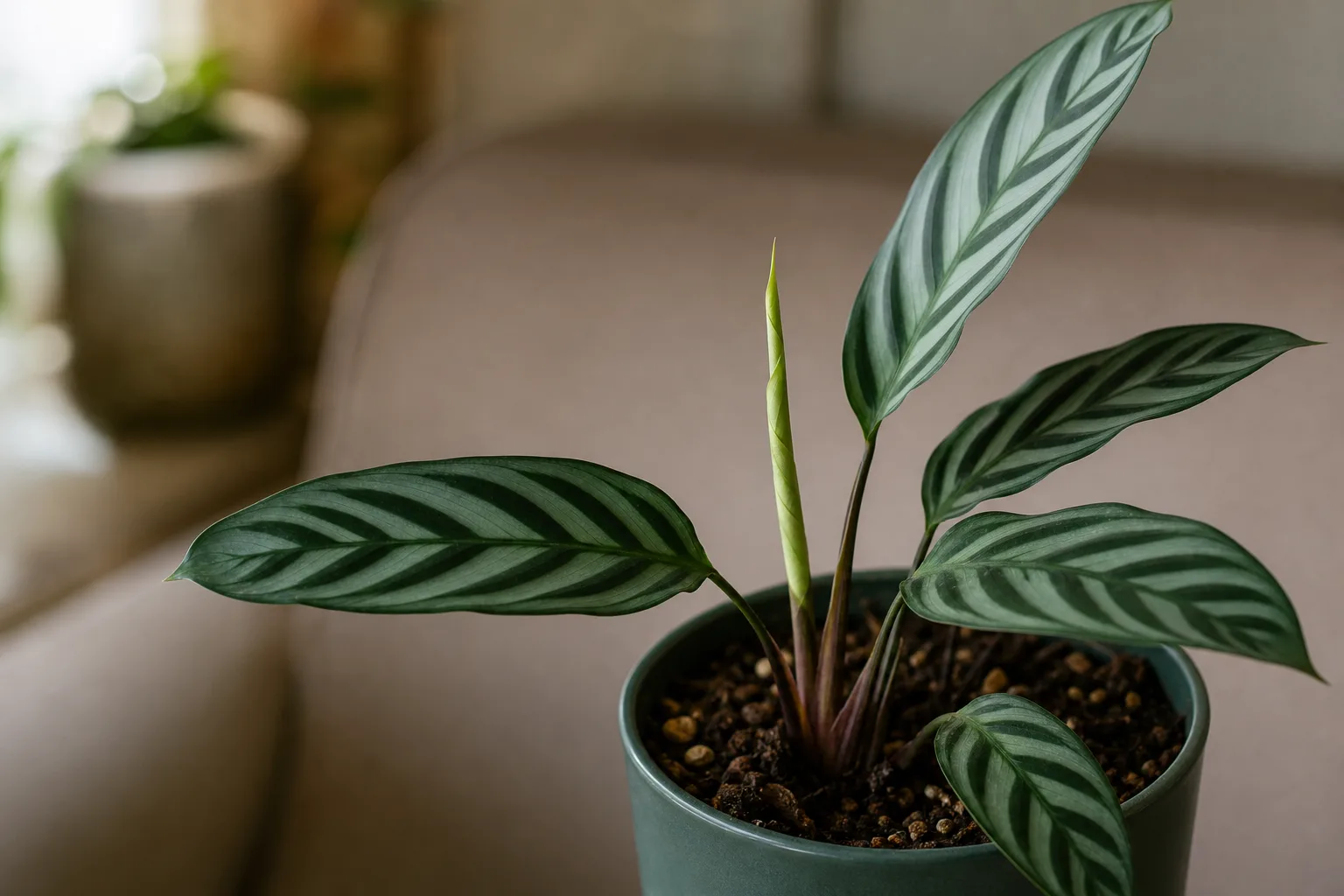
Slow Growth on Ctenanthe: Causes, Checks & Fixes
This guide covers slow growth on Ctenanthe. See also the general Slow Growth guide, watering, and light pages for this plant.
Slow Growth on Ctenanthe: Causes, Checks & Fixes
Quick answer
Ctenanthe is a Marantaceae prayer-plant relative with moderate-not rapid-indoor growth. A fishbone C. burle-marxii may look nearly unchanged for weeks in winter while leaves still fold at night; a golden C. lubbersiana can push visible new shoots every few weeks in a bright room. Slow becomes a problem when no new leaves appear through an entire warm spring despite firm tissue, or when every new leaf emerges smaller and paler than the last.
First step: count how many fully opened leaves appeared in the last eight weeks, compare the newest leaf size to a mature one from last season, and note how far the pot sits from your brightest window. That trio separates normal seasonal rest from light starvation, root crowding, or chronic underwatering-before you stack fertilizer, repot, and grow lights on the same weekend.
What slow growth looks like on Ctenanthe (and what normal growth is)
On a healthy active Ctenanthe, new leaves unfold from rolled tubes along short stems or rhizome tips. Pattern contrast stays crisp-fishbone stripes on burle-marxii, silver bands or gold splashes on larger species. Nyctinastic folding at night is normal; the clump looks alive even when vertical gain is modest.
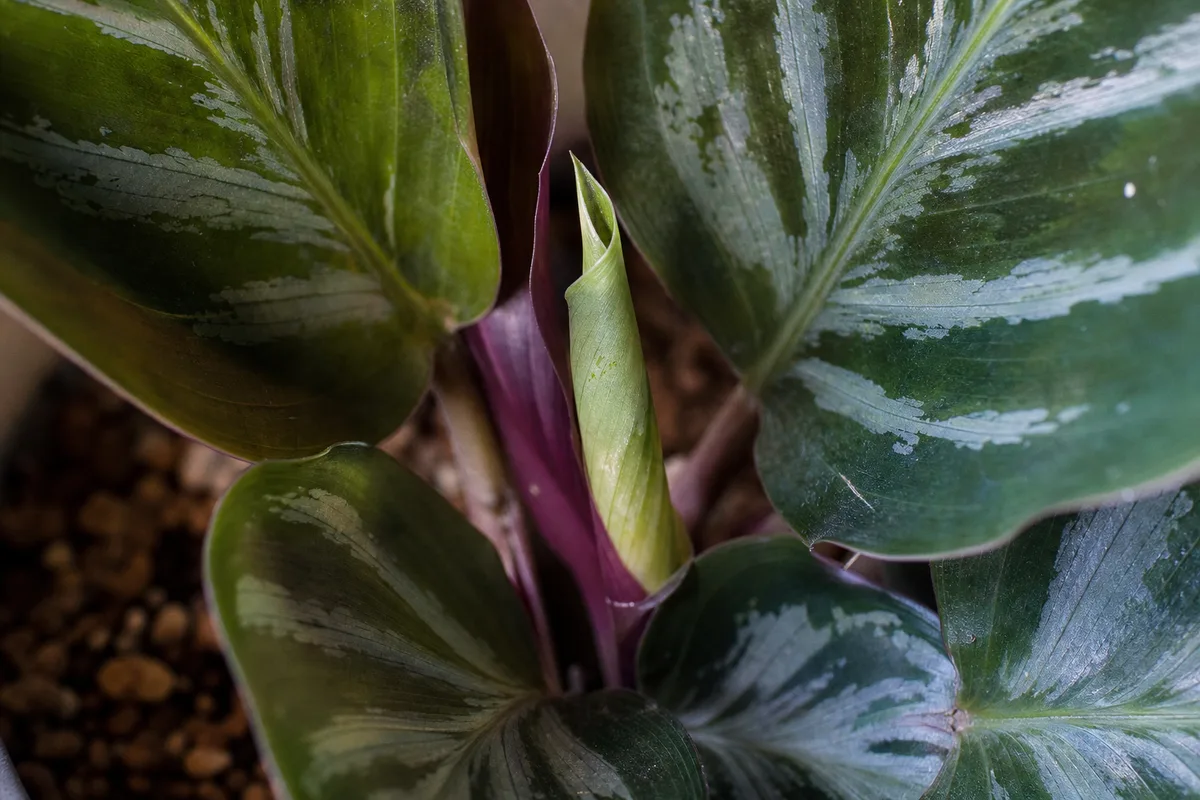
Slow Growth symptoms on Ctenanthe - compare with healthy tissue on the same plant.
Baseline expectations by species:
| Species | Typical indoor size | Growth character in good light |
|---|---|---|
| C. burle-marxii (fishbone) | 6–12 in (15–30 cm) tall | Compact clump; new leaves every 2–4 weeks in warm months |
| C. oppenheimiana (never never) | 1–3 ft (30–90 cm) | Medium growth rate; several leaves per active season |
| C. lubbersiana (bamburanta) | 2–3 ft tall, 3–4 ft spread | Rapid growth rate when bright, humid, and root space allows |
Slow growth as a symptom looks like:
- No new fully opened leaves for eight or more weeks during March–September in a temperate home
- Each new leaf smaller, thinner, or less patterned than leaves from six months ago
- Long gaps between leaves on upright stems while the plant leans toward the window
- Static clump size for a full year despite warm weather and regular watering
- New shoots that abort or stay rolled for more than two weeks without opening
Normal slow periods that are not emergencies:
- Winter rest (roughly November–February) with green firm leaves and normal night folding
- Two to three weeks after repot while rhizomes re-anchor
- Compact species staying desk-sized while still producing proportionally sized new leaves
Why Ctenanthe grows slowly
Ctenanthe stalls when photosynthesis, root uptake, or humidity cannot support new tissue. Ranked by how often they appear in home complaints:
1. Insufficient light (most common)
Ctenanthe evolved on the rainforest floor and needs bright, indirect light-not a dim hallway. Low light reduces photosynthesis and produces smaller, weaker growth. In shade, the plant survives on stored energy, then stops pushing new leaves once reserves run low. Pattern fade and long internodes often appear before growth stops entirely-see not enough light and leggy growth.
2. Seasonal winter slowdown
Short days and cooler windowsills slow Marantaceae metabolism even indoors. Growth that pauses in December while leaves stay firm and fold at night is expected, not failure. The mistake is continuing summer watering and fertilizer on a plant that is not building new tissue.
3. Underwatering cycles
Ctenanthe wants moist, well-drained mix with a brief dry-down at the surface-not bone-dry root balls. Repeated drought kills fine roots, so the plant cannot support new leaves even after you water. Chronic edge crisping and daytime leaf curl with a light pot point here-see underwatering.
4. Rootbound rhizome clump
Ctenanthe spreads by rhizomes. When the clump fills the pot, new shoots compete for the same volume. Water runs through instantly, mix dries unevenly, and growth stalls despite green old leaves. This is common on fishbone types left in nursery pots for years.
5. Low humidity slowing leaf expansion
Ctenanthe needs medium to high humidity-often 50% and above indoors. Dry heated air does not always stop leaf production entirely, but new leaves may emerge small, stuck, or crisp at the edges before reaching full size. Pair with the low humidity guide if margins brown while growth slows.
6. Cool temperatures and drafts
Ctenanthe prefers 60–85°F (15–29°C) and is intolerant of temperatures below 60°F and cold drafts. A plant on a winter windowsill or near an AC vent may stay alive but metabolically paused for months.
7. Overwatering and hidden root damage
Saturated mix in low light reduces root function without obvious collapse at first. The clump looks static while soil stays wet. If lower leaves yellow and the pot stays heavy, inspect roots before assuming the plant needs feed-see overwatering and root rot.
8. Pests on emerging leaves
Spider mites, thrips, and mealybugs attack tender new growth first. A plant that starts a leaf then stalls with stippling, webbing, or distorted tips may be pest-limited-not light-limited. Check undersides with a magnifier before upgrading fertilizer.
9. Recent repot or transplant shock
Division and repotting pause growth for two to four weeks while rhizomes settle. That is normal. Panic-repotting again because “nothing happened in ten days” resets recovery.
Lookalike symptoms to rule out
| What you see | Likely issue | Differentiating check |
|---|---|---|
| Long stems, small pale leaves, lean toward window | Low light / leggy growth | Window distance; compare to leggy growth |
| Firm leaves, normal night fold, no new leaves in January | Winter rest | Resume counting in March; reduce water |
| Crisp edges, curled daytime leaves, light pot | Underwatering | Depth moisture and pot weight |
| Yellow lower leaves, sour wet soil | Overwatering / root rot | Root firmness; stop watering |
| Only old leaves look fine; no new tips for months in bright room | Rootbound or spent mix | Roots at drainage holes; water channels through |
| Stippling on new leaves | Spider mites / thrips | Magnifier on undersides |
How to confirm the cause
Work through this checklist in order:
- Season check - Is it late fall or winter with short days? If yes, note baseline and recheck in March before treating.
- New leaf count - How many leaves fully opened in the last eight weeks? Zero in spring is abnormal; zero in February may not be.
- New leaf size test - Is the newest leaf at least 70% the length of a mature leaf from last season? Smaller and paler confirms light or root stress.
- Window distance - Measure pot to glass. More than 4–6 feet from a bright window, or only north exposure in winter, often throttles Marantaceae growth.
- Soil and pot weight - Heavy wet pot with no new growth suggests root stress. Light pot with dry depth and crisp edges suggests drought.
- Root peek - Slide the plant partway out. White firm roots with circling at walls support repot timing. Brown mushy roots switch diagnosis to rot.
- Humidity and temperature - Hygrometer below 40% or plant below 60°F near glass supports environmental stall.
- Pest scan - Inspect newest rolled leaves and undersides for mites, thrips, or mealybugs.
First fix for Ctenanthe
Make one change, then wait three to four weeks before stacking another.
If light is the confirmed limiter
Move the pot closer to bright indirect light-east window or 3–4 feet from a filtered south or west window-or add a full-spectrum grow light 12–18 inches above the canopy for 10–12 hours daily. Acclimate over one to two weeks if coming from deep shade. Do not jump to direct afternoon sun; Ctenanthe is intolerant of direct sunlight.
If underwatering is confirmed
Give one thorough soak until water exits the drainage hole, empty the saucer, then return to watering when the top inch dries. Use filtered or distilled water if edges already show mineral burn.
If rootbound in spring
Repot one size up with fresh airy tropical mix-see repotting. Divide crowded rhizomes if the clump is dense. Water once to settle; expect two to three weeks before new shoots.
If humidity or temperature is low
Run a humidifier to hold 50–60% near the plant and move the pot off cold window sills and AC vents. Growth often resumes before any fertilizer change.
If pests are on new growth
Isolate, rinse undersides, and treat the identified pest on new leaves first-growth cannot resume while mites shred every emerging leaf.
If it is winter rest only
Reduce watering frequency, skip fertilizer, and recheck in March. No repot, no feed, no panic moves.
Recovery timeline
| Cause fixed | What to expect |
|---|---|
| Light upgrade in spring | First firm new leaf in 2–4 weeks; pattern improvement on the second or third new leaf |
| Underwatering corrected | Unrolling and new growth within 1–3 weeks if roots are still firm |
| Spring repot from rootbound | 2–4 weeks pause, then new shoots; full clump fill may take one season |
| Humidity corrected | Next leaf may open full size; old crisp edges do not revert |
| Winter rest | Growth resumes when day length and warmth increase-often March–April |
Judge success by new leaf frequency and size, not old leaf color. Damaged margins on mature leaves rarely heal; a compact new fishbone leaf with crisp striping means the fix worked.
What not to do
Do not fertilize a stalled winter plant or one in dim light-salt stress worsens edge burn without adding photons. Do not repot during a winter stall unless roots are rotting. Do not assume fertilizer fixes low light; half-strength monthly feed belongs only in active growth after light and moisture are right.
Do not stack repot, prune, move, and pesticide the same day. Do not expect summer growth rates in December. Do not upgrade to a much larger pot hoping for faster growth-excess wet soil around a small rhizome clump invites rot and slower recovery.
How to prevent slow growth next time
Align daily care with how Ctenanthe actually grows in your room:
- Place in bright indirect light year-round; supplement in winter if new leaves shrink.
- Water when the top inch dries-adjust interval when you move the plant, not on a fixed calendar.
- Maintain 50%+ humidity in heated air; use filtered water if margins crisp.
- Repot every one to three years or when roots circle-before a full season of zero shoots.
- Feed at half strength monthly only during visible active growth in spring and summer.
- Log new leaf count monthly in warm months so a stall shows early.
Cross-check species size and family biology on the Ctenanthe overview when multiple symptoms overlap.
When to worry
Escalate when zero new growth in a bright warm spring pairs with wet sour soil, soft crown tissue, or widespread yellowing-inspect roots for rot today.
Patience is enough when leaves are firm, night folding is normal, the calendar is winter, or you repotted two weeks ago. Ctenanthe often recovers faster than the fussiest Calatheas once light and moisture align, but a hollow rhizome with no firm shoots for two months after corrected care is an honest stopping point.
Ctenanthe care cross-check
| Factor | Active season target | Slow-growth mistake |
|---|---|---|
| Light | Bright indirect; compact new leaves | Dim corner survival mode |
| Water | Top inch dry-down; moist root zone | Summer calendar in dim winter room |
| Humidity | 50–60%+ near foliage | Expecting full-size leaves in dry heat |
| Roots | Refresh before severe rhizome crowding | Nursery pot for three years |
| Feed | Half strength monthly when growing | Winter fertilizer on wet soil |
| Season | Expect winter pause | Panic-repot in January |
Related Ctenanthe guides
- Ctenanthe overview - species sizes, nyctinasty, and baseline care rhythm
- Light requirements - window placement and grow-light setup
- Watering - top-inch checks and seasonal intervals
- Not enough light - pattern fade and stretch before full stall
- Leggy growth - long internodes when light-not general slowness-is the issue
- Underwatering - drought stall and leaf curl
- Low humidity - small or crisp new leaves in dry air
- Root rot - wet-soil stall with yellowing
- Fertilizer - feeding only during active growth
- Repotting - rhizome division and root-bound recovery