Aphids on Ctenanthe: Causes, Checks & Fixes
Quick answer
Aphids on Ctenanthe show up as soft clusters on new leaves and stem tips, often with sticky honeydew. First step: move the plant away from neighbors and rinse leaf undersides and crown shoots thoroughly before applying any spray.
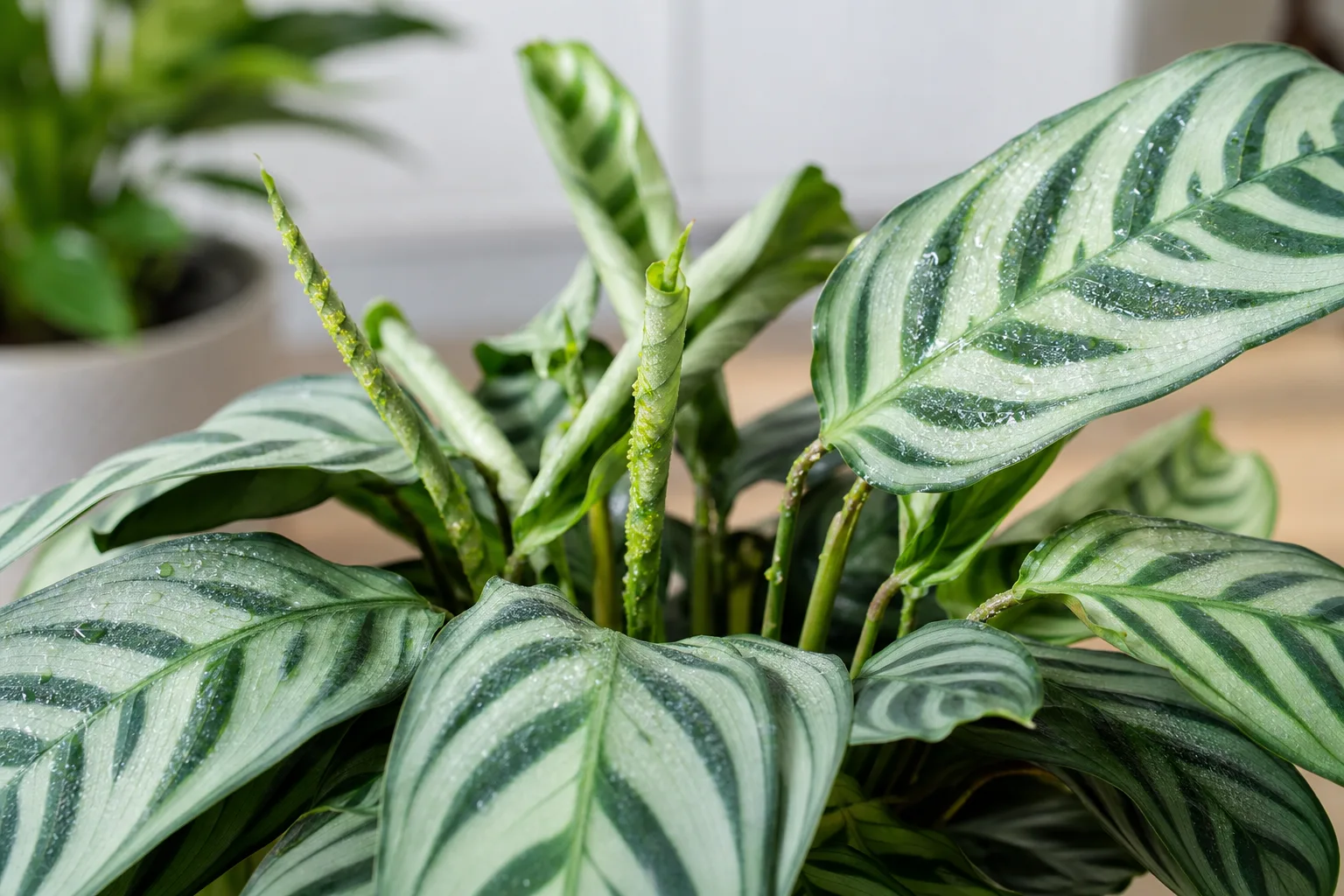
Aphids on Ctenanthe: Causes, Checks & Fixes
This guide covers aphids on Ctenanthe. See also the general Aphids guide, watering, and light pages for this plant.
Aphids on Ctenanthe: Causes, Checks & Fixes
Quick answer
Aphids on Ctenanthe are small, soft-bodied sap feeders that colonize the tender shoots this prayer-plant relative pushes from its rhizome. You will usually spot them on newly opening fishbone leaves, at stem joints, or along insignificant flower stalks-not scattered randomly across old foliage.
First step: isolate the plant and rinse leaf undersides and crown shoots with lukewarm water. Hold stems gently and spray from below so the patterned leaf backs get direct contact. That knocks down live aphids and washes fresh honeydew before it attracts ants or grows sooty mold. Only after you confirm insects are present should you move to insecticidal soap or horticultural oil.
Why Ctenanthe gets aphids
Ctenanthe belongs to Marantaceae-the prayer-plant family-and grows as a compact clump of patterned leaves from a rhizome. NC State Extension notes that Ctenanthe prefers bright indirect light, evenly moist soil, and high humidity, conditions that keep the plant producing soft new leaves through much of the year indoors. That constant flush of tender tissue is exactly what aphids target.
Indoor collections lack the lady beetles, lacewings, and parasitic wasps that control aphids outdoors. Aphids reproduce quickly in warm conditions, and a few hitchhikers on a new nursery plant can become a colony within days. Ctenanthe’s herringbone striping and purple-red leaf undersides make small green aphids easy to miss until honeydew or leaf curl gives them away.
Stress does not cause aphids, but it makes recovery slower. A Ctenanthe fighting low humidity, mineral-heavy tap water, or soggy mix will lose damaged leaves faster and produce fewer clean replacements while pests drain sap from new growth. Over-fertilizing with nitrogen pushes lush, soft shoots that aphids prefer over tough older foliage.
Common introduction routes include unquarantined new plants, open windows in warm weather, and contaminated tools used on multiple pots. Grouped prayer plants on a humidity tray share airflow and pests-one infested Ctenanthe can seed neighbors within a week if winged adults appear.
What aphids look like on Ctenanthe
Typical aphid signs:
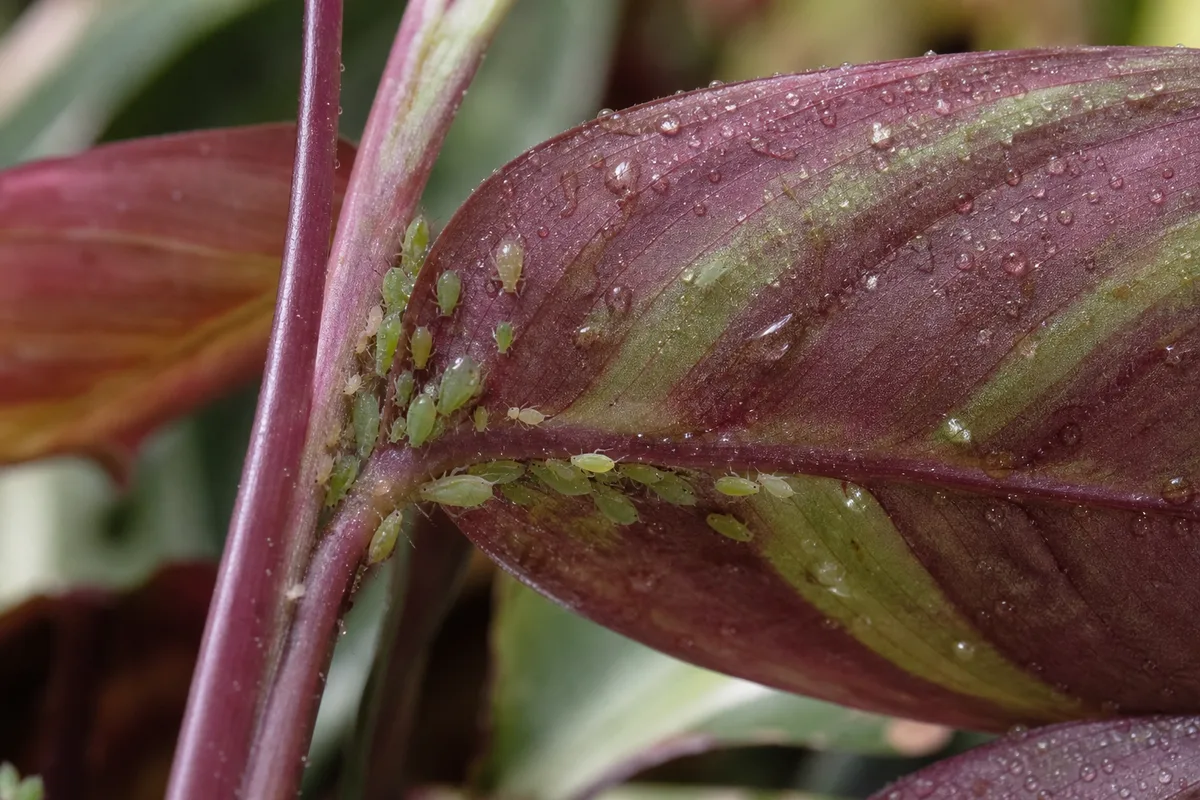
Aphids symptoms on Ctenanthe - compare with healthy tissue on the same plant.
- Soft clusters on newest leaves, unfurling shoots, and stem axils near the crown
- Pear-shaped bodies 1/16 to 1/8 inch long, usually green but sometimes black, brown, or gray
- Shiny, sticky honeydew on upper leaf surfaces or nearby shelves
- Black sooty mold growing on honeydew patches
- New leaves curling, puckering, or staying partially rolled during the day
- Ants marching on the pot, saucer, or plant stand
Aphids have cornicles-small tube-like projections on the hind end-which helps distinguish them from other tiny insects. They move slowly when disturbed, unlike thrips that jump or flee quickly.
On Ctenanthe specifically, damage concentrates at the crown where multiple shoots emerge. Older lower leaves may look fine while the top of the clump is coated in insects. The fishbone pattern can hide green aphids against pale green stripes, so inspect the leaf backs under good light rather than judging from the patterned front alone.
Honeydew is often the first clue owners notice-a tacky film on leaves or a sticky spot on the table below a shelf plant. Honeydew is a sugary exudate that supports sooty mold growth but does not infect Ctenanthe tissue directly. Once aphids are gone, the mold stops spreading and can be wiped or rinsed off.
How to confirm the cause
Work through these checks before treating:
- Crown and new growth first - Lift the newest leaves and look at undersides and the junction where shoots meet the rhizome. Aphids cluster on soft tissue; if you find none here, suspicion drops.
- Movement test - Touch a suspect cluster with a cotton swab. Aphids squash easily and leave a green smear. Mealybugs feel waxy and cottony; scale stays fixed to the stem.
- Honeydew and ants - Wipe a shiny upper leaf. Sticky residue that returns within days, plus ant activity, strongly supports aphids over environmental curl.
- Daytime curl pattern - Ctenanthe normally folds leaves at night (nyctinasty). Leaves that stay curled or distorted through the day with visible insects point to aphid feeding. Curl without pests more often tracks underwatering on Ctenanthe or dry air.
- Collection scan - Check Calathea, Maranta, and Stromanthe nearby. Aphids are not picky about Marantaceae hosts.
- Recent history - New plant within three weeks? Moved outdoors for summer? Either raises introduction risk.
If you find no insects, no honeydew, and no ant trails, look at humidity and watering before spraying chemicals. Misdiagnosed environmental curl is common on this genus.
First fix for Ctenanthe
Move the plant away from other houseplants and rinse all leaf undersides, stem joints, and crown shoots with a steady stream of lukewarm water.
Use a sink sprayer or shower head for larger specimens. Tilt the pot and spray upward so water hits the backs of leaves directly-this is where aphids feed and where contact treatments must reach. Let foliage dry in bright indirect light the same day. Ctenanthe tolerates rinsing well when humidity is already moderate, but avoid leaving the crown soaking wet overnight in a cold, stagnant corner.
Do not apply insecticidal soap or oil on day one if a strong rinse removes every visible aphid. Do not fertilize a pest-hit plant hoping to push replacement growth-that produces more soft tissue for survivors to colonize. Do not repot unless soil pests are also confirmed; aphids on Ctenanthe are almost always a foliage problem.
Step-by-step recovery
After the initial isolation and rinse:
- Re-inspect in 48 hours - Aphid nymphs hatch quickly. Repeat water sprays every four to seven days until two consecutive checks find no live insects.
- Apply insecticidal soap if colonies persist - Use a product labeled for houseplants. Cover undersides and stem joints thoroughly. Insecticidal soaps kill on contact and leave no residual protection, so missed aphids survive until the next application.
- Test sensitive foliage first - Spray one leaf and wait 24 hours before treating the whole plant. Marantaceae leaves can react to soaps or oils applied in hot, dry air. Avoid spraying above 90°F or in direct sun.
- Prune only when necessary - Cut out shoots so heavily curled that spray cannot reach the aphids sheltering inside folded tissue. Sterilize scissors between cuts.
- Manage ants - Sticky barriers on pot feet or ant bait away from the plant help natural predators reach aphids if you move plants outdoors briefly in warm weather.
- Wash sooty mold - Once honeydew production stops, wipe coated leaves with a damp cloth. Severely blackened old leaves can be trimmed after the plant stabilizes.
Keep the plant isolated until you see at least one week with no new aphids on inspection.
Recovery timeline
Moderate infestations often collapse after two to three thorough rinses spaced four to seven days apart. Soap or oil courses add another one to two weeks when colonies were established inside curled new leaves.
Expect clean, fully patterned new leaves within two to four weeks once feeding stops. Old leaves that yellowed or curled heavily usually will not revert-focus on the crown, not cosmetic damage on lower foliage.
Honeydew and sooty mold clear faster than leaf shape recovers. If new shoots still emerge distorted after three weeks of consistent control, re-check for hidden colonies in curled leaves or reinfestation from a nearby host.
Lookalike symptoms to rule out
Low humidity or underwatering curl - Leaves roll inward at margins without insects, honeydew, or ants. Soil feels dry and pot is light. Fixing moisture and humidity resolves curl over days without pest treatment.
Spider mites - Fine stippling and webbing at leaf bases, not soft clustered bugs. Mites favor hot dry air; confirm with a white-paper tap test.
Mealybugs - White cottony masses in axils and along stems. They move even less than aphids but feel waxy, not soft and pear-shaped.
Scale insects - Hard brown or tan bumps glued to stems. They do not cluster as moving groups on new growth.
Mineral or fluoride edge burn - Brown crisp tips without stickiness or insects. Common on Ctenanthe with hard tap water; unrelated to sap feeders.
Normal nyctinasty - Upright folded leaves at night that flatten by morning. Not a problem and not caused by aphids.
Mistakes to avoid
Do not treat every curled Ctenanthe leaf as aphids without checking undersides. Environmental curl is common on this genus and does not need pesticide.
Do not use homemade dish-soap mixes on patterned prayer-plant foliage. Commercial insecticidal soaps are formulated to reduce phytotoxicity; harsh detergents can burn leaves permanently.
Do not return an isolated plant to a group after a single rinse. One surviving female can restart the colony overnight.
Do not ignore ants. They protect aphids from predators and signal active honeydew production.
Do not spray oil or soap on a wilted, sun-stressed, or recently repotted Ctenanthe. Stabilize watering and light first.
Do not compost heavily infested clippings near other houseplants.
Ctenanthe care cross-check during recovery
While fighting aphids, keep the baseline care steady rather than changing everything at once:
- Light - Medium to bright indirect light supports recovery without the heat stress that complicates spray timing.
- Water - Keep mix evenly moist, not soggy. Stress from drought slows new leaf production pests already reduced.
- Humidity - Maintain 60% or higher if possible. High humidity helps Ctenanthe but does not prevent aphids; it does help new leaves emerge cleanly after treatment.
- Water quality - Continue filtered or rested water if your tap causes brown tips. Pest recovery and mineral stress are separate issues.
- Feeding - Hold fertilizer until new growth looks clean and the plant is actively pushing leaves again.
Weekly underside checks during active growth catch the next colony before honeydew spreads.
How to prevent aphids next time
Quarantine every new Ctenanthe or prayer-plant purchase for at least two weeks before placing it near existing plants. Inspect crown shoots and leaf backs at purchase-the fishbone pattern hides early pests.
Wipe or rinse leaf undersides during regular care. Dusty, neglected foliage is easier for pests to colonize undetected.
Avoid excess nitrogen during spring and summer pushes. Steady, balanced feeding produces tougher growth aphids find less attractive.
Monitor plants at least twice weekly when growth is fast. Ctenanthe in a bright bathroom or grouped humidity tray needs the same pest scouting as a windowsill succulent.
When moving plants outdoors for summer, inspect before bringing them back inside. Aphids that were harmless outside can explode indoors where predators are absent.
When to worry
Treat as urgent when winged aphids appear, honeydew coats most of the clump, new shoots abort before unfurling, or multiple Marantaceae plants show identical symptoms. Winged forms mean the population is dispersing-check every nearby foliage plant the same day.
A Ctenanthe that loses all new growth to curled, aphid-filled shoots for more than a month despite repeated treatment may need aggressive pruning to healthy rhizome tissue or replacement if the crown weakens. Established clumps usually survive moderate aphid pressure if the rhizome stays firm and new buds remain, but severe sap loss in a already stressed plant can stall recovery for a full season.
Natural stickiness does not occur on Ctenanthe the way it does on some flowering plants-any tacky leaf surface with insects present is worth treating promptly.
Conclusion
Aphids on Ctenanthe announce themselves on new crown growth and leaf undersides, often through honeydew before you spot the insects themselves. Isolate, rinse thoroughly, confirm survivors, then treat with labeled contact sprays only if needed. Keep baseline humidity and watering steady, watch for clean new fishbone leaves as your recovery benchmark, and quarantine new prayer plants so the problem does not restart across your whole collection.
When to use this page vs other Ctenanthe guides
- Ctenanthe watering guide - Use for routine moisture checks before assuming aphids is the main issue.
- Ctenanthe problems hub - Browse all 17 common issues on this species.
- Curling Leaves on Ctenanthe - Different entry point when symptoms overlap with aphids.
- Mealybugs on Ctenanthe - Different entry point when symptoms overlap with aphids.
- Spider Mites on Ctenanthe - Different entry point when symptoms overlap with aphids.