Peace Lily Care Guide: Light, Water, Blooms and Brown Tips
Grow a healthier peace lily with practical tips on light, watering, blooms, humidity, soil and common leaf problems.
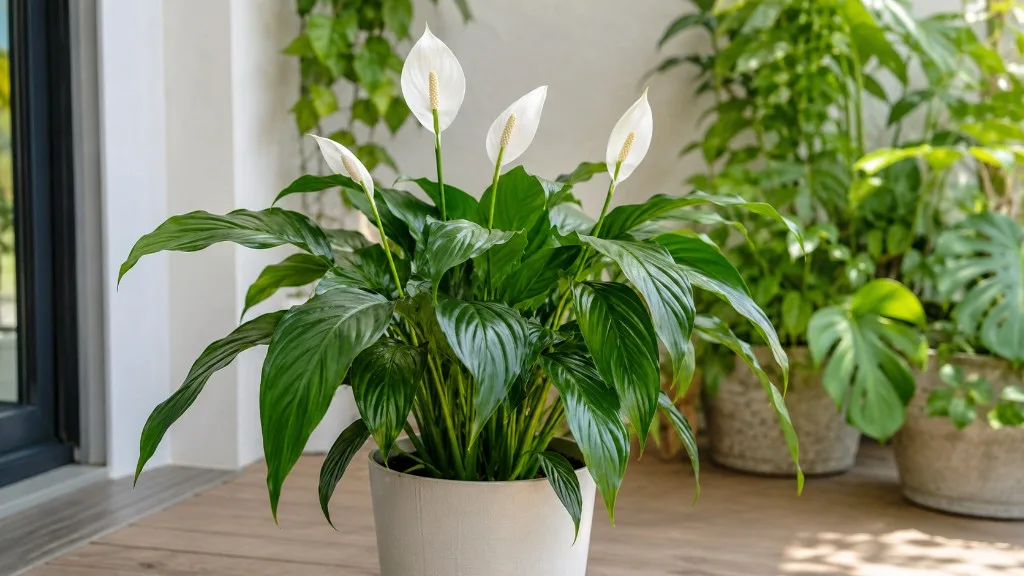
A peace lily (Spathiphyllum) looks easy until the leaves flop, the tips brown, or the white spathes stop returning. Most failures are not mysterious. They come from a predictable stack of light, water, drainage, and indoor air that fights tropical understory logic. This guide gives you a workable peace lily care framework in one read. For cultivar names, grow-light specs, pest treatment workflows, fluoride tap-water fixes, and sixteen symptom-specific rescue pages, use the Peace Lily hub instead.
When to Use This Guide vs. the Peace Lily Hub
Use this guide when you want a single-scroll basics path: light placement, watering checks, soil and pot rules, reblooming logic, pet safety essentials, and the air-purifier reality check. It is built for beginners who just brought a plant home or owners who want a refresher without opening six tabs.
Use the Peace Lily hub when you need the full species profile-Spathiphyllum wallisii and Mauna Loa context, Araceae family background, grow-light distance and duration, spider mite and fungus gnat workflows, and deep dives on every care topic. The hub links to dedicated pages for watering, light, soil, fertilizer, repotting, propagation, and pruning, plus a problems hub for symptom-first troubleshooting.
If your plant shows one clear symptom-persistent drooping, brown tips, yellow leaves, root rot, or spider mites-start on the matching problem page. Come back here when you want the whole care picture in order.
Peace Lily Care at a Glance
Good peace lily care follows one rule: respond to the plant and the soil, not the calendar. Water when the upper layer of mix begins to dry, keep the root zone lightly moist, and never leave the pot standing in a saucer of water. Place the plant where it sees daylight without harsh direct sun. Use a pot with drainage holes, wipe dusty leaves, feed lightly during active growth, and protect the plant from cold drafts and dry heat blasts.
For healthy indoor growth, aim for bright indirect light, a well-draining potting mix, moderate humidity, and average room warmth. Clemson Extension recommends moist but not soggy soil with slight drying between waterings and warns that standing water in the saucer invites root rot. (Clemson HGIC) The RHS notes peace lilies can survive deeper shade but rarely flower there, with an ideal temperature range around 12–24°C. (RHS) That surviving-versus-thriving gap explains why many owners think their plant is “fine” in a dark corner yet never see new spathes.
Check soil every few days, water thoroughly when needed, empty excess runoff, and rotate the pot occasionally for even growth. Remove spent spathes when they fade, trim fully yellow or brown leaves at the base, and treat repeated drooping as a signal to review light, moisture, and root health-not as an automatic cue to pour more water.
What Makes Peace Lilies Different Indoors
Peace lilies are sold as easy plants, which is only true when conditions stay stable. Indoors they still behave like tropical understory growers: filtered light, consistent moisture, warm air, and roots that need oxygen as much as water. When one piece slips, the plant usually speaks through drooping, yellowing, browning, or stalled flowering before you notice root damage.
The care logic is straightforward. Leaves need enough light to fuel growth. Roots need moisture and air in balance. Potting mix must hold water long enough to use but not so long that roots sit in stale wet soil. Indoor air should stay reasonably stable because sudden cold, dry heat, or strong drafts stress leaf margins fast.
Spathe, Spadix, and Normal Aging
The white part most people call the flower is a spathe, a modified leaf wrapping the central spadix where tiny true flowers sit. Fresh spathes open white or creamy white, then gradually turn green, tan, or brown as they age. That color shift is normal aging, not automatic proof of disease.
Fresh white spathes age to green and then brown - trim spent blooms at the base when they look tired.
Cut old spathes near the base once they look tired. Leaving them on is not dangerous, but spent blooms make an otherwise healthy plant look worse than it is. If leaves stay glossy and new shoots emerge, a lack of fresh flowers usually points to light, maturity, season, or feeding-not a fatal problem.
Surviving vs. Thriving in Low Light
A peace lily can survive in lower light, but a surviving plant is not a thriving one. In dim rooms you often see fewer new leaves, slower growth, and little or no flowering. In bright indirect light, the plant has enough energy for fresh foliage and spathes. Missouri Botanical Garden describes peace lilies as tolerant of lower light but preferring bright filtered light, with a clear warning against direct sun. (Missouri Botanical Garden)
“Low light plant” does not mean “no light plant.” A dark hallway or windowless bathroom may keep leaves alive briefly without supporting long-term health. If the plant leans toward a window, produces smaller leaves, stops flowering, or stays wet too long after watering, light is probably too weak. Fix placement before reaching for fertilizer.
Light for Foliage and Blooms
The best light for a peace lily is bright indirect light-near a window with filtered sun, beside a sheer curtain, a few feet from a bright east- or north-facing window, or in a naturally bright room. Direct summer sun through glass can scorch leaves, while very dim rooms reduce flowering and slow growth. RHS guidance matches that pattern: bright indirect light near a window, out of direct summer sun, for stronger growth and blooms. (RHS)
Peace lilies do not need cactus-level sun, but flowering is energy-expensive. If your plant bloomed at the nursery and has not produced a new spathe in months, weak light is the first fix. For grow-light setups, a practical starting point is 10–12 hours of full-spectrum LED light, 12–18 inches above the foliage-then adjust based on leaf color and growth. Full distance, duration, and acclimation steps live on the Peace Lily light guide.
The Book Test for Dim Rooms
Low light keeps many peace lilies alive if you mainly want foliage. Bright indirect light is better when you want fuller growth and repeat blooms. A practical test: can you comfortably read a book in the spot during the day without turning on a lamp? If not, the location is probably too dim for reliable flowering.
This test is more useful than guessing from room size. A large living room with one small window can still be too dark for blooms even though the plant “has a window.” Move the pot closer to the light source gradually over one to two weeks if you increase exposure.
How Light Changes Your Watering Rhythm
Light and water are linked more than most care cards admit. A peace lily in brighter indirect light uses water faster because it is actively photosynthesizing. A plant in a dark corner uses water slowly, so the same weekly schedule becomes overwatering. If your peace lily sits in low light and the mix stays damp for a week or more, reduce watering and improve light before root rot starts.
In a LeafyPixels editorial check (June 2026), a medium peace lily in a 6-inch nursery pot under bright east-window light in a heated apartment needed water roughly every 5–7 days in summer and every 10–14 days in winter, while the same cultivar in a dim hallway corner dried in 12–16 days in summer but stayed wet too long if watered weekly. That is one observed setup-not a universal schedule-but it shows why calendar watering fails.
Watering Without Guesswork
Water a peace lily by checking the soil first, then soaking thoroughly when the top layer has started to dry. The plant likes moisture but not stagnant wet roots. Clemson Extension’s guidance is especially useful here: keep soil moist but not soggy, allow slight drying between waterings, use room-temperature water, and never let the pot sit in excess runoff. (Clemson HGIC)
A rigid “water every seven days” rule fails because indoor conditions change. Warm bright rooms dry pots faster than cool dim offices. Small terracotta pots dry faster than large plastic ones. Winter heating, air conditioning, pot size, root density, and mix composition all shift the rhythm. The plant does not know what day it is; it responds to moisture, oxygen, light, and temperature.
For fluoride sensitivity, seasonal schedules, and the dramatic wilt signal in full detail, use the Peace Lily watering guide.
Wet-Soil Wilt vs. Dry-Soil Droop
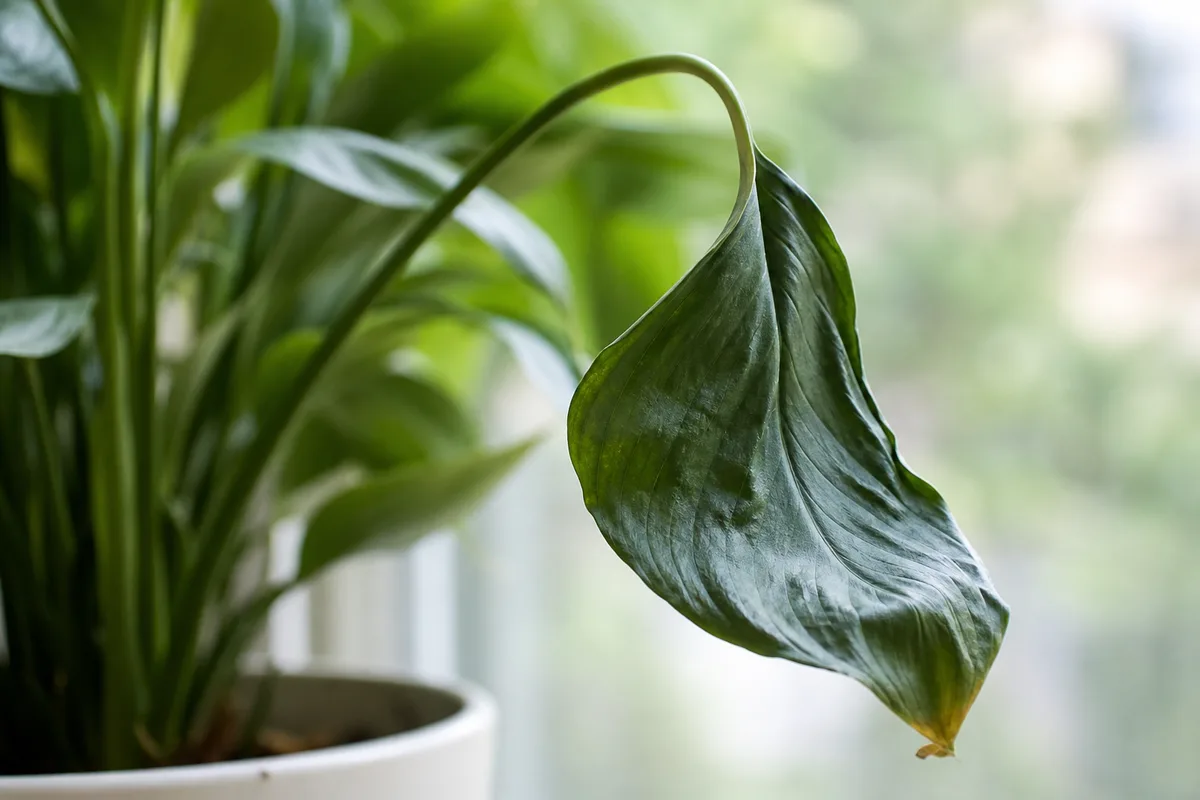
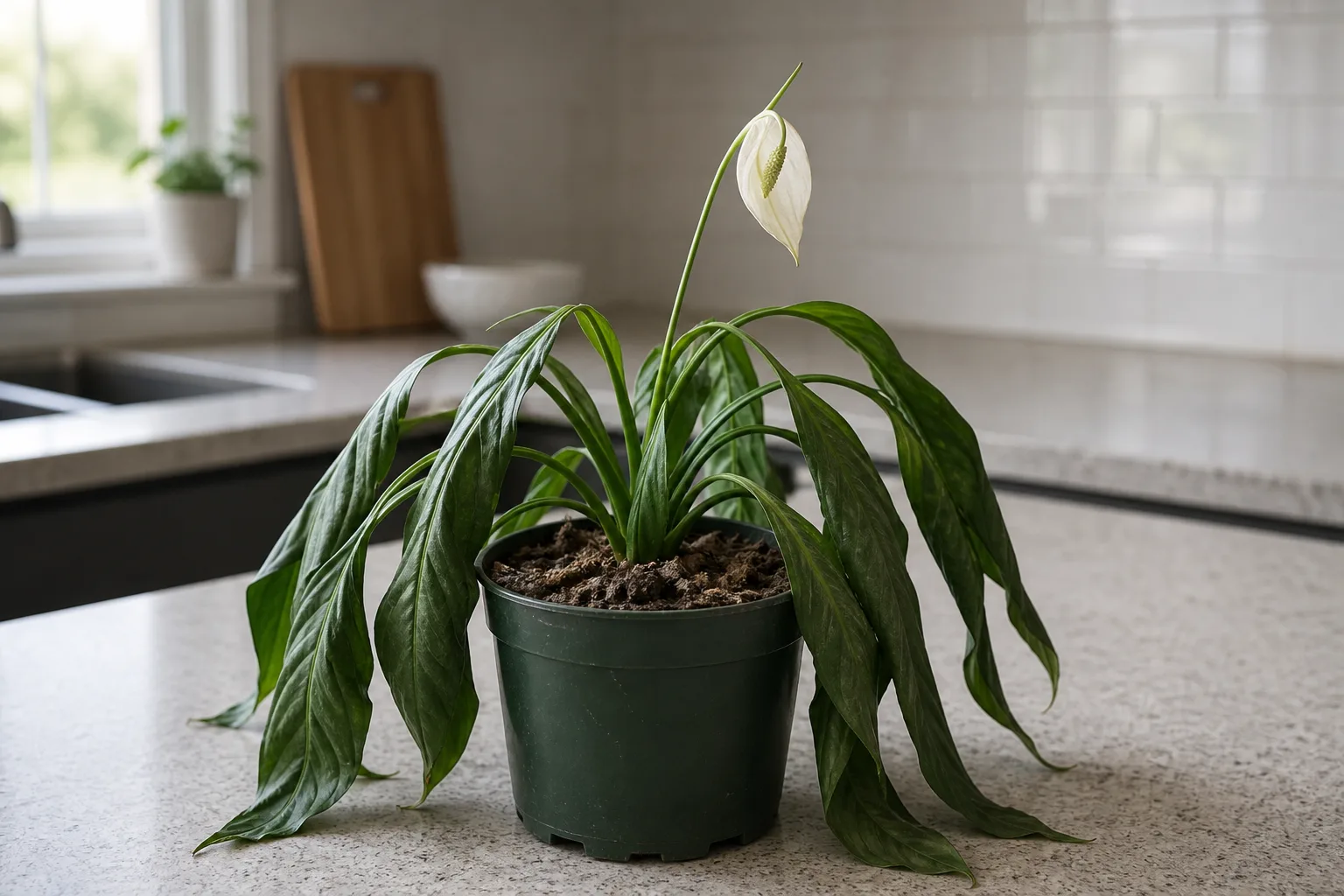
Drooping is the peace lily’s loudest alarm, but the cause can be opposite problems. An underwatered plant usually has dry soil, a lighter pot, limp leaves, and a quick recovery within hours after a thorough drink. An overwatered plant may also droop, yet the soil feels wet, the pot is heavy, lower leaves may yellow, and adding water makes things worse.
Dry-soil droop is dramatic but usually reversible within hours after a thorough soak and complete drainage.
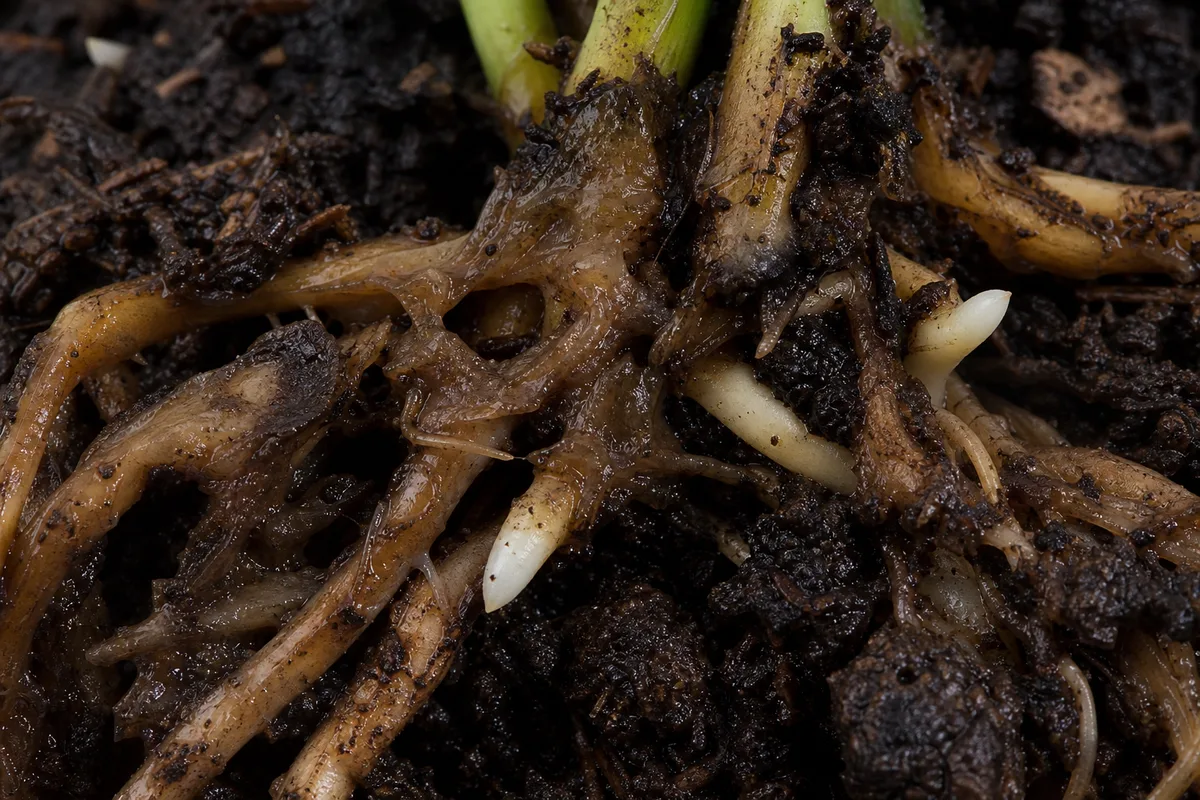
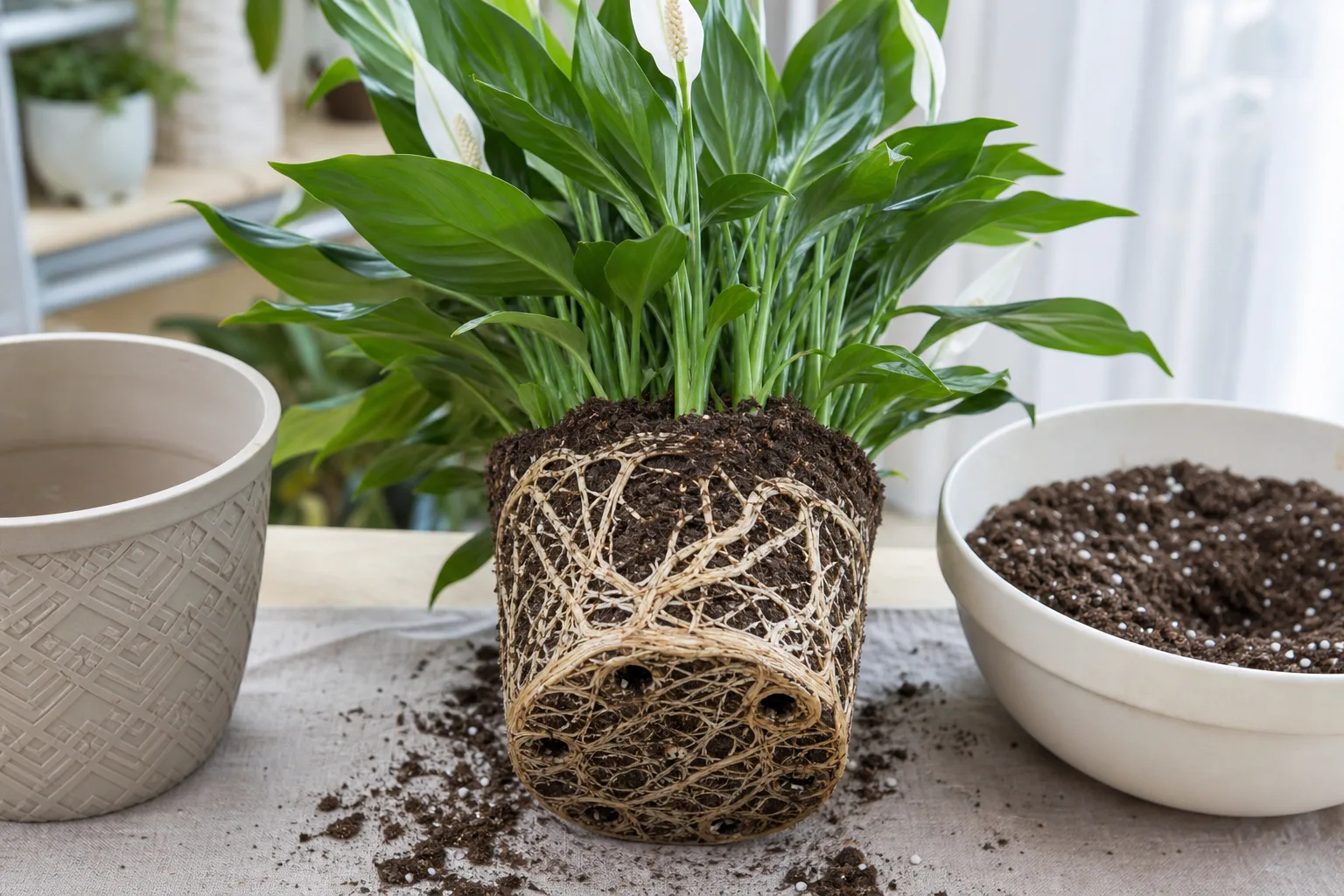
Root rot sits behind chronic overwatering. Roots stay too wet too long, lose oxygen, and stop absorbing water-so the plant wilts while sitting in wet mix. If your peace lily droops in wet soil, slide it out and inspect roots. Healthy roots are firm and pale to light tan; rotting roots are mushy, dark, and may smell sour. Trim damaged roots with clean scissors, repot into fresh airy mix, and water more carefully while the plant recovers. Persistent wet-soil wilt without recovery after watering is a root rot workflow, not a thirst problem.
Bottom Watering When Mix Repels Water
When you water, soak the mix until water flows from drainage holes, then let the pot drain completely and empty the saucer. If water runs straight through very dry mix without soaking in, let the pot sit briefly in a shallow basin so the mix rehydrates, then drain well. NC State Extension notes that watering from below works well for peace lilies, but the plant should still drain afterward. (NC State Extension)
Bottom watering helps when peat-heavy mix becomes hydrophobic after a dry spell. It is a recovery tool, not a permanent substitute for checking moisture at the top of the pot.
Soil, Pots, and Drainage Basics
A good peace lily soil mix holds moisture without turning dense. Most quality indoor potting mixes work if they drain well; heavy garden soil in containers is a poor choice because roots need air pockets. Clemson Extension notes peace lilies grow in almost any well-drained potting mix-a useful reminder that drainage beats branded blends. (Clemson HGIC)
If mix feels compacted, smells stale, grows mold repeatedly, or takes too long to dry, improve structure with perlite, fine bark, or coco chips. You do not need an extreme chunky aroid mix unless your home is very humid or you chronically overwater. The goal is balance: enough moisture for tropical foliage, enough drainage for healthy roots.
Every pot needs drainage holes. Decorative cachepots work only when the plant sits in a separate nursery pot inside them and you remove excess water after watering. A sealed container hides the reservoir where roots rot first. When repotting, move up only one pot size; an oversized pot holds too much wet soil around roots. Full mix recipes and refresh timing live on the Peace Lily soil guide.
Temperature, Humidity, and Placement
Peace lilies prefer stable indoor warmth. NC State Extension describes ideal warm conditions around 68–85°F during the day and warns that extended cold below about 40°F damages leaves, stems, and roots. (NC State Extension) RHS recommends keeping plants away from hot radiators and cold drafts, with a broader room-temperature range of 12–24°C. (RHS)
Humidity helps but is often overstated as a cure-all. Peace lilies tolerate average indoor humidity, yet dry air can contribute to brown tips-especially with underwatering, heat vents, or fertilizer salts. Bathrooms and kitchens work when light is adequate. Grouping plants or using a humidifier raises local humidity more reliably than misting, which only briefly wets leaves. UF/IFAS also recommends wiping dusty leaves with a soft damp cloth so foliage receives light better. (UF/IFAS Gardening Solutions)
Keep pots off cold window sills in winter and away from blasting AC or radiator heat. Temperature swings change drying speed, so read the pot-not the calendar-when seasons shift.
Feeding and Reblooming
Peace lilies are not heavy feeders. Feed lightly during active growth, usually spring through summer, with balanced houseplant fertilizer at diluted strength. If the plant sits in low light, was recently repotted, or is not actively growing, skip feeding. Light is the energy source; fertilizer supplies minerals-it cannot replace insufficient light.
Overfertilizing causes brown tips, crusty soil, and stressed roots. A yellow plant from overwatering does not need more fertilizer. A scorched plant from direct sun does not need more fertilizer. Fix the underlying issue first.
A peace lily that will not flower usually needs better light, time, or more balanced care-not a bloom booster. Move it to bright indirect light and wait several weeks. Very young divisions may grow roots and leaves before flowering. Remove spent spathes, keep soil evenly moist during growth, and expect home reblooming to be less dramatic than nursery greenhouse displays. Light-first logic and feeding schedules are expanded on the Peace Lily fertilizer guide.
Symptom Quick-Map: Where to Go Next
Peace lily problems are easier to solve when you read the whole plant, not one leaf. A single old yellow leaf at the base may be normal aging. Multiple yellow leaves with wet soil suggest overwatering. Brown tips with firm leaves may reflect dry air, inconsistent watering, mineral buildup, or fertilizer stress. Limp leaves with bone-dry soil usually mean thirst; limp leaves with wet soil mean inspect roots.
Before repotting, fertilizing heavily, or spraying for pests, check light, soil moisture, drainage, temperature, and recent changes-a move, new pot, darker room, heat wave, or schedule shift. Many failures start there.
| What you see | Likely starting point |
|---|---|
| Collapse with dry soil | Underwatering or drooping leaves |
| Collapse with wet soil | Overwatering or root rot |
| Brown leaf tips | Brown tips or low humidity |
| Yellow leaves, heavy pot | Overwatering |
| Pale stretched growth, no blooms | Not enough light or leggy growth |
| Webbing or speckled leaves | Spider mites |
| Small flies above soil | Fungus gnats |
The Peace Lily problems hub indexes every symptom page when you need step-by-step rescue workflows.
Repotting and Division Basics
Repot when the plant is clearly root-bound, drying out too fast, pushing roots through drainage holes, or sitting in broken-down compacted mix. Spring is often easiest because growth is picking up, but rotting soil should be fixed when you find it-not after one yellow leaf. Repotting helps when the root environment is the problem; otherwise it adds stress.
During repotting, check for firm pale roots versus mushy dark tissue before adding fresh mix.
Water lightly a day ahead if mix is very dry, slide the plant out, loosen crowded roots gently, and move to a container only slightly larger. Add fresh mix around the root ball without burying the crown too deep. Water thoroughly, drain well, and keep the plant in bright indirect light while it settles. Some droop after repotting is normal; soggy soil and repeated disturbance slow recovery. Full timing and mix refresh steps are on the Peace Lily repotting guide.
Propagation is usually done by division, not leaf cuttings. UF/IFAS recommends dividing peace lilies in spring. (UF/IFAS Gardening Solutions) Each division needs roots and growing points; a single leaf without roots will not become a new plant. Divide only when the parent is large enough to separate naturally. Smaller divisions take time to look full, so avoid splitting into too many weak pieces. See the Peace Lily propagation guide for division steps.
Pet and Child Safety
Peace lily is not a true lily, but it is still unsafe to chew or eat. The ASPCA lists Spathiphyllum as toxic to dogs and cats because of insoluble calcium oxalate crystals, with possible signs including oral irritation, burning of the mouth, drooling, vomiting, and difficulty swallowing. (ASPCA) SDSU Extension notes all parts contain calcium oxalate and advises keeping small children, cats, and dogs from chewing the plant. (SDSU Extension)
This toxicity is different from true lilies (Lilium, Hemerocallis) that can cause kidney failure in cats, as Pet Poison Helpline explains when owners panic over the word “lily.” (Pet Poison Helpline) Peace lily irritation is serious and painful, but it is not the same emergency category as Easter lily or daylily ingestion. Still treat any confirmed chewing seriously.
If a pet or child eats part of the plant and shows symptoms:
- Contact your veterinarian or physician promptly.
- Call the ASPCA Animal Poison Control Center at (888) 426-4435 (fee may apply).
- Call Poison Control at 1-800-222-1222 for human exposure guidance.
Prevention beats crisis management. Keep peace lilies out of reach of chewers, clean up trimmed leaves, and wash hands after pruning if you have sensitive skin. If pets repeatedly target houseplants, choose verified pet-safe alternatives instead of relying on training alone.
The Air-Purifying Claim: What Research Actually Shows
Peace lilies are often marketed as air-purifying plants, but the claim needs context. NASA’s 1989 indoor plant study included peace lily and showed that plants could remove certain pollutants under controlled chamber conditions. (NASA Technical Reports Server) That finding helped create the popular idea that a few houseplants clean normal living rooms. A sealed test chamber is not the same as a home with open doors, ventilation, furniture off-gassing, cooking particles, cleaning products, and changing airflow.
Later analysis has been more cautious. A review by Bryan E. Cummings and Michael S. Waring concluded that potted plants have shown VOC removal in small sealed chambers, but typical indoor environments would need unrealistically high numbers of plants to meaningfully compete with normal building air exchange. (PubMed) The practical takeaway is not that peace lilies are useless-they are beautiful, calming houseplants. They should not be treated as replacements for ventilation, source control, or a proper air purifier when indoor air quality is a real concern.
Buy a peace lily because you like the plant, not because you expect it to solve indoor pollution. It can make a room feel fresher and more alive, and caring for plants can be a satisfying daily ritual. For smoke, fine particles, heavy allergens, mold problems, or chemical exposure, use appropriate building, cleaning, filtration, and professional advice. A plant is a living decoration with benefits, not a mechanical air-cleaning system.
Related Guides
- How to water indoor plants the right way - soil-check habits that prevent overwatering
- Houseplant humidity guide - when dry air contributes to brown tips
- Repotting houseplants - general repot workflow for root checks and pot sizing
- Pothos care guide - similar beginner species-care framework for another forgiving vine
Conclusion
Peace lily care works when you treat the plant as responsive, not indestructible: bright indirect light, water when the top of the mix begins to dry, drainage that never traps stale water, and symptom checks before you panic-pour. When one problem keeps returning, use the Peace Lily hub and the matching problem page instead of guessing from leaf color alone.