Problems

Hornwort Problems: Causes & Quick Fixes

Quick answer

Hornwort is prone to 16 common issues - each link below is a plant-specific fix guide.
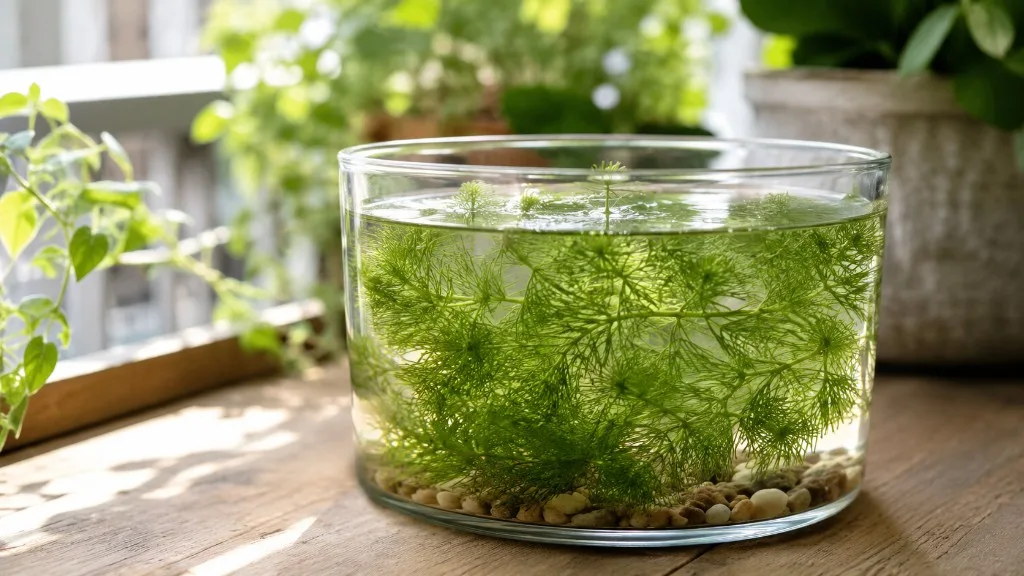
Hornwort aquatic plant in clean aquarium water

Hornwort problems

Use the guides below to diagnose and fix common issues on Hornwort. Each problem page explains why it happens on this species and what to do first.

Or use our problem diagnosis tool to narrow down symptoms.

Common problems on Hornwort

Likely cause: Low nutrients, poor light, dirty water, or acclimation melt after moving tanks

Quick fix: Remove melting growth, improve water changes, and adjust light gradually.

Full fix guide →

Likely cause: Weak light, cold water, or nutrient imbalance in a low-tech setup

Quick fix: Stabilize temperature and use moderate aquarium lighting before adding fertilizer.

Full fix guide →

Likely cause: Common on this plant type; confirm with recent watering, light, and root checks.

Quick fix: Inspect the plant and correct the most likely care stressor before stacking treatments.

Full fix guide →

Root Rot

Medium

Likely cause: Common on this plant type; confirm with recent watering, light, and root checks.

Quick fix: Inspect the plant and correct the most likely care stressor before stacking treatments.

Full fix guide →

Likely cause: Common on this plant type; confirm with recent watering, light, and root checks.

Quick fix: Inspect the plant and correct the most likely care stressor before stacking treatments.

Full fix guide →

Likely cause: Common on this plant type; confirm with recent watering, light, and root checks.

Quick fix: Inspect the plant and correct the most likely care stressor before stacking treatments.

Full fix guide →

Likely cause: Common on this plant type; confirm with recent watering, light, and root checks.

Quick fix: Inspect the plant and correct the most likely care stressor before stacking treatments.

Full fix guide →

Mealybugs

Medium

Likely cause: Common on this plant type; confirm with recent watering, light, and root checks.

Quick fix: Inspect the plant and correct the most likely care stressor before stacking treatments.

Full fix guide →

Aphids

Medium

Likely cause: Common on this plant type; confirm with recent watering, light, and root checks.

Quick fix: Inspect the plant and correct the most likely care stressor before stacking treatments.

Full fix guide →

Likely cause: Common on this plant type; confirm with recent watering, light, and root checks.

Quick fix: Inspect the plant and correct the most likely care stressor before stacking treatments.

Full fix guide →

Wilting

Medium

Likely cause: Common on this plant type; confirm with recent watering, light, and root checks.

Quick fix: Inspect the plant and correct the most likely care stressor before stacking treatments.

Full fix guide →

Likely cause: Common on this plant type; confirm with recent watering, light, and root checks.

Quick fix: Inspect the plant and correct the most likely care stressor before stacking treatments.

Full fix guide →

Likely cause: Common on this plant type; confirm with recent watering, light, and root checks.

Quick fix: Inspect the plant and correct the most likely care stressor before stacking treatments.

Full fix guide →

Likely cause: Common on this plant type; confirm with recent watering, light, and root checks.

Quick fix: Inspect the plant and correct the most likely care stressor before stacking treatments.

Full fix guide →

Likely cause: Common on this plant type; confirm with recent watering, light, and root checks.

Quick fix: Inspect the plant and correct the most likely care stressor before stacking treatments.

Full fix guide →

Likely cause: Common on this plant type; confirm with recent watering, light, and root checks.

Quick fix: Inspect the plant and correct the most likely care stressor before stacking treatments.

Full fix guide →

Frequently asked questions

How often should I water Hornwort?

Keep fully aquatic in clean, dechlorinated water; refresh water quality before the plant declines. In practice, water always submerged or floating in clean water; maintain tank or pond water changes. Check water clarity, temperature, flow, and leaf color rather than watering by a calendar. Growth slows in cool water or short winter light; thin excess growth and keep filtration steady.

What light does Hornwort need?

Hornwort grows best in moderate to bright aquarium or pond light; avoid sudden harsh outdoor sun without acclimation. It also tolerates Low-tech aquarium light, Filtered outdoor pond light. Avoid unacclimated full sun, dirty water, and tanks treated with copper or algaecides.

Is Hornwort toxic to pets?

Hornwort is not treated as broadly pet-safe. LeafyPixels keeps cats, dogs, rabbits, and birds at caution, and treats turtle and tortoise use as limited-evidence, husbandry-specific guidance that depends on clean water, correct identification, and conservative feeding.

How do I propagate Hornwort?

Hornwort propagates by division, stem cuttings, runner separation. The easiest method is division or cuttings. Propagate from healthy divisions or cuttings taken from clean, untreated stock.

What soil is best for Hornwort?

Use aquatic setup with no ordinary potting mix in the turtle tank; anchor or float according to the species. A good mix includes Aquarium-safe sand or gravel if rooted, No fertilizer-rich potting soil in turtle tanks, Attach rhizome plants to rock or driftwood. Not applicable for submerged aquatic culture; prioritize clean, oxygenated water. Target soil pH around About 6.5-7.8 for most community turtle aquariums.

What humidity does Hornwort need?

Hornwort prefers aquatic or constantly humid surface conditions. You may need to boost humidity for best growth. Keep exposed roots and floating leaves from drying out Use a covered aquarium only if ventilation remains adequate.

When should I repot Hornwort?

Repot Hornwort thin or reposition growth as needed rather than repotting on a schedule, ideally in warm active growth. Signs it needs a bigger pot: overcrowded tank surface, plants clogging filter intake, root mats trapping debris.

How this Hornwort problems guide is reviewed?

Editorial policyReview board

Written by · Reviewed by LeafyPixels Review Board · Updated June 22, 2026

This Hornwort problems problem guide was researched and written by . Problems symptoms on Hornwort, lookalike causes, and step-by-step fixes are cross-checked against extension pest, disease, and care references before publication.

We prioritize sources that hold up under scrutiny:

  • University cooperative extension bulletins and fact sheets (Penn State, Clemson, UMD, NC State, and similar programs)
  • Botanical garden and horticultural society publications
  • Peer-reviewed plant science and veterinary toxicology references where pet safety matters (including ASPCA Animal Poison Control)
  • Established reference works on indoor plant culture

The LeafyPixels editorial team then reviews the draft for clarity, step-by-step usefulness, and fit with real apartment and home conditions-not ideal greenhouse setups. When guidance changes materially, we update the page and note the revision date.


Sources used

  1. Aquarium Co-Op notes (n.d.) Hornwort Care. [Online]. Available at: https://www.aquariumcoop.com/blogs/aquarium/hornwort-care (Accessed: 22 June 2026).
  2. coontail (n.d.) Fs1236. [Online]. Available at: https://njaes.rutgers.edu/fs1236/ (Accessed: 22 June 2026).
  3. coontail naturally forms denser growth (n.d.) Coontail. [Online]. Available at: https://aquaticweed.org/species/coontail/ (Accessed: 22 June 2026).
  4. draws nutrients from the water column (n.d.) Plantedturtletanks. [Online]. Available at: https://austinsturtlepage.com/Articles/plantedturtletanks.htm (Accessed: 22 June 2026).
  5. has no functional root system (n.d.) WsSWIMSDocument.Ashx. [Online]. Available at: https://apps.dnr.wi.gov/water/wsSWIMSDocument.ashx?documentSeqNo=54821717 (Accessed: 22 June 2026).
  6. Honeydew can support sooty mold (n.d.) Pn7404. [Online]. Available at: https://ipm.ucanr.edu/PMG/PESTNOTES/pn7404.html (Accessed: 22 June 2026).
  7. insecticidal soap or a strong water spray (n.d.) Common Houseplant Insects Related Pests. [Online]. Available at: https://hgic.clemson.edu/factsheet/common-houseplant-insects-related-pests/ (Accessed: 22 June 2026).
  8. insecticidal soap or horticultural oil labeled for mites (n.d.) Spider Mites. [Online]. Available at: https://ipm.ucanr.edu/home-and-landscape/spider-mites/ (Accessed: 22 June 2026).
  9. Insufficient light causes stems to grow long spaces between leaf nodes (n.d.) Lighting Indoor Plants. [Online]. Available at: https://extension.umn.edu/planting-and-growing-guides/lighting-indoor-plants (Accessed: 22 June 2026).
  10. Light attenuates with depth in water (n.d.) Full. [Online]. Available at: https://www.frontiersin.org/journals/plant-science/articles/10.3389/fpls.2013.00140/full (Accessed: 22 June 2026).