Mealybugs on Hornwort: Causes, Checks & Fixes
Quick answer
Mealybugs on hornwort almost always sit on emersed or floating stem tips-not on fully submerged whorls. First step: move the bunch to a quarantine bucket, inspect forked leaves at the waterline, and dab visible insects with alcohol outside the fish or turtle tank.
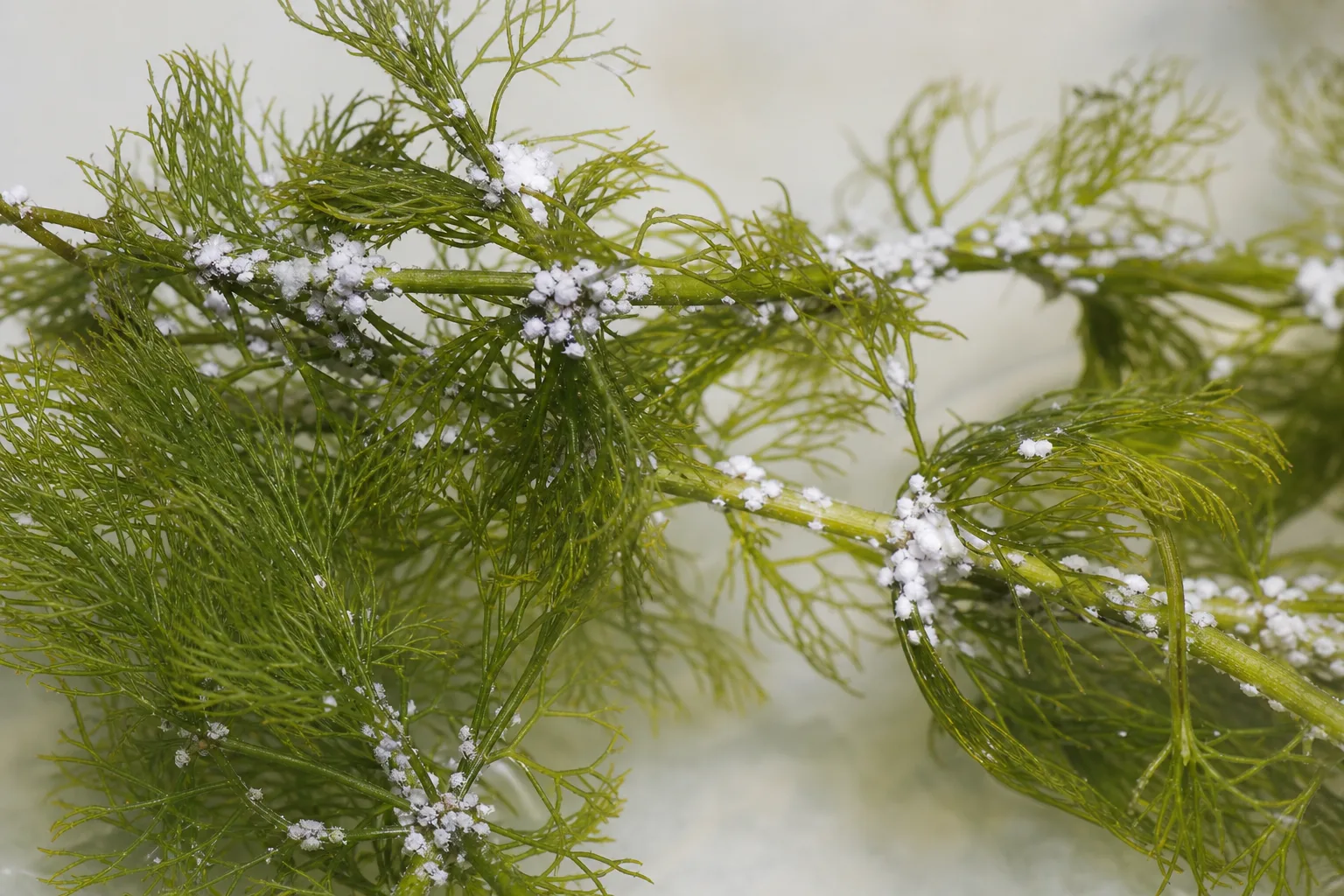
Mealybugs on Hornwort: Causes, Checks & Fixes
This guide covers mealybugs on Hornwort. See also the general Mealybugs guide, watering, and light pages for this plant.
Mealybugs on Hornwort: Causes, Checks & Fixes
Quick answer
Mealybugs on hornwort (Ceratophyllum demersum, coontail) look out of place for good reason. Hornwort is a fully aquatic, rootless plant with forked leaves in tight whorls-not a potted houseplant with leaf axils and crowns. Mealybugs are soft, wax-covered insects that feed in colonies on plant stems and protected crevices, which on hornwort usually means emersed tips, floating stems at the waterline, or nursery stock kept partially out of water.
First step: pull the affected bunch out of your display tank and into a quarantine bucket. Inspect whorl forks and stem nodes with a hand lens. Dab each cottony cluster with a cotton swab dipped in 70% isopropyl alcohol only while the plant is out of the aquarium-never pour alcohol, neem oil, or insecticidal soap into a stocked fish or turtle tank. After manual cleanup, trim any stems still coated in wax or honeydew and re-rinse before deciding whether the bunch is safe to return.
What mealybugs look like on hornwort
On hornwort, mealybugs show up as white, cottony patches caught in the forked needles of a whorl or along a stem node-most often where stems break the surface or were grown emersed in a greenhouse. Colonies produce sticky honeydew and may be accompanied by ants or black sooty mold on nearby surfaces.
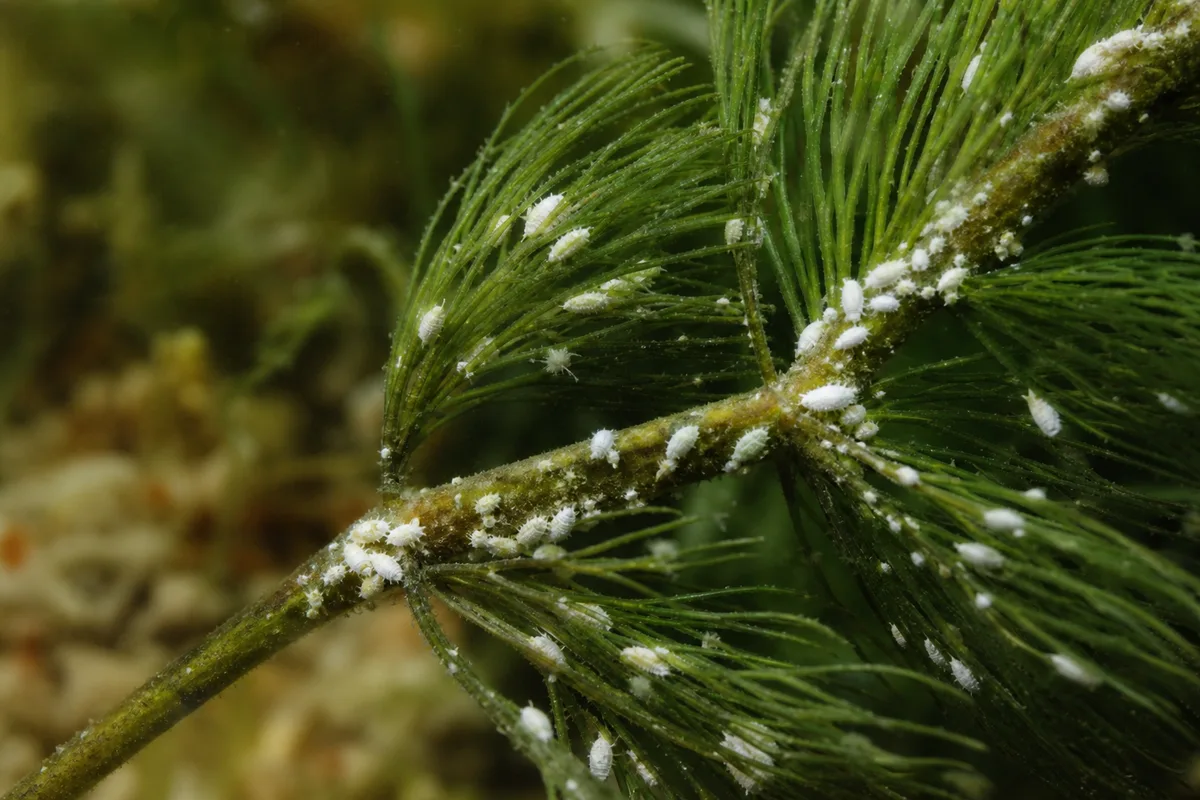
Mealybugs symptoms on Hornwort - compare with healthy tissue on the same plant.
Because hornwort lacks broad leaves and true roots, you will not see the classic houseplant pattern of cotton masses in leaf axils or at the soil line. Instead, check:
- Whorl forks where needles branch-tight pockets collect wax and egg sacs
- Floating stem tips resting against tank glass, hardscape, or rim
- Emersed portions on paludarium ledges or quarantine containers with low water
- Sticky film on the water surface or rim where honeydew drips from infested tips
Heavy feeding can leave hornwort looking pale, stunted, or shedding needles, but melting is common during acclimation too. Pest damage tends to track localized white clusters rather than uniform needle drop across the whole bunch.
Why hornwort gets mealybugs
Mealybugs are greenhouse and indoor-plant pests, not native aquatic insects. They are often introduced on new plants, tools, or pots. Hornwort picks them up in a few predictable ways:
Emersed nursery culture. Aquarium plants are frequently grown partially above water in humid greenhouses-the same environment where citrus and other mealybug species thrive on ornamentals. Cottony clusters on newly purchased hornwort usually arrived before the plant ever reached your tank.
Floating contact at the waterline. Hornwort is commonly kept floating. Stems that ride against the glass or spill over the rim sit in the warm, still air mealybugs prefer, especially near windows, heat lamps, or turtle basking lights.
Cross-contamination during quarantine. Hornwort quarantined on a shelf beside infested pothos, fittonia, or other houseplants can acquire crawlers that walk from pot to bucket.
Stress without causing the pest. Dirty water, acclimation melt, or low light can weaken hornwort, but mealybugs still need emersed or waterline tissue to persist. Hornwort absorbs nutrients through its stems and leaves and has no true roots, so there is no potting-soil reservoir where root-feeding mealybugs hide-unlike many houseplants.
Fully submerged stems in a clean, filtered aquarium are poor long-term habitat for air-breathing mealybugs. If you only ever see white fuzz briefly after purchase and it disappears once submerged growth takes over, you likely removed the last emersed tissue already.
How to confirm the cause
Work through these checks before treating:
- Location on the plant - Are clusters only on tips above water or at the surface? Submerged-only white specks may be debris or algae instead.
- Crush test - Dab a cluster with a wet swab. Mealybugs leave a pinkish smear; perlite, styrofoam packing, or hard water crust do not.
- Movement - Under a hand lens, nymphs may shift slowly in whorl forks. Static fluff that never changes over several days is less likely to be live mealybugs.
- Honeydew and ants - Sticky honeydew and sooty mold are common mealybug signs. Ants on the tank rim pointing to one floating bunch strongly suggest sap feeders on emergent tissue.
- Purchase history - New hornwort from a fish store, online seller, or pond trade within the last few weeks fits introduction far better than a spontaneous in-tank outbreak.
- Lookalike exclusion - See the section below before using any pesticide dip.
If every stem stays fully underwater, water is clean, and white material is evenly dusted on needles without clustering in forks, suspect calcium or biofilm, not mealybugs.
First fix for hornwort
Move the affected hornwort to a separate quarantine bucket or bare tank-no fish, turtles, or shrimp.
That single step keeps honeydew, crawlers, and any treatment products out of your main system while you inspect. UMN Extension recommends isolating a plant as soon as pests are detected.
Then:
- Rinse stems under lukewarm running water, gently opening whorls with your fingers to dislodge surface insects.
- Physically remove colonies with tweezers or a cotton swab dipped in 70% isopropyl alcohol, dabbing each cottony mass. UC IPM advises testing alcohol on a small area first and repeating weekly until the infestation is gone.
- Trim stems still coated in wax, honeydew, or dense egg sacs. Hornwort reproduces from fragments, so keep only clean sections.
- Hold in quarantine two to three weeks with moderate light. Inspect new growth and whorl forks regularly before returning the plant to a display or turtle tank.
Do not make alcohol, neem oil, or insecticidal soap your first move inside a stocked aquarium. Those products can harm fish, turtles, and beneficial bacteria. If emersed infestation is severe on irreplaceable stock, treat out of tank only, then rinse thoroughly and quarantine again.
Step-by-step recovery
Week 1: Daily inspection of quarantined hornwort. Remove any new white clusters manually. Skim honeydew from the quarantine water surface and change water if it feels slick.
Weeks 2–3: Repeat alcohol dabs or water rinses every five to seven days to catch newly hatched crawlers before they lay new egg sacs. Mealybug wax protects adults; young nymphs are easier to kill.
When reintroducing: Float or anchor only stems with no cottony residue at the waterline. Position bunches so emergent tips do not rest against tank rims shared with houseplant shelves.
If treatment fails: UC IPM notes that severely infested houseplants are often best discarded rather than repeatedly treated. Hornwort is cheap and fast-growing-replacing a persistently infested bunch is usually safer for a turtle or community tank than escalating pesticides.
Recovery timeline
Expect visible clusters to shrink within one to two weeks of consistent manual removal. Plan three to four weekly passes before calling the bunch clear; mealybug egg sacs hatch on staggered cycles.
Hornwort recovery signs:
- New bright-green whorls on stem tips without white wax
- No fresh honeydew on the water surface after 7–10 days
- Stable needle density instead of ongoing melt from localized stem damage
Worsening signs:
- Cottony masses spread to multiple quarantine bunches
- Ant activity increases around the bucket or tank rim
- Stems turn mushy or black-that is rot or water-quality failure, not mealybug wax; discard those sections
Damaged needles do not “heal,” but hornwort quickly replaces lost growth from surviving tips when water quality and light are stable.
Lookalike symptoms on hornwort
| What you see | Likely cause | How to tell |
|---|---|---|
| White cottony clumps in whorl forks on emersed tips | Mealybugs | Pink smear when crushed; slow movement under lens |
| Even white dust on submerged needles | Calcium precipitate or biofilm | Wipes off uniformly; no clustering in forks |
| Tiny white specks that jump | Springtails or other arthropods in quarantine area | Jump when disturbed; not waxy cotton |
| Fluffy debris in shipping bag | Perlite, rock wool, or styrofoam | Crumbles dry; no honeydew |
| Brown mushy stem sections | Rot from buried stems or foul water | Soft tissue, foul smell-not white wax |
Do not treat lookalikes with alcohol dips until you confirm live mealybugs. Unnecessary dips stress hornwort during acclimation and delay rooting or floating stability.
Mistakes to avoid
- Treating inside a stocked turtle or fish tank. Alcohol and horticultural oils are not aquarium-safe first responses.
- Assuming submerged hornwort has a soil-dwelling mealybug population. Root-mealy species matter on potted houseplants; hornwort in water does not offer the same habitat.
- One rinse and done. Mealybugs require repeated treatment to catch crawlers.
- Returning quarantined hornwort while emergent tips still touch infested houseplants.
- Over-fertilizing after pest stress. High nitrogen can stimulate tender growth where mealybugs prefer to lay eggs on any emersed tissue you leave above water.
- Confusing hornwort melt with pest damage. Acclimation shedding after a tank move is common; pair melt with wax clusters before blaming mealybugs.
How to prevent mealybugs on hornwort
- Quarantine every new bunch two to three weeks in a separate bucket with light and water changes.
- Rinse and inspect whorls before adding hornwort to turtle tanks, breeding setups, or display aquaria.
- Buy submerged stock when possible and trim emersed tips on arrival.
- Keep floating mats away from houseplant shelves, windowsill pots, and heat vents where mealybugs thrive.
- Inspect at the waterline during weekly tank maintenance-early cottony spots are easiest to remove outside the main system.
- Discard heavily infested bunches instead of risking your aquarium biology on repeated pesticide experiments.
For turtle keepers: hornwort is often used for shade and nibbling, but decaying, honeydew-coated stems foul water quickly. Remove treated or trimmed fragments promptly so they do not decompose in the tank.
When to worry
Mealybugs on hornwort are usually a quarantine and hygiene problem, not a death sentence for the plant. Worry more when:
- Infestation spans several bunches and persists after three weekly manual treatments
- You run a paludarium with permanently emergent hornwort-mealybugs can persist there like on any houseplant
- Ants tend colonies at the tank rim, which often means the population is established and reproducing
- You also keep high-value emersed plants nearby; crawlers can walk to pothos, ferns, or orchids
If fully submerged hornwort in a clean tank shows no emergent tips and new white clusters still appear, re-check the source-another nearby plant is the more likely reservoir, not the hornwort underwater.
When to use this page vs other Hornwort guides
- Hornwort watering guide - Use for routine moisture checks before assuming mealybugs is the main issue.
- Hornwort problems hub - Browse all 16 common issues on this species.
- Yellow Leaves on Hornwort - Different entry point when symptoms overlap with mealybugs.
- Slow Growth on Hornwort - Different entry point when symptoms overlap with mealybugs.
- Spider Mites on Hornwort - Different entry point when symptoms overlap with mealybugs.