Spider Mites on Hornwort: Causes, Checks & Fixes
Quick answer
Spider mites on hornwort (*Ceratophyllum demersum*) almost always sit on emersed or floating stem tips at the waterline, not on fully submerged whorls. First step: move the bunch to a quarantine bucket, inspect forked needles for stippling and webbing, and rinse whorls under lukewarm water-never pour horticultural oil, neem, or insecticidal soap into a stocked fish or turtle tank.
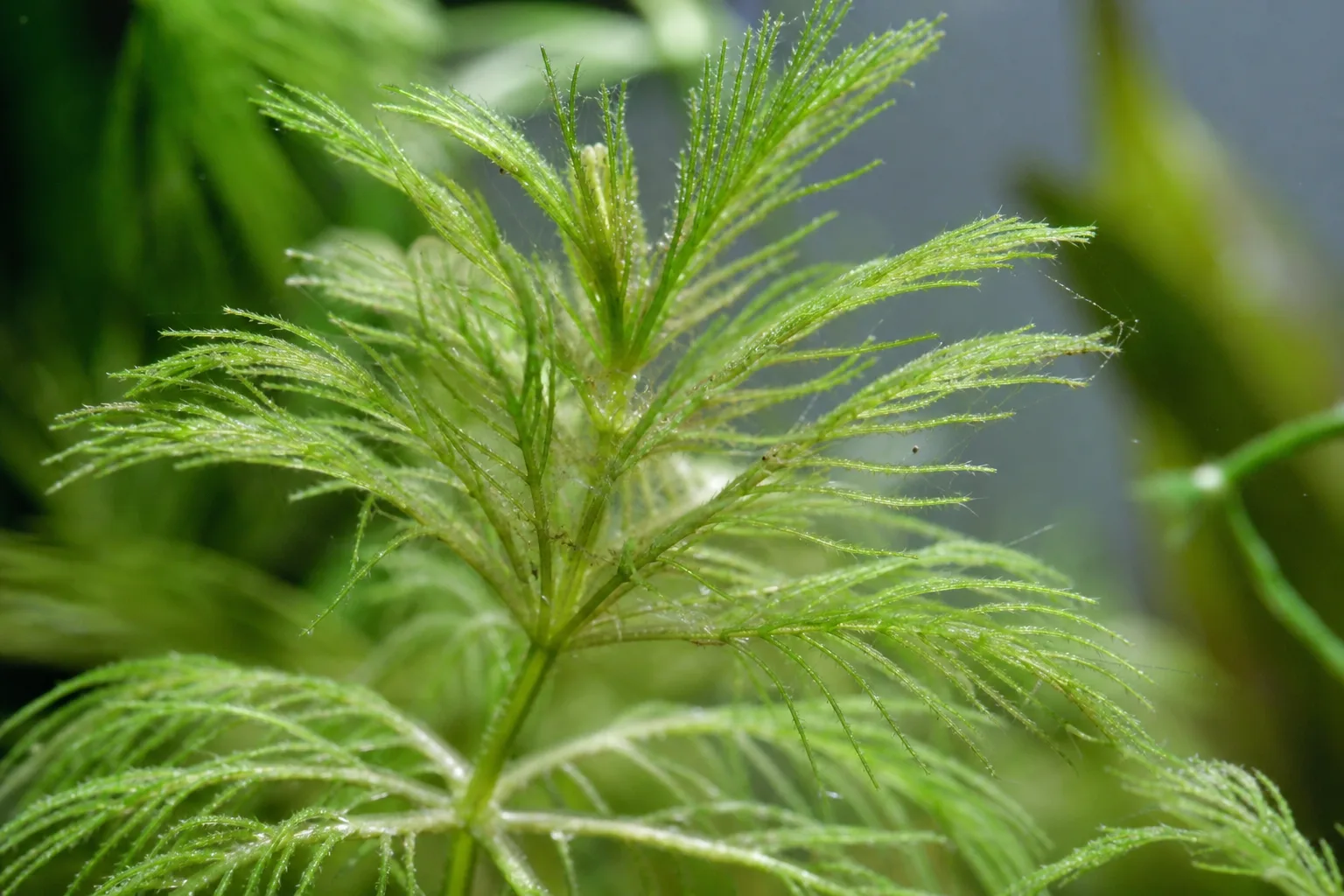
Spider Mites on Hornwort: Causes, Checks & Fixes
This guide covers spider mites on Hornwort. See also the general Spider Mites guide, watering, and light pages for this plant.
Spider Mites on Hornwort: Causes, Checks & Fixes
Quick answer
Spider mites on hornwort (Ceratophyllum demersum, coontail) are tiny sap-feeding arachnids that colonize emersed stem tips, floating mats at the waterline, and nursery stock-not healthy stems fully submerged in a clean aquarium. Spider mites multiply in hot, dry air and leave stippled, silvery mottling plus fine webbing on plant tissue.
First step: pull the affected bunch out of your display tank into a quarantine bucket. Inspect forked needles in whorl forks where stems break the surface. Rinse whorls under lukewarm running water to knock down live mites, then hold the plant outside the aquarium while you confirm stippling and webbing. Never pour horticultural oil, neem, or insecticidal soap into water shared with fish, turtles, or shrimp.
What spider mite damage looks like on hornwort whorls
On hornwort, mite damage shows up on feathery whorls of forked needles-most often where stems float at the surface or were grown emersed before sale. Spider mites are tiny arachnids that pierce individual plant cells and feed on sap. Check:
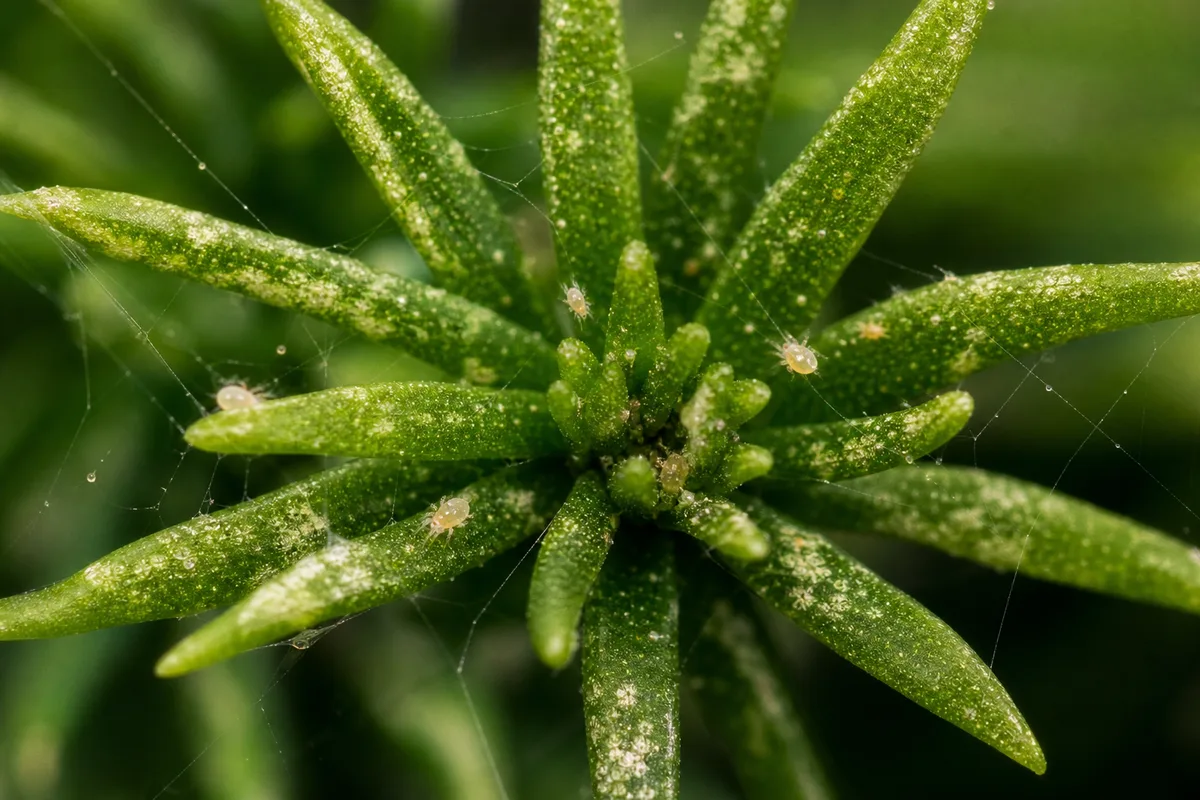
Spider Mites symptoms on Hornwort - compare with healthy tissue on the same plant.
- Silvery or yellow stippling on emersed whorls-the classic pinprick damage pattern
- Fine webbing in whorl forks and along floating stem tips, especially in dry, still air
- Bronzing or crisping on heavily fed portions as cells die
- No black specks on needles-thrips leave dark droppings; mites do not
Because hornwort has needle-like forked leaves in tight whorls, not broad houseplant foliage, you will not see the textbook pattern of damage on flat leaf undersides. Instead, stippling often tracks the outer needles of whorls exposed to air at the tank rim, against glass, or under turtle basking lamps.
Fully submerged stems deep in the water column are poor long-term habitat for air-breathing spider mites. Spider mites cannot survive underwater, so uniform speckling on submerged-only tissue with no emergent tips points to lookalikes-calcium precipitate, biofilm, or algae-not an active mite colony.
Why hornwort gets spider mites
Spider mites are greenhouse and indoor-plant pests, not native aquatic insects. Hornwort picks them up in predictable ways:
Emersed nursery culture. Aquarium plants are often grown partially above water in humid greenhouses-the same warm, dry microclimate where spider mites thrive when air is hot and dry. Stippling on newly purchased hornwort usually arrived before the plant reached your tank.
Floating mats at the waterline. Hornwort is commonly kept floating. Stems piled against the glass or spilling over the rim sit in warm, still air-especially near windows, heat vents, or turtle basking lamps that dry emergent tissue quickly.
Open-top turtle tanks and paludariums. Low water levels or mats trapped at the surface leave humid stem tips exposed for days. Mites prefer that emersed zone the same way they colonize houseplant leaves near heaters.
Cross-contamination from houseplants. Hornwort quarantined beside infested pothos, fittonia, or other dry-air houseplants can acquire crawlers that walk to the bucket rim.
Stress without causing the pest. Poor water quality or acclimation melt can weaken hornwort, but spider mites still need emersed or waterline tissue to persist. Hornwort absorbs nutrients through its stems and leaves and has no true roots-there is no potting-soil reservoir or crown where terrestrial mites hide.
Spider mites vs. calcium dust, algae, thrips, and aphids on hornwort
| What you see | Likely cause | How to tell |
|---|---|---|
| Silvery stippling + fine webbing in whorl forks on emersed tips | Spider mites | Paper-tap test shows slow-moving specks; webbing present |
| Even white dust on submerged needles | Calcium precipitate or biofilm | Wipes off uniformly; no webbing; no movement |
| Green film on bright emergent tips | Algae | Fixed coating; no legs; no stipple pattern |
| Tiny insects that jump or flee | Thrips | No webbing; black droppings may appear on tissue |
| Pear-shaped clusters on soft stem tips with honeydew | Aphids | See aphids on hornwort-submersion often drowns them |
| White cottony wax in whorl forks | Mealybugs | See mealybugs on hornwort-crush test smears pink |
Do not treat lookalikes with oil or soap dips until you confirm live mites. Unnecessary chemical dips stress hornwort during acclimation and risk your aquarium if residues return with the bunch.
How to confirm spider mites (six-step checklist)
Work through these checks before treating:
- Location on the plant - Is stippling and webbing only on tips at or above the waterline? Submerged-only speckles without emergent tissue favor mineral crust or algae.
- Paper-tap test - Hold white paper under an emersed whorl and tap firmly. Slow-moving specks confirm spider mites; static dust that never shifts is not live mites.
- Webbing check - Fine silk in whorl forks distinguishes mites from thrips and from calcium dust.
- Movement under a lens - Eight-legged mites crawl slowly in webbing; thrips jump; algae and crust do not move.
- Purchase history - New hornwort from a fish store, online seller, or greenhouse within the last few weeks fits introduction better than a spontaneous outbreak on fully submerged stock.
- Lookalike exclusion - Rule out aphids and mealybugs on the same emersed tips before escalating pesticides.
If every stem stays fully underwater, water is clean, and stippling is evenly dusted on needles without webbing in forks, suspect calcium or biofilm, not spider mites.
First fix: quarantine outside the tank, rinse whorls, treat on a schedule
Move the affected hornwort to a separate quarantine bucket or bare tub-no fish, turtles, or shrimp.
That single step keeps webbing, crawlers, and any treatment products out of your main system while you inspect. UMN Extension recommends isolating a plant as soon as pests are detected.
Then:
- Rinse stems under lukewarm running water, gently opening whorls with your fingers to dislodge mites and webbing from emersed portions.
- Fully submerge emergent tips in the quarantine bucket for 24–48 hours when possible. Spider mites on emersed aquarium plants drown once tissue stays underwater-fish in the display tank may eat mites that rinse off, but do not rely on in-tank rinsing alone when floating tips stay dry.
- Trim heavily stippled or web-coated floating portions. Hornwort reproduces from fragments; keep only clean sections.
- If mites persist on emersed tissue, treat out of tank only with insecticidal soap or horticultural oil labeled for mites, covering whorls thoroughly. Repeat every three to five days for about two weeks to catch newly hatched mites.
- Hold in quarantine two to three weeks with moderate light. Inspect whorl forks at the waterline before returning the bunch to a display or turtle tank.
Do not make oil, neem, or insecticidal soap your first move inside a stocked aquarium. Those products harm fish, turtles, shrimp, and beneficial bacteria. Broad-spectrum insecticides labeled for insects often fail on mites and can kill predators that would otherwise limit outbreaks.
Step-by-step recovery
Days 1–3: Daily inspection of quarantined hornwort. Rinse emersed whorls and re-submerge floating tips. Remove webbing with a soft stream of water.
Week 1: Apply water rinses or out-of-tank soap/oil treatments every three to five days if submersion alone did not clear stippling. Mite eggs hatch on staggered cycles-one pass is rarely enough.
Weeks 2–3: Watch for new stippling on clean whorls. If fresh damage appears only on tips that keep breaking the surface, thin the floating mat so emergent tissue stays submerged.
When reintroducing: Float or anchor only stems with no webbing and no new stippling at the waterline. Position bunches so emergent tips do not rest against tank rims shared with infested houseplant shelves.
If treatment fails: Hornwort is cheap and fast-growing-replacing a persistently infested bunch is usually safer for a turtle or community tank than repeated pesticide experiments in quarantine.
Recovery timeline
Expect active webbing to stop spreading within one to two weeks of consistent rinsing and out-of-tank treatment. Plan two to three weekly treatment passes before calling the bunch clear.
Hornwort recovery signs:
- New bright-green whorls on stem tips without fresh stippling
- No new webbing in whorl forks after 7–10 days
- Stable needle density instead of ongoing bronzing on floating portions
Worsening signs:
- Stippling spreads to multiple quarantine bunches despite submersion
- Floating tips stay dry under basking lamps while you only rinse submerged stems
- Stems turn mushy or black-that is rot or water-quality failure, not mite damage; discard those sections
Damaged needles do not “heal,” but hornwort quickly replaces lost growth from surviving tips when water quality and light are stable.
What not to do
Do not spray horticultural oil, neem oil, pyrethrin, or insecticidal soap into a turtle tank or community aquarium. Residues harm fish, shrimp, beneficial bacteria, and turtles even when labels say “natural.”
Do not assume submerged stems are infested and dose the whole tank. Treat emergent and surface tissue only, or remove bunches for out-of-tank care.
Do not use general insecticides expecting mite control. Mites are arachnids, not insects-many insecticides miss them while killing beneficial predators.
Do not treat once and stop. Repeat on schedule until webbing and new stippling stop.
Do not return quarantined hornwort while emergent tips still touch infested houseplants on a nearby windowsill.
Do not confuse hornwort melt with pest damage. Acclimation shedding after a tank move is common; pair melt with stippling and webbing in whorl forks before blaming mites.
How to prevent spider mites on hornwort
- Quarantine every new bunch two to three weeks in a separate bucket with light and water changes.
- Rinse and inspect whorls before adding hornwort to turtle tanks, breeding setups, or display aquaria.
- Trim emersed tips on arrival and buy submerged stock when possible.
- Keep floating mats from piling above the meniscus-thin overcrowded surface cover so tips stay underwater in open-top tanks.
- Inspect at the waterline during weekly maintenance-early stippling is easiest to rinse away outside the main system.
- Keep open aquariums away from houseplant shelves where dry air favors spider mite outbreaks.
- Discard heavily infested bunches instead of risking your aquarium biology on repeated pesticide experiments.
For turtle keepers: hornwort piled at the rim under a basking lamp dries emergent tissue fast-the exact microclimate mites prefer. Float mats fully submerged or trim tips that persistently break the surface.
When to discard the bunch instead of treating
Spider mites on hornwort are usually a quarantine and hygiene problem, not a death sentence for the plant. Discard rather than escalate when:
- Infestation spans several bunches and persists after three weekly out-of-tank treatments
- You run a paludarium with permanently emergent hornwort-mites can persist there like on any houseplant
- Replacement hornwort costs less than the risk of pesticide residue in turtle or shrimp water
- Stems arrive from a seller with heavy webbing across most emersed tips-starting fresh is faster than saving every needle
If fully submerged hornwort in a clean tank shows no emergent tips and new stippling still appears, re-check nearby houseplants-the reservoir is more likely on a dry windowsill pot than on hornwort underwater.
When to use this page vs other Hornwort guides
- Hornwort watering guide - Use for routine moisture checks before assuming spider mites is the main issue.
- Hornwort problems hub - Browse all 16 common issues on this species.
- Low Humidity on Hornwort - Different entry point when symptoms overlap with spider mites.
- Slow Growth on Hornwort - Different entry point when symptoms overlap with spider mites.