Aphids on Hornwort: Causes, Checks & Fixes
Quick answer
Aphids on Hornwort almost always sit on soft stem tips and floating growth above or at the waterline. First step: submerge infested stems fully in clean tank water for 24–48 hours, or swish colonies into the water so fish or turtles can eat them-never spray insecticidal soap into occupied aquarium water.
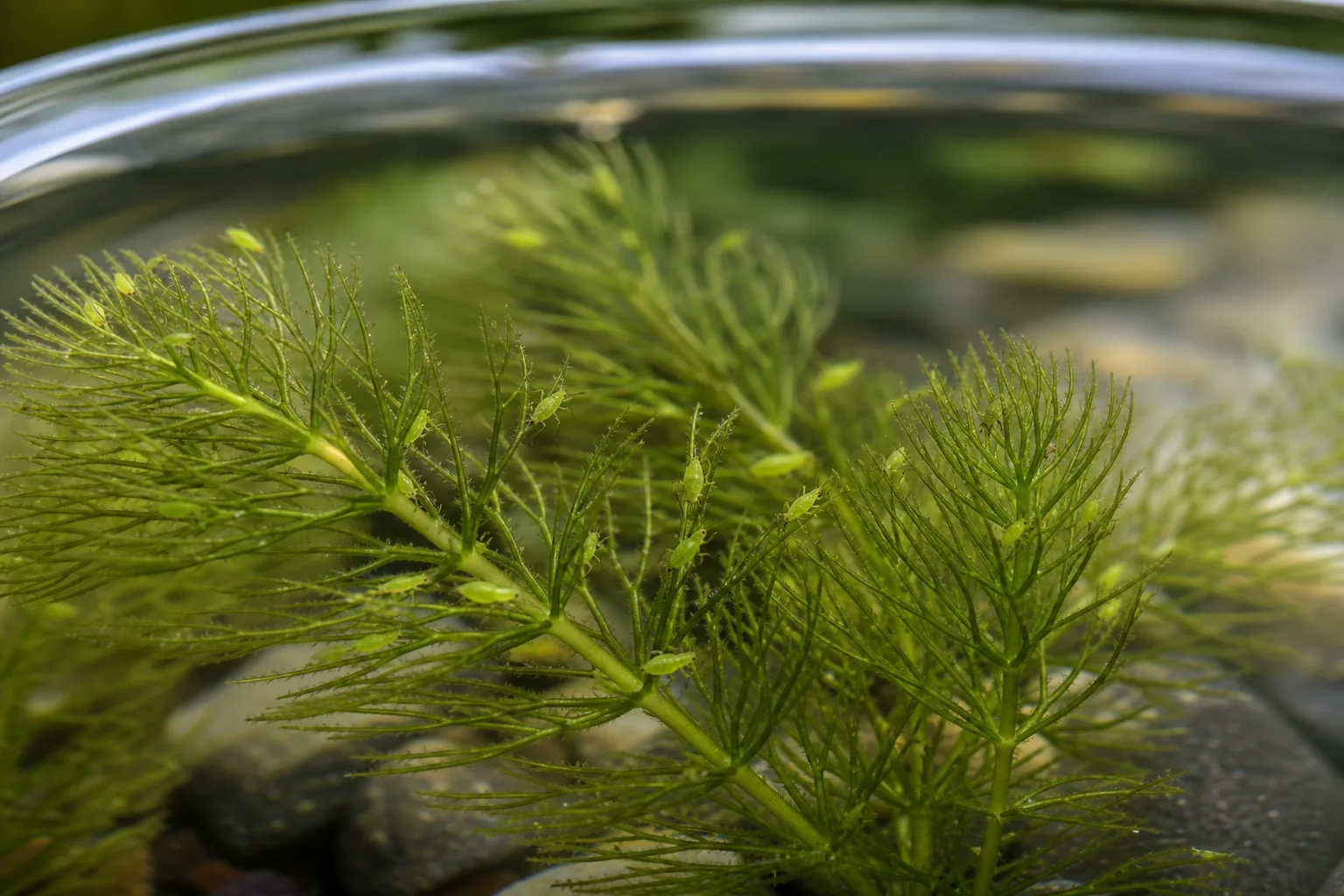
Aphids on Hornwort: Causes, Checks & Fixes
This guide covers aphids on Hornwort. See also the general Aphids guide, watering, and light pages for this plant.
Aphids on Hornwort: Causes, Checks & Fixes
Quick answer
Aphids on Hornwort (Ceratophyllum spp.) are small sap-sucking insects that colonize soft stem tips and floating growth at or above the waterline in aquariums, turtle tanks, and ponds. Fully submerged stems are rarely infested because aphids cannot breathe underwater.
First step: submerge every infested stem and floating tip fully in clean tank water for at least 24 hours, or swish colonies off with a gentle stream of dechlorinated water so they fall into the tank. In fish setups, dislodged aphids are often eaten before they can crawl back onto floating leaves. Do not spray insecticidal soap, neem oil, or copper products into water shared with turtles, fish, or invertebrates.
What aphids look like on Hornwort
On Hornwort, aphids show up on emergent and surface-skimming tissue, not on healthy submerged stems deep in the water column. Check:
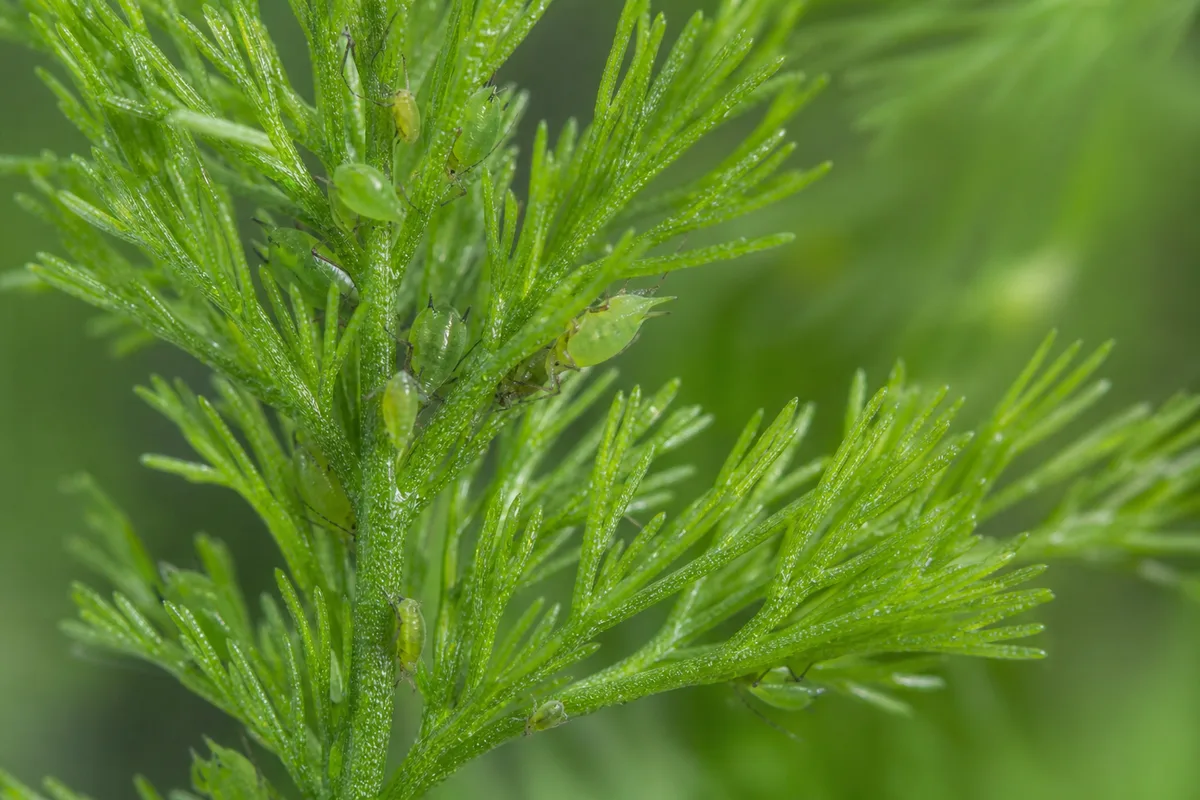
Aphids symptoms on Hornwort - compare with healthy tissue on the same plant.
- Terminal shoots on floating bunches-the softest, brightest green tips
- Stems piled at the waterline where mats overlap and trap humid air
- New divisions taken from nursery stock before full submersion
- Surface-skimming fronds in low-water turtle tanks or open-top tubs
Aphids are small, soft-bodied, pear-shaped insects about 1/16 to 1/8 inch long, usually green but sometimes black, brown, or pale. Most are wingless and cluster in dense groups along feathery leaf whorls. When populations surge, winged adults can appear and fly to neighboring plants.
Plant damage on fast-growing Hornwort shows up as stunted or curled tips, shiny honeydew on needle-like leaves, and occasionally yellowing on heavily fed shoots. Honeydew can support sooty mold, which looks like dark smudges on otherwise bright green foliage. Whitish cast skins may cling near colonies after molting.
Why Hornwort gets aphids
Hornwort is often grown emersed in humid greenhouses before it reaches your tank. Emersed aquarium plants frequently arrive with hitchhiking aphids because insecticides are avoided to keep stock safe for shrimp and sensitive fish. Aphids pierce soft emersed shoots and can persist on floating tips long after the rest of the bunch is submerged.
Once in your setup, aphids persist when:
- Floating mats pile up at the surface in open-top turtle tanks, exposing humid stem tips
- Fast spring growth produces soft terminal shoots aphids prefer
- Overcrowded surface cover traps emergent fronds above the meniscus
- Nearby infested houseplants sit close to an open aquarium
- Warm tank temperatures speed both Hornwort growth and aphid reproduction
Hornwort is not a potted houseplant-it is a free-floating or loosely anchored aquatic that lives in clean, oxygenated water. Aphids are a problem of surface and emergent tissue plus introduction routes, not of submerged stems rotting in substrate.
How to confirm the cause
Work through these checks before treating:
- Location on the plant - Insects only on floating tips or above-water stems point to aphids. Uniform melting or browning on submerged portions suggests poor water quality, light stress, or acclimation melt-not aphids.
- Movement - Disturb a cluster with a toothpick. Aphids shuffle slowly; thrips jump or flee quickly; scale stays fixed.
- Body shape - Pear-shaped soft bodies with visible legs and antennae confirm aphids. Cornicles-small tubelike structures on the rear-distinguish aphids from other insects.
- Honeydew - Sticky, glossy residue on feathery leaves or tank glass below floating mats is a strong aphid clue.
- Ant trails - Ants on emergent stems often mean aphids are present; ants harvest honeydew and protect colonies from predators.
- Water-surface insects - If pests skate on the meniscus without drowning, you may have water-lily aphids that resist simple submersion. Skim them with a fine net and keep surface leaves submerged.
Rule out mealybugs (white cottony wax in stem forks), scale (hard brown shields on stems), and algae or biofilm (fixed coating with no legs and no honeydew).
First fix for Hornwort
Fully submerge infested floating stems and emergent tips in clean aquarium water.
Gather affected bunches, push every colonized tip below the surface, and hold them there 24 to 48 hours in a quarantine tub or main tank. Aphids brought in on emersed plants cannot survive underwater and usually drown or are eaten by fish.
If the mat is too large to submerge, swish colonies off by gently shaking each bunch underwater or directing a soft stream of dechlorinated water at infested tips so insects fall into the tank. Repeat daily until you see no live movement.
That single physical step is the safest first response in turtle tanks, where most insecticides are highly toxic to fish and other aquatic life and soaps can harm turtles even when labeled natural. Only after submersion or swishing fails should you escalate to out-of-tank treatment.
Step-by-step recovery
After the first submersion or swish:
- Isolate new or heavily infested bunches in a quarantine tub with matching temperature and dechlorinated water. Isolate affected plants from others until you see no new colonies for two weeks.
- Thin overcrowded mats - Remove excess floating Hornwort so remaining stems stay submerged. Overcrowded surface cover is how emergent tips reappear.
- Trim heavily infested tips - Snip off colonies you cannot reach on dense feathery whorls and discard the cuttings outside the tank. Hornwort regrows quickly from healthy stems.
- Skim the water surface if honeydew or winged aphids collect at the meniscus. A fine net removes pests that might otherwise recolonize floating tips.
- Let fish help where appropriate - Community fish often eat dislodged aphids. Do not assume turtles will control outbreaks on dry emergent stems they never reach.
- Escalate outside the tank if needed - Move bunches to a bucket, treat emergent portions with insecticidal soap or a strong water spray per label directions, rinse thoroughly, and quarantine again before reintroducing. Never pour soap or neem directly into an occupied turtle or shrimp aquarium.
- Refresh water quality once insects are gone - Remove honeydew-coated fragments promptly so decay does not foul turtle water.
Repeat inspections every three to five days. Aphid populations can rebuild quickly in warm weather because females give birth to live young without mating.
Recovery timeline
You should see no live movement within 48 hours of a full submersion if all emergent tissue stayed underwater. Swish-only methods often need five to seven days of daily passes.
Clean new branching at stem tips is the real success marker. Because Hornwort grows fast, lightly damaged tips may be replaced within one to two weeks. Heavily honeydew-coated stems may look rough until you trim them-old damage does not green up again.
Plan two to three weeks of follow-up checks before merging quarantined bunches back with a display tank. If winged aphids or ants return within that window, reinfestation is still active-extend isolation and look for a nearby emersed host plant.
Worsening signs: honeydew spreading across the entire floating mat, new colonies on freshly trimmed tips within days, or mats melting and fouling water after pest damage weakens growth.
Lookalike symptoms
- Acclimation melt - Translucent or mushy submerged stems after a tank move; no honeydew and no insect clusters.
- Poor water quality - Yellowing or browning throughout the mat with foul smell; affects submerged and floating tissue evenly.
- Algae on emergent tips - Green film in high light; no legs, no clustering at growing points.
- Mealybugs on Hornwort - White, greasy wax in stem forks; slower movement; same honeydew but no pear-shaped green bodies.
- Scale insects - Fixed brown or tan bumps on stems; does not move when touched.
- Water-lily aphids on the surface - Move on the meniscus; need netting, not just a quick dunk.
What not to do
Do not spray insecticidal soap, neem oil, pyrethrin, or copper products into a turtle tank or community aquarium. Residues harm fish, shrimp, beneficial bacteria, and turtles even when labels say “natural.”
Do not assume submerged stems are infested and dose the whole tank. Treat emergent and surface tissue only, or remove bunches for out-of-tank care.
Do not share cuttings or fragments from infested mats between tanks-Hornwort propagates easily, and so do aphids riding on soft tips.
Do not treat once and stop. Repeat treatments are usually necessary because new nymphs hatch from hidden colonies on curled young shoots.
Do not let overcrowded floating mats persist while fighting pests. Thinning is normal Hornwort maintenance and keeps emergent tips underwater.
Hornwort care cross-check
While inspecting for aphids, confirm the basics that keep Hornwort resilient:
- Clean, dechlorinated water with regular partial changes in turtle setups
- Moderate aquarium or pond light, not sudden harsh unacclimated sun
- Temperature in the 18–28 °C range matching your tank inhabitants
- Thin excess growth before mats clog filters or trap debris
- No copper, pesticide residues, or algaecides on plants destined for turtle water
Stressed Hornwort melts when water quality slips, but aphid control still centers on surface tissue and quarantine, not Hornwort repotting guide or soil changes-Hornwort does not grow in potting mix indoors.
How to prevent aphids next time
- Quarantine new Hornwort bunches one to two weeks in a separate tub before adding them to a display tank.
- Submerge emersed nursery plants fully on arrival; inspect terminal whorls with a lens.
- Keep floating tips submerged in open-top turtle tanks-thin mats before they pile above the meniscus.
- Inspect weekly during warm growth; check softest stem tips first.
- Isolate nearby houseplants with aphids away from open aquariums.
- Remove melting or honeydew-coated fragments promptly so ants and sooty mold do not establish on the waterline.
- Rinse new cuttings before sharing them between tanks.
When to worry
Escalate fast if winged aphids, ants on floating stems, or multiple plants in the same room show honeydew at once-those colonies spread beyond a single bunch.
Treat as urgent in turtle tanks when you cannot submerge emergent tips and must choose between repeated trimming and escalating to out-of-tank soap treatment. Do not let pesticides enter the water column.
If dense colonies persist after two full submersion cycles and daily swishing, discard the most infested floating mat rather than risking your entire tank-replacement Hornwort is inexpensive compared with a pesticide accident in turtle water.
Conclusion
Aphids on Hornwort are an above-water problem on a mostly submerged plant. Confirm them on emergent stem tips and floating mats, then submerge or swish before any chemical treatment. In turtle and fish tanks, physical removal protects your animals better than houseplant sprays ever will. Fast regrowth helps recovery, but floating mats spread pests quickly-quarantine new bunches, thin surface cover, and judge success by clean new tips, not yesterday’s honeydew-coated stems.
When to use this page vs other Hornwort guides
- Hornwort watering guide - Use for routine moisture checks before assuming aphids is the main issue.
- Hornwort problems hub - Browse all 16 common issues on this species.
- Mealybugs on Hornwort - Different entry point when symptoms overlap with aphids.
- Spider Mites on Hornwort - Different entry point when symptoms overlap with aphids.
- Yellow Leaves on Hornwort - Different entry point when symptoms overlap with aphids.