Hornwort Tank Transfer Guide: Moving and Re-Anchoring
Hornwort Tank Transfer Guide: Moving and Re-Anchoring
Hornwort Tank Transfer Guide: Moving and Re-Anchoring
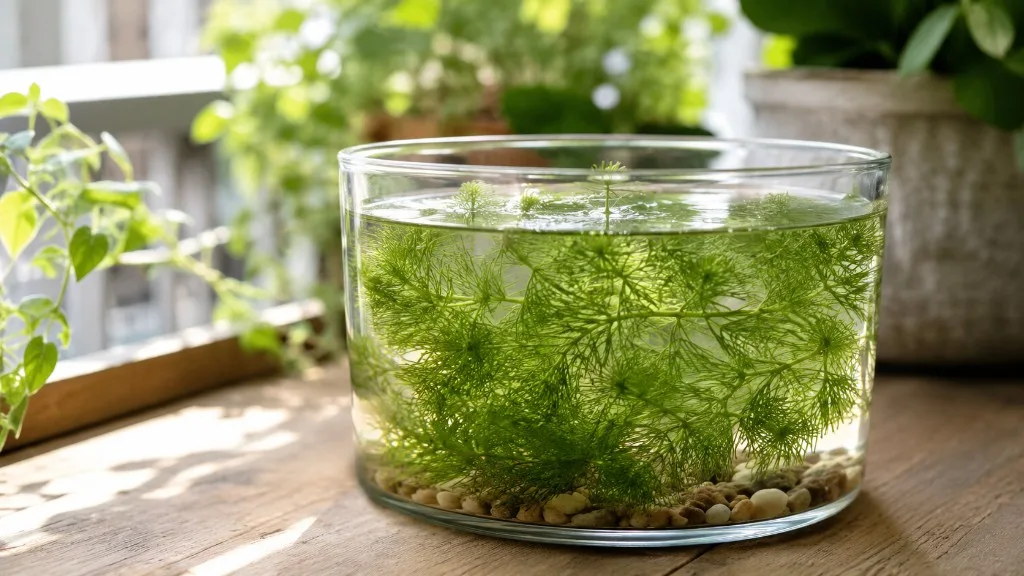
If you searched “hornwort repotting,” you are probably holding a tangled mass of green needles and wondering whether you need a bigger pot and fresh soil. You do not. Hornwort (Ceratophyllum demersum, also called coontail) is a rootless aquatic plant that lives entirely in water. It does not anchor with true roots, does not pull nutrients from substrate, and does not benefit from the houseplant repotting routine of bigger pots and new potting mix. What you actually need is a tank transfer and replanting workflow: move healthy stems between aquariums, decide whether to float or re-anchor them, and trim away the portions that have gone mushy at the base.
That distinction matters because the most common hornwort failures - needle shedding, stems rotting in gravel, masses floating into the filter intake - all trace back to treating a column-feeding floater like a rooted stem plant. This guide covers when to move hornwort, how to prepare both the plant and the destination tank, five re-anchoring methods that hold without causing rot, what normal transfer shock looks like, and how to dispose of trimmings so the plant does not become an invasive headache. By the end, you will have a repeatable routine you can run in under twenty minutes.
Why hornwort does not get repotted like a houseplant
Houseplant repotting solves a root-zone problem: circling roots, depleted soil, a container that is too small. Hornwort has none of those constraints. It is a free-floating or loosely anchored species whose entire body - stems, whorled needle-like leaves, and occasional modified basal structures called rhizoids - absorbs nutrients directly from the water column. Rhizoids grip surfaces but do not function as feeding roots. Burying hornwort stems in substrate cuts them off from light and flow, which is why the buried portion often turns brown, releases ammonia, and breaks free anyway.
Aquarium hobby publications including Gensou Aquascaping and AquaTerra Obsession consistently describe hornwort as optimal when floated or lightly weighted, not deeply planted. The practical “repotting equivalent” for hornwort is therefore three operations bundled together: thinning overgrown stems, transferring healthy sections to a new tank or position, and re-anchoring if you want a background bush rather than a surface mat. None of those require new soil in the terrestrial sense.
What tank transfer actually means for a rootless plant
Tank transfer for hornwort is closer to moving a bundle of cut flowers between vases than repotting a fern. You are changing the water chemistry, light environment, and physical placement of stems that will continue feeding from the surrounding water regardless of what sits beneath them. The substrate - gravel, sand, bare glass, or nothing at all - is a positioning tool, not a nutrition source. When hobbyists say they “replanted” hornwort, they usually mean they trimmed the healthy upper portion, discarded a rotting base, and re-positioned the top using a weight, a rock, or a hardscape tie.
Because hornwort reproduces easily from fragmentation, every healthy stem you move is effectively a new plant. That is an advantage during transfers: you do not need to preserve a delicate root ball. You do need to preserve cell integrity - avoid crushing stems, keep them submerged during the move, and match water parameters closely enough that the plant does not interpret the change as a stress event. A gentle transfer with matched temperature and dechlorinated water produces little to no melt. A careless dump into a cold, chlorinated tank produces the infamous needle shower within hours.
Floating versus anchored growth modes
Hornwort supports two growth modes, and your transfer method should match the one you intend to keep. Floating is the default and the fastest path to establishment. Stems spread across the surface, receive maximum light, and grow vigorously - often several inches per week under strong lighting and supplemental CO₂. Floating hornwort shades fish below, provides fry cover, and acts as a nutrient sponge that can absorb ammonia during tank cycling. The trade-off is aquascape chaos: dense mats block light from reaching lower plants and can clog surface skimmers if you let them go untrimmed.
Anchored growth gives you design control. A weighted bunch pinned in the back corner creates a green wall effect without the surface mess. Tying stems to driftwood or a rock produces a midground bush. Suction cup clips hold stems against the glass at a chosen depth. Anchored hornwort grows slightly slower than floating stock because lower sections receive less direct light, but the visual payoff is worth it in display tanks. The non-negotiable rule across all anchored methods: never bury the stem itself. Anchor the weight, the hardscape, or the tie point - not the living tissue.
When to move hornwort between tanks
Hornwort does not follow a calendar schedule. You move it when the plant’s current placement stops working for the tank, or when you are setting up a new aquarium and want hornwort’s cycling and cover benefits from day one. Unlike rooted plants that signal root-bound stress, hornwort signals overcrowding, placement failure, and water-quality load.
Signs it is time to thin and reposition
Four reliable signals tell you hornwort needs a transfer-level intervention rather than a simple trim:
- Surface takeover - floating stems have covered more than half the water surface and lower plants are yellowing from shade.
- Filter interference - the intake or skimmer pulls in needles weekly despite routine maintenance.
- Base rot in anchored bunches - the bottom inch of weighted stems has turned brown or slimy while the upper growth stays green.
- Tank rescape or livestock change - you are moving hornwort to a breeding tank, a turtle enclosure, a quarantine tub, or a new display aquarium.
Any one of these is a reason to act within the next maintenance session. Two or more together mean you should transfer and re-anchor this week, not next month. Waiting allows rotting bases to release ammonia and lets floating mats shade the entire water column, which triggers cascading melt in light-hungry neighbors.
Best timing for transfers and rescapes
Hornwort is hardy enough to transfer year-round in a heated indoor aquarium, but timing still affects recovery speed. The best window is during a stable maintenance week - no major parameter swings planned, no new fish medications running, no large water change with cold tap water scheduled for the same day. If you are moving hornwort into a newly set-up tank, add it during or immediately after fishless cycling so it can absorb ammonia while beneficial bacteria establish. Extension guidance notes that coontail is a water-column feeder whose fast growth can help absorb dissolved nutrients during tank cycling.
Avoid transferring on the same day you dose a heavy algae treatment, swap out your entire filter media, or introduce a large school of fish. Each of those events already stresses the water chemistry. Stacking a hornwort move on top raises the odds of needle shed. For pond-to-aquarium transfers, quarantine the plant in a separate tub for one to two weeks first. Outdoor hornwort can carry snails, copepods, and algae that you may not want in a display tank, and pond temperature swings are larger than indoor tanks typically experience.
Preparing hornwort before you move it
Preparation is the difference between a five-minute transfer that the plant barely notices and a messy rescue that takes weeks to recover from. Spend the prep time on stem hygiene and parameter matching, not on substrate selection.
Cleaning stems and removing dead growth
Start by removing hornwort from its current position - lift floating mats gently with both hands so stems do not snap, or slide a plant weight out of the substrate rather than yanking upward. Rinse the mass in a bucket of tank water, not tap water, to dislodge debris, snail eggs, and detached needles without chlorine shock. Spread the stems on a clean surface and inspect each one.
Trim any section that is brown, slimy, or brittle with sharp aquascaping scissors. Separate the mass into manageable bunches of three to five stems for anchoring, or leave longer sections intact for floating. If you are transferring store-bought hornwort, remove the rubber band or lead weight it arrived in - those constrict stems and concentrate rot at the binding point. Strip any yellowing needles from the lower third of anchored bunches so buried or weighted sections stay clean. Healthy hornwort stems feel firm and springy; mushy stems go in the disposal bag, not the destination tank.
Matching water parameters between tanks
Hornwort tolerates a wide parameter range - roughly 15-30°C (59-86°F), pH 6.0-7.5, and soft to moderately hard water, according to agency and extension profiles - but it does not tolerate sudden changes well. Temperature shock is the number one cause of post-transfer needle shedding. Before moving stems, check both tanks and close the gap: if the destination tank is more than 2-3°F (1-2°C) cooler or warmer, float the hornwort in a sealed bag or container in the destination tank for twenty to thirty minutes to equalize temperature, the same way you would acclimate fish.
Match these parameters as closely as practical:
- Temperature within 2-3°F
- pH within 0.3 units
- Dechlorination - destination water must be treated; chlorine burns delicate stems on contact
- TDS/general hardness - large jumps in mineral content stress cell walls; drip acclimation over thirty to sixty minutes helps when moving between very soft and moderately hard tanks
If the destination tank is brand new, confirm that ammonia and nitrite are at safe levels before adding a large hornwort mass. Hornwort can absorb some ammonia, but dumping it into a tank reading 4 ppm ammonia and zero beneficial bacteria sets up a race between plant uptake and stem damage. A partial water change to below 1 ppm ammonia, or waiting until cycling progresses, is the safer call.
Step-by-step tank transfer protocol
The core transfer is simple. Complexity comes from whether the plant is floating or anchored in the source tank and what you want in the destination tank. Follow this sequence regardless.
Moving floating hornwort safely
Step 1: Turn off surface skimmers and reduce filter flow if possible - strong current during transfer scatters stems across the room. Step 2: Scoop the floating mass with a net or your hands into a bucket of source-tank water. Keep the bucket covered if you have jumpy fish; hornwort stems slide easily. Step 3: Acclimate the bucket in the destination tank for twenty to thirty minutes if temperature differs. Step 4: Gently release stems onto the destination water surface. Spread them so they do not pile in one corner - a single dense clump shades itself and sheds needles at the center. Step 5: Leave the tank alone for forty-eight hours before major trimming. Let the plant adjust before you judge success.
Floating transfers are the lowest-risk option. Most hobbyists moving hornwort between community tanks, breeding tubs, and turtle enclosures should default to floating first, then anchor later once the plant has acclimated for a week. If you need shade immediately for fry or a betta, floating delivers it on day one without any anchoring hardware.
Moving anchored bunches without losing placement
Anchored transfers require more care because weights, ties, and hardscape attachments do not travel well in a net. Step 1: Identify each anchored bunch and note its position - back left corner, behind the driftwood, mid-right glass. Step 2: Grasp the weight or hardscape anchor, not the stem tips, and lift slowly. If stems are tied to driftwood that is too large to move, cut the tie and plan to re-tie in the destination tank rather than dragging wood through the water column. Step 3: Place the entire bunch - weight included - into a container of source water. Step 4: Acclimate and move to the destination tank. Step 5: Re-position using the same anchor method, or upgrade to a more secure method if the old one failed in the source tank.
If the bottom of an anchored bunch is rotting, do not transfer the rot with it. Cut the stems an inch above the healthy green tissue, discard the mushy base and any weight that contacted rotting material (rinse reusable slate or stone in hot water), and re-anchor only the healthy tops. This is the closest hornwort gets to “replanting” - you are essentially taking a cutting from your own plant and starting fresh in a new position.
Re-anchoring methods that actually hold
Re-anchoring is where most hornwort articles give dangerous advice. “Just push the stems into gravel” works for exactly one week before rot sets in. These five methods hold long-term without killing the plant.
Plant weights and substrate pinning
The weighted bunch method is the standard background approach. Gather three to five cleaned stems with level bottoms, wrap a plant weight (lead band or coated metal strip) around the bottom inch, and set the weight on the substrate surface. Push the weight lightly into gravel or sand so it does not slide - about 1-2 cm (under an inch) - but keep the stems themselves above the substrate line. The weight holds position; the stems stay in open water where light and flow reach them.
Check weighted bunches every two to three weeks. The bottom whorls nearest the weight receive the least light and may yellow first. When you see browning at the base, trim that section off, re-bunch the healthy tops, and set a fresh weight. This trim-and-re-anchor cycle is normal maintenance, not a sign of failure. It is the hornwort equivalent of refreshing a potting mix - you are renewing the viable stem, not upgrading a container.
Hardscape ties and suction cup anchoring
When weights slide in high-flow tanks or when you want stems at mid-height, hardscape and hardware anchors work better.
Driftwood or rock tie: Bundle stems and attach them to a piece of driftwood, cholla wood, or a smooth river stone with cotton thread or fishing line. Cotton dissolves over weeks and disappears; fishing line lasts longer but must be cut and removed during future trims. Rest the hardscape on the substrate or wedge it between existing rocks. The stems fan upward from the tie point without any burial.
Suction cup clips: Commercial aquarium plant clips on suction cups pin individual stems or small bunches to the glass at any height. This method survives cichlid digging and strong filter current better than weights in sand. Space clips every 10-15 cm (4-6 inches) along a stem for a vertical green panel effect.
Floating anchor: Tie a large hornwort bunch to a small decorative stone and release it mid-water. The stone sinks while buoyancy lifts the foliage toward the surface, creating a suspended bush - useful for betta cover without a full surface mat. This hybrid method combines floating growth speed with partial depth control.
Common transfer problems and fixes
Even careful transfers produce symptoms. The key is distinguishing normal acclimation from a setup error you need to correct.
Needle shedding after a move
Needle shedding - fine green needles detaching and raining through the water column - is the signature hornwort stress response. In most transfers it is temporary and normal, peaking at three to five days and tapering by seven to ten days as stems adjust. Causes ranked by frequency:
- Temperature mismatch during the move
- Water chemistry change - especially pH or hardness jumps
- Light intensity change - moving from a dim store tank to a high-light home aquarium or vice versa
- Physical damage - crushing stems during netting or constricting with tight rubber bands
The fix for normal shed is patience and stability. Keep lighting moderate, avoid large water changes for the first week, and remove shed needles from the substrate surface with a gentle siphon so they do not decay into ammonia. New growth at stem tips - brighter green, firm needles - is the recovery signal. If shedding continues past two weeks with no new tips forming, test ammonia, nitrite, and nitrate. Persistent shed with elevated ammonia usually means a rotting anchored base you missed during transfer.
Stems that float away after anchoring are telling you the anchor method failed, not that hornwort refuses to stay put. Weights too light for your flow, sand that shifts under cichlid digging, or stems buried too deep and rotting free - each produces the same symptom of green masses at the surface days after you “planted” them. Switch to suction cup clips or hardscape ties in high-flow tanks. In digger tanks, anchor to immovable rock rather than loose gravel.
Filter clogs are a maintenance rhythm problem, not a transfer failure. Hornwort sheds needles continuously at a low rate even when healthy; after a transfer the rate spikes temporarily. Rinse mechanical filter sponges weekly during the first month after a move, trim floating mats before they fragment across the surface, and angle the filter intake away from the hornwort zone if clogs persist. A pre-filter sponge on the intake tube catches needles before they reach the impeller.
Disposal and invasive species rules
Every transfer and thinning session produces trimmings. How you dispose of them is not a minor detail. Ceratophyllum demersum is a prolific invasive species in many temperate waterbodies. In regions where hornwort is regulated - such as New Zealand and Tasmania - releases into natural waterways are prohibited.
Never flush hornwort down a drain, toss it into a stream, or compost it where runoff reaches a pond. The safe protocol: place trimmings in a sealed bag, freeze for 24-72 hours to kill surviving fragments, and put the bag in household trash. Drying on pavement away from water for several days is an alternative where freezing is impractical. If you share hornwort with another hobbyist, pass only clean, pest-inspected stems in a sealed container - never assume outdoor ponds or local lakes need “a little more plant life.”
Conclusion
Hornwort does not get repotted. It gets moved, thinned, and re-anchored - and the entire operation revolves around keeping healthy stems in stable water rather than burying them in substrate. Float hornwort for the fastest establishment and best nutrient uptake. Anchor it with weights, hardscape ties, or suction cups when your aquascape demands structure. Match temperature and dechlorinate destination water before every transfer. Expect some needle shedding in the first week; watch for new green tips as your recovery benchmark. Trim and re-bunch rotting bases every few weeks instead of fighting to save mushy lower stems. Dispose of every trimming responsibly.
Run that routine and hornwort becomes one of the lowest-maintenance plants in the hobby - a rootless column feeder that forgives beginner mistakes, speeds up cycling, and fills a tank from a single handful of stems. The plant does not need a new pot. It needs a clear plan for where its stems go next.
When to use this page vs other Hornwort guides
- Hornwort overview - Start here for whole-plant context before deep-diving this topic.
- Hornwort problems hub - Jump to symptom-specific fix guides when this care topic does not resolve the issue.
- Root Rot on Hornwort - Escalate here when repotting adjustments are not enough.
Related Hornwort guides
- Hornwort overview
- Hornwort watering
- Hornwort light
- Hornwort soil
- Hornwort propagation
- Hornwort fertilizer
- Root Rot on Hornwort
- Hornwort problems
Related tool
Try the Pot Size Calculator with hornwort pre-selected to estimate needs for your setup.