Low Humidity on Hornwort: Causes, Checks & Fixes
Quick answer
Fully submerged hornwort ignores room humidity. Its whorls live in near-100% moisture from the tank water column, so winter dry air does not cause needle shedding. Shedding and melt usually mean acclimation shock, water-parameter swings, low light on lower stems, buried-stem rot, or chemical stress-not a humidifier problem.
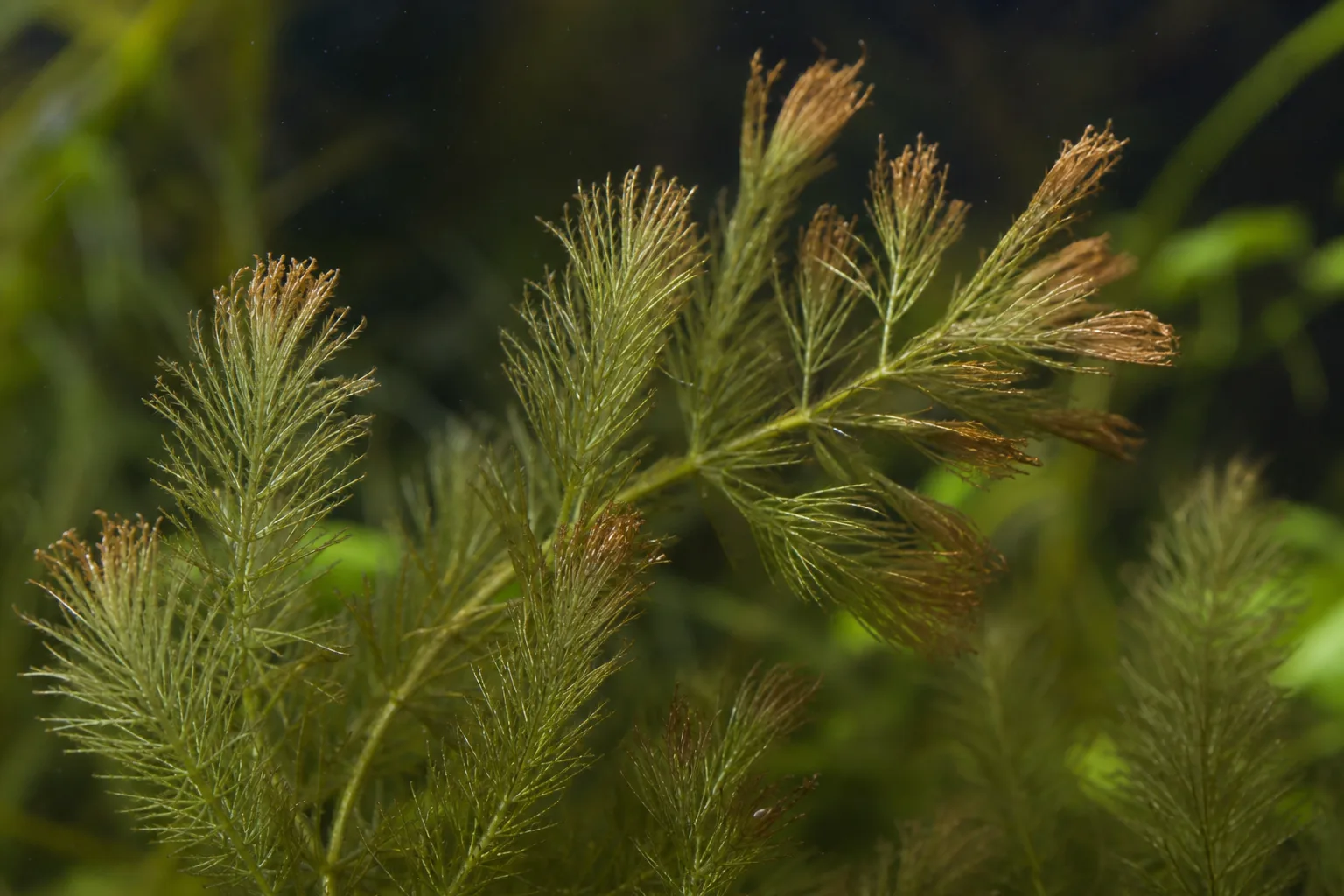
Low Humidity on Hornwort: Causes, Checks & Fixes
This guide covers low humidity on Hornwort. See also the general Low Humidity guide, watering, and light pages for this plant.
Low Humidity on Hornwort: Causes, Checks & Fixes
Quick answer
Hornwort (Ceratophyllum demersum, coontail) is a fully submerged freshwater plant that absorbs water and nutrients directly from the water column through its feathery whorled stems. It has no true roots and cannot tolerate emergence from water. Underwater tissue sits in near-100% moisture at all times-winter heating that drops household humidity to 20–30% does not affect submerged needles.
Low humidity becomes relevant only in rare setups where hornwort tissue contacts room air: stems left on a counter during unpacking, open propagation cups without lids, or tips pushed above the waterline in drafty rooms. There, dry air shows up as crisp brown needles within hours.
Aquarists who search “hornwort low humidity” or “hornwort dry” usually see needle shedding on the substrate-a stress response to acclimation shock, water-parameter swings, low light on lower whorls, buried-stem rot, strong filter flow, or liquid-carbon dosing, not dry indoor air.
First step: confirm whether every stem is fully submerged. If yes, skip humidifiers and run the aquarium confirmation checklist below. If tips sit in open air, cover the setup or re-submerge before changing tank chemistry.
Why room humidity rarely affects aquarium hornwort
In nature, coontail grows as a rootless submerged macrophyte in lakes, ponds, and slow rivers-floating freely or loosely anchored at depths where the water column, not ambient air, supplies moisture. USDA describes Ceratophyllum demersum as a submerged aquatic plant in the Ceratophyllaceae family with whorled forked leaves, not a terrestrial houseplant subject to dry winter air.
Inside a standard aquarium, tank water is the humidity source. Submerged whorls never exchange moisture with your living room. A pebble tray, grouping tropicals, misting the air once daily, or running a room humidifier changes nothing for tissue that stays underwater. This is the same submerged-vs-emersed split explained on the Java Fern low humidity guide-another amphibious aquarium plant where room RH matters only above the waterline.
What does matter underwater is stable water chemistry, adequate light penetration, correct placement, and gentle flow. Aquarium Co-Op notes that hornwort sheds needles when water parameters change abruptly, when lower stems lack light, when nutrients run short, or when certain chemicals like liquid carbon are dosed-failures that mimic environmental stress but need tank fixes, not higher room RH.
What low humidity looks like on hornwort (and what doesn’t)
Dry-air injury and underwater shedding look different. Learn both patterns before buying a humidifier or changing fertilizer.
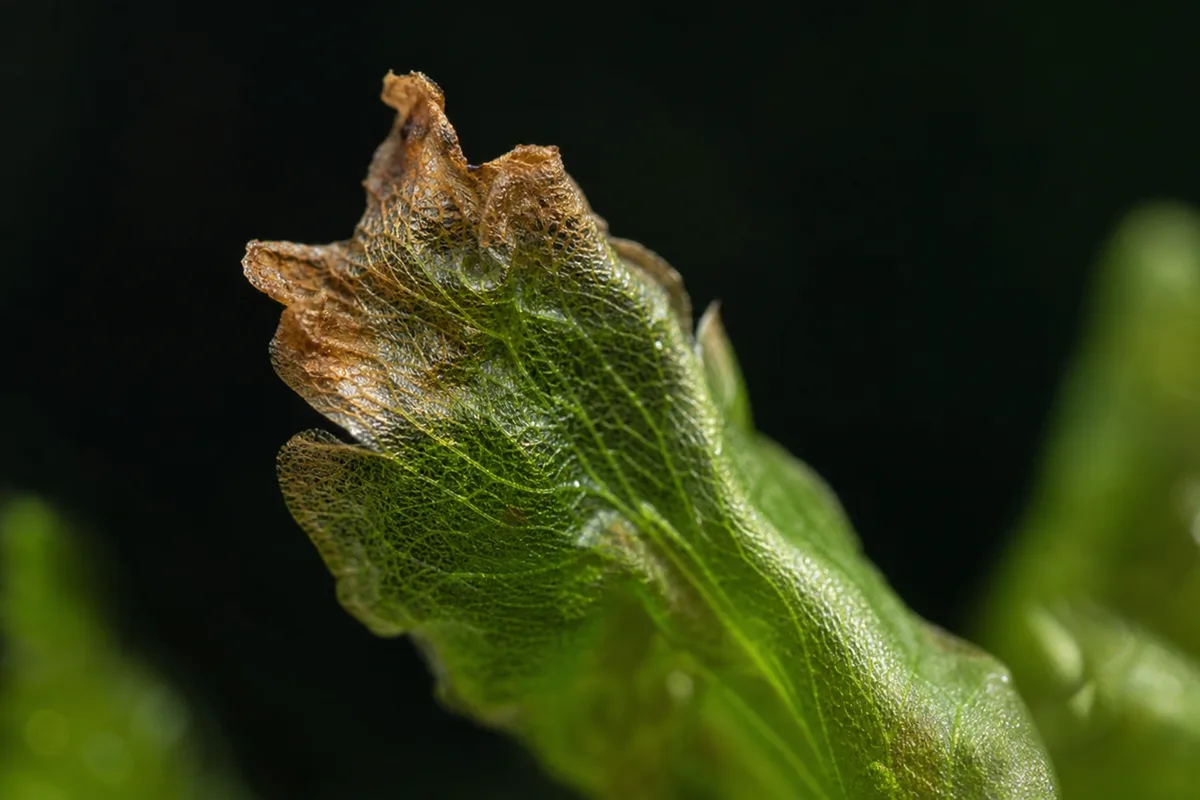
Low Humidity symptoms on Hornwort - compare with healthy tissue on the same plant.
Fully submerged culture - room RH is irrelevant
When every whorl sits underwater in a closed or open-top aquarium, household humidity is not a variable. Needles that detach and carpet the substrate are shedding, not dry-air damage. Stems usually stay firm; floating tips often stay greener than shaded lower sections during acclimation. Aquarium Co-Op lists major parameter changes and unfavorable tank conditions-not dry winter air-as the usual shed triggers.
This is why generic houseplant low-humidity advice (inspect soil moisture, pebble trays, mist leaves) is factually wrong for standard hornwort culture. See the hornwort overview for floating vs anchored placement and column-feeding biology.
Rare emersed or air-exposed tissue
Dry air matters only where hornwort contacts room air:
- Stems left on a counter during unpacking or trimming - needles crisp brown within hours
- Open propagation cups with tips above water and no dome - papery, brittle texture
- Shipping bags opened in a dry, heated room before re-submersion - rapid browning on exposed whorls
- Drafty windowsills where a cup of hornwort sits beside the tank overnight
Rutgers FS1236 states coontail cannot tolerate periods of total emergence from water. Emersed desiccation is fast and obvious-unlike gradual underwater shedding spread over days.
Shedding needles misread as dry-air stress
The most common misdiagnosis: an aquarist runs a humidifier while submerged hornwort keeps shedding because the real cause is tank-side:
- Acclimation melt in the first 7–10 days after purchase when store water differs from your tank
- Large untempered water changes causing temperature or pH swings
- Low light on anchored lower whorls while floating tips stay bushy green
- Buried stems in substrate rotting at the base and shedding upward
- Liquid carbon or copper medication triggering rapid needle drop
Each pattern is covered in more detail on yellowing needles and drooping leaves guides when discoloration accompanies the shed.
Low humidity vs. shedding vs. melt - when to use this page
| What you see | Likely cause | First move |
|---|---|---|
| Green needles on substrate; firm stems; new purchase or recent water change | Acclimation or parameter shock | Stabilize water; vacuum debris; wait 1–2 weeks |
| Lower whorls bare; green floating tips | Light starvation on deep/anchored stems | Float healthy tips; see not enough light |
| Mushy brown base on buried stem | Anaerobic rot from substrate burial | Trim mushy section; float or shallow-anchor only |
| Crisp brown needles on counter or in open cup | Air desiccation (true low humidity) | Re-submerge or dome the cup |
| Transparent or tank-wide melt after chemical dose | Liquid carbon, copper, or foul water | Remove plant; partial water change; see overwatering |
Use this page when you wonder whether winter dry air or a humidifier explains hornwort problems. Use shedding-specific guides when you already confirmed full submersion and need cause-specific tank fixes.
Why hornwort problems get blamed on dry air
Three habits drive the misdiagnosis:
- Keyword overlap - “hornwort dry” and “hornwort dying” SERPs mix houseplant humidity templates with aquarium forums describing needle shed.
- Visible debris - Green needles on gravel look like “drying out” even though the plant is fully hydrated underwater.
- Seasonal timing - Winter heating lowers room RH at the same time new holiday tank setups trigger acclimation melt, creating a false correlation.
Hornwort’s column-feeding habit and lack of true roots mean it never experiences “dry soil” or “underwatered potting mix.” Every whorl shares the same tank water. When shedding persists after you humidify the room, the plant is telling you to inspect tank parameters, not a hygrometer in the living room.
Lookalike symptoms to rule out
Acclimation melt - New hornwort often sheds heavily in week one when store water differs from yours. Firm stems, green floating tips, and gradual slowdown point here-not dry air.
Light starvation on anchored stems - Lower whorls shed while surface growth stays dense. Coontail grows bushy near tips but sparse lower on shaded stems. Fix placement and light before humidity.
Buried-stem rot - Stems pressed deep into gravel or sand rot at the base and shed upward. UF/IFAS describes coontail as rootless-burial causes anaerobic decay, not moisture deficit from air.
Foul-water decay - Shed needles left to rot recycle ammonia. What started as acclimation can cascade if debris accumulates. See overwatering for foul-water rescue.
Liquid-carbon sensitivity - Full-strength glutaraldehyde products often trigger rapid needle drop across every stem. Chemical stress, not humidity.
True air desiccation - Only on tissue out of water: crisp brown needles, brittle feel, hours-not-days timeline. Re-submerge promptly.
How to confirm the cause
Work through this aquarium inspection checklist in order:
- Submersion check - Is every whorl fully underwater? If yes, room humidity is ruled out as primary cause.
- Timeline - Did shedding start within 7–10 days of purchase or a large water change? Acclimation and parameter shock rank first.
- Placement map - Floating, shallow-anchored, or buried deep? Note whether lower whorls are shaded or buried.
- Stem texture - Firm and green vs. mushy brown at the base. Mushy bases mean rot, not dry air.
- Water tests - Ammonia, nitrite, nitrate, pH, and temperature. Match change water to tank temp within 2°F.
- Recent chemicals - Liquid carbon, copper meds, or algicides in the last 48 hours?
- Room context - Only matters if stems sat on a counter, shipping bag sat open in dry heat, or an open cup lacks a lid.
Confirmed low-humidity diagnosis: crisp brown needles on air-exposed tissue in an open setup with low ambient humidity, while submerged portions on the same stem (if any remain) stay green.
Suspected but unconfirmed submerged shedding: treat as tank stress first-stabilize parameters, float healthy tips, vacuum debris.
First fix for hornwort
If every stem is fully submerged and shedding, stabilize tank conditions before buying a humidifier.
Match the temperature of your next partial water change to the tank within 2°F, limit the change to 25–30% of volume, and float the healthiest green portion at the surface where light and gas exchange are strongest. Gravel-vacuum fallen needles so decay does not spike ammonia. Make one change at a time-do not stack fertilizer, medication, and major lighting overhauls on the same day.
If shedding began within the first week after purchase, patience plus debris removal often resolves acclimation melt without further intervention. See the hornwort watering guide for acclimation and change-water routines.
If emersed tips or counter-dried stems are crisping (rare), re-submerge or cover immediately.
Place stems back in matched tank water or put an inverted cup with air holes over an open propagation container. The goal is stopping active desiccation-not humidifying the entire room. Do not leave hornwort on a dry surface while troubleshooting tank chemistry.
If mushy buried bases are present, trim and float.
Cut away soft brown tissue, discard rotted sections, and float firm green stems. Never bury whorled leaves deep in substrate-the hornwort overview warns this is a primary shed trigger.
Step-by-step recovery by cause
Submerged acclimation shedding
- Leave firm stems in place-do not discard the whole bunch on day three.
- Vacuum shed needles during weekly maintenance so decay does not foul water.
- Avoid large untempered water changes for two weeks.
- Judge success by new whorls on floating tips within 7–14 days.
Light-starved lower whorls
- Float healthy green cuttings at the surface for two weeks.
- Trim bare lower sections on anchored stems that cannot reach adequate PAR.
- Review fixture output per the hornwort light guide.
Air-exposed desiccation
- Re-submerge in dechlorinated water matched to tank temperature.
- For propagation cups, add a dome lid until new growth appears.
- Discard fully crisped tissue; recovery comes from remaining firm stems only.
Post-chemical or foul-water melt
- Remove hornwort to a tub of matched tank water if medications continue.
- Run partial water changes and remove decaying biomass.
- Reintroduce only after parameters stabilize and stems feel firm.
Recovery timeline
Submerged acclimation shedding often slows within 7–10 days once parameters stay stable and debris is removed. New whorls on floating tips may appear in one to two weeks. Aquarium Co-Op advises waiting for recovery rather than discarding the plant after initial needle drop.
Air-exposed desiccation stops spreading within hours of re-submersion or doming. Crisped needles do not re-green; judge success by new growth on firm stems over the next one to two weeks.
Light- or rot-related shedding follows the timeline of the underlying fix-often two to three weeks after floating healthy tips and trimming mushy bases.
Old shed needles and crisped air-damaged tissue do not revert to green. Watch for new bottle-brush whorls on firm stems.
What not to do
Do not run a room humidifier for a fully submerged aquarium and expect shedding to stop.
Do not inspect potting soil, pot drainage, or pebble trays-hornwort does not grow in pots.
Do not bury stems deep in substrate to “keep them moist.” Buried portions rot and shed.
Do not confuse underwater shedding with dry-air damage-different fixes.
Do not fertilize heavily into a shedding, possibly foul-water tank before stabilizing parameters.
Do not discard the entire bunch during normal first-week acclimation melt if stems stay firm.
Do not leave trimmed hornwort on a dry counter while deciding next steps-re-submerge or bag with tank water.
How to prevent shedding and melt on hornwort
For standard aquarium culture, prevention is tank stability, not humidity management:
- Acclimate new bunches slowly - float the bag, temper water, avoid large day-one changes (watering guide)
- Default to floating in low-tech setups so every whorl gets surface light (overview)
- Never bury living whorls - anchor with weights or suction cups only
- Vacuum shed needles during weekly 25–30% water changes
- Use moderate light on an 8–10 hour photoperiod (light guide)
- Avoid full-strength liquid carbon on sensitive stock
- Keep shipping bags sealed until stems return to tank water
For rare emersed or cup culture, use a fitted lid or dome and keep tissue from sitting in dry room air.
When to worry
Treat air-exposed desiccation as urgent when needles go from green to fully crisp within hours and stems feel brittle on a counter or in an open cup-re-submerge immediately.
For submerged plants, worry when mushy stems, ammonia above zero in a cycled tank, foul-smelling water, or rapid whole-tank melt after chemical dosing accompany shedding. Those patterns need water-quality review, not humidity adjustment.
Do not worry about household winter dryness affecting hornwort that lives entirely underwater with firm stems and slow but steady new floating growth-that is normal behavior even when your hygrometer reads 25%.
Hornwort care cross-check
Match your diagnosis to how you actually grow the plant:
- Standard submerged aquarium - Room RH optional; maintain stable water, gentle flow, and floating or shallow-anchored placement
- New purchase - Expect first-week shedding; vacuum debris; avoid stacked treatments
- Anchored background stems - Confirm lower whorls receive adequate PAR; trim or float if shaded
- Propagation cup or shipping hold - Keep submerged or domed; never leave stems in dry air
- Goldfish or turtle tanks - Shedding may increase with warm water and disturbance; stability matters more than humidifiers
Temperature stability supports recovery more than ambient humidity does for submerged tissue. Wide heater swings stress hornwort more than a dry winter day affects underwater whorls.
Related Hornwort guides
- Hornwort overview - floating vs anchored placement, needle-shedding FAQ, and column-feeding biology
- Java Fern low humidity - structural peer for submerged-vs-emersed humidity framing
- Yellowing needles - when discoloration accompanies shedding
- Drooping leaves - limp stems and flow-related stress
- Not enough light - bare lower whorls from light starvation
- Overwatering - foul-water melt and organic overload
- Underwatering - air exposure and crispy brown needles above the waterline
- Hornwort light - photoperiod and PAR guidance
- Hornwort watering - water-change rhythm and parameter stability
Conclusion
Low humidity on hornwort is a niche problem for air-exposed tissue, not a standard aquarium issue. Fully submerged coontail ignores room RH because every whorl draws moisture from tank water. When needles litter your substrate, inspect acclimation timeline, water parameters, placement, light penetration, and buried stems before you humidify the living room. Cover or re-submerge only the rare emersed portions that actually contact dry air. That single diagnostic split saves weeks of misdirected humidifier use and points submerged shedding toward the tank fixes that actually work.