Drooping Leaves on Hornwort: Causes, Checks & Fixes
Quick answer
Drooping on Hornwort is limp or sagging whorled stems-not dry potting soil. Ceratophyllum has no true roots. First step: note whether stems float or are anchored, check light at the needle layer, and inspect whether bases are firm green or mushy brown before changing fertilizer.
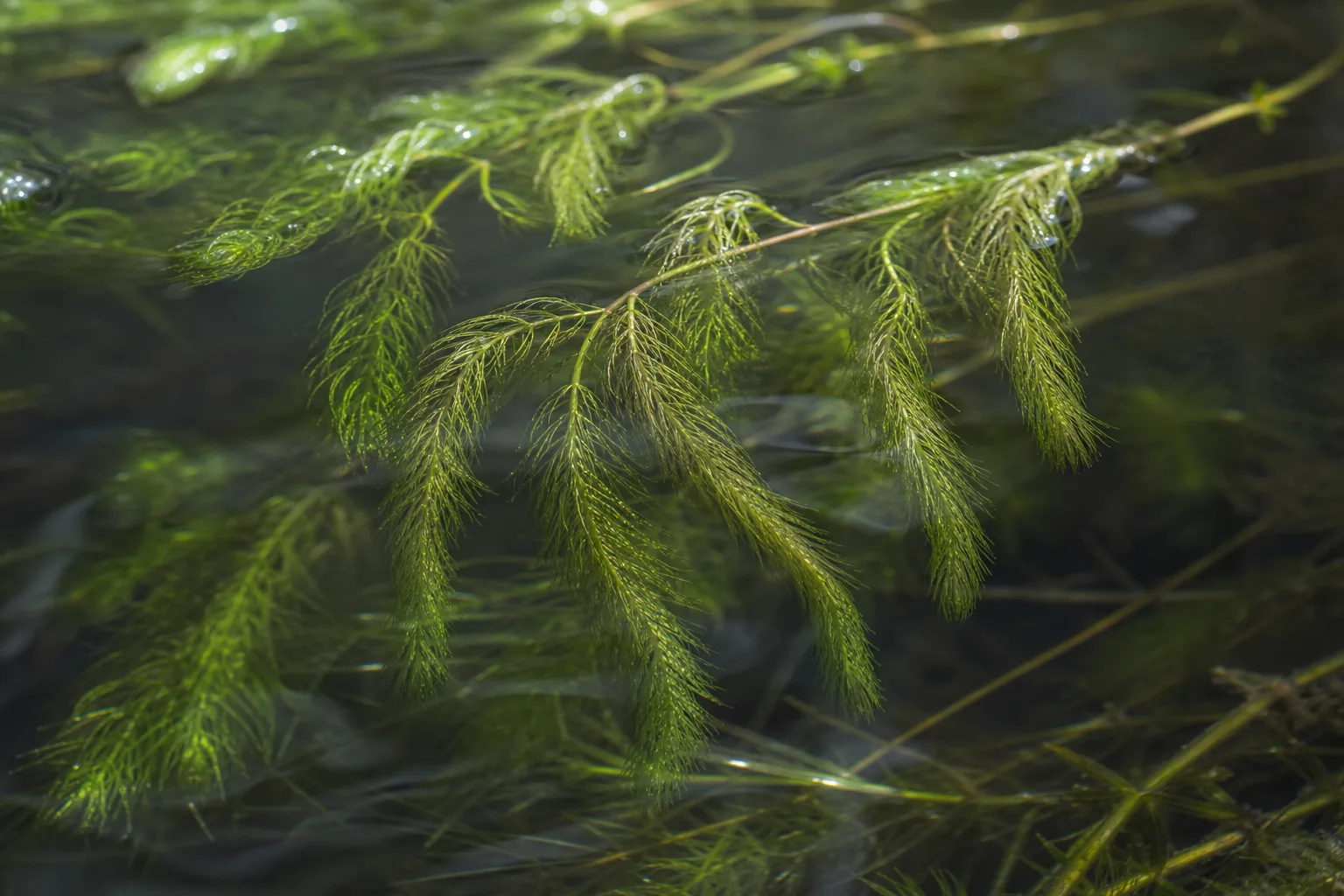
Drooping Leaves on Hornwort: Causes, Checks & Fixes
This guide covers drooping leaves on Hornwort. See also the general Drooping Leaves guide, watering, and light pages for this plant.
Drooping Leaves on Hornwort: Causes, Checks & Fixes
Quick answer
Drooping on Hornwort (Ceratophyllum demersum, coontail) shows up as limp, sagging, or bending whorled stems in the aquarium-not houseplant leaves losing turgor from dry soil. This rootless column feeder has no true roots and absorbs everything from the water through its needles. Healthy hornwort holds stiff, bushy bottle-brush whorls. When those whorls hang down, collapse under their own length, or thin out on the lower half while tips stay green, the usual causes are insufficient light at the needle layer, anchored stems shaded by depth or floating mats, and long stems bending under weight-not underwatering a pot.
First step: confirm float vs anchor placement, measure whether light reaches the drooping section, and check that stem bases are firm green-not mushy brown.
Drooping on hornwort is not houseplant drooping
Generic drooping-leaves guides focus on soil moisture, pot drainage, and root uptake. Hornwort never grows above the water surface and floats freely or is very loosely anchored in nature. There is no potting mix to probe, no crown to inspect, and no repotting fix.
In aquariums, “drooping leaves” on hornwort almost always means sagging submerged whorls or bending stems-sometimes with moderate needle drop, but without the mushy base rot that defines wilting emergencies. Diagnosis uses placement method, light depth, stem length, and base firmness-not soil dryness or humidity trays.
What drooping looks like on Hornwort
Learn these patterns before assuming the plant is dying.
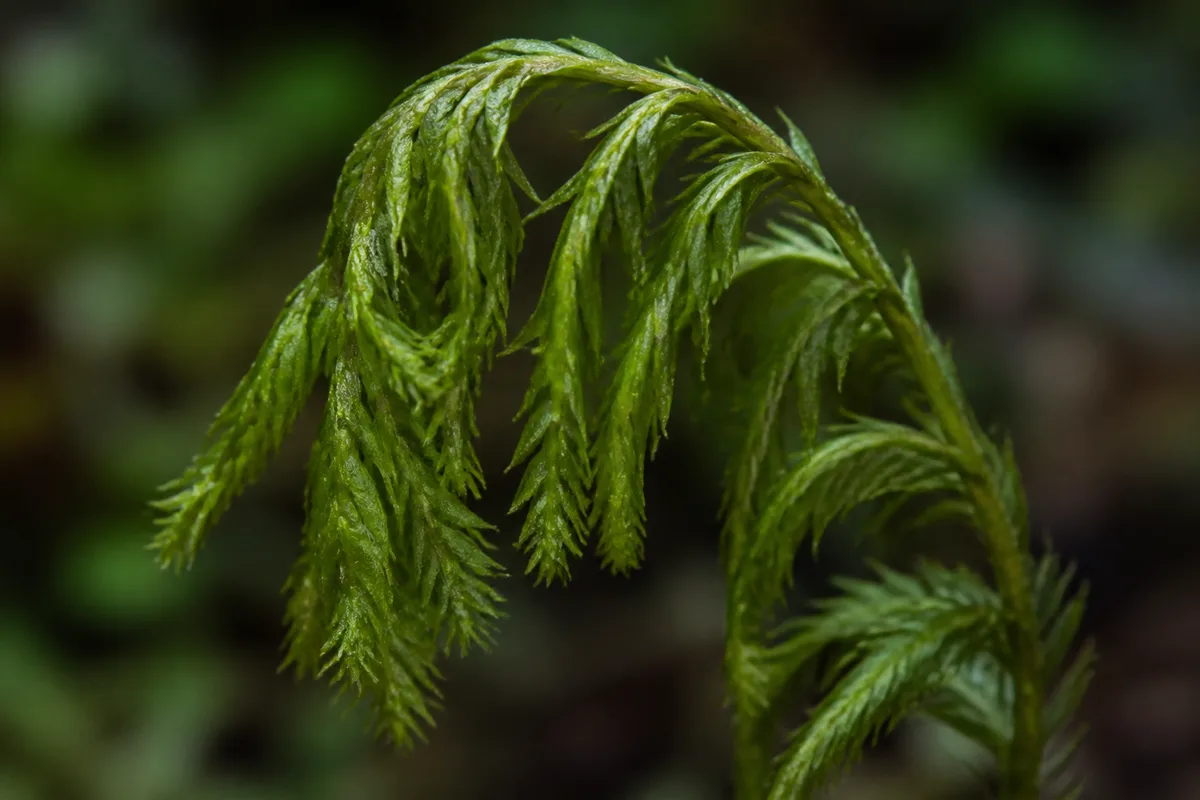
Drooping Leaves symptoms on Hornwort - compare with healthy tissue on the same plant.
Healthy baseline: stiff bushy whorls
Vigorous hornwort forms dense, forked needle whorls along brittle stems-bottle-brush texture that holds its shape in gentle flow. Rutgers FS1236 describes coontail as often bushy near the tips with sparser lower sections even when healthy; the drooping problem starts when lower whorls go limp and bare while tips still look acceptable, or when the whole stem loses rigidity.
Limp lower whorls on anchored stems
When hornwort is weighted in the background, the bottom third often goes pale, sparse, and droopy while upper whorls stay green and bushy. Light attenuates with depth in water, so stems anchored low in a tall tank receive far fewer photons than floaters at the surface. The stem bends or hangs; needles thin out; the plant looks “top-heavy” and sad from the midline down. Bases stay firm and green-not slimy.
Sagging floating mats in dim tanks
Floating hornwort droops when the aquarium LED is too weak or the photoperiod too short. Instead of a buoyant green cloud at the surface, mats sink partially, whorls collapse, and internodes stretch. Floating placement usually guarantees strong surface light-so tank-wide sagging on floaters points to fixture output or photoperiod, not burial.
Long stems bending under their own weight
Fast-growing hornwort in moderate light produces long vertical stems that bow or arc under whorl mass-especially when anchored without support and allowed to grow unchecked for weeks. Tips may still be green; the bend is gravity and length, not rot. This overlaps with leggy growth when internodes stretch in low light.
Moderate needle drop with sagging-not full melt
Drooping sometimes includes needles on the substrate, but stems stay firm. Distinguish this from acclimation shock (heavy shed, firm stems, first two weeks) and from wilting (mushy bases, ammonia, chemical exposure). See the wilting guide when collapse is rapid and bases turn brown.
Drooping vs wilting vs shedding on hornwort
Searchers use these terms interchangeably; on hornwort they imply different fixes.
| Pattern | Best label | Where to read more |
|---|---|---|
| Long firm stems bending; limp lower whorls; green bases | Drooping (this page) | Float, trim, or raise light at depth |
| Mushy brown buried bases; tank-wide limp collapse after meds | Wilting | Wilting guide |
| Heavy needle rain days 3–14; firm stems; new purchase | Acclimation shedding | Watering guide |
| Pale yellow-green tips; sparse needles tank-wide | Nutrient or light shortage | Yellow leaves, not enough light |
Drooping emphasizes structural sag on firm tissue-shade at depth, weak fixture, or stem length-not emergency rot or chemical melt.
Why Hornwort droops
Insufficient light at the drooping whorls
Hornwort tolerates relatively low light compared with many aquarium stems, which creates a trap: it survives while whorls go limp. Aquarium Co-Op notes that insufficient light especially at the base of planted stems triggers needle shedding and poor form. Floating tips in the same tank may look fine while anchored lower sections droop-a classic light-depth signature.
Anchored placement in shade
Weighted bunches tucked behind rock, under thick floating mats, or in the lower third of tall tanks spend most of their length in a dim band. The plant elongates toward brighter zones; lower whorls shed and sag. Substrate type does not feed hornwort-only photons at the needles matter for rigidity.
Floating mat self-shading
Dense floating hornwort can shade its own lower layers. Bottom stems in a thick mat go limp and brown while the top surface stays green. Rotating or splitting mats restores light to inner stems.
Stem length and gravity
Unchecked vertical growth produces stems too long to stay upright without support-especially when whorls are sparse from prior low light. The plant bows rather than stands vertical. Trimming tops and replanting firms up the display.
Acclimation overlap in the first two weeks
New hornwort may droop and shed simultaneously while adapting to your water. If bases stay firm and ammonia reads zero, treat as temporary-see recovery timeline below. Persistent lower-section droop after day fourteen usually means light placement, not acclimation alone.
How to confirm the cause
Work through these checks in order. Stop when one pattern clearly fits.
- Placement audit - Floating or anchored? Anchored lower droop with green tips strongly suggests light depth. Floating sag tank-wide suggests weak fixture or short photoperiod.
- Base firmness - Mushy brown lowest inch means burial rot-redirect to wilting, not drooping fixes. Firm green bases keep you on this page.
- Light at the needles - Estimate PAR or use the rule of thumb in the hornwort light guide: drooping anchored sections often sit below 35 PAR. Surface floaters should see the brightest zone.
- Split float test - Cut a firm green tip and float it at the surface for ten to fourteen days while leaving the droopy anchored section in place. If the floater firms up and the anchored half stays limp, light depth is confirmed.
- Mat density - Thick floating mat? Peel bottom layers away and see if inner stems re-stiffen within a week.
- Stem length - Stems over 30–40 cm with sparse lower whorls may droop from length alone. Trim and replant tops.
- Timeline - Days 3–14 after purchase with firm stems and heavy needle drop fits acclimation; ongoing lower droop after week two fits light or length.
Floating vs anchored droop matrix
| Symptom | Floating placement | Anchored placement |
|---|---|---|
| Whole mat sagging, pale | Weak LED or short photoperiod | Rare-check if weighted deep |
| Green tips, limp lower half | Unusual unless mat is stacked thick | Classic light-depth droop |
| Firm bases, no mush | Yes | Yes |
| Fixes first | Raise PAR, extend photoperiod to 8–10 h | Float tops, trim lower bare stem, raise mid-tank light |
First fix for Hornwort
If lower whorls droop on anchored stems while tips stay green: float healthy cuttings at the surface-do not bury deeper or dose fertilizer yet.
Cut firm green tops 10–15 cm long, remove brown needles, and let them float under your aquarium light. Leave the anchored portion temporarily if bases are firm-you are running a comparison, not discarding the plant. Surface placement puts hornwort where coontail naturally forms denser growth in ample light.
If a floating mat sags tank-wide in a dim setup: increase light at the surface before any other change.
Add or upgrade to a moderate planted-tank LED, or extend photoperiod gradually to 8–10 hours per the hornwort light guide. Do not jump from six to twelve hours in one day-that can trigger needle shed.
If long stems bow under their own weight with firm tissue throughout: trim the top third and float or re-anchor cuttings.
Use sharp aquascaping scissors; replant bushy tops. Lower bare stem sections can be removed-they will not re-foliate without light.
Step-by-step recovery
After the first fix matches your diagnosis:
- Trim bare drooping sections - Remove limp stem lengths with no green whorls. They will not recover rigidity.
- Thin floating mats - Keep 30–50% of surface open so inner stems receive light and gas exchange stays healthy per the hornwort overview.
- Re-anchor shallowly if you prefer background placement - Weight only the bottom centimeter; never bury whorled leaves per the hornwort substrate guide.
- Vacuum shed needles during water changes so decay does not cloud diagnosis with ammonia spikes.
- Stabilize water - Match change water temperature within 2°F for two weeks per the hornwort watering guide.
- Dose fertilizer only after new whorls firm up - If floating tips stay pale despite good light, test nitrate and consider balanced liquid fertilizer per the hornwort fertilizer guide. Do not fertilize during heavy acclimation shed.
Recovery timeline
Expect tighter new whorls on firm floating tips within one to three weeks after light placement is corrected. Acclimation-related droop with firm stems often stabilizes in 7–14 days without beyond debris removal.
Old limp whorls and bent stem sections do not re-firm. Success means new side shoots and stiff needles at tips-not resurrecting collapsed tissue lower on the stem.
Worsening signs: bases turn mushy (switch to wilting workflow); ammonia above zero in a cycled tank; tank-wide collapse after liquid carbon or copper (chemical sensitivity-not light droop).
Lookalike symptoms to rule out
- Wilting with mushy buried bases - Slimy brown lowest inch and float-away stems. Not drooping; fix burial and water quality first.
- Acclimation needle rain - Heavy shed, firm stems, new tank. Patience unless ammonia rises.
- Filter intake shredding - Ragged limp stems on one side only. Prefilter sponge-not light.
- Nutrient deficiency pale droop - Tank-wide pale yellow-green with nitrate near zero. Test before assuming light alone.
- Normal post-trim droop - 24–48 hours after heavy prune; stops quickly.
What not to do
Do not check soil moisture, repot, or adjust room humidity-hornwort is fully submerged with no functional roots in substrate.
Do not bury sagging stems deeper hoping lower whorls will recover. Buried tissue rots; stems float free within days.
Do not dose fertilizer as the first response to drooping when light at the needle layer is unconfirmed.
Do not assume drooping always means more light if bases are mushy or ammonia is elevated-fix rot and water quality via the wilting guide first.
Do not stack large water changes, light upgrades, and fertilizer the same week-you will not know which change stopped the sag.
Do not discard trimmings in natural waterways-hornwort is invasive in many regions. Bag for trash disposal.
How to prevent drooping next time
Default to floating in low-tech and breeding tanks so every whorl receives surface-level light per the hornwort overview.
Anchor shallowly only when mid-tank PAR is adequate - use weights or suction cups; follow the hornwort substrate guide.
Trim every one to two weeks in fast-growing setups so stems do not bow under length-see hornwort pruning.
Run 8–10 hours of aquarium light on a timer; avoid compensating for weak fixtures with excessively long photoperiods that fuel algae.
Thin dense floating mats before inner stems droop from self-shading.
Acclimate new bunches slowly to limit combined droop-and-shed in week one per the hornwort watering guide.
When to worry
Simple light-depth droop on firm green stems is low urgency-float and trim. Escalate when mushy bases, ammonia above zero, foul smell, or rapid tank-wide collapse after medication appear; those patterns belong on the wilting page, not drooping patience.
If floating firm tips under your strongest light still produce limp new whorls after three weeks with clean water tests, review nutrient shortage or persistent chemical sensitivity rather than placement alone.
Related Hornwort guides
- Hornwort overview - floating vs anchored placement and column-feeding biology
- Wilting - mushy bases, acclimation melt, filter damage, and chemical collapse
- Not enough light - PAR targets and fixture upgrades
- Hornwort light - photoperiod and LED guidance
- Hornwort watering - acclimation and stable parameters
- Hornwort substrate - safe anchoring without burial rot
- Hornwort pruning - managing length and mat density
- Yellow leaves - pale droop from nutrient shortage
- Leggy growth - stretched internodes overlapping with sag
Conclusion
Drooping on Hornwort is an aquarium placement and light-depth problem-limp or sagging whorls on firm stems-not a signal to inspect potting soil. Anchored lower sections lose rigidity when photons fade with depth; floating mats sag when fixtures underdeliver; long stems bow under their own weight. Confirm float vs anchor, check base firmness, float healthy tips as the default first fix, and judge recovery by stiff new whorls at stem tips. Stable water and adequate light at the needles come before fertilizer; differentiate drooping from wilting when bases go mushy or chemicals are involved.