Wilting on Hornwort: Causes, Checks & Fixes
Quick answer
Wilting on Hornwort shows up as limp stems and rapid needle shedding-not dry potting soil. Ceratophyllum has no true roots. First step: inspect stem bases for mushiness, confirm float vs anchor placement, and test ammonia before changing fertilizer or light.
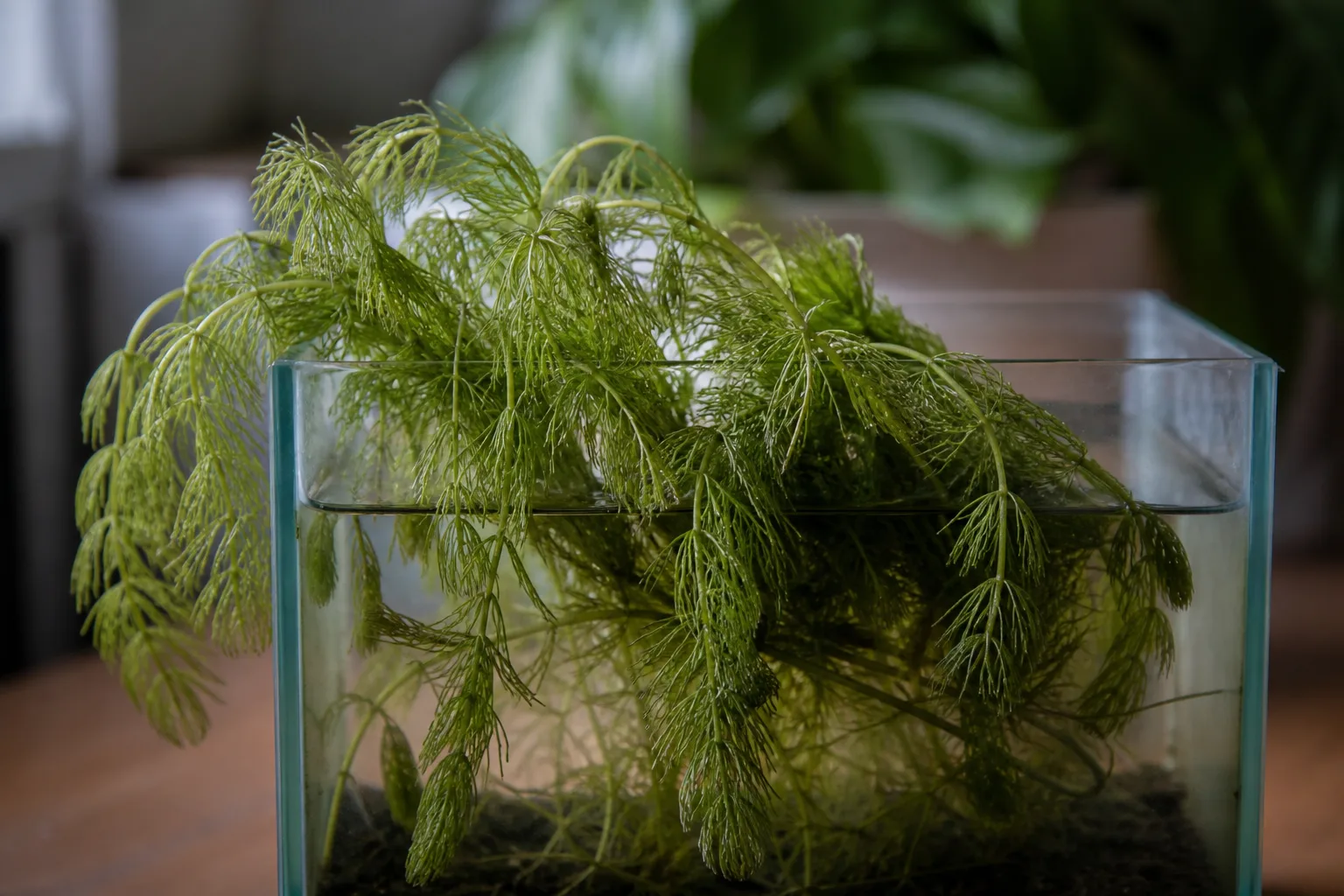
Wilting on Hornwort: Causes, Checks & Fixes
This guide covers wilting on Hornwort. See also the general Wilting guide, watering, and light pages for this plant.
Wilting on Hornwort: Causes, Checks & Fixes
Quick answer
Wilting on Hornwort (Ceratophyllum demersum, coontail) is limp stems and rapid needle shedding in the water column-not houseplant turgor loss from dry soil. This rootless column feeder absorbs nutrients directly from the water and cannot tolerate emergence from water. When hornwort “wilts,” stems lose rigidity, whorls collapse, and needles rain onto the substrate. Common triggers are acclimation shock, buried-stem rot, insufficient light on lower anchored sections, strong filter intake damage, ammonia from decay, nutrient shortage, and liquid-carbon sensitivity.
First step: inspect stem bases for mushiness, confirm whether stems are floating or buried, and test ammonia before stacking light or fertilizer changes.
Wilting on hornwort is not houseplant wilting
Houseplant wilting guides focus on soil moisture at depth, pot drainage, and root uptake failure. Hornwort has no true roots and never grows above the water surface. Penn State Extension describes coontail as very loosely anchored or floating freely-not a potted plant with a crown to inspect.
In aquariums, “wilting” means structural collapse of submerged whorled stems plus needle drop. Diagnosis uses tank timeline, float-vs-anchor placement, stem-base condition, water tests, filter contact, and recent maintenance-not pot weight, soil dryness, or repotting.
What limp stress and wilting look like on Hornwort
Learn these patterns before reaching for fertilizer or ripping out the plant.
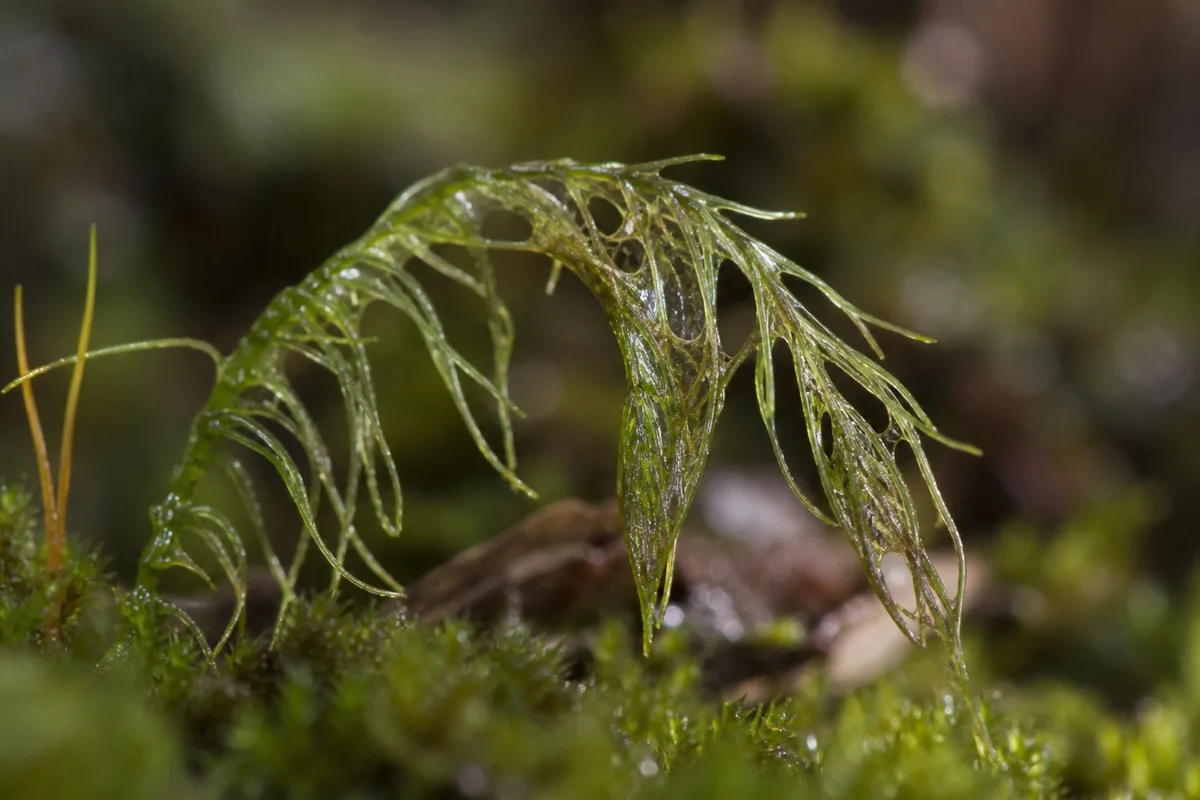
Wilting symptoms on Hornwort - compare with healthy tissue on the same plant.
Rapid needle shedding with still-firm stems
Newly purchased hornwort often sheds needles heavily while stems stay green and firm when store water differs from your tank in temperature, pH, or hardness. Aquarium Co-Op notes that needle shedding is a stress response to major water-parameter changes and is most common when you first add the plant. Needles litter the substrate; floating tips often stay bushier than lower sections. This is acclimation, not immediate death-unless ammonia rises or bases turn mushy.
Limp stems with mushy brown bases
When hornwort is buried in gravel or sand, the lowest inch often turns brown, slimy, and structurally weak while upper whorls still look acceptable briefly. Aquarium Co-Op warns that because hornwort never grows proper roots, the attached end tends to rot away when planted in substrate. The stem goes limp, sheds needles, and floats free within days. This is buried-stem rot-not underwatering.
Pale limp lower whorls on anchored stems
When hornwort is weighted deep or shaded by its own floating mat, lower whorls go pale, sparse, and limp while surface tips stay green and bushy. Rutgers FS1236 notes coontail is often bushy near the tips and sparse lower-when the inverse pattern is extreme (limp bare base, firm green top), light starvation on submerged sections is the limiter. See the not enough light guide for the full workflow.
Stems stripped and limp at filter intake
Strong hang-on-back or canister intake suction can pull hornwort against the tube, shredding whorls and leaving ragged limp stems on one side of the tank. Aquarium Co-Op recommends keeping needles from getting sucked into the filter intake. Damage appears sudden and localized-not gradual over weeks.
Tank-wide limp collapse after chemicals or foul water
Liquid carbon (glutaraldehyde), copper medication, ammonia spikes, or decaying biomass can cause rapid limpness and needle rain across every stem at once. Aquarium Co-Op lists liquid carbon dosing and unfavorable environments-including strong currents and insufficient light at the base of planted stems-among common shed triggers.
Wilting vs drooping vs normal post-trim needle drop
These terms overlap in search results but mean different things on hornwort.
Wilting (this page) emphasizes loss of stem rigidity, mushy bases, and heavy needle rain tied to rot, shock, or mechanical damage. The whole bunch may look collapsed and messy.
Drooping on hornwort usually describes long anchored stems bending under their own weight or floating mats sagging-not necessarily rot. See the drooping leaves guide when stems are limp from length and shade but bases stay firm and green.
Normal post-trim needle drop happens for 24 to 48 hours after a heavy prune when cut ends adjust. If shedding stops within two days and new whorls form on firm stems, no rescue is needed.
Acclimation melt in the first 7 to 14 days after purchase overlaps with wilting symptoms but resolves with stable water-compare patterns in the yellow leaves guide when discoloration dominates over limpness.
Why Hornwort goes limp or sheds heavily
Acclimation and parameter shock
Hornwort tolerates a wide band-roughly 59–86°F (15–30°C) and pH 6.0–7.8 in most community tanks-but reacts to sudden shifts with needle shedding and limp appearance. Untempered large water changes, bag-to-tank temperature gaps, or pH drift after substrate changes all trigger stress. Stability matters more than hitting a perfect number on day one.
Buried stems and anaerobic base rot
UF/IFAS describes coontail as rootless and free-floating. Burying whorled leaves in substrate cuts off oxygen to soft tissue; the base decays, releases ammonia, and the stem loses structural integrity. This is the most common “I planted it like other stem plants” failure.
Light starvation on anchored lower sections
Coontail can grow at relatively low light compared with many submerged plants, which creates a trap: it survives in dim corners while lower whorls go limp and bare. Light attenuates with depth in water, so stems tucked behind rock, under thick floating mats, or anchored in the lower third of a tall tank receive far fewer photons than surface floaters.
Strong filter flow and mechanical damage
Hornwort prefers gentle flow. Direct current on floating mats or anchored bunches strips needles and leaves stems looking wilted and threadbare. Prefilter sponges and flow deflectors fix this faster than fertilizer.
Nutrient shortage in ultra-clean water
Because hornwort pulls nutrients from the water column with no sediment roots, fast-growing masses in lightly stocked, heavily filtered setups can exhaust available nitrogen. Limp pale new growth in otherwise clean water may signal deficiency-not thirst.
Liquid carbon and medication sensitivity
Glutaraldehyde-based liquid carbon products and copper treatments often trigger rapid needle drop and limp collapse at doses tolerated by fish. Remove hornwort to matched tank water during treatment or reduce dose if yellowing and shedding follow dosing.
How to confirm the cause
Work through these checks in order. Stop when one pattern clearly fits.
- Timeline - Added within the last 7 to 14 days? Firm stems with heavy needle rain and ammonia at 0 ppm strongly suggest acclimation-not chronic failure.
- Stem-base inspection - Are lowest inches buried in substrate or mushy brown? Burial rot shows slimy limp bases; acclimation melt keeps bases firm.
- Placement split test - Float a healthy green cutting at the surface for two weeks while leaving part of the clump in its old position. If the floater firms up and the deep section stays limp, light is the limiter (not enough light).
- Water parameters - Test ammonia and nitrite. Readings above 0 ppm in a cycled tank point to decay overload or bioload stress. Nitrate near 0 in a lightly stocked tank supports deficiency suspicion when light is adequate.
- Filter contact - Are stems pinned against intake or outlet? Localized shredding on one side confirms mechanical damage.
- Recent maintenance log - Large water changes, medication, liquid carbon, or filter upgrades in the last 48 hours? Timing fits chemical or shock wilting.
- Float vs anchor audit - Floating stems limp tank-wide may mean shock or chemicals. Only lower sections limp on anchored bunches usually means light or burial.
Lookalike table
| What you see | More likely cause | Differentiating check |
|---|---|---|
| Heavy needle rain, firm green stems, day 3 to 14 | Acclimation shock | Ammonia 0 ppm; no mushy bases |
| Mushy brown base, buried lowest inch | Burial rot | Stem floats free within days |
| Limp lower whorls, green floating tips | Light starvation on anchored stems | Surface float test firms up cuttings |
| Ragged limp stems on intake side only | Filter mechanical damage | Prefilter sponge stops further shredding |
| Tank-wide limp collapse after dosing | Liquid carbon or copper | Recent chemical log; all stems affected |
| Limp long stems, firm bases, no mush | Drooping from length/shade | See drooping leaves |
First fix for Hornwort
If stems were buried and bases are mushy: trim rotted tissue, float healthy green tips, and never re-bury whorled leaves.
Cut away brown slimy sections back to firm green tissue. Float the healthiest tips at the water surface in moderate light-the same zone where coontail naturally forms denser growth. Vacuum shed needles so decay does not spike ammonia. Do not anchor deep in gravel hoping the base will recover.
If needles dropped after a large water change or new purchase: stabilize parameters and wait-do not fertilize yet.
Match change water temperature within 2°F, limit single changes to 25–30% of volume, and follow the hornwort watering guide acclimation steps. Remove mushy fragments only; leave firm stems in place. Patience beats stacked treatments during the first week.
If lower whorls are limp on anchored stems while tips stay green: float healthy tips at the surface.
Surface placement puts hornwort in the brightest band of the tank. Do not dose fertilizer, re-anchor deep, or change multiple parameters the same week. Read the next one or two whorls for tighter, firmer needles.
If stems are pinned at filter intake: add a prefilter sponge and move the mat.
Deflect flow before assuming the plant is dying from nutrient lack.
Step-by-step recovery
After the first fix matches your diagnosis:
- Remove mushy and fully limp tissue - Cut back to firm green stems. Rot will not re-firm; it spreads upward.
- Vacuum shed needles - Gravel-vac or net debris during each water change. Fallen needles add excess nutrients when left to rot.
- Stabilize parameters - Match temperature and avoid large untempered water changes for two weeks per the hornwort watering guide.
- Adjust light if indicated - Float stems, thin dense surface mats, or upgrade aquarium lighting to 8 to 10 hours daily before assuming failure. See the hornwort light guide.
- Dose fertilizer only when light and water are clean - In sparse, filtered setups, a balanced liquid aquarium fertilizer after two weeks of stable firm growth on floating tips. Skip dosing during acclimation or foul-water rescue.
- Wait for new whorls - Judge success on side shoots and firm new needles, not old limp sections.
Recovery timeline
Expect slowing shed and firmer new whorls within one to three weeks after the correct fix during active growth. Acclimation wilting often stabilizes in 7 to 14 days without intervention beyond debris removal.
Old limp needles and collapsed whorls do not re-firm. Recovery is forward-looking: firm stems sprouting new whorls tell you the fix worked. Cool water or short winter days may extend the timeline even after parameters stabilize.
Worsening signs: mushy stems with foul smell despite cleanup (decay overload-escalate water-quality rescue); continued tank-wide limpness after acclimation with ammonia at 0 (check liquid carbon, copper, or strong flow); firm floating tips but persistent limp lower sections in a tall tank (still insufficient mid-column light).
What not to do
Do not check soil moisture, pot weight, or root firmness in potting mix-hornwort has no functional roots and no soil.
Do not bury stems deep in substrate hoping limp bases will recover. Rot spreads upward; float or weight-anchor only the bottom centimeter per the hornwort overview.
Do not dose fertilizer into foul water or during heavy acclimation shedding-excess nutrients with stressed tissue fuel algae without fixing limpness.
Do not assume limp always means more light if ammonia is elevated or stems are mushy. Fix water quality first.
Do not use full-strength liquid carbon on sensitive hornwort without watching for rapid needle drop. Reduce dose or remove the plant during glutaraldehyde treatments if wilting follows dosing.
Do not stack light upgrades, large water changes, medication, and fertilizer the same week-you will not know which change caused the next shed.
Do not discard trimmings in natural waterways-hornwort is invasive in many regions. Bag for trash disposal.
How to prevent limp stress next time
Acclimate slowly - Float the bag to match temperature, then add small amounts of tank water over 30 to 60 minutes before release. Stability prevents shock that wilts hornwort on day one.
Default to floating in low-tech and breeding tanks so every whorl receives surface-level light. Anchor shallowly only when mid-tank lighting is proven adequate per the hornwort light guide.
Never bury living tissue - follow the hornwort substrate guide for safe anchoring with weights or suction cups.
Protect filter intakes - Prefilter sponges prevent shredded limp stems and clogged impellers.
Vacuum shed needles weekly during partial water changes. Decay prevention stops acclimation wilting from cascading into foul-water decline.
Match fertilizer to stocking - stocked community and goldfish tanks rarely need extra nitrogen; ultra-clean setups may. See the hornwort fertilizer guide before dosing.
When to worry
Acclimation shedding alone rarely kills hornwort. Treat as urgent when mushy stems, ammonia or nitrite above 0 in a cycled tank, foul-smelling water, or copper or pesticide exposure accompany limp collapse-those patterns need water-quality and chemical review, not patience alone.
If two new whorls still arrive limp and pale after floating healthy tips under your strongest fixture and water tests stay clean, assume nutrient shortage in a sparse tank or persistent light limits-and adjust accordingly rather than replacing the species.
Discard stems that are mushy from base to tip with no firm green tissue remaining. Keep and float any segment with rigid green whorls-hornwort propagates from cuttings easily.
Related Hornwort guides
- Hornwort overview - floating vs anchored placement, needle-shedding FAQ, and column-feeding biology
- Drooping leaves - long limp stems from length and shade without rot
- Yellow leaves - discoloration patterns overlapping with early wilting
- Overwatering - foul-water melt and organic overload (not wet soil)
- Underwatering - air exposure and crispy brown needles above the waterline
- Hornwort light - photoperiod and fixture guidance
- Hornwort watering - water-change rhythm and parameter stability
- Hornwort fertilizer - when column feeding needs supplementation
- Hornwort pruning - trimming limp sections and managing mat density
Conclusion
Wilting on Hornwort is an aquarium stress signal-limp submerged stems and needle rain-not a reason to inspect potting soil. Acclimation shock, buried-stem rot, light-starved lower whorls, filter mechanical damage, foul water, nutrient shortage, and chemical sensitivity each leave a distinct pattern on whorled stems with no true roots. Confirm mushiness at the base and float-vs-anchor placement first, float healthy tips as the default rescue for non-acclimation cases, and judge recovery by firm new whorls-not re-firming of collapsed old tissue. Stable water comes before fertilizer; patience during the first week beats stacked treatments on a plant still adapting to your tank.