Underwatering on Hornwort: Causes, Checks & Fixes
Quick answer
Underwatering on Hornwort means stems dried in air-not dry potting soil. Ceratophyllum has no true roots and cannot tolerate emergence. First step: re-submerge every exposed stem in clean, dechlorinated tank water immediately.
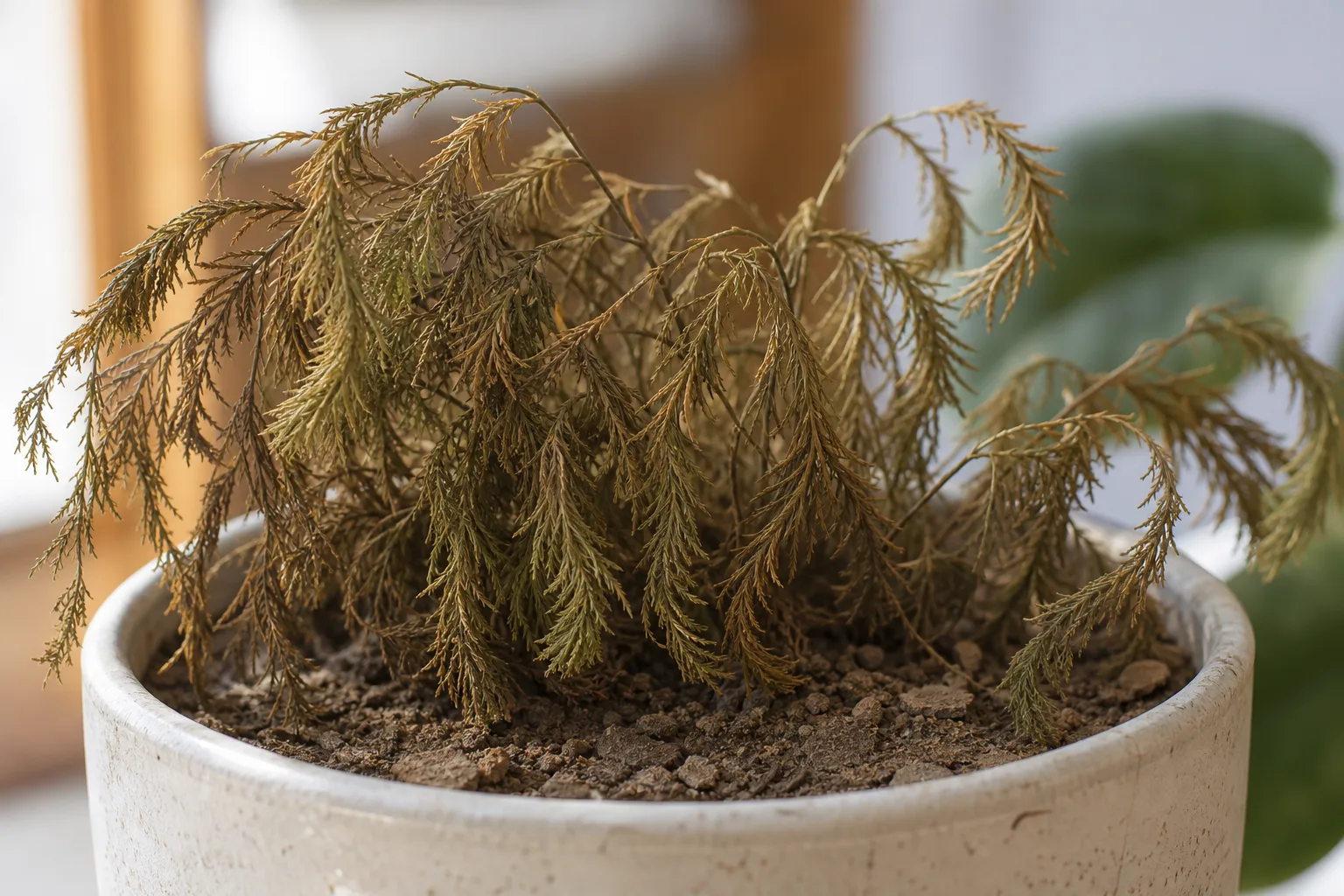
Underwatering on Hornwort: Causes, Checks & Fixes
This guide covers underwatering on Hornwort. See also the general Underwatering guide, watering, and light pages for this plant.
Underwatering on Hornwort: Causes, Checks & Fixes
Quick answer
Underwatering on Hornwort (Ceratophyllum spp., coontail) is dehydration from air exposure-not dry potting soil. This is a fully aquatic plant with no true roots; it absorbs nutrients directly from the water column in the tank or pond. Rutgers Cooperative Extension notes that coontail cannot tolerate periods of total emergence, so even short time on a dry counter during maintenance can crisp stems and trigger heavy needle shedding.
First step: re-submerge every exposed stem in clean, dechlorinated water at tank temperature. Do not wait for a scheduled water change, repot into substrate, or dose fertilizer. Wet tissue recovers; air-dried tissue does not.
What underwatering looks like on Hornwort
Above the waterline or after air exposure, hornwort shows stress differently than a houseplant in dry soil:
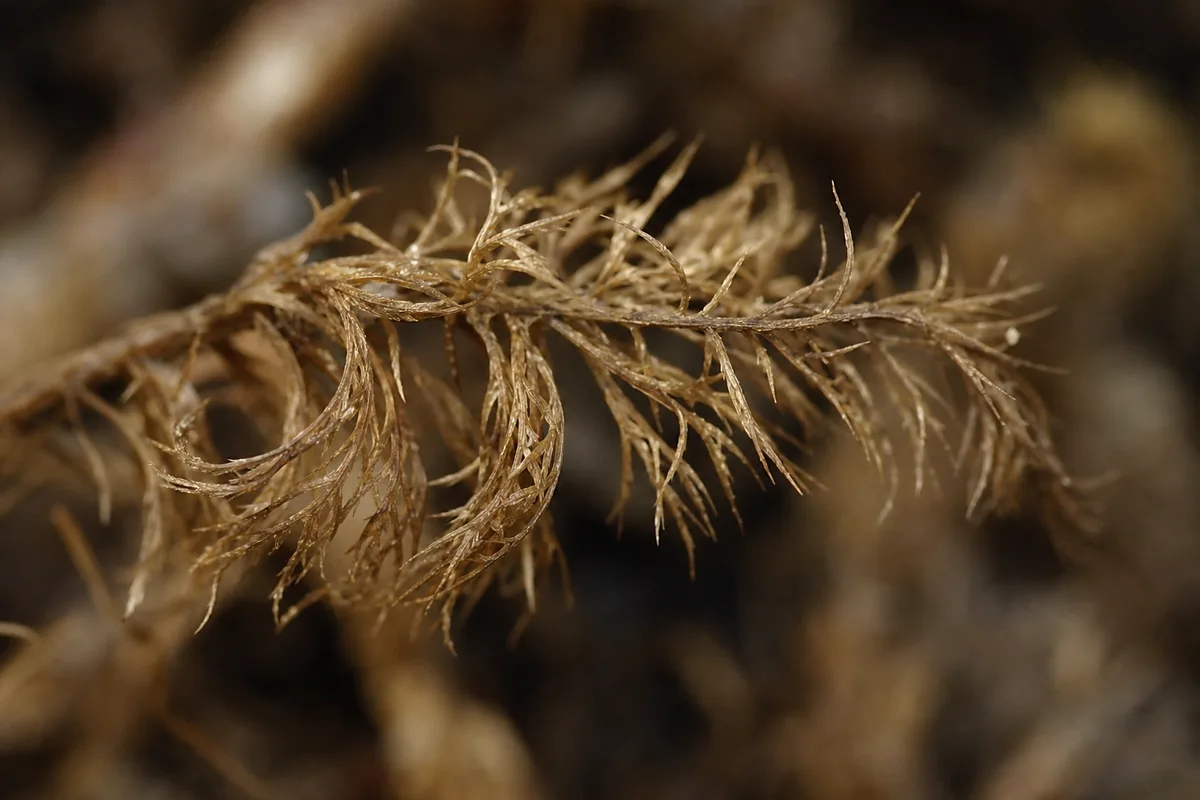
Underwatering symptoms on Hornwort - compare with healthy tissue on the same plant.
- Dry, brittle floating mats at the tank surface, especially edges riding on glass or rim
- Crispy brown needle tips that snap when bent-healthy submerged needles feel soft and springy underwater
- Shrinking bunches as the plant sheds needles and stems thin out
- Stems breaking apart when handled, with the bunch losing its bushy coontail shape
- Rapid needle drop right after maintenance if bunches were left out to dry
Submerged underwatering is subtler: a low water level leaves the top of a floating mass exposed to air. Evaporation, open-top turtle tanks, and summer pond drawdowns all pull the surface below the plant before you notice leaf damage.
Healthy contrast: Firm green stems fully underwater, slow needle shedding only in the first week after purchase, and new side shoots forming on floating portions within days of stable conditions.
Why Hornwort gets underwatered
Hornwort evolved for still or slow-moving freshwater where stems stay submerged or float with tissue in contact with water. Penn State Extension describes coontail as lacking true roots and growing very loosely anchored or floating freely-there is no moist soil reservoir to buffer drought.
Common Hornwort-specific triggers:
- Tank maintenance without a holding tub - stems left on the counter while you scrub the aquarium dry out in minutes
- Low water level - evaporation, splash-out, or infrequent top-offs expose floating tips
- Turtle tank heat - basking lamps dry surface-floating hornwort faster than submerged portions
- Pond level drops - summer evaporation or intentional drawdown leaves mats stranded on mud
- Shipping and store display - hornwort often arrives partially dehydrated; Aquarium Co-Op notes it does not survive shipping very well compared with hardier beginner plants
- Filter or surface clutter - portions pushed above the waterline by return flow or floating equipment
Because hornwort is a water-column feeder that lacks roots to draw from sediment, drought damage hits the leaves and stems directly. There are no roots buried in wet substrate to keep the top alive while the surface crisps-once tissue desiccates, that section is done.
How to confirm the cause
Work through these checks before treating nutrient deficiency or rot:
- Water line vs. plant position - Are floating edges, stem tips, or entire bunches above the surface? A full tank with submerged green tissue points away from underwatering.
- Recent maintenance - Was hornwort removed, drained, or set on a dry surface in the last 24 hours? That timing fits dehydration better than gradual decline.
- Stem texture - Pinch submerged stems: soft and green is healthy; dry, brown, and brittle confirms air damage on those sections.
- Needle shedding pattern - Sudden mass shed right after a water change suggests drying out. Gradual shedding over two weeks in a stable submerged tank usually means acclimation, flow, or chemistry stress.
- Tank type - Open-top aquariums, turtle setups with heat lamps, and outdoor ponds lose water faster than sealed systems.
- Smell and mush - Foul, slimy stems in wet water suggest rot or melt, not underwatering. Dehydrated hornwort is dry and brittle, not mushy.
If stems stay fully submerged, water is clean, and tissue still yellows or sheds, nutrient shortage, strong current, or light stress are more likely-underwatering is a poor fit.
First fix for Hornwort
Re-submerge all exposed stems in clean, dechlorinated water matched to tank temperature.
Gather every brittle or floating portion and place it fully underwater-floating freely is fine. If you are mid–water change, use a holding tub of aquarium water rather than tap water straight from the cold faucet. The goal is to stop further drying immediately; trimming, fertilizer, and substrate planting come later.
Do not mist leaves, wrap stems in wet paper towels for days, or plant into gravel as a hydration shortcut. Hornwort needs continuous submersion, not surface moisture.
Step-by-step recovery
Once everything is underwater again, proceed in this order:
- Remove dead tissue - Trim dry brown or crispy stem sections with sharp scissors. Dead needles will not re-green and decay if left in the tank.
- Float healthy cuttings - Let green portions drift at the surface or lie submerged. Hornwort roots poorly because it never grows proper roots; floating gives the best access to light and surface gas exchange after stress.
- Vacuum shed needles - Gravel-vacuum or net fallen needles so they do not foul water quality as they break down.
- Stabilize temperature - Keep water in the 18–28°C (64–82°F) band hornwort tolerates in home aquariums. Avoid large temperature swings right after re-wetting.
- Hold fertilizer and chemicals - Skip liquid carbon, copper medications, and heavy dosing until new shoots appear. Stressed hornwort sheds more when chemistry shifts.
- Watch for new shoots - Side branches and brighter green tips on remaining stems mean recovery is underway. Propagate from those sections if the original bunch was mostly lost.
If only a small green fragment remains, treat it like a fresh cutting-float it and wait. Hornwort propagates easily from any healthy segment once fully submerged.
Recovery timeline
24–72 hours: Needle shedding should slow once tissue is fully wet; no further crisping on submerged sections.
One to two weeks: New side shoots and denser needle growth on green stems are realistic in stable aquarium conditions.
Three to four weeks: A thinned bunch can look bushy again if you removed dead material early and kept water clean.
What will not recover: Brown crispy needles and desiccated stem sections-they stay dead. Judge success by new green growth, not old damaged color.
Worsening signs: Stems turn slimy underwater, smell foul, or dissolve entirely-that is rot or melt, not ongoing underwatering. Replace with fresh stock if the whole bunch disintegrates despite prompt re-submersion.
Lookalike symptoms
- Acclimation melt - New hornwort often sheds needles for one to two weeks while adjusting to your water, even when fully submerged. Stable parameters and patience help; air-dried tissue is brittle immediately, not gradual.
- Nutrient deficiency - Yellowing or thin growth with stems still soft underwater; fix with water changes or aquarium-safe fertilizer, not more air exposure.
- Excess light or heat - Bronze or brown tips on otherwise turgid submerged stems; reduce lamp intensity or move floating mass slightly deeper.
- Strong filter current - Mechanical needle stripping with healthy green base; redirect flow or move the bunch away from the intake.
- Planted stem rot - Lower stems buried in substrate turn mushy while tips look fine; hornwort has no true roots and the attached end tends to rot away-float instead of planting deeper.
What not to do
Do not plant into substrate to fix dryness-buried ends rot and the problem was air, not anchoring. Avoid fertilizing a dehydrated bunch before it puts out new growth. Do not mist hornwort like a houseplant; surface moisture does not rehydrate desiccated stems. Do not assume crispy leaves mean overwatering on Hornwort and drain the tank-hornwort cannot be overwatered in the houseplant sense while properly submerged. Skip copper or algaecide treatments during recovery unless you move the plant to a separate tub.
How to prevent underwatering on Hornwort
- Maintenance tub - Keep hornwort in a container of tank water whenever the aquarium is drained or cleaned.
- Weekly top-offs - Replace evaporation in open-top and turtle tanks before floating mats ride above the line.
- Trim dense surface mats - Thin overcrowded floating hornwort so weight keeps stems wet and filters stay clear.
- Mind heat sources - Position floating bunches away from turtle basking bulbs and tank heaters near the surface.
- Pond monitoring - Refill outdoor ponds after drawdowns or dry spells before coontail mats sit on exposed mud.
- Gentle acclimation - Float new bunches in the bag or a cup of tank water for 30 minutes, then release fully submerged.
Match everyday care to how hornwort actually lives: always in water, clean and dechlorinated, with moderate light and gentle flow. Check floating edges during your weekly water-change routine-the first dry inch of stem is the earliest warning.
Hornwort care cross-check
Underwatering prevention sits on top of normal hornwort husbandry. Confirm water clarity and temperature stay steady, light is moderate to bright without cooking surface mats, and flow is gentle enough that needles are not pinned above the waterline. In turtle tanks, remove decaying fragments promptly so water quality does not decline while the plant recovers. Hornwort is resilient once fully wet again-but it will not forgive being treated like a potted houseplant that needed a deeper drink.
When to use this page vs other Hornwort guides
- Hornwort watering guide - Use for routine moisture checks before assuming underwatering is the main issue.
- Hornwort problems hub - Browse all 16 common issues on this species.
- Wilting on Hornwort - Different entry point when symptoms overlap with underwatering.
- Brown Tips on Hornwort - Different entry point when symptoms overlap with underwatering.
- Yellow Leaves on Hornwort - Different entry point when symptoms overlap with underwatering.