Overwatering on Hornwort: Causes, Checks & Fixes
Quick answer
Overwatering on Hornwort means foul, stagnant tank water and decaying organic matter-not wet potting soil. Ceratophyllum has no true roots and lives submerged. First step: test ammonia and nitrite, then do a partial water change and remove mushy stems and sunken melt.
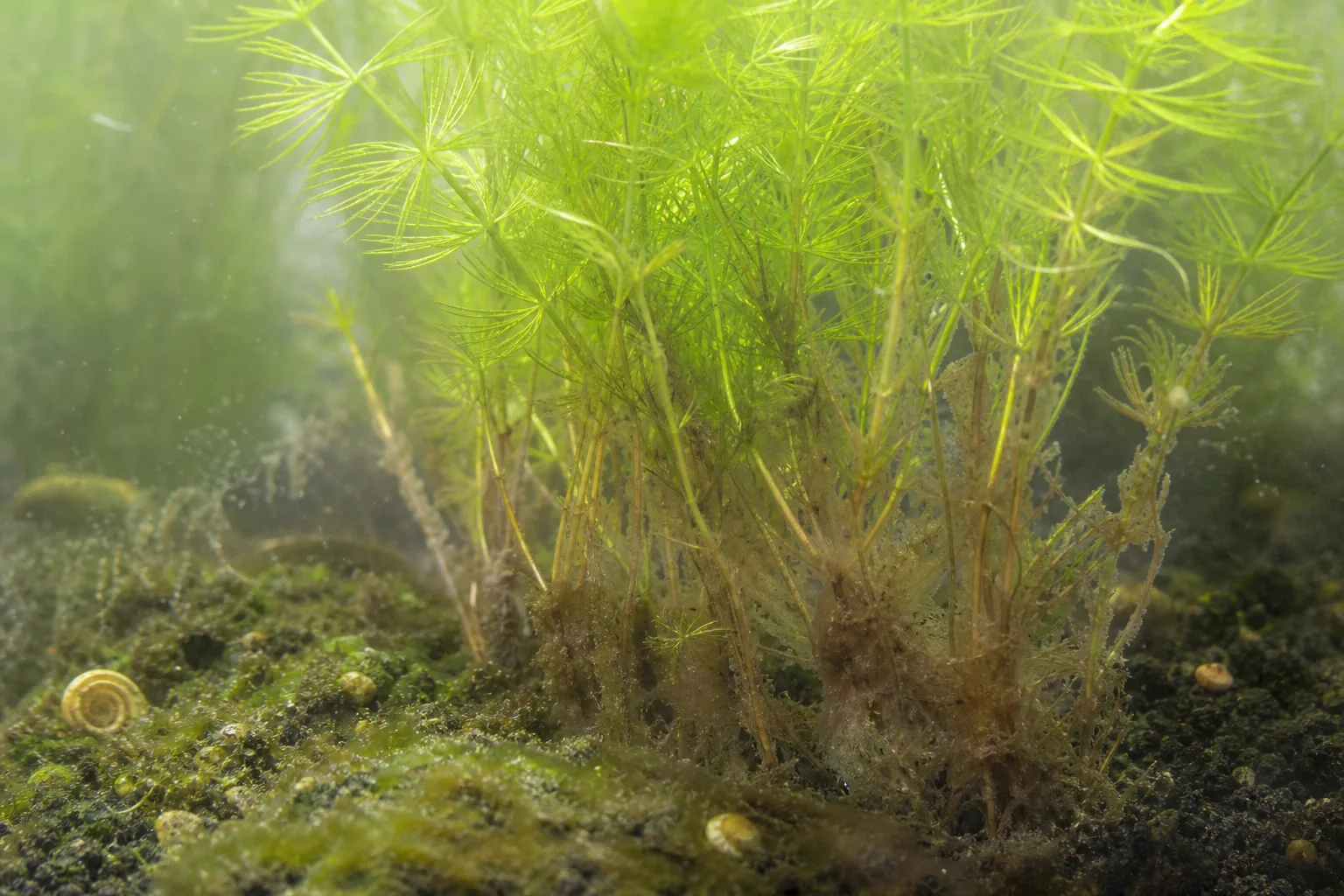
Overwatering on Hornwort: Causes, Checks & Fixes
This guide covers overwatering on Hornwort. See also the general Overwatering guide, watering, and light pages for this plant.
Overwatering on Hornwort: Causes, Checks & Fixes
Quick answer
Overwatering on Hornwort (Ceratophyllum spp., coontail) is foul-water stress and organic overload-not wet potting soil. This is a fully aquatic plant with no true roots that absorbs nutrients directly from the water column. It cannot be overwatered in the houseplant sense while properly submerged in clean water. When hobbyists search for hornwort overwatering, they usually mean stagnant water, decaying biomass, buried-stem rot, or turtle-tank fouling that drives needle shedding and stem melt.
First step: test ammonia and nitrite, then do a partial water change and remove mushy stems and sunken melt. Do not pause water changes, let substrate dry, or check pot weight-those are terrestrial fixes that do not apply to Ceratophyllum.
”Overwatering” on hornwort is not houseplant overwatering
Houseplant overwatering means saturated potting mix starving roots of oxygen. Hornwort has no functional root system and never grows in a pot with drainage holes. Penn State Extension describes coontail as very loosely anchored or floating freely, drawing nutrition from surrounding water rather than from moist soil.
The aquarium version of “too wet” is different:
- Foul, stagnant water loaded with dissolved organics from decaying plant matter, fish waste, and uneaten food
- Buried stems in gravel or sand that go anaerobic and rot at the base
- Dense floating mats that trap debris and create low-flow zones underneath
- Turtle-tank organic overload where shredding, feeding, and warm water accelerate breakdown
- Ammonia or nitrite spikes when decay outpaces your filter and living plant uptake
Hornwort is actually a strong nutrient sponge-it grows fast by consuming ammonia, nitrates, and phosphates from the water. The problem is not too much clean water. It is too much dirty water and decaying tissue recycling nitrogen back into the column faster than you remove it.
What foul-water stress looks like on Hornwort
Above healthy submerged growth, foul-water decline shows a distinct pattern:
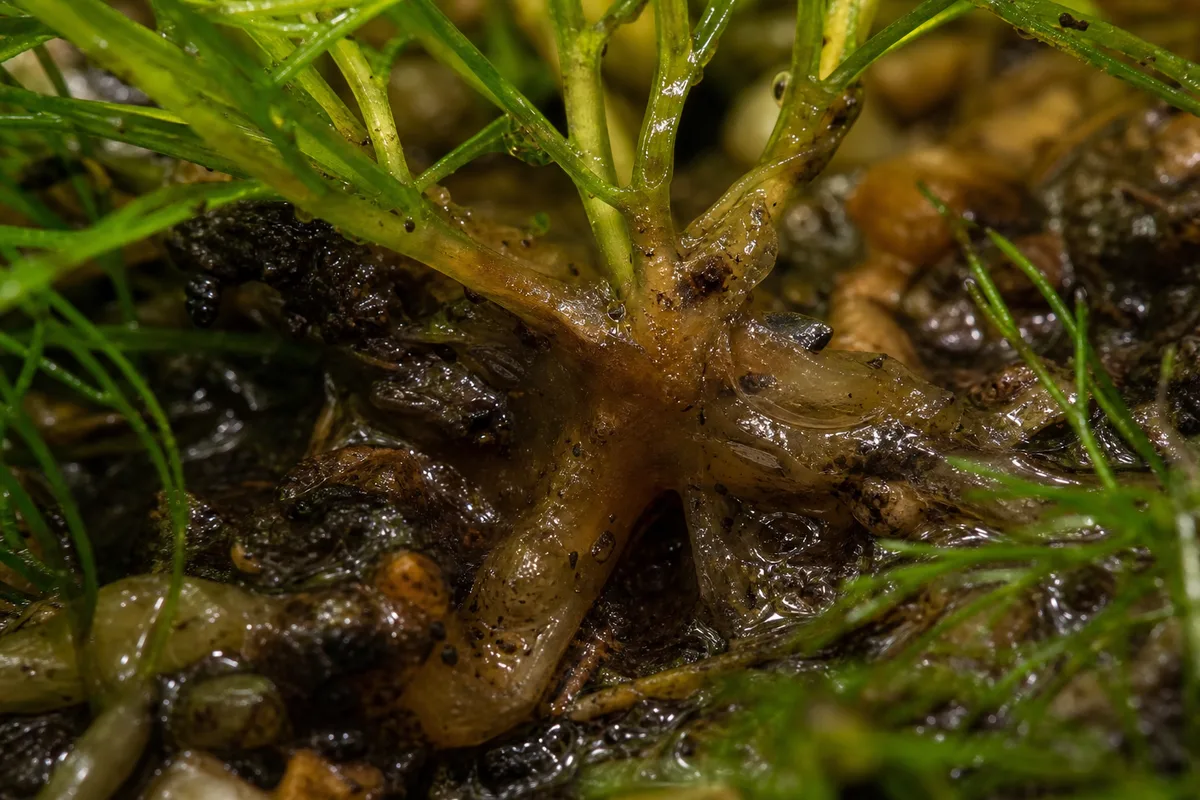
Overwatering symptoms on Hornwort - compare with healthy tissue on the same plant.
- Brown, slimy, or mushy stem bases, especially on anchored bunches where the lowest inch contacts substrate
- Heavy needle shedding that leaves a carpet of debris on gravel-not the gradual shed of first-week acclimation
- Cloudy or gray-tinted water and sometimes a sour or rotten smell when you disturb the substrate
- Sunken, translucent melt that breaks apart when handled instead of staying firm and green
- Thin, stringy lower stems on planted bunches while tips still look bushy-burial rot climbing upward
- Ammonia or nitrite above 0 ppm on liquid test kits in an established tank
Healthy contrast: Firm green whorls on floating or drifting stems, slow needle loss only in the first one to two weeks after purchase, and new side shoots forming within days once water stays clean.
Floating hornwort fails differently from anchored hornwort. Floating masses usually show surface green tissue with debris collecting beneath the mat. Anchored bunches fail at the weighted or buried base first while upper whorls still look acceptable-until the rot severs the stem.
Why Hornwort declines in foul water
Decaying biomass and organic overload
Hornwort sheds needles when stressed-acclimation, flow, light shifts, or chemistry swings all trigger it. Aquarium Co-Op notes that fallen leaves should be gravel-vacuumed promptly because they add excess nutrients when left to decay. In a fast-growing mass, shed needles, broken fragments, and uneaten food compound quickly. Dissolved organics climb, biofilm spreads, and the tank shifts from hornwort cleaning the water to decaying hornwort fouling the water. Dense decaying mats can deplete oxygen as breakdown outpaces gas exchange.
Because hornwort has no roots to retreat into, every stem segment sits in the same water quality. Column feeders absorb ammonia and nitrates from solution-but when decay loads exceed uptake and filtration, tissue damage follows.
Buried stems and anaerobic substrate zones
A common trigger is treating hornwort like a rooted stem plant and burying living tissue in gravel, sand, or aquatic soil. UF/IFAS describes coontail as rootless and free-floating, and UC Davis notes that roots are lacking on Ceratophyllum demersum; buried soft stems go anaerobic, decay, and release ammonia into the water. The rot spreads upward, leaving bare stringy bases and eventually floating fragments.
Wet substrate around a weight is not the same as healthy submersion. Hornwort needs oxygenated water contact on all living tissue, not stems smothered under grains.
Turtle-tank fouling and overfeeding
Turtle aquariums combine high bioload, warm water, plant shredding, and leftover food-all accelerants for organic overload. Hornwort often survives turtles when nitrates stay controlled with frequent 30 to 40 percent water changes, but unchecked debris under gravel produces the same mushy decline people mislabel as overwatering. The fix is debris removal and water changes, not less water in the tank.
Stagnant zones under dense floating mats
A thick floating canopy shades below and can slow flow under the mass. Debris trapped there decays anaerobically. Thinning the mat restores circulation and keeps shed needles from composting on the substrate under the shadow.
How to confirm the cause
Work through these checks before blaming light, fertilizer, or disease:
- Liquid test ammonia and nitrite - Readings above 0 ppm in a cycled tank point to breakdown or bioload overwhelming the system. Nitrate alone does not tell the whole story.
- Smell and clarity - Sour, rotten odors and persistent cloudiness after filtration has run suggest organic overload, not normal acclimation shedding.
- Anchor method - Are stems buried in substrate, or only a weight resting on gravel with tissue exposed? Mushy lowest inches confirm burial rot.
- Debris inventory - Net or siphon test: piles of brown needles, food particles, and mushy fragments on the bottom feed foul-water decline.
- Flow path - Is the hornwort mass pinned against a dead corner, filter intake, or under a solid floating blanket with no circulation?
- Recent changes - Large untempered water changes, medication, or liquid carbon can cause shed; foul-water decline usually pairs with rising ammonia, smell, or substrate sludge, not chemistry alone.
- Tissue texture - Slimy and brown underwater means rot or melt. Dry and brittle means air exposure (underwatering), not this problem.
Lookalike symptoms
| What you see | More likely cause | Differentiating check |
|---|---|---|
| Gradual needle shed, firm green stems, stable tests | Acclimation melt | First one to two weeks after purchase; ammonia 0 ppm |
| Dry, crispy brown tips above waterline | Air exposure / underwatering | Stems sat on counter or floated above surface |
| Pale thin growth, ammonia 0 ppm | Low light or nitrogen deficiency | Stems soft, not slimy; see not enough light |
| White fuzz on gravel only | Decaying debris / water mold | Living stems green; see mold on soil |
| Mushy buried base, tips still green | Buried-stem anaerobic rot | Stems in substrate; see hornwort soil guide |
First fix for Hornwort
Test ammonia and nitrite, then do a partial water change and remove decaying tissue.
Match replacement water to tank temperature within a couple of degrees and dechlorinate before adding it. Remove the worst mushy stems and net or gravel-vacuum sunken melt in the same session. The goal is to stop adding organics and dilute what’s already dissolved-not to drain the tank dry or “let soil dry out.”
Do not dose fertilizer, liquid carbon, or copper medications on a fouling bunch until water tests clean and firm green tissue remains. Stressed hornwort sheds more when chemistry shifts on top of existing decay.
Step-by-step recovery
Once the first water change and debris removal are done, proceed in order:
- Trim all mushy, brown, or translucent stems - Cut back to firm green tissue with sharp scissors. Dead needles will not re-green and fuel ammonia if left in the tank.
- Gravel-vacuum shed needles and sludge - Target piles under floating mats, near filter intakes, and around anchor weights. Vacuuming fallen leaves prevents nutrient buildup.
- Float healthy cuttings - Release green portions to drift freely. Floating gives maximum light and gas exchange after stress; do not re-bury bases.
- Improve flow gently - Redirect the filter outlet so water moves through the plant mass without shredding needles against the intake.
- Retest ammonia and nitrite in 24 hours - If readings stay elevated, repeat a partial change and remove more decay before adding fish-safe bacterial supplements.
- Hold chemicals - Skip liquid carbon (glutaraldehyde) and copper treatments until new growth appears; both commonly melt hornwort.
- Watch for new whorls - Side shoots on firm floating stems mean recovery is working. Propagate from those sections if the original bunch was mostly lost.
If only a small green fragment survives, float it and wait. Hornwort reproduces readily from fragments once water quality stabilizes.
Recovery timeline
24–48 hours: Ammonia should trend down after debris removal and a partial change; needle shedding should slow on firm submerged tissue.
One to two weeks: New side shoots and brighter whorls on green stems are realistic when tests stay at 0 ppm ammonia and nitrite.
Three to four weeks: A thinned bunch can look bushy again if you trimmed decay early and kept up weekly partial changes.
What will not recover: Brown, slimy, or translucent needles and mushy stem sections-they stay dead. Judge success by new green growth, not old damaged color returning.
Worsening signs: Entire stems dissolve into slime despite clean tests, smell stays rotten after two water changes, or ammonia rebounds within 24 hours-escalate by removing more biomass, checking filter function, and reviewing stocking and feeding rate.
What not to do
Do not pause water changes to fix hornwort decline-dirty stagnant water is the problem, not excess clean water. Do not bury stems deeper to stabilize a melting bunch; burial accelerates anaerobic rot. Do not mist or bottom-water like a houseplant. Do not repot into terrestrial mix or garden soil-hornwort is not a potted plant. Do not fertilize a fouling mass before water tests normalize. Do not assume limp hornwort needs less water and drain the tank; check ammonia first. Skip large chemical doses during recovery unless you move the plant to a separate tub.
How to prevent foul-water problems on Hornwort
- Weekly 25 to 30 percent partial water changes - Baseline for community tanks; 30 to 40 percent in turtle or goldfish setups with heavy bioload. See the hornwort watering guide for temperature and pH stability.
- Vacuum shed needles every change - Do not let melt compost on gravel.
- Thin dense floating mats - Weekly or biweekly in fast growth so flow and light reach all stems.
- Float or weight-anchor only - Never bury living tissue; follow the hornwort substrate guide.
- Control feeding in turtle tanks - Remove uneaten food within an hour; expect more frequent changes.
- Trim before debris wins - Export nitrogen by removing clippings from the tank, not letting them sink and decay.
- Test monthly - Ammonia, nitrite, nitrate, and temperature catch drift before melt accelerates.
Match everyday care to how hornwort actually lives: fully submerged in clean freshwater with moderate light and gentle flow. Foul-water prevention is really maintenance discipline, not a watering schedule for dry soil.
Hornwort care cross-check
Foul-water rescue sits on top of normal hornwort husbandry. Confirm stable temperature and pH per the overview guide, moderate light without cooking surface mats, and gentle flow that does not strip needles. After cleanup, review propagation and pruning habits so excess biomass exports nutrients instead of recycling them-see hornwort pruning and propagation. If stems were anchored, switch problematic bunches to floating to eliminate burial rot entirely.
When to use this page vs other Hornwort guides
- Hornwort watering guide - Use for routine moisture checks before assuming overwatering is the main issue.
- Hornwort problems hub - Browse all 16 common issues on this species.
- Root Rot on Hornwort - Different entry point when symptoms overlap with overwatering.
- Yellow Leaves on Hornwort - Different entry point when symptoms overlap with overwatering.
- Wilting on Hornwort - Different entry point when symptoms overlap with overwatering.