Brown Needle Tips on Hornwort: Causes, Checks & Fixes
Quick answer
Brown tips on Hornwort are brown needle tips on whorled stems-not houseplant leaf margins. Ceratophyllum has no true roots and browns from air exposure, buried stems, low light, liquid carbon, or acclimation stress. First step: check the water line against floating edges and inspect stem bases before changing fertilizer.
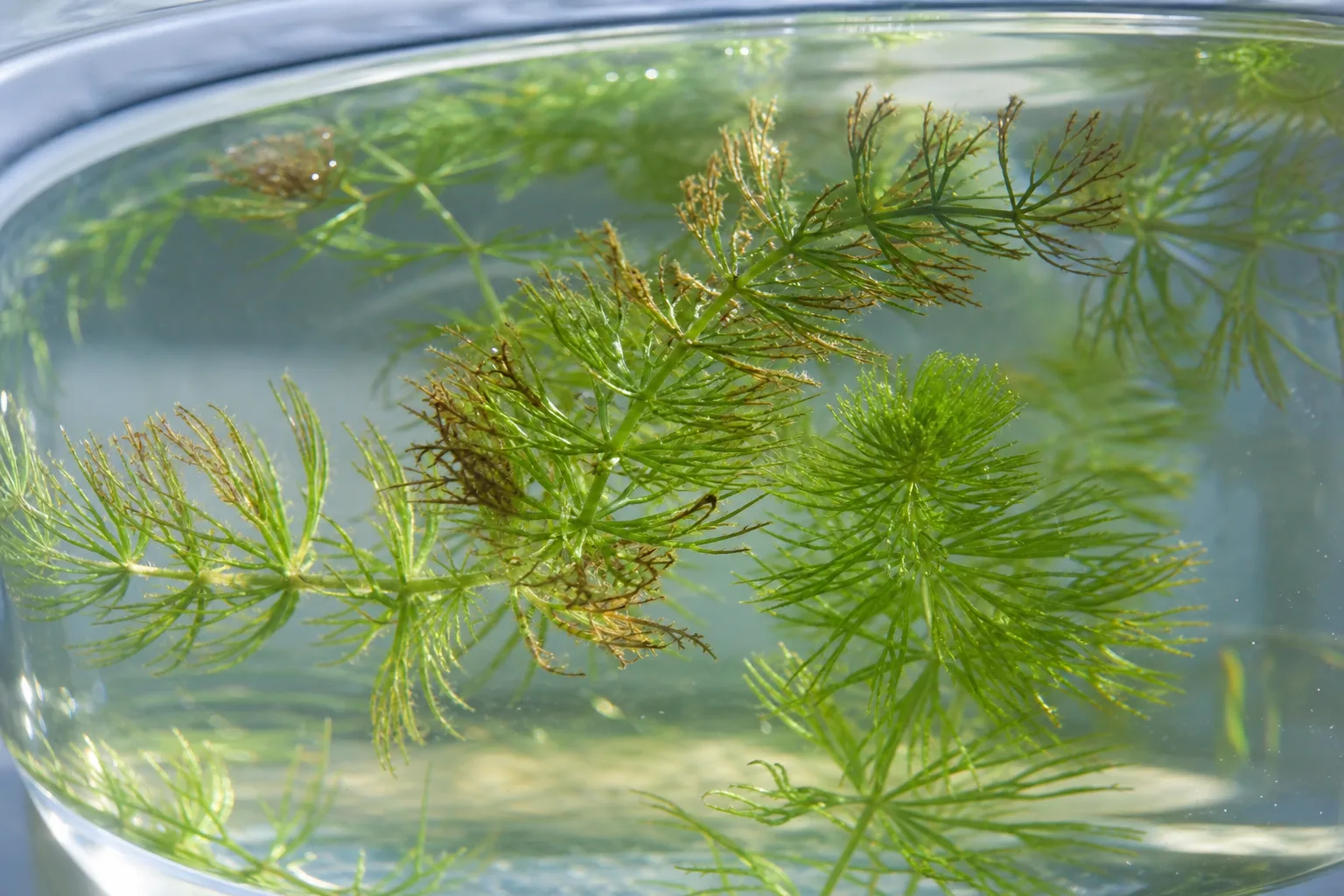
Brown Needle Tips on Hornwort: Causes, Checks & Fixes
This guide covers brown tips on Hornwort. See also the general Brown Tips guide, watering, and light pages for this plant.
Brown Needle Tips on Hornwort: Causes, Checks & Fixes
Quick answer
Brown tips on Hornwort (Ceratophyllum demersum, coontail) are brown needle tips on forked whorls-not dry margins on broad houseplant leaves. This is a fully aquatic, rootless column feeder that cannot tolerate total emergence from water. When keepers search “brown tips,” they usually mean crispy floating edges, stress-browned whorls, or decaying buried bases-not dry potting mix.
First step: check the water line against your hornwort’s position. Floating edges riding above the surface, stems left on a dry counter during maintenance, and mushy buried lower sections each produce brown needles through different mechanisms. Fix the pattern you see before stacking fertilizer, substrate changes, or chemical treatments.
Brown tips on hornwort are not houseplant leaf margins
Terrestrial brown-tip guides talk about humidity, salt buildup, and “water when the soil surface dries.” None of that applies here. Hornwort lacks true roots, absorbs nutrients from the water column, and lives entirely submerged or floating in aquariums, tubs, and ponds. Its “leaves” are narrow forked needles arranged in whorls along brittle stems-the damage you see is needle-tip necrosis or lower-whorl dieback, not margin burn on a potted foliage plant.
That distinction matters for diagnosis. Houseplant tip burn creeps down leaf edges from the farthest point from roots. Hornwort browning clusters at exposed stem tips, shaded lower whorls on anchored stems, or buried bases while upper tissue may still look green. Treating hornwort like a windowsill plant sends you toward wrong checks and delays the actual fix.
What brown needle tips look like on Hornwort
Brown tips present differently depending on the stressor. Learn these patterns before reaching for fertilizer.
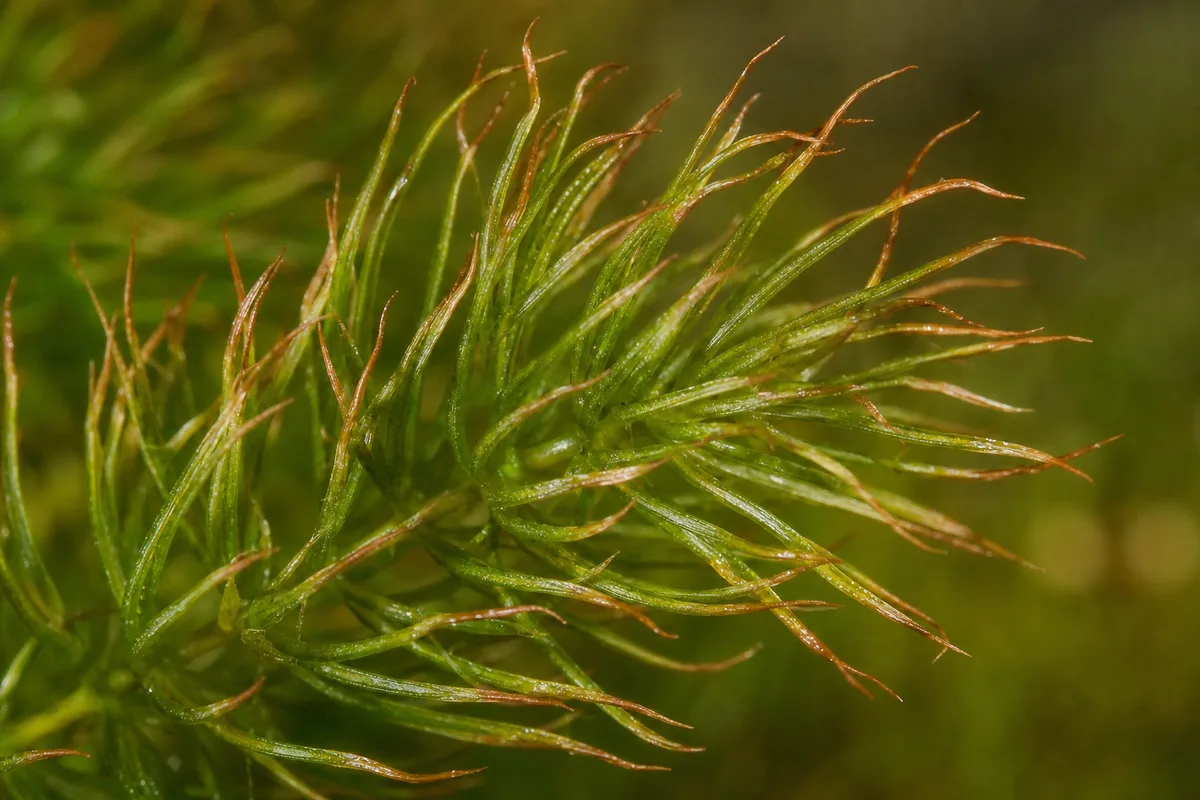
Brown Tips symptoms on Hornwort - compare with healthy tissue on the same plant.
Crispy tips from air exposure
Floating mat edges or stem tips left above the waterline turn dry, tan-to-brown, and brittle. They snap when bent. The tissue feels papery, not slimy. Often only the top inch of a floating bunch is affected while submerged portions stay green-until evaporation or a low water level exposes more stem. This overlaps heavily with underwatering on Hornwort; re-submersion is the urgent first response.
Brown lower whorls from burial or low light
Anchored or “planted” hornwort frequently browns from the base upward. Lower whorls go bare, olive, or brown while newer tips stay greener-classic shading on stems weighted into substrate. Buried stem portions rot because hornwort never grows proper roots; the attached end tends to decay while floating tissue thrives. Mushy brown bases in wet substrate point to burial rot, not air drying.
Stress browning from liquid carbon or acclimation
After a glutaraldehyde-based liquid carbon dose, needles may bronze or brown across otherwise submerged, turgid stems-often with rapid shedding. Aquarium Co-Op notes hornwort sheds when chemistry shifts unfavorably, including liquid carbon. New purchases also drop needles for one to two weeks during acclimation even when fully underwater; gradual shed with soft green stems differs from immediate crispy tips after air exposure.
Healthy contrast: Firm green whorls fully underwater, slow needle loss only in the first week after purchase, and new side shoots forming on trimmed stems within days of stable conditions.
Why Hornwort needles turn brown
Air exposure and evaporation
Penn State Extension describes coontail as a submerged plant with leaves that never emerge above the surface. Rutgers adds that coontail cannot tolerate periods of total emergence. Evaporation in open-top tanks, pond drawdowns, turtle basking heat, and maintenance that leaves bunches on a dry counter all desiccate needle tissue within minutes. Floating hornwort dries at the surface edge first-exactly where “brown tips” appear in forum photos.
Buried stems and anaerobic base decay
Hobbyists often push hornwort into gravel like rooted stem plants. Without true roots, buried whorls sit in low-oxygen substrate and decay. The base turns brown and mushy; the bunch eventually floats free. Light anchoring with weights or a shallow gravel tuck works; deep burial causes rot.
Low light on anchored lower sections
Hornwort tolerates shade better than many submerged plants, but anchored stems in the lower third of a tall tank still lose needles when PAR drops too low. Lower whorls brown and shed while floating tips at the surface stay bushy-a depth problem, not a species failure. See not enough light on Hornwort when stretch and pale color accompany base browning.
Liquid carbon and glutaraldehyde sensitivity
Liquid carbon products stress hornwort at full dose. Needles bronze, brown, and shed within days of treatment. Copper medications and some algaecides produce similar melt. Stressed hornwort responds to unfavorable chemistry with needle drop before other plants show damage.
Acclimation and water-parameter shock
Transfer between tanks with different temperature, pH, or hardness triggers shedding. Tissue stays soft and green at first; needles detach over days rather than crisping instantly. Large single water changes and shipping dehydration compound the response. Stable parameters and patience usually restore growth without heroic intervention.
Nutrient deficiency (secondary pattern)
In bright, clean, lightly stocked tanks, thin growth with pale or bronze new needles can signal low nitrate or iron-especially when light is adequate and stems are not buried. Deficiency browning tends to be diffuse yellow-bronze on new whorls, not localized crispy tips on floating edges. Confirm light and submersion before dosing.
How to confirm the cause
Work through this numbered workflow. Stop when one pattern clearly fits.
- Water line check - Are any stem tips or floating edges above the surface? Yes → air exposure (re-submerge first). Fully submerged → continue.
- Stem-base inspection - Mushy brown base in substrate with green tips above → burial rot. Firm green base → continue.
- Maintenance history - Stems on a dry surface in the last 24–48 hours? → dehydration. No → continue.
- Light on lower whorls - Anchored stems with brown bare lower sections and bushy floating tips elsewhere → low light or self-shading. Compare with hornwort lighting.
- Chemical review - Liquid carbon, copper, or algaecide in the last week? → chemical stress. None → continue.
- Purchase timing - New to the tank under two weeks with gradual shed and soft stems? → acclimation. Established plant with sudden crispy tips? → air or burial.
Lookalike comparison
| Pattern | Texture | Location | First fix |
|---|---|---|---|
| Air-dried tips | Dry, brittle, snaps | Floating edges, exposed tips | Re-submerge in tank water |
| Buried-base rot | Mushy, foul in wet substrate | Lower stem in gravel | Trim base, float or lightly anchor |
| Low light | Soft, pale/brown lower whorls | Deep anchored stems | Float higher or upgrade light |
| Liquid carbon | Bronze/brown submerged needles | Whole bunch after dose | Remove plant, reduce or skip dose |
| Acclimation shed | Soft green stems, needles detach | Tank-wide, new purchase | Stable params, wait 1–2 weeks |
| Nutrient lack | Pale/bronze new whorls | Bright tank, submerged | Water change + aquarium fertilizer |
First fix for Hornwort
Match the first fix to the confirmed pattern-do not stack treatments.
- Air-exposed crispy tips: Re-submerge every affected stem in clean, dechlorinated water at tank temperature immediately. Use a holding tub during water changes. Details in underwatering on Hornwort.
- Mushy buried base: Trim the brown mushy section, float the healthy green cutting, and re-anchor only the bottom centimeter if you need a background look-never bury whorled leaves.
- Low-light lower browning: Float healthy stems at the surface or improve light reaching mid-tank sections before fertilizing.
- Liquid carbon damage: Remove hornwort to a tub of matched tank water during treatment, or dose at half strength away from the plant.
- Acclimation shed: Gravel-vacuum fallen needles, hold chemistry stable, and wait for new whorls-avoid large parameter swings.
One correction at a time lets you read the plant’s response over the next week.
Recovery timeline
24–72 hours: Air-dried sections stop crisping further once fully submerged; chemical-stressed shedding should slow if exposure ended.
One to two weeks: New side shoots and brighter green whorls on trimmed stems are realistic in stable aquarium conditions.
Three to four weeks: A thinned bunch can look bushy again after early dead-tissue removal and clean water.
What will not recover: Brown crispy needles and desiccated stem sections stay dead. Judge success by new whorl growth, not old needle color.
Worsening signs: Stems turn slimy underwater with a foul smell, or the whole bunch dissolves despite correct submersion-that is rot or advanced melt, not ongoing tip browning. Propagate from any remaining green fragment or replace the stock.
What not to do
Do not check soil moisture, pot drainage, or leaf undersides for spider mites-hornwort is not in soil and aquarium pests rarely cause isolated crispy needle tips. Do not mist stems like a houseplant; surface moisture does not rehydrate desiccated coontail. Do not bury stems deeper to fix browning. Do not fertilize a stressed bunch before confirming submersion, light, and chemistry. Do not assume brown tips mean overwatering on Hornwort and drain the tank-submerged hornwort needs continuous water contact. Skip stacking Hornwort repotting guide-analog moves (substrate overhauls), heavy pruning, and pesticide on the same day.
How to prevent brown needle tips next time
- Submersion discipline - Keep tissue in contact with water; top off evaporation in open-top and turtle tanks before floating edges dry.
- Maintenance tub - Hold hornwort in aquarium water whenever the tank is drained or cleaned.
- Float or lightly anchor - Use weights, suction cups, or a shallow tuck per hornwort overview guidance; avoid deep burial.
- Light the lower whorls - Float in dim tanks or trim shaded bases on anchored stems; target adequate PAR at the needles.
- Chemical caution - Treat liquid carbon and copper as hornwort hazards; remove the plant or reduce dose.
- Acclimate new stock - Float in bag or cup water for 30 minutes, match temperature within 2°F on water changes.
- Weekly edge check - During water changes, scan floating rims for the first dry inch-that is the earliest brown-tip warning.
Match everyday care to how hornwort actually lives: always in water, stable water parameters, moderate aquarium light, and gentle flow that does not pin stems above the surface.
When to use this page vs other Hornwort guides
- Hornwort watering guide - Use for routine moisture checks before assuming brown tips is the main issue.
- Hornwort problems hub - Browse all 16 common issues on this species.
- Low Humidity on Hornwort - Different entry point when symptoms overlap with brown tips.
- Underwatering on Hornwort - Different entry point when symptoms overlap with brown tips.
- Overwatering on Hornwort - Different entry point when symptoms overlap with brown tips.