Hoya Pubicalyx Care: Light, Water & Blooms
Hoya pubicalyx
Hoya pubicalyx is the fastest-blooming gateway hoya. Vigorous grower, dark dramatic flowers, sweet fragrance. Bright indirect light, seasonal cool/dry rest, never cut peduncles.
Hoya Pubicalyx Care: Light, Water & Blooms
Start with wateringThe most common care mistake for Hoya PubicalyxWatering guide →Hoya Pubicalyx care essentials
Light
bright indirect light
Water
Top half dry before watering. Every 7–14 days summer; every 21–28 days winter. Drier rest supports blooming.
Soil
Epiphytic mix: compost + perlite + orchid bark.
Humidity
40–60%
Temperature
18–27°C (65–80°F)
Fertilizer
Use low-nitrogen, phosphorus-rich fertilizer to encourage flowering and stop if the plant is stressed, newly repotted, or not actively growing. High-nitrogen fertilizer; winter feeding.
About Hoya Pubicalyx
Hoya Pubicalyx is native to Philippines, typically reaches Up to 6 m vining indoors, with moderate to fast (faster-growing than many hoyas) growth. Hoya Pubicalyx has a trailing growth habit and part of the Apocynaceae family. It is also known as Silver-pink Vine and Purple Hoya.
| Detail | Information |
|---|---|
| Also known as | Silver-pink Vine, Purple Hoya |
| Native region | Philippines |
| Mature size | Up to 6 m vining |
| Growth rate | Moderate to fast (faster-growing than many Hoyas) |
| Growth habit | Trailing |
| Scientific name | Hoya pubicalyx |
| Family | Apocynaceae |
Hoya Pubicalyx Care: Light, Water & Blooms
What Is Hoya Pubicalyx?
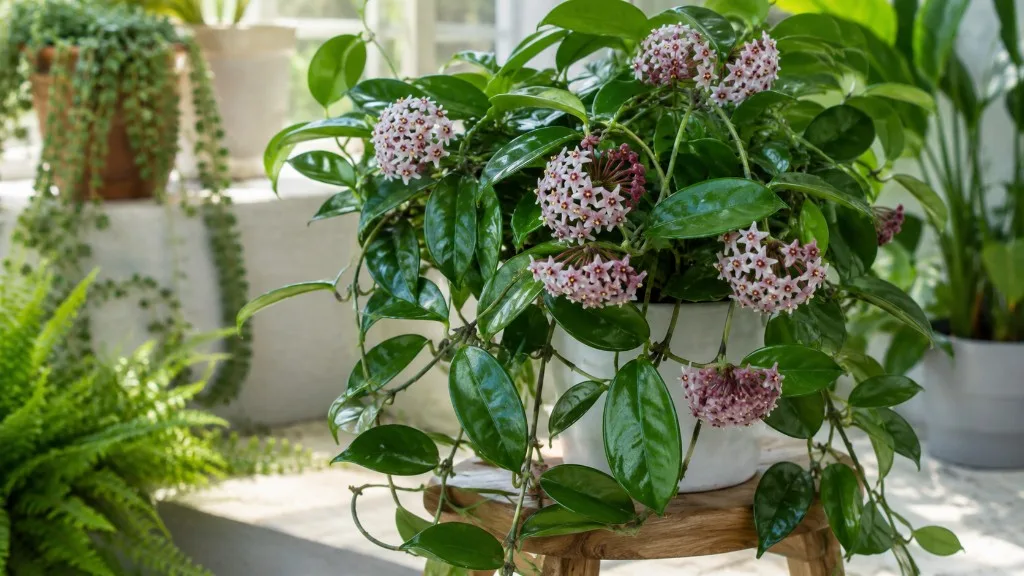
Hoya pubicalyx is a fast-growing tropical vine from the Philippines, grown for dark, lance-shaped leaves dusted with silver flecks and for clusters of fragrant, star-shaped flowers that open on the same woody spurs year after year. It belongs to the Apocynaceae family - the dogbane family - and behaves like an epiphyte in nature: its roots anchor the plant to tree bark and absorb moisture from rain, dew, and humid air rather than sitting in heavy ground soil. That single fact explains more about indoor care than any product label.
Indoors, Hoya pubicalyx typically grows at a moderate to fast pace - noticeably quicker than many slower hoyas such as Hoya carnosa - and can reach up to 6 meters (roughly 20 feet) of vining length over time if given bright light, a support structure, and consistent care. Most houseplant growers keep it trimmed to a manageable length on a trellis, moss pole, or hanging basket. The leaves are thick, glossy, and semi-succulent, storing water that helps the plant ride out short dry spells. New growth on some cultivars emerges red or bronze before maturing to deep green with gray-silver mottling.
If you are deciding whether Hoya Pubicalyx overview fits your home, the honest summary is this: Hoya pubicalyx rewards bright light, a dry-down Hoya Pubicalyx watering guide, and patience around blooms - and it punishes soggy soil, dim corners, and cutting off old flower spurs. It suits beginner hoya collectors who want visible growth without extreme fuss, fast-blooming enthusiasts willing to wait two to three years for the first umbel, and anyone who enjoys fragrant evening flowers. It is a poor fit for low-light rooms, hands that water on autopilot every Tuesday, or buyers expecting flowers within the first season.
Botanical Background and Native Range
Hoya pubicalyx was described by botanist Elmer Drew Merrill in 1918 and is native to the Philippines, where it grows in tropical rainforest habitats as a compact climbing vine according to NParks Flora & Fauna Web. The species epithet pubicalyx refers to the fine hairs on the calyx - the outer cup of the flower - which is a useful identification detail when comparing similar hoyas in commerce.
The plant’s Apocynaceae family membership matters for practical care. Like other members of this family, Hoya pubicalyx produces a milky latex sap when cut, prefers excellent drainage with periodic drying, and is vulnerable to root problems when kept constantly wet. Leaves are ovate to lanceolate, leathery, and typically 6 to 18 cm long depending on cultivar and growing conditions, with mid to dark green coloration and dull grayish-silver flecks on the upper surface. Flowers appear in umbels - rounded clusters - with dark rose-pink corollas and pale pink coronas, though color varies by cultivar and even within a single inflorescence.
NC State Extension notes that blooms are most fragrant during evening hours, which matches what many growers observe: the sweet scent intensifies after dusk. Maturity before first flowering may take up to two years or longer in cultivation, and the plant is generally slow to reach blooming size even though vegetative growth can feel brisk once conditions click.
Cultivars, Dark Foliage, and Silver Markings
Commerce sells Hoya pubicalyx under the species name plus several cultivar labels that differ mainly in leaf size, silver patterning, and flower color. Common names include Pink Silver, Red Button, Royal Hawaiian Purple, Porcelain Flower, Silver Pink Vine, and Wax Plant. Pink Silver is known for heavy silver flecking on dark green leaves and pink flowers. Red Button tends toward less silver on the foliage and deeper flower tones. Royal Hawaiian Purple - sometimes sold as Chimera - pushes toward purple-black corollas with red-tinged coronas.
Two plants labeled “Hoya pubicalyx” at a nursery can look different and still be the same species or closely related selections. Keep the tag if you have one. The care basics stay the same, but leaf size, silver density, and flower color will vary. Dark foliage with silver speckling is normal and desirable - it is not a sign of disease. In strong indirect light, mature leaves on some plants develop an attractive purplish-red blush from anthocyanin pigments that act as natural sun protection, according to NC State Extension. That color shift is usually harmless and often indicates the plant is receiving enough light for healthy growth and future flowering.
Best Growing Conditions for Hoya Pubicalyx
Hoya pubicalyx performs best when the room setup mirrors its native rhythm: warm, bright, airy, and allowed to dry between drinks. It is a trailing or climbing vine that can eventually span meters of wall or shelf space, so plan for a support early rather than wrestling a mature tangle onto a trellis later. Growth rate is moderate to fast relative to other hoyas, which means new leaves and internodes appear regularly in warm months - and the pot dries faster than you might expect if you are coming from a slower species.
The four conditions that decide almost every outcome are light, water, soil, and temperature. Get those four aligned and fertilizing, pruning, and propagation become straightforward. Get any one badly wrong - especially water in low light - and the plant declines no matter how much fertilizer you add.
Light Requirements
Hoya pubicalyx needs bright, indirect light for most of the day to maintain compact growth, strong silver leaf patterning, and the energy reserves required for flowering. A practical starting range is roughly 1,000 to 8,000 lux of plant-facing light, though the exact number matters less than how new growth responds. East-facing windows, bright north exposures in the Northern Hemisphere, or filtered south- and west-facing windows are reliable placements. The plant often tolerates one to three hours of direct morning sun when acclimated gradually, and that gentle direct exposure can accelerate growth and support bud formation.
Too little light produces long internodes, smaller pale leaves, and weak stems that reach toward the window. Too much harsh midday sun causes bleached patches, brown crisp edges, and leaf curling during peak hours. Acclimate any move to stronger light over one to two weeks so leaves formed in lower light are not scorched overnight. If natural light is weak - common in winter above 40°N latitude - a full-spectrum grow light running 12 to 14 hours daily on a timer can substitute reliably and often triggers the first bloom on plants that had been light-starved for years.
The best proof of correct light is new growth: firm stems, appropriately sized leaves, and stable silver patterning without stretching. Old sun damage will not heal, so judge by the newest leaves after any change in placement.
Temperature and Humidity
Hoya pubicalyx prefers stable indoor temperatures between 18 and 27°C (65 and 80°F) and dislikes cold drafts, sudden AC blasts, and winter window ledges that drop below 10°C (50°F) at night - NC State Extension notes that cooler temperatures can damage foliage. Most homes already sit inside this range. Problem spots are predictable: directly under a cold AC vent, on a radiator shelf, or pressed against a single-pane window in January.
Humidity of 60 to 70 percent is optimal according to NC State Extension, though Iowa State Extension notes that hoyas generally adapt to average indoor humidity in the 40 to 60 percent range. Very dry air below 30 percent can encourage spider mites, especially in winter when heaters run. Grouping plants, using a pebble tray, or running a small humidifier all help in dry homes. Misting leaves is not a reliable humidity fix - the effect is brief, and wet foliage overnight can invite fungal spotting on some hoyas.
A cooler, drier rest period in winter - slightly reduced watering and temperatures dipping toward the lower end of the comfort range at night - can support future blooming for mature plants, though young plants still need stable warmth and should not be stressed deliberately.
Soil and Drainage
Use an epiphytic, airy potting mix rather than standard peat-heavy indoor soil. A proven recipe is compost or quality potting soil blended with perlite and orchid bark at roughly equal parts by volume, adjusted for your watering habits and home humidity. The mix should drain freely, hold air around the roots, and not stay wet for days after a thorough watering. Heavy, compacted peat mixes are one of the fastest routes to root rot on Hoya Pubicalyx with this species.
Target substrate pH around 6.0 to 7.0, though most hobbyists never need to measure - a normal well-draining hoya mix sits close enough. Always use pots with drainage holes. Decorative cachepots are fine only if you empty runoff after every watering. Because Hoya pubicalyx is epiphytic, its roots need oxygen as much as moisture; a mix that holds stagnant water suffocates fine roots even when the surface looks dry.
How to Water Hoya Pubicalyx
The general rule is simple: water when the top half of the mix is dry and the deeper root zone is approaching dry - not on a fixed calendar. A practical starting rhythm is every 7 to 14 days during active growth and every 21 to 28 days in winter, but pot size, soil texture, light intensity, and room temperature all shift that interval. A plant in a bright east window in July may need water twice as often as the same plant in a dim corner in February.
Check moisture with a finger, wooden skewer, or pot-weight test before every watering. If the deeper mix is still damp, wait. If the top half is dry and the pot feels light, water thoroughly until excess runs from the drainage holes, then empty the saucer so the roots are not sitting in stale runoff. Hoya pubicalyx stores water in its leaves, so slightly wrinkled foliage with dry soil means it is thirsty; soft yellowing leaves with wet soil means you waited too long to cut back on water.
Watering Rhythm During Active Growth
During the warm, bright months when new vines and leaves appear regularly, Hoya pubicalyx uses water predictably. The pot dries on a steady rhythm that you can learn within a few weeks of consistent checking. Water deeply when dry rather than giving small sips daily - shallow watering keeps surface roots wet while the center stays inconsistently moist, which stresses epiphytic plants.
Because this species grows faster than many hoyas, it can also dry faster when well lit. Do not assume a schedule that worked for a Hoya carnosa or a pothos will transfer directly. Tie watering checks to new growth speed and pot weight, not memory.
Seasonal Adjustments
In cooler, dimmer months, metabolic activity slows even if the plant still looks green. The same summer interval will overwater the plant in winter. Stretch the dry-down period, verify moisture at root depth before every drink, and pause fertilizer until new growth resumes in spring. Resume the normal rhythm only when you see active new vines or leaves and the pot is drying on a predictable schedule again.
Some growers deliberately allow slightly drier conditions in late winter to mimic a rest period that supports blooming on mature specimens. That does not mean desiccating the plant - it means checking more carefully and skipping water when the mix is still cool and damp.
Common Watering Mistakes
The single most common cause of problems with Hoya pubicalyx is watering on a schedule instead of on the plant’s actual state. Other frequent mistakes include watering into a cachepot that holds runoff, using dense soil that never dries, watering because leaves look slightly soft without checking whether the soil is already wet, and increasing water when growth slows in winter out of concern the plant is unhappy.
If you suspect overwatering on Hoya Pubicalyx, stop watering, inspect the root zone, and improve light or soil aeration before resuming. Recovery is slow; prevention is faster.
How to Feed Hoya Pubicalyx
Hoya pubicalyx does not need heavy feeding. A modest, balanced fertilizer applied during active growth is enough to support the fast vine production this species is known for. Strong doses, weekly feeding, and fertilizer applied to dry or stressed roots are how people burn fine roots and accumulate salt in the mix.
Use a balanced water-soluble houseplant fertilizer at one-quarter to one-half of the label rate, applied to already-moist soil every four to six weeks during spring and summer. If your potting mix contains a starter charge, hold supplemental feeding for the first month after Hoya Pubicalyx repotting guide. Some growers switch to a bloom fertilizer with higher phosphorus for four to six weeks in late summer on mature plants, though light and maturity matter far more than fertilizer brand for triggering flowers.
Pause feeding during dormancy, after a major repot, while the plant recovers from pests, and through the deepest winter slowdown. Feeding a plant that cannot use nutrients adds salt without benefit. Resume when new growth is clearly visible and the pot dries on a normal rhythm.
Repotting and Root Health
Repot Hoya pubicalyx roughly every one to two years, or when the pot dries much faster than it used to, roots circle drainage holes, or water runs straight through without soaking in. The best timing is early in the active growing season so the plant has months of warmth and light to refill the root zone.
Go up only one pot size at a time. An oversized pot holds excess wet mix that roots cannot use quickly, which is the most common post-repotting cause of rot. Use fresh, airy epiphytic mix, water lightly for the first week, and avoid fertilizing until you see new growth.
Here is the counterintuitive hoya rule: mature Hoya pubicalyx often blooms better when slightly root-bound. If your primary goal is flowers and the plant is healthy, repot less aggressively than you would a fast-draining herb. Wait until roots are clearly crowded and growth or drying speed suggests the current pot is limiting - not simply because a calendar says two years passed.
Physical signs it is time to repot include roots at the soil surface, roots emerging from drainage holes, water channeling straight through, sour-smelling or compacted mix, and a plant that is top-heavy for its container. If the mix has degraded but the plant is preparing to bloom, delay repotting until after the flowering cycle unless root health is clearly compromised.
Propagation Methods for Hoya Pubicalyx
The simplest home propagation method for Hoya pubicalyx is stem cuttings, which root reliably in water, perlite, or sphagnum moss when taken from healthy, actively growing vines. Division is possible on large, dense specimens but is awkward because mature plants tangle tightly; stem cuttings are the beginner-friendly default.
Take a cutting 10 to 15 cm (4 to 6 inches) long with at least two nodes and two leaves, using clean, sharp shears. Remove the lowest leaf pair to expose nodes, let the cut end callous for 30 to 60 minutes, then place the nodes in room-temperature water, barely moist sphagnum, or a light, airy propagation mix. Keep the cutting in bright, indirect light with stable humidity - a loose propagation bag or box helps - and expect roots in two to four weeks at warm room temperatures around 21 to 24°C (70 to 75°F).
Change water weekly if propagating in water. When roots reach 2.5 to 5 cm (1 to 2 inches), pot into the same epiphytic mix you use for the parent plant. Spring and early summer offer the highest success rates because the parent plant is actively growing. Winter cuttings root slowly and rot more easily below 18°C (65°F).
Do not propagate from stressed, pest-infested, or recently overwatered plants. Cuttings inherit the parent’s problems, and weak parent tissue fails at a much higher rate than healthy growth tips.
Getting Hoya Pubicalyx to Bloom
Fragrant flowers are the payoff, but they require maturity, light, and restraint more than any single product. Most Hoya pubicalyx plants need at least two to three years of steady growth before they produce their first umbels indoors, and some take longer depending on light and pot size. Young plants in oversized pots often push leaves instead of flowers.
The bloom checklist that actually moves the needle:
Bright light sustained for most of the day is the primary trigger. Without enough plant-facing light, Hoya pubicalyx grows foliage indefinitely and never initiates reproductive growth. Slight root-bound stress in a snug pot often helps mature plants. Do not repot right before you expect buds. Cooler nights in winter combined with reduced watering can mimic seasonal cues, though extremes will harm the plant. Leave peduncles - the woody flower spurs - completely intact after blooms fade. Hoya pubicalyx reblooms from the same peduncle repeatedly; cutting them off removes future flower sites permanently.
When buds form, do not move the plant, rotate the pot aggressively, or handle the vine more than necessary. Bud blast - dropping unopened clusters - is common after sudden environmental changes. Flowers typically last about two weeks per umbel, with strongest fragrance in the evening. Color can vary pink, spotted, and near-black tones within the same cluster on some cultivars, which is normal for this species.
If a mature, well-lit plant still refuses to bloom after years, the usual culprits are insufficient light duration, recent repotting, over-fertilizing with nitrogen-heavy food, or peduncles removed in past pruning.
Common Hoya Pubicalyx Problems
Most problems with Hoya pubicalyx are environmental, not mysterious. Symptoms map to specific causes once you check moisture, light, and pests in that order. Because the plant grows quickly when happy, it also shows stress quickly - which is useful if you treat early signals as information rather than panic.
Yellow Leaves, Brown Tips, and Pests
Yellow leaves are the most common complaint. They can indicate overwatering, underwatering on Hoya Pubicalyx, low light, sudden light change, salt buildup, natural older-leaf drop, or pests. Check soil moisture first, then light level, then inspect leaf undersides and stem joints for insects before changing your watering schedule.
Brown leaf tips and edges often point to low humidity, underwatering, fertilizer salt accumulation, or fluoride and chlorine in tap water. Flush the pot with plain water periodically to wash salts through, and review whether the dry-down rhythm matches what the plant is actually using in its current light.
Wrinkled, thin leaves with dry soil indicate underwatering or root loss from past overwatering - the leaves dehydrate even after you water because damaged roots cannot absorb moisture. Inspect roots if wrinkling persists after a thorough, well-drained drink.
Pests to watch for include mealybugs in leaf axils, spider mites in dry air, scale along stems, aphids on new growth, and fungus gnats if the mix surface stays wet. Inspect weekly. Manual removal, a strong shower, and insecticidal soap handle most infestations if you start before populations explode. NC State Extension lists mealybugs, aphids, and whiteflies as common hoya pests.
Root rot from overwatering shows as yellowing leaves, soft stems at the soil line, and a sour smell from the mix. Trim affected roots, repot into fresh airy mix, and improve light and dry-down habits - recovery takes months.
Is Hoya Pubicalyx Safe for Pets?
According to the ASPCA, Hoya pubicalyx - listed as Silver Pink Vine - is non-toxic to dogs, cats, and horses. That is good news for pet-friendly households, but it is not a license to let pets treat the plant as salad.
Hoya pubicalyx produces milky latex sap when cut or damaged. NParks notes that this sap may cause skin irritation in sensitive individuals and lists toxic upon ingestion as a usage hazard in landscape contexts - meaning large quantities or sap contact can still cause oral irritation or mild gastrointestinal upset in pets or children even when the species is classified non-toxic. Keep hanging baskets out of reach if you have cats that chew vines, and wash hands after pruning.
When in doubt, confirm with the ASPCA Animal Poison Control Center or your veterinarian before placing any plant within reach of a known chewer.
Conclusion
The most useful thing to know about Hoya pubicalyx is that it is a fast-growing Philippine epiphyte with dark, silver-flecked foliage and evening-fragrant flowers that return on the same peduncles for years when you leave them alone. If Hoya Pubicalyx light guide, dry-down watering, airy epiphytic soil, and stable warm temperatures fit your home, the vine will grow vigorously and - with patience - bloom. If any one of those basics is off, especially water in low light, fix the environment first and the plant usually follows.
Treat this overview as your decision map: place the plant where new growth stays compact, check the top half of the mix before every drink, repot only when roots demand it, propagate from healthy stem tips in spring, and never cut old flower spurs. Those habits cover the majority of what Hoya pubicalyx needs to become the fragrant, trailing showpiece it is capable of being indoors.
When to use this page vs other Hoya Pubicalyx guides
- Hoya Pubicalyx overview - Canonical hub for this species - care topics and problems branch from here.
- Hoya Pubicalyx problems - Symptom-first path when you already know something is wrong.
Related Hoya Pubicalyx guides
- Hoya Pubicalyx watering
- Hoya Pubicalyx light
- Hoya Pubicalyx soil
- Hoya Pubicalyx propagation
- Hoya Pubicalyx fertilizer
- Hoya Pubicalyx repotting
- Hoya Pubicalyx pruning
- No Flowers on Hoya Pubicalyx
- Yellow Leaves on Hoya Pubicalyx
- Mealybugs on Hoya Pubicalyx
- Brown Tips on Hoya Pubicalyx
- Root Rot on Hoya Pubicalyx
How to care for Hoya Pubicalyx?
How much light does Hoya Pubicalyx need?
bright indirect light
- bright indirect light - bright indirect light.
When should you water Hoya Pubicalyx?
Top half dry before watering. Every 7–14 days summer; every 21–28 days winter. Drier rest supports blooming.
- Top half of soil dry before watering - Top half dry before watering.
- Drain excess water - Top half dry before watering.
What soil works best for Hoya Pubicalyx?
Epiphytic mix: compost + perlite + orchid bark.
- potting mix - Epiphytic mix: compost + perlite + orchid bark.
- perlite - Epiphytic mix: compost + perlite + orchid bark.
- orchid bark - Epiphytic mix: compost + perlite + orchid bark.
Grower notes for Hoya Pubicalyx
What matters most with Hoya Pubicalyx
Hoya Pubicalyx stores more water than it looks like it does. Treat soft leaves, wrinkling, and stalled growth as signals to check both moisture and light before watering again. In practice, the care checkpoint is simple: bright indirect light. Pair that with epiphytic mix: compost + perlite + orchid bark, and avoid changing water, pot size, and placement all at once.
Best placement in a real home
Hoya Pubicalyx belongs where bright indirect light is realistic for most of the day, not only where the pot looks good. Top half dry before watering. Every 7–14 days summer; every 21–28 days winter. Drier rest supports blooming. If the pot stays wet longer than expected, move the plant into better light or reassess the mix before watering again. Humidity target: 40–60%. Temperature comfort zone: 18–27°C (65–80°F).
Before you buy this plant
Choose Hoya Pubicalyx with firm new growth, clean leaf undersides, and soil that does not smell sour or feel compacted. Be cautious if you see no-flowers, sticky residue, collapsed crowns, or a pot that is wet in poor light. Cosmetic old-leaf damage is less worrying than weak roots or active pests.
First month after bringing it home
Do not repot Hoya Pubicalyx on day one unless the mix is failing or pests are obvious. Quarantine it, learn how fast the pot dries, and keep care boring while it adjusts. Watch especially for no-flowers, yellow-leaves, and mealybugs. If problems appear, correct the condition first rather than stacking fertilizer, repotting, and pruning together.
Pet-aware note for Hoya Pubicalyx
Hoya Pubicalyx is a better choice for pet-aware homes than toxic ornamentals, but pet safe does not mean the plant should be chewed. Use hanging, shelf, or room placement if pets dig in soil or shred leaves, and choose sturdier plants for high-traffic pet zones.
How to tell Hoya Pubicalyx is settling in
Also sold as Silver-pink Vine and Purple Hoya, this plant should be judged by stable new growth rather than label names alone. If you plan to multiply it later, common methods include Stem node cuttings. Repot only when you see root-bound and fast drying. If yellow-leaves shows up early, inspect light, watering, and roots before assuming the plant is permanently weak.
Is it pet safe?
Hoya pubicalyx is non-toxic to cats and dogs.
Non-toxic to cats and dogs.
Watering Hoya Pubicalyx
For Hoya Pubicalyx, top half of soil dry before watering and water every 7–14 days in growing season; monthly in winter. Reduce significantly in winter.
| Detail | Information |
|---|---|
| How often | Every 7–14 days in growing season; monthly in winter |
| How to check | Top half of soil dry before watering |
| Seasonal changes | Reduce significantly in winter |
Signs of overwatering
- yellowing leaves
- root rot
Signs of underwatering
- slightly wrinkled leaves (minor)
Soil & potting for Hoya Pubicalyx
Use a mix of potting mix, perlite, orchid bark for Hoya Pubicalyx. Excellent. Target soil pH around 6.0–7.0. Repot every 2 years, ideally in spring.
| Detail | Information |
|---|---|
| Recommended mix | potting mix, perlite, orchid bark |
| Drainage | Excellent |
| Soil pH | 6.0–7.0 |
| Repotting frequency | Every 2 years |
| Best season to repot | Spring |
Signs it needs repotting
- root-bound
- fast drying
Humidity & temperature for Hoya Pubicalyx
Hoya Pubicalyx prefers 40–60%, though normal home humidity is usually fine. Keep temperatures around 18–27°C (65–80°F).
| Detail | Information |
|---|---|
| Humidity | 40–60% - normal home humidity is fine. |
| Ideal temperature | 18–27°C (65–80°F) |
Fertilizer & pruning for Hoya Pubicalyx
Use use low-nitrogen, phosphorus-rich fertilizer to encourage flowering and stop if the plant is stressed, newly repotted, or not actively growing. High-nitrogen fertilizer; winter feeding. for Hoya Pubicalyx.
| Detail | Information |
|---|---|
| Fertilizer type | Use low-nitrogen, phosphorus-rich fertilizer to encourage flowering and stop if the plant is stressed, newly repotted, or not actively growing. High-nitrogen fertilizer; winter feeding. |
Common problems on Hoya Pubicalyx
No Flowers
LowLikely cause: H. pubicalyx is a reliable bloomer when given adequate light and seasonal rest - non-blooming indicates one of these is insufficient
Quick fix: Increase light; allow cool/dry winter rest; check peduncles are intact
Full fix guide →Yellow Leaves
MediumLikely cause: Overwatering causes yellow leaves in H. pubicalyx
Quick fix: Allow top half to dry; check drainage
Full fix guide →Mealybugs
MediumLikely cause: Mealybugs colonise leaf axils of pubicalyx
Quick fix: 70% alcohol; neem oil; repeat weekly
Full fix guide →Brown Tips
MediumLikely cause: Common on this plant type; confirm with recent watering, light, and root checks.
Quick fix: Inspect the plant and correct the most likely care stressor before stacking treatments.
Full fix guide →Root Rot
MediumLikely cause: Common on this plant type; confirm with recent watering, light, and root checks.
Quick fix: Inspect the plant and correct the most likely care stressor before stacking treatments.
Full fix guide →Overwatering
MediumLikely cause: Common on this plant type; confirm with recent watering, light, and root checks.
Quick fix: Inspect the plant and correct the most likely care stressor before stacking treatments.
Full fix guide →Underwatering
MediumLikely cause: Common on this plant type; confirm with recent watering, light, and root checks.
Quick fix: Inspect the plant and correct the most likely care stressor before stacking treatments.
Full fix guide →Spider Mites
MediumLikely cause: Common on this plant type; confirm with recent watering, light, and root checks.
Quick fix: Inspect the plant and correct the most likely care stressor before stacking treatments.
Full fix guide →Aphids
MediumLikely cause: Common on this plant type; confirm with recent watering, light, and root checks.
Quick fix: Inspect the plant and correct the most likely care stressor before stacking treatments.
Full fix guide →Leggy Growth
MediumLikely cause: Common on this plant type; confirm with recent watering, light, and root checks.
Quick fix: Inspect the plant and correct the most likely care stressor before stacking treatments.
Full fix guide →Slow Growth
MediumLikely cause: Common on this plant type; confirm with recent watering, light, and root checks.
Quick fix: Inspect the plant and correct the most likely care stressor before stacking treatments.
Full fix guide →Wilting
MediumLikely cause: Common on this plant type; confirm with recent watering, light, and root checks.
Quick fix: Inspect the plant and correct the most likely care stressor before stacking treatments.
Full fix guide →Drooping Leaves
MediumLikely cause: Common on this plant type; confirm with recent watering, light, and root checks.
Quick fix: Inspect the plant and correct the most likely care stressor before stacking treatments.
Full fix guide →Low Humidity
MediumLikely cause: Common on this plant type; confirm with recent watering, light, and root checks.
Quick fix: Inspect the plant and correct the most likely care stressor before stacking treatments.
Full fix guide →Not Enough Light
MediumLikely cause: Common on this plant type; confirm with recent watering, light, and root checks.
Quick fix: Inspect the plant and correct the most likely care stressor before stacking treatments.
Full fix guide →Fungus Gnats
MediumLikely cause: Common on this plant type; confirm with recent watering, light, and root checks.
Quick fix: Inspect the plant and correct the most likely care stressor before stacking treatments.
Full fix guide →Mold on Soil
MediumLikely cause: Common on this plant type; confirm with recent watering, light, and root checks.
Quick fix: Inspect the plant and correct the most likely care stressor before stacking treatments.
Full fix guide →