Low Humidity on Hoya Pubicalyx: Causes, Checks & Fixes
Quick answer
Low humidity on Hoya pubicalyx shows as fine stippling, dull leaf texture, or crisp margins when room air drops below roughly 40% RH-common near heating vents in winter. First step: check ambient RH with a hygrometer beside the foliage, then move the pot away from radiators and heat registers before you change watering.
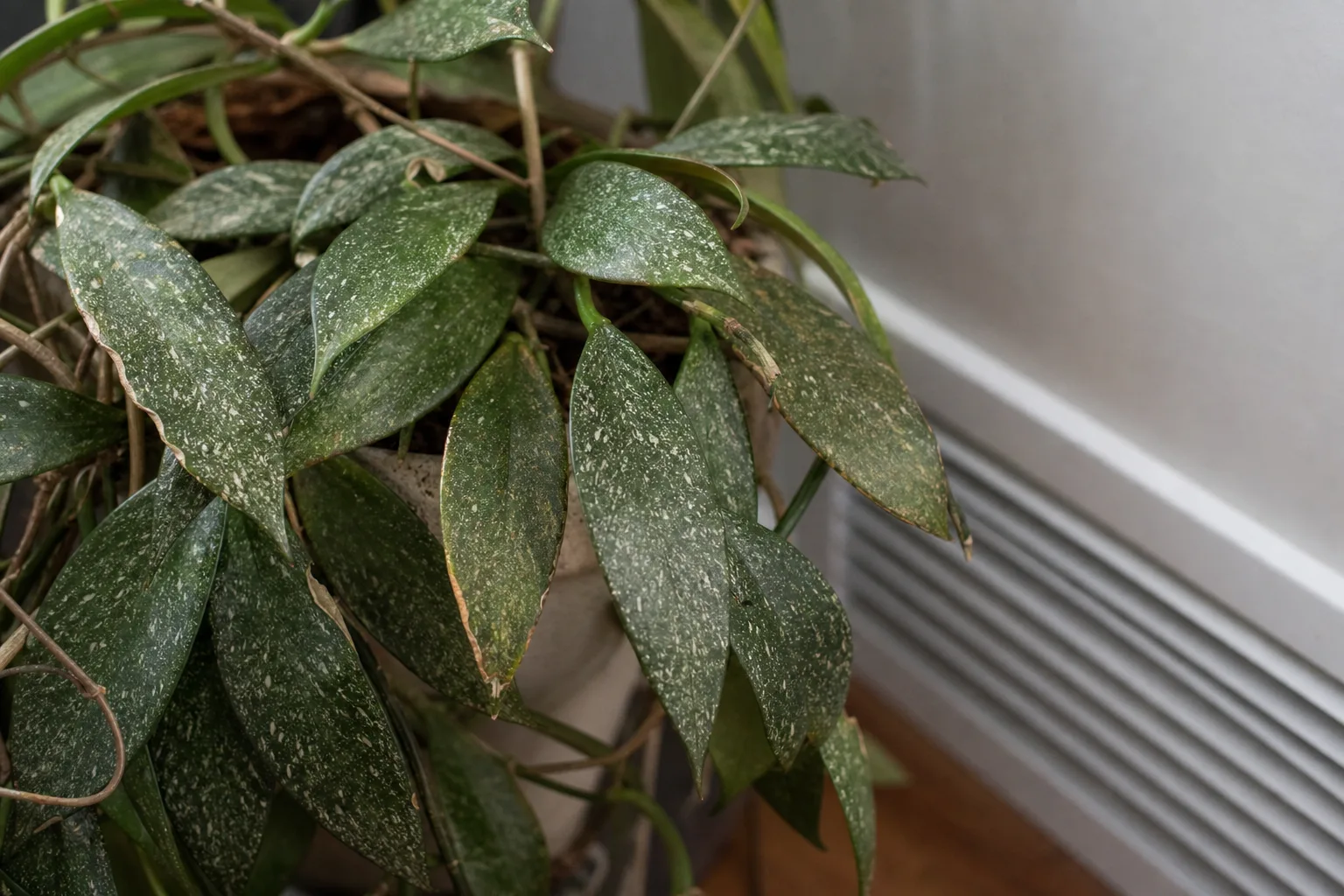
Low Humidity on Hoya Pubicalyx: Causes, Checks & Fixes
This guide covers low humidity on Hoya Pubicalyx. See also the general Low Humidity guide, watering, and light pages for this plant.
Low Humidity on Hoya Pubicalyx: Causes, Checks & Fixes
Quick answer
Hoya pubicalyx is a fast-growing Philippine epiphyte with thick, semi-succulent, silver-flecked leaves that store water better than thin-leaved tropicals-but it still prefers humid air and suffers when winter heating drops room relative humidity for weeks. NC State Extension recommends 60–70% RH as optimal; Iowa State Extension notes that hoyas generally adapt to 40–60% in average homes.
First step: place a hygrometer beside the foliage and move the pot away from radiators, heat registers, and cold drafty windows. Dry forced-air heat is the most common trigger for stippling and dull leaves while soil moisture stays normal. Do not flood the pot to compensate for dry air-that invites root stress on an epiphytic species already vulnerable to soggy mix.
What low humidity looks like on Hoya Pubicalyx
Low-humidity stress on Hoya Pubicalyx overview usually appears on the most exposed foliage first-outer leaves near vents, sunny glass, or the trailing ends of a long vine. Typical patterns:
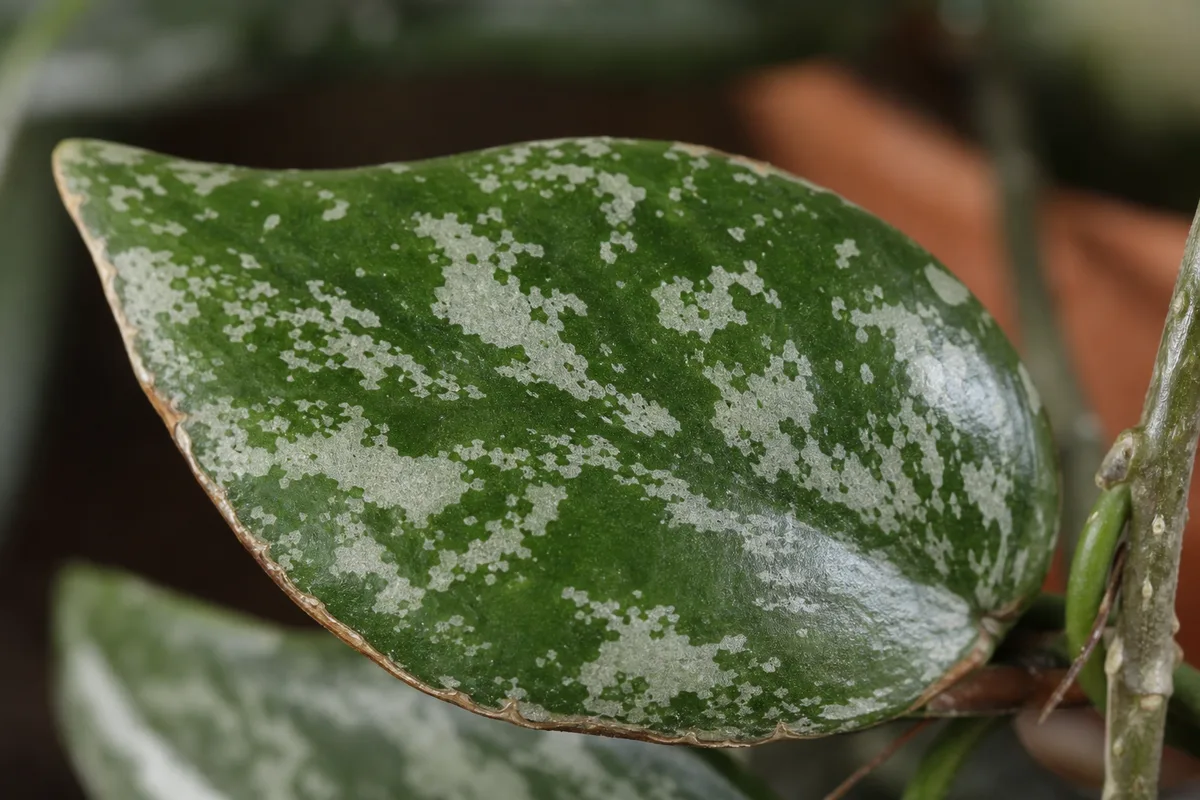
Low Humidity symptoms on Hoya Pubicalyx - compare with healthy tissue on the same plant.
- Fine stippling or bronzing - Tiny yellow or white speckles on the leaf surface that deepen to a dull bronze over time. On pubicalyx, stippling often starts on the oldest or outermost leaves before crisp margins appear.
- Dull, less glossy leaves - Healthy pubicalyx leaves look thick, waxy, and firm with visible silver flecking. Dry-air stress makes them look flat, slightly wrinkled, or less turgid even when soil moisture is appropriate.
- Crisp margins or tips - Brown, papery edges on lance-shaped leaves, often worse on the side facing a heat source. See brown tips when salt burn or tap-water minerals may overlap.
- Slowed summer vine growth - Pubicalyx grows faster than many hoyas in warm, bright months. When ambient RH is very low during active growth, new internodes may shorten and new leaves arrive smaller than usual.
- Bud stress on mature plants - Prolonged dry air can contribute to bud drop on plants already forming flower clusters, though light and watering rhythm matter more for blooming.
- Location-specific damage - Only the vine section above a radiator or beside a hot window browns first, while shaded inner growth stays greener longer.
- Winter timing - Symptoms often appear or worsen between October and March when indoor relative humidity commonly falls sharply as furnaces and radiators strip moisture from indoor air.
- Spider mite overlap - Fine webbing at leaf bases alongside stippling means dry air and active spider mites may need parallel fixes.
Crispy brown tissue on old leaves does not re-green. Recovery shows up as firm, glossy new leaves on the vine tips once RH and placement stabilize.
Why Hoya Pubicalyx is affected by dry air
Hoya pubicalyx evolved as a Philippine rainforest epiphyte that absorbs moisture from humid air as well as rain. Indoors, its thick, semi-succulent leaves buffer short dry spells better than calatheas or ferns-but sustained low RH still increases transpiration loss faster than roots can replace it, especially on fast-growing summer vines.
Winter heating strips humidity. Furnaces and radiators warm air without adding moisture, so relative humidity often drops sharply indoors in winter even when outdoor air feels damp. Pubicalyx tolerates average home conditions better than thin-leaved hoyas like Hoya linearis, but weeks below roughly 30% RH show on foliage and invite pests.
Heat vents create microclimates. A trailing vine hanging above a floor register or radiator shelf may sit in a stream of very dry air while a wall hygrometer across the room reads higher. NC State Extension advises avoiding placement near indoor vents and heaters because they dry foliage quickly.
Fast summer growth increases water demand. Pubicalyx produces vines and leaves at a moderate-to-fast pace relative to other hoyas. More leaf surface area means more moisture lost per hour when RH is low-dry-air stress may appear sooner in July than on a slower species in the same room.
Waxy leaves resist misting fixes. Surface moisture evaporates within minutes and does not raise whole-room RH. Wet foliage overnight with poor airflow can invite spotting on waxy hoya leaves-a reason misting is a poor primary strategy.
Do not confuse dry air with drought. Pubicalyx stores water in its leaves. Growers sometimes see tired foliage and water more, which keeps mix wet while air stays dry-the wrong fix for humidity stress and a common route to root problems. See watering and underwatering for the moisture-at-root distinction.
Low humidity vs. underwatering vs. salt burn vs. heat scorch
| Check | Low humidity | Underwatering | Salt / fertilizer burn | Heat scorch |
|---|---|---|---|---|
| Room RH | Below ~40%; often below 30% in winter | Any RH; drought is soil-driven | Any RH | Any RH; hot direct sun or radiator contact |
| Soil moisture | Top half dry on normal schedule; pot weight normal | Dry well into mix; pot feels light | Often moist; salts visible on mix surface | Mix may be dry or normal |
| Leaf pattern | Stippling, dull texture, even margins; vent-side first | Wrinkled, thin, soft leaves throughout | Crisp tips/edges; sometimes yellow band above brown | Bleached or brown patches on sun-exposed side |
| Leaf undersides | Stippling; possible mite webbing | Usually clean | Usually clean | Usually clean |
| Location clue | Near heat vent, radiator, or dry winter room | Anywhere; neglect or root loss | After heavy feeding or hard tap water | South/west window or radiator shelf |
| First fix | Raise RH; relocate away from dry heat | Deep water when mix is dry | Flush pot; reduce fertilizer | Move to Hoya Pubicalyx light guide; away from heat |
If soil stays wet for days, leaves yellow with soft stems, or roots smell sour, treat as overwatering-not humidity.
How to confirm low humidity
Work through these checks before you change watering, fertilizer, or Hoya Pubicalyx repotting guide:
- Room and microclimate RH - Use a digital hygrometer at foliage height beside the plant for 24 hours. Target roughly 40–60% for comfortable pubicalyx growth; NC State lists 60–70% as optimal. Winter readings below 30% strongly support a humidity diagnosis.
- Placement audit - Note distance to heating vents, radiators, fireplaces, and single-pane winter windows. Pubicalyx trailing above a heat source is a classic dry-air setup.
- Soil moisture vs. air dryness - Check whether the top half of the mix is dry on your normal schedule. Cool, appropriately dry mix with stippled leaves points to low humidity. Dusty dry mix deep down and a light pot point to underwatering instead.
- Leaf texture and turgor - Firm, thick leaves with stippling fit dry air. Thin, wrinkled, soft leaves with dry soil fit drought or root loss.
- Pest check - Hold white paper under a leaf and tap. Moving specks plus webbing at stem joints mean spider mites-dry air favors outbreaks and needs pest treatment alongside humidity work.
- Seasonal timeline - Symptoms that appear when heat kicks on support environmental dryness rather than sudden root failure.
- Salt check - White crust on the mix surface with tip burn may be fertilizer or hard-water salts; flush before assuming humidity alone.
If multiple causes overlap, fix placement and RH first, then reassess watering after one week.
First fix for Hoya Pubicalyx
Move the pot or reroute trailing vines away from heating vents, radiators, and drafty window glass, then measure RH at the plant’s new location.
Even shifting a shelf three to six feet off a floor register can stop active stippling within days because you remove the driest microclimate. Place the hygrometer beside the foliage-not across the room-before deciding the space is acceptable.
If RH stays below roughly 40% after relocation:
- Group plants together on the same shelf so transpiration raises local humidity slightly.
- Run a small cool-mist humidifier three to six feet from the plant for several hours daily in the driest months.
- Use a pebble tray under the pot if the container sits on a solid surface-keep the pot base above the water line.
Do not respond to dull or stippled leaves by watering more when the mix is still on schedule. Pubicalyx epiphytic roots need dry-down cycles; flooding a humidity-stressed plant is a common winter mistake.
Make one change at a time and watch new growth for two weeks before adding a second intervention.
Step-by-step recovery by cause
If RH is below 40% in winter: Relocate away from heat sources, add a humidifier or grouped plant shelf, and maintain stable watering per the overview dry-down rhythm. Do not mist nightly.
If the vine sits above a radiator or AC vent: Reroute the hanger or shorten the trail so no foliage hangs in the air stream. AC vents in summer can desiccate leaves the same way heat registers do in winter.
If stippling appears with normal watering: Treat as dry air plus possible mites. Raise RH, rinse leaf undersides with lukewarm water, and inspect for webbing. Escalate to the spider mites guide if specks persist after humidity stabilizes.
If trailing growth slows in a dry, bright summer room: Increase ambient humidity during active growth months-not just winter-because fast pubicalyx vines transpire heavily when pushing new leaves.
Recovery timeline
Mild stippling often stabilizes within one to two weeks once RH rises above roughly 40% and the plant is away from dry heat. Dull leaf texture may improve on existing leaves slowly; judge success by firm, glossy new leaves at the vine tips rather than old damaged tissue re-greening.
Crisp brown margins on mature leaves are permanent. Severe winter damage or untreated mite stippling may take several weeks to fully stop spreading; new growth should emerge clean if humidity, watering, and pest pressure are aligned.
If stippling spreads while RH reads above 50% and soil stays wet, inspect roots and pests before adding more humidity.
What not to do
- Do not overwater when leaves look tired but the mix is still moist-check RH and placement first.
- Do not mist waxy pubicalyx leaves nightly expecting sustained humidity gains; the effect is brief and wet foliage can spot with poor overnight airflow.
- Do not stack repotting, heavy pruning, and fertilizer on the same week as a humidity correction-give the plant one stable variable to respond to.
- Do not place a humidifier so close that foliage stays constantly wet or that electronics and cords create a hazard; aim for elevated ambient RH, not dripping leaves.
- Do not ignore stippling in a dry room- untreated low RH winters often lead to spider mite outbreaks on pubicalyx.
How to prevent low humidity stress on Hoya Pubicalyx
Match everyday care to how this species actually grows indoors:
- Know your winter RH - Check a hygrometer monthly from October through March when heaters run.
- Plan placement before hanging long trails - Avoid routing vines over radiators or heat registers from the start.
- Group with other plants on a bright shelf if your home regularly drops below 40% RH.
- Keep watering on the dry-down schedule from the watering guide-appropriate moisture at the roots plus appropriate moisture in the air both matter.
- Inspect leaf undersides weekly in dry seasons to catch mites before webbing spreads.
Pubicalyx rarely needs calathea-level humidity in most homes, but preventing sustained sub-30% RH protects foliage and reduces pest pressure on a fast-growing vine.
When to worry
Treat as urgent if:
- Stippling spreads rapidly across multiple vines within a week despite relocation-inspect for spider mites immediately.
- Fine webbing appears at leaf joints alongside bronzing- isolate the plant and follow mite treatment steps.
- New growth shrivels while soil is wet-this may be root failure, not humidity; stop watering and inspect roots.
- Bud clusters drop on a mature blooming plant after a sudden move to a dry heat source- stabilize RH and leave the plant in place once corrected.
For most pubicalyx in average homes, low humidity is a slow seasonal stress-not an emergency-unless mites or chronic vent placement accelerate damage.
Hoya Pubicalyx care cross-check
Low humidity is one variable in a plant that responds quickly to light, water, and airflow changes:
- Light - Bright indirect light drives the fast summer growth that increases transpiration demand. See not enough light if vines stretch rather than stipple.
- Water - Dry-down watering prevents root stress; do not use extra water as a humidity substitute.
- Overview - The Hoya pubicalyx care guide covers optimal 60–70% RH, misting caveats, and winter rest context in one place.
When RH, watering, and placement align, pubicalyx usually rebounds with clean new leaves on the vine tips within a few weeks.
When to use this page vs other Hoya Pubicalyx guides
- Hoya Pubicalyx watering guide - Use for routine moisture checks before assuming low humidity is the main issue.
- Hoya Pubicalyx problems hub - Browse all 17 common issues on this species.
- Brown Tips on Hoya Pubicalyx - Different entry point when symptoms overlap with low humidity.