Underwatering on Hoya Pubicalyx: Causes, Checks & Fixes
Quick answer
Underwatering on Hoya Pubicalyx shows as a light pot, slightly soft or wrinkled leaves, and bone-dry mix through the top half. First step: bottom-water once until the root ball is fully moist, then drain completely before adjusting your schedule.
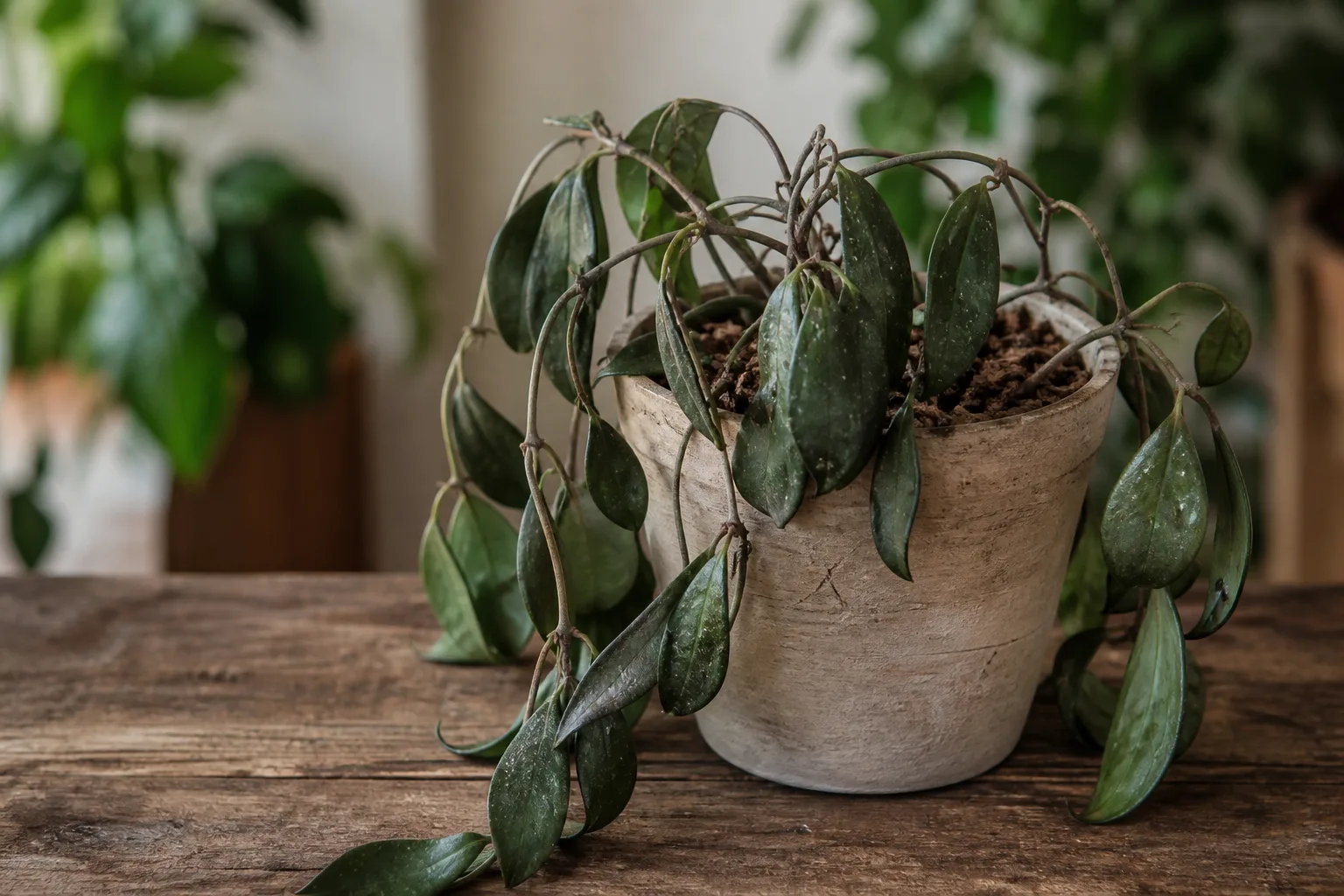
Underwatering on Hoya Pubicalyx: Causes, Checks & Fixes
This guide covers underwatering on Hoya Pubicalyx. See also the general Underwatering guide, watering, and light pages for this plant.
Underwatering on Hoya Pubicalyx: Causes, Checks & Fixes
Quick answer
Underwatering on Hoya Pubicalyx (Hoya pubicalyx, Silver-pink Vine) means the root zone stayed dry too long for this fast-growing epiphyte to replace the water it loses through its thick, waxy leaves. The plant stores moisture in foliage-so it tolerates brief dry spells better than constant sogginess-but chronic drought still shows up as soft, slightly wrinkled leaves, a very light pot, and mix that is dry well below the surface.
First step: bottom-water once until the entire root ball is moist, then drain completely. Set the pot in a shallow tray of water for 20–30 minutes (or until the surface darkens), lift it out, and empty the saucer. Do not follow with daily heavy pours-that swings toward overwatering on Hoya Pubicalyx. Wait until the top half of the mix dries again before the next drink.
What underwatering looks like on Hoya Pubicalyx
Pubicalyx leaves are lance-shaped, often silver-flecked, and normally feel firm and slightly thick when hydrated. Underwatering changes texture before color:
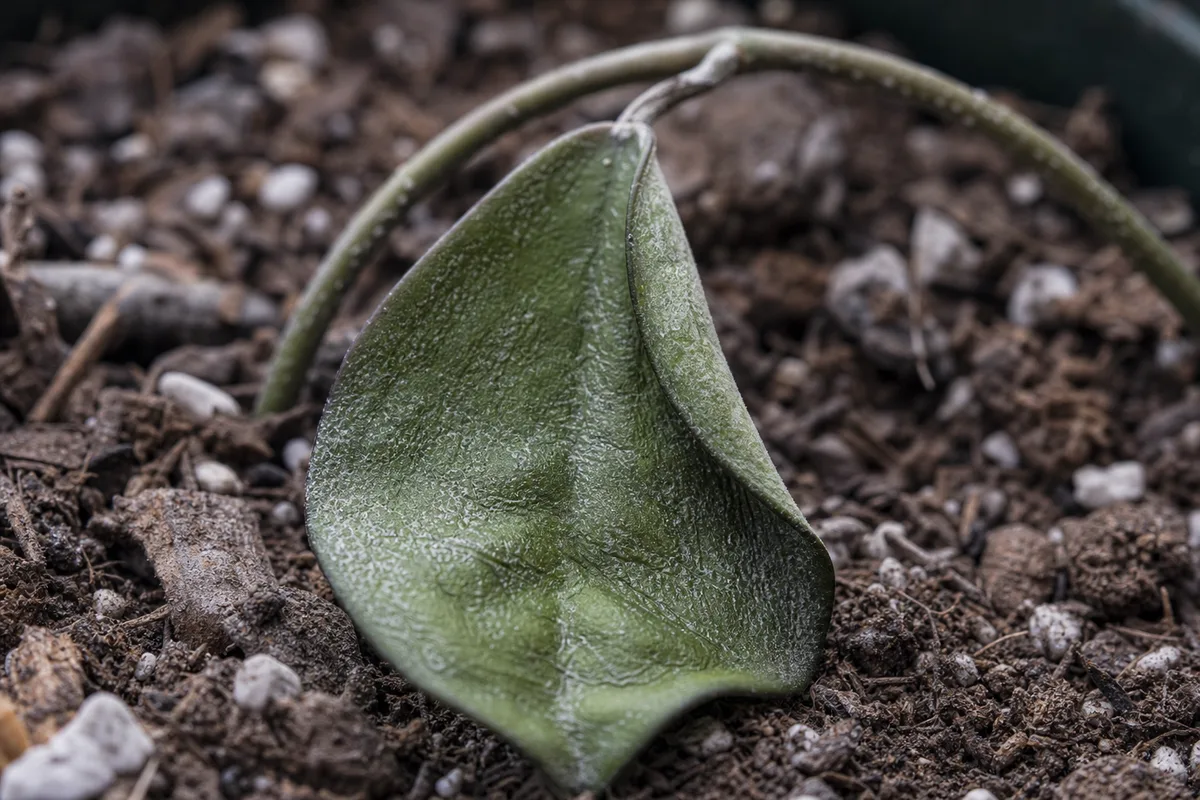
Underwatering symptoms on Hoya Pubicalyx - compare with healthy tissue on the same plant.
- Leaves lose turgor and feel soft, thin, or lightly puckered along the midrib
- Foliage may curl inward slightly as the plant conserves moisture
- The pot feels noticeably lighter than it does an hour after watering
- Mix is dry halfway down (your normal check point for Hoya Pubicalyx overview) and may pull slightly away from the pot wall
- Growth slows or pauses; new leaves stay small or do not appear
- Older leaves may develop crisp brown tips or margins after repeated dry cycles
- In advanced drought, vines droop and peduncles may abort buds
Healthy pubicalyx wilts differently from rot. With underwatering, soil is light, dusty, and dry at depth. Stems stay firm. There is no sour smell. Roots, if you unpot, are pale and firm, not brown and mushy.
Important lookalike: Wrinkled or soft leaves can also appear when roots are damaged from overwatering and can no longer move water-even though the mix feels wet. Always pair leaf texture with soil moisture at half-pot depth, not surface appearance alone.
Why Hoya Pubicalyx gets underwatered
Pubicalyx evolved as an epiphyte in the Philippine rainforest, anchoring to bark and taking up rainwater in bursts. Indoors it wants a chunky, airy mix and a wet-dry cycle-but the dry phase should end before the plant exhausts stored leaf water.
Common pubicalyx-specific triggers:
Fear of overwatering. Hoya care advice stresses dry roots, and pubicalyx is often described as drought-tolerant. Many growers wait too long, especially after a past rot scare. Hoyas are happiest slightly on the dry side, but still need thorough watering when dry.
Calendar watering in a fast-draining mix. Your epiphytic blend-potting mix, perlite, and orchid bark-dries unevenly. A weekly schedule that worked in winter may be too sparse in summer when pubicalyx grows vigorously in Hoya Pubicalyx light guide.
Small or root-bound pots. Pubicalyx flowers well when slightly pot-bound, but a dense root ball in a small container can go from moist to desert in a few days under strong light or near a heating vent.
Light increases water demand. This species takes bright indirect light well and grows faster than many Hoyas. More light and warmth mean faster evaporation from both leaves and porous mix-without adjusting check frequency.
Shallow or rushed watering. Quick top pours on chunky bark often run down the sides while the center stays dry. The surface may look briefly damp while roots sit thirsty.
Winter rest taken too far. Pubicalyx benefits from a cooler, drier winter to support spring blooms-but bone-dry for weeks in a heated room still stresses an evergreen vine. Reduce frequency, do not eliminate water entirely.
Hydrophobic old mix. When peat or fine compost dries completely, it can repel water and leave the root ball center dead dry while water runs down the sides. You think you watered; the root ball never rewets.
How to confirm the cause
Work through these checks before soaking:
- Pot weight - Lift the pot. A dry pubicalyx pot is dramatically lighter than after a thorough drink.
- Moisture at half depth - Insert a finger or skewer to the middle of the pot. Dusty dry throughout confirms drought. Cool, damp mix at depth rules out simple thirst.
- Leaf squeeze test - Gently press a mature leaf. Hydrated pubicalyx feels firm; underwatered leaves feel softer and may show fine wrinkles.
- Recent care history - Has it been three weeks or more since a real soak? Did you skip winter water entirely? Did you move it to a sunnier window without watering more often?
- Drainage and mix - Are holes open? Is the mix chunky or dense peat? Does water race through in seconds?
- Root spot-check (if unsure) - If leaves are wrinkled but soil feels wet, slide the plant out. Firm pale roots with dry mix = underwatering. Mushy roots with wet mix = overwatering or rot.
If the pot is heavy, soil stays dark and cool for many days, and lower leaves yellow while wet, stop-that pattern fits overwatering, not this guide.
First fix for Hoya Pubicalyx
Bottom-water once until the root ball is fully moist, then drain.
- Fill a basin or sink with room-temperature water to just below the pot rim.
- Set the pot in the water for 20–30 minutes until the surface of the mix darkens and feels evenly moist.
- If water ran through too fast on a previous top-water attempt, poke a few shallow holes in the dry surface with a chopstick before soaking-do not stab deep into roots.
- Lift the pot, let it drain freely for 15–30 minutes, and empty the saucer completely.
- Place the plant back in bright indirect light. Do not fertilize until new growth looks normal.
Within a day, leaves should feel firmer. If they stay wrinkled while soil is now wet, unpot and inspect roots before watering again.
Step-by-step recovery
After the first soak, rebuild a sustainable rhythm:
- Wait for the top half to dry before the next full watering-the check point pubicalyx normally uses.
- Water thoroughly from the top until a little runs from drainage holes, or bottom-water again if the mix dried unevenly.
- Trim only fully crisp dead tissue with clean snips. Do not cut peduncles (flower spurs); pubicalyx reblooms from the same spurs.
- Hold fertilizer until leaves firm up and you see active new growth-usually two to four weeks after rehydration.
- Refresh hydrophobic mix if the next two soaks still leave a dry core. Repot into fresh epiphritic mix only when necessary; do not jump to an oversized pot.
Recovery timeline
Mild underwatering on pubicalyx often reverses quickly because the leaves hold reserves:
- 6–24 hours: Leaves feel noticeably firmer after a proper soak
- 2–5 days: Drooping vines stiffen; new growth points look plump
- 1–3 weeks: Fresh leaves expand normally; growth rate picks up
- Permanent: Crisp brown tips or margins on older leaves-dead tissue does not green up
Judge success by turgid new leaves and stable vines, not by old blemishes. If no improvement appears within a week after confirmed dry-soil rehydration, roots-not thirst-are the bottleneck.
Lookalike symptoms
| What you see | Likely cause | Key difference |
|---|---|---|
| Wrinkled leaves + light, dry pot | Underwatering | Mix dry at half depth; roots firm |
| Wrinkled leaves + wet, heavy pot | Root damage / overwatering | Soil damp days after watering; possible sour smell |
| Yellow lower leaves + wet soil | Overwatering | Yellowing with moisture, not drought |
| Brown crispy tips only | Low humidity or old drought scars | Stem and most leaf still firm; soil may be fine now |
| Bud drop after moving | Stress / draft / light change | Often temporary; soil moisture may be adequate |
| Slow growth, dark stretched stems | Not enough light | Leaves thin but not always wrinkled; pot may not be unusually light |
Pubicalyx is more vigorous than many common Hoyas and dries faster in the same room-do not assume a schedule that works for a slow Hoya carnosa ‘Compacta’ fits pubicalyx.
Mistakes to avoid
- Misting instead of soaking. Surface humidity does not rehydrate dry roots; roots need soil moisture in dry bark mix.
- Daily heavy watering after one dry spell. One deep soak, then wait for the top half to dry-allow soils to become nearly dry between water applications.
- Fertilizing a drought-stressed plant. Rehydrate first; salts on dry roots cause burn.
- Hoya Pubicalyx repotting guide into a huge pot to “help watering.” Excess soil stays wet and invites rot.
- Ignoring pot weight. Learning your plant’s dry versus wet weight prevents both underwatering and overwatering.
- Cutting peduncles when removing damaged leaves-you remove future bloom sites.
How to prevent underwatering next time
Match checks to how fast your pubicalyx dries:
- Summer / active growth: Water when the top half of mix is dry-often every 7–14 days in bright indirect light.
- Winter rest: Stretch to every 3–4 weeks, but do not let the vine sit dust-dry for a month in a heated room.
- Use the pot test: Lift weekly until dry weight feels familiar.
- Keep mix chunky: Potting mix, perlite, and orchid bark in roughly equal parts supports rapid drainage with some internal moisture retention.
- Adjust after environmental changes: New grow light, south window, root-bound state, or smaller pot all mean faster drying.
- Bottom-water when mix dries unevenly-especially in hanging baskets where top-down water escapes quickly.
When to worry
Underwatering is usually recoverable. Escalate if:
- Leaves stay limp and wrinkled more than a week after a confirmed full soak while soil is moist
- Stems soften at the base or turn black-unlikely from drought alone
- More than a third of roots are mushy on inspection
- The plant sheds large numbers of leaves rapidly after rehydration (possible shock plus hidden root issue)
A thirsty pubicalyx in dry soil is a watering fix. A wilted pubicalyx in wet soil is a root inspection-not more water.
Conclusion
Hoya Pubicalyx underwatering is one of the easier Hoya problems to fix when you catch it early: the leaves tell you before permanent damage spreads, and one thorough bottom-water often restores firmness within a day. The skill is reading half-pot dryness, pot weight, and leaf texture together-then soaking deeply instead of panicking with daily dribbles or misting. Keep the wet-dry cycle pubicalyx expects, adjust for its faster growth in bright light, and treat wrinkled leaves in wet soil as a root problem until proven otherwise.
When to use this page vs other Hoya Pubicalyx guides
- Hoya Pubicalyx watering guide - Use for routine moisture checks before assuming underwatering is the main issue.
- Hoya Pubicalyx problems hub - Browse all 17 common issues on this species.
- Wilting on Hoya Pubicalyx - Different entry point when symptoms overlap with underwatering.
- Brown Tips on Hoya Pubicalyx - Different entry point when symptoms overlap with underwatering.
- Yellow Leaves on Hoya Pubicalyx - Different entry point when symptoms overlap with underwatering.