Wilting on Hoya Pubicalyx: Causes, Checks & Fixes
Quick answer
Wilting on Hoya Pubicalyx means vines lost turgor because water is not reaching the leaves. Lift the pot and check the top half of the mix first-dry, light soil with soft wrinkled silver-flecked leaves needs one thorough soak; wet, heavy soil with limp foliage means stop watering and inspect roots.
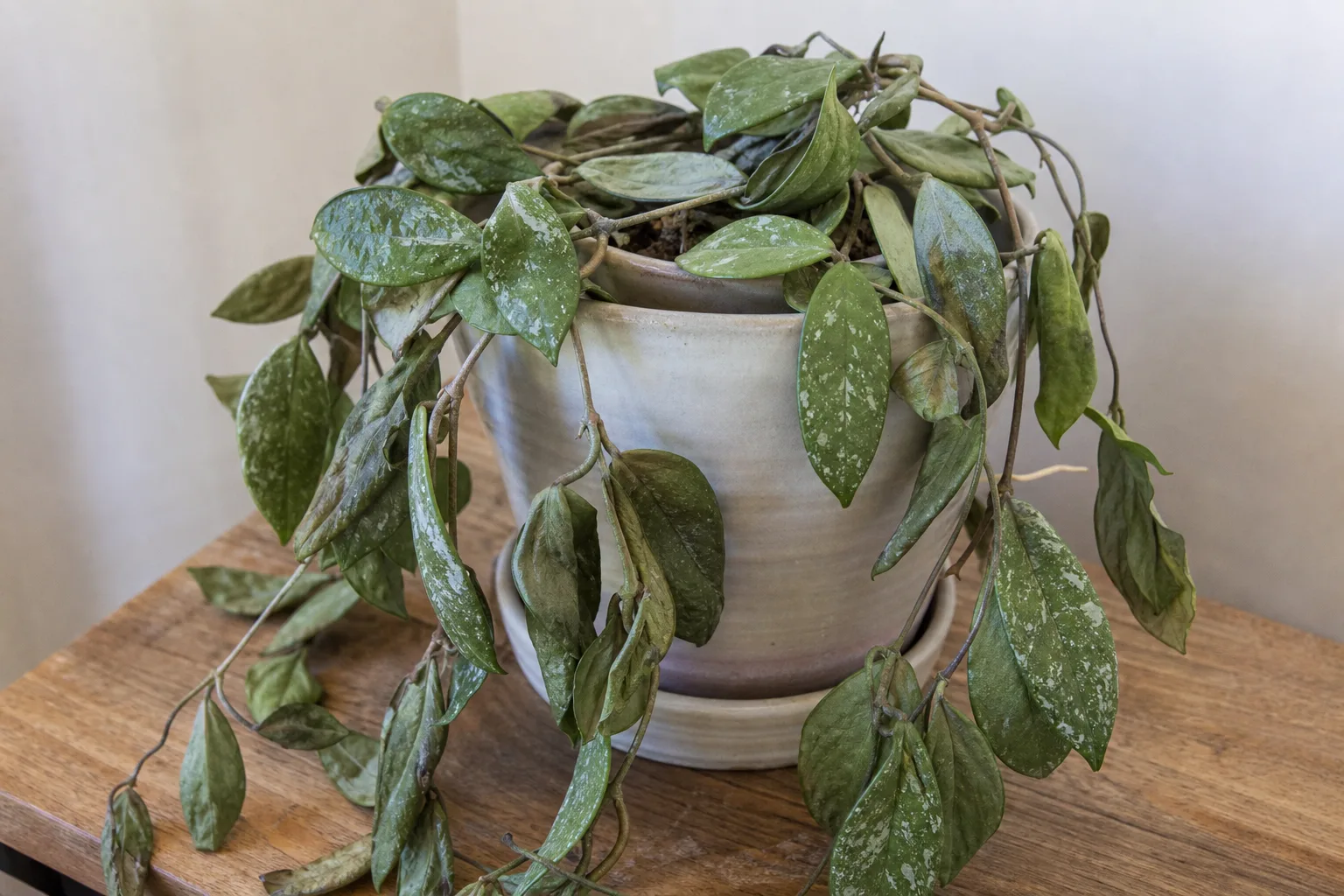
Wilting on Hoya Pubicalyx: Causes, Checks & Fixes
This guide covers wilting on Hoya Pubicalyx. See also the general Wilting guide, watering, and light pages for this plant.
Wilting on Hoya Pubicalyx: Causes, Checks & Fixes
Quick answer
Wilting on Hoya Pubicalyx (Hoya pubicalyx, Silver Pink Vine) means the trailing vines and lance-shaped leaves have lost turgor because water is not moving from roots to foliage. That failure almost always starts with how the root zone is managed-not because every limp vine automatically needs a drink. A wilted houseplant with moist soil often has damaged roots that cannot absorb water, and pubicalyx is no exception.
First step: lift the pot and probe the top half of the chunky epiphytic mix. A feather-light pot with dusty-dry mix and soft, slightly wrinkled silver-flecked leaves calls for one thorough bottom soak, then full drainage. A heavy, wet pot with limp vines and yellow lower leaves means root stress-stop watering and inspect roots before you add more water.
What wilting looks like on Hoya Pubicalyx
Healthy pubicalyx leaves are thick, glossy, and silver-flecked, with firm stems that hold trailing vines upright. Wilting changes texture and posture before color in most cases-and the pattern tells you which branch to follow.
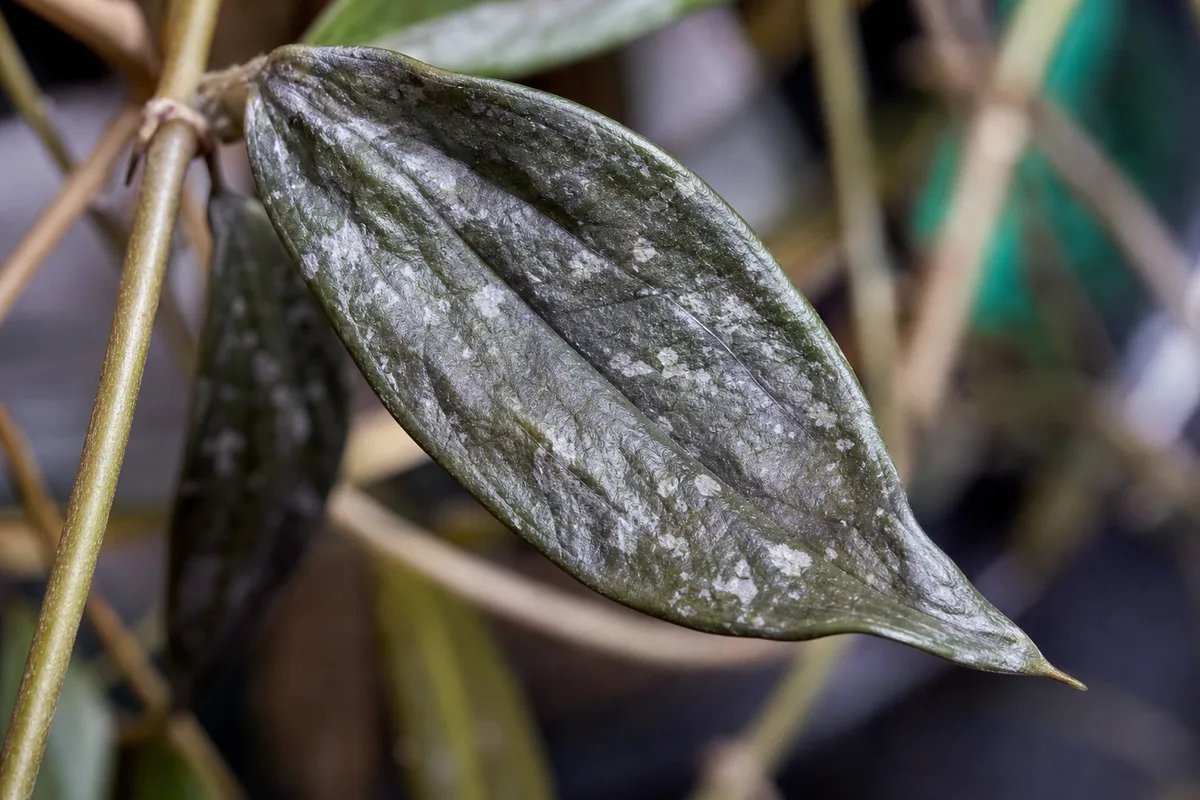
Wilting symptoms on Hoya Pubicalyx - compare with healthy tissue on the same plant.
Soft wrinkled leaves on a dry, lightweight pot (thirst wilt)
This is pubicalyx’s normal drought signal. Leaves feel soft, thin, or lightly puckered along the midrib. The pot feels dramatically lighter than an hour after watering. Mix is dry halfway down-the check point this species normally uses-and may pull slightly from the pot wall. Stems stay firm. There is no sour smell. This pattern often follows calendar neglect, a bright east window that dried a small pot-bound root ball in days, or fear-of-overwatering after a past rot scare.
Limp vines on wet mix with yellow lower leaves (root-failure wilt)
The most dangerous misread on pubicalyx. Vines hang limp while mix stays dark, cool, and heavy for many days after the last pour. Yellowing starts on lower leaves while soil remains damp. You may see fungus gnats near the surface or a faint sour odor from drain holes. Hoyas are epiphytes that need a free-draining mix and are intolerant of soggy roots. Damaged roots cannot move water even when the pot is full-so more water makes wilt worse.
Water races through on first pour (hydrophobic bark)
After weeks without a real soak, peat or fine compost in an epiphritic blend can repel water and leave the root ball center dead dry while runoff escapes down the sides. The surface may look briefly damp. Leaves soften because roots never rewet. Quick top pours that finish in seconds are a clue.
Afternoon limpness that perks overnight on moist soil (heat stress)
In strong indirect or morning sun, pubicalyx may look slightly limp during the hottest hours while mix moisture is adequate. Vines often stiffen overnight when temperatures drop. Stems stay firm; there is no progressive yellowing. This is temporary turgor loss, not root failure-though repeated scorch can crisp leaf edges.
Limp or translucent leaves after cold exposure
NC State Extension notes that temperatures below 50 °F (10 °C) can damage pubicalyx foliage. A winter window ledge, single-pane glass, or AC draft can wilt an otherwise healthy vine overnight. Leaves may look dull or slightly translucent. Watering alone will not fix cold-damaged tissue-you need warmth away from the chill first.
Wilting vs. drooping on Hoya Pubicalyx
Wilting here means a clear loss of leaf firmness or vine turgor tied to water movement, mix failure, temperature shock, or root health. Drooping on pubicalyx can mean mild vine sag on an otherwise hydrated plant-long trailing stems under their own weight, a few aging lower leaves, or brief post-watering limpness that resolves within hours.
Use this page when leaves feel noticeably softer than usual, the pot weight or half-pot moisture does not match healthy baseline, or limpness persists more than a day. For mild partial sag without texture change, see the drooping-leaves guide. For confirmed dry-soil wrinkling with a light pot, the underwatering page goes deeper on rehydration rhythm.
Why Hoya Pubicalyx wilts
Pubicalyx evolved as an epiphyte in Philippine rainforest, anchoring to bark and taking up rainwater in bursts. Indoors it stores moisture in thick semi-succulent leaves-so it tolerates brief dry spells better than constant sogginess-but chronic drought or root failure both show up as wilt.
Underwatering and hydrophobic mix. Hoyas prefer a wet-dry cycle and are happiest slightly on the dry side-but still need thorough watering when dry. Pubicalyx grows moderate to fast relative to other hoyas, so a bright, pot-bound specimen can exhaust stored leaf water in days. Shallow top pours on chunky bark leave the center dry while leaves soften.
Overwatering and root rot. Calendar watering, heavy peat mix, cachepots without drainage, and oversized pots keep epiphytic roots saturated. Oxygen loss damages fine roots; the plant wilts on wet soil-the opposite of thirst. Many owners see limp leaves and pour more water, which accelerates decline.
Fear-of-overwatering drought swings. After one rotted Hoya, growers often wait too long. Pubicalyx’s firm leaves can mask drought for days, then soften suddenly-making it look like the plant “collapsed overnight” when the mix was dry for weeks.
Fast summer dry-down. More light and warmth mean faster evaporation from both leaves and porous mix. A schedule that worked in winter may be too sparse in July for a vigorously growing pubicalyx in a small pot.
Cold drafts and window-sill chill. Tropical foliage wilts quickly when night temperatures drop below the species’ comfort zone near a cold pane.
Heat and light stress. Strong afternoon sun or a sudden move to a much brighter window can cause temporary afternoon wilt without changing your watering calendar.
Repot shock. Disturbed roots may fail to uptake water for days after transplant even when you water correctly.
Lookalike symptoms to rule out
| What you see | Likely cause | Key difference |
|---|---|---|
| Soft wrinkled leaves + light, dry pot | Thirst wilt / underwatering | Mix dry at half depth; roots firm if inspected |
| Limp leaves + wet, heavy pot | Root damage / overwatering | Soil damp days after watering; possible sour smell |
| Yellow lower leaves + wet soil | Overwatering | Yellowing with moisture, not drought |
| Soft leaves + water runs through fast | Hydrophobic bark | Dry core despite surface dampness |
| Afternoon limp, firm by morning | Heat / light stress | Adequate mix moisture; no yellow spread |
| Translucent limp leaves after cold night | Cold damage | Placement on winter window ledge or AC draft |
| Slow growth, long internodes | Not enough light | Leaves thin but not always wrinkled; pot may not be unusually light |
How to confirm the cause
Work through these checks in order so you do not water a rotting plant or soak one that only needs warmth.
- Pot weight - Lift the pot. Dry pubicalyx is dramatically lighter than after a thorough drink. Heavy and cool between waterings suggests oversaturation.
- Moisture at half depth - Insert a finger or skewer to the middle of the pot. Dusty dry throughout confirms drought. Cool, damp mix at depth with limp leaves rules out simple thirst.
- Leaf squeeze test - Gently press a mature silver-flecked leaf. Hydrated pubicalyx feels firm and slightly thick; wilted leaves feel softer and may show fine wrinkles.
- Yellowing pattern - Bottom-up yellow on wet mix strongly suggests root stress. Even wilt across all leaves on dry mix points to drought or hydrophobic core.
- Drainage and pour behavior - Does water race through in seconds? Does a cachepot hold standing water for days? Both worsen wilt.
- Temperature and placement - Cold window ledge below 10 °C (50 °F), AC vent, or radiator shelf narrows cause quickly.
- Recent history - Hoya Pubicalyx repotting guide within two weeks, vacation dry spell, new grow light, or switch to a smaller pot-bound state all shift the diagnosis.
- Root spot-check (if unsure) - Slide the plant out. Firm pale roots with dry mix = thirst. Mushy roots with wet mix = overwatering or rot.
Confirmed dry wilt: light pot, dry half-pot mix, firm stems, pale firm roots at the edge. Confirmed wet wilt: moist mix, yellow lower leaves, mushy roots, or sour smell. Suspected hydrophobic mix: dry core, fast runoff, soft leaves after surface-only pours.
First fix for Hoya Pubicalyx
Your first action depends on what the pot and leaves tell you-never default to “water it” without checking.
If the top half of mix is dry and leaves feel soft or wrinkled
Bottom-water once until the root ball is fully moist, then drain completely.
- Fill a basin with room-temperature water to just below the pot rim.
- Set the pot in the water for 20–30 minutes until the surface darkens evenly.
- If the mix was hydrophobic, poke a few shallow holes in the dry surface with a chopstick before soaking-do not stab deep into roots.
- Lift, drain freely 15–30 minutes, and empty the saucer completely.
- Wait until the top half dries again before the next full drink.
If mix is wet and leaves stay limp
Stop watering immediately. Move to Hoya Pubicalyx light guide if the plant sits in deep shade-slow evaporation worsens wet soil. Let the top half of mix dry before any reconsideration of water. If decline continues after the mix dries, slide the plant out and inspect roots. See overwatering and root rot before repotting on day one.
If water runs straight through on a light pot
Treat as drought plus hydrophobic mix: bottom-soak as above. Refresh mix only if the next two soaks still leave a dry core.
If the plant sits in a cold draft or on a cold sill
Move to stable room temperatures in the 18–27 °C (65–80 °F) range away from the chill. Do not compensate with extra water until leaf firmness and placement stabilize.
If the plant was recently repotted
Hold watering steady-not more, not less-until roots re-establish. Wilting that started within days of transplant often resolves as roots heal if mix is appropriately airy and not waterlogged.
Step-by-step recovery by cause
After the first fix, rebuild stability one branch at a time:
- Thirst wilt: Wait for top-half dryness, then water thoroughly until a little runs from holes. Judge recovery by firmer leaves within 24–48 hours and turgid new growth within one to three weeks.
- Wet-soil wilt: Withhold water until the top half dries. Trim only fully mushy roots with clean snips if you unpot; repot into fresh epiphytic mix only when necessary-do not jump to an oversized pot. Hold fertilizer until new growth looks normal.
- Hydrophobic mix: Repeat bottom-watering on the next dry cycle. Plan a mix refresh if runoff persists through two full soak-dry cycles.
- Heat stress: Filter harsh midday sun or move back from the window edge. Maintain normal dry-down watering-do not flood the plant because leaves looked limp at 3 p.m.
- Cold damage: Remove only fully dead tissue after a week of stable warmth. New growth-not old translucent leaves-shows whether the vine survived.
Recovery timeline
Mild thirst wilt on pubicalyx often reverses quickly because leaves hold reserves:
- 6–24 hours: Leaves feel noticeably firmer after a proper soak on confirmed dry soil
- 2–5 days: Drooping vines stiffen; growth points look plump
- 1–3 weeks: Fresh leaves expand normally; growth rate picks up
- Permanent: Crisp brown tips or margins on older leaves-dead tissue does not green up
Judge success by turgid new leaves and stable vines, not by old blemishes. Root-failure wilt may take one to three weeks to show improvement when enough healthy root remains-and yellow lower leaves rarely revert to green.
If no improvement appears within a week after confirmed dry-soil rehydration, or if limpness worsens on wet soil after you stopped watering, roots-not thirst-are the bottleneck.
What not to do
Do not pour more water onto a wilted pubicalyx when the mix is already wet-that is the fastest route from reversible stress to root rot. Do not mist leaves instead of soaking dry bark mix; surface humidity does not rehydrate thirsty roots. Do not fertilize a wilted plant before you know whether roots are healthy. Do not repot on day one unless root rot, failed mix, or severe hydrophobic collapse is confirmed. Do not stack repotting, pruning, and pesticide on the same day. Do not cut peduncles (flower spurs) when removing damaged foliage-you remove future bloom sites.
How to prevent wilting on Hoya Pubicalyx
Match checks to how fast your pubicalyx dries:
- Summer / active growth: Water when the top half of mix is dry-often every 7–14 days in bright indirect light.
- Winter rest: Stretch to every 3–4 weeks, but do not let the vine sit dust-dry for a month in a heated room.
- Use the pot test: Lift weekly until dry weight feels familiar-pubicalyx responds quickly to care changes once you learn your plant’s rhythm.
- Keep mix chunky: Potting mix, perlite, and orchid bark in roughly equal parts supports rapid drainage with internal air space.
- Bottom-water when mix dries unevenly-especially in hanging baskets.
- Protect from cold: Keep night temperatures above 10 °C (50 °F) and away from AC blasts on foliage.
- Adjust after environmental changes: New grow light, south window, or tighter pot-bound state all mean faster dry-down.
When to worry
Act immediately if stems soften at the base, the mix smells sour, more than a third of roots are mushy on inspection, or the whole vine collapses within days while soil stays wet-those signs suggest advancing root failure, not thirst.
Also escalate if leaves stay limp and wrinkled more than a week after a confirmed full soak while soil is moist, or if large numbers of leaves drop rapidly after rehydration (possible shock plus hidden root issue).
You can observe if only outer leaves are soft, stems are firm, and you have already corrected a clear dry-wilt or draft mistake. Improvement shows as new leaves opening firm within one to two weeks.
A thirsty pubicalyx in dry soil is a watering fix. A wilted pubicalyx in wet soil is a root inspection-not more water.
When to use this page vs other Hoya Pubicalyx guides
- Hoya Pubicalyx watering guide - Use for routine moisture checks before assuming wilting is the main issue.
- Hoya Pubicalyx problems hub - Browse all 17 common issues on this species.
- Underwatering on Hoya Pubicalyx - Different entry point when symptoms overlap with wilting.
- Overwatering on Hoya Pubicalyx - Different entry point when symptoms overlap with wilting.
- Root Rot on Hoya Pubicalyx - Different entry point when symptoms overlap with wilting.