Hoya Pubicalyx Watering: Dry-Between Schedule and Checks
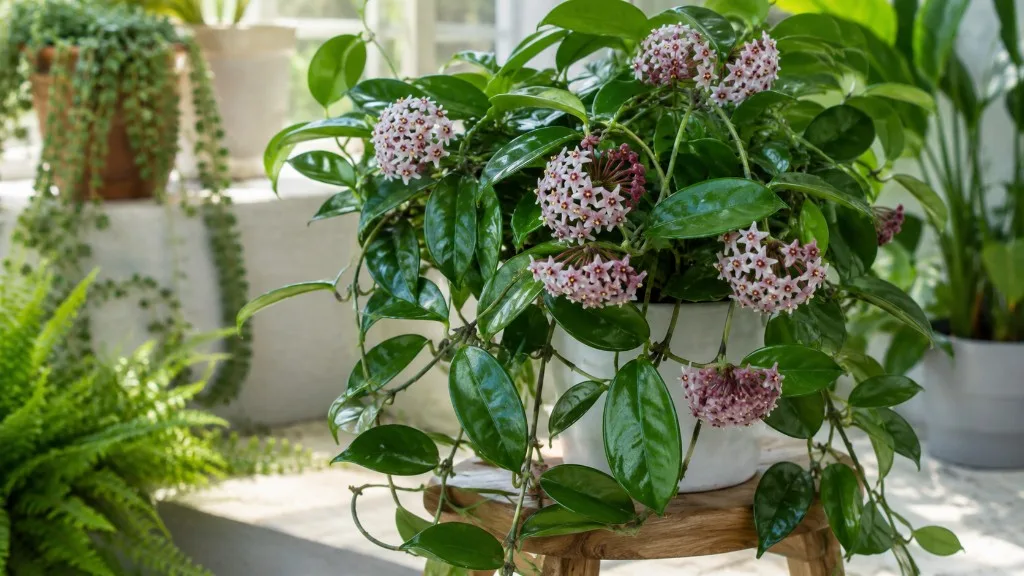
Hoya Pubicalyx Watering: Dry-Between Schedule and Checks
Hoya Pubicalyx Watering: Dry-Between Schedule and Checks
Hoya pubicalyx watering is not about memorizing a day of the week. It is about giving epiphytic roots a full drink, then letting the mix dry down far enough that air returns to the root zone before you water again. Hoya pubicalyx is a fast-growing wax plant from the Philippines that climbs tree bark in humid forest canopy - roots adapted to quick drainage and intermittent rain, not to sitting in soggy potting soil for days. The leaves are thick and semi-succulent, storing water that buffers short dry spells. That combination means pubicalyx tolerates underwatering on Hoya Pubicalyx far better than overwatering on Hoya Pubicalyx, and the most reliable growers treat moisture checks as the schedule rather than the calendar.
The practical starting point for most indoor setups: water when the top half of the mix is dry and the deeper root zone is approaching dry - roughly every 7 to 14 days in spring and summer, stretching to every 3 to 4 weeks in winter when growth slows. Water thoroughly until excess runs from drainage holes, empty the saucer, and never let the pot sit in cached runoff. Pair that rhythm with a chunky epiphytic mix - compost, perlite, and orchid bark - and Hoya Pubicalyx light guide. Change one variable at a time when troubleshooting; if leaves yellow with wet soil or wrinkle with a light dry pot, the answer is almost always in the moisture check, not in another splash of water.
Why Epiphytic Roots Change Everything About Watering
Understanding why pubicalyx wants dry-between watering makes the how much easier to remember. In its native range, the plant anchors to bark and branches rather than rooting deeply in ground soil. Missouri Botanical Garden notes that Hoya pubicalyx is native to the Philippines and grows as an epiphyte in tropical forests - a habit shared with orchids and many bromeliads (Missouri Botanical Garden - Hoya pubicalyx). Epiphytic roots evolved for attachment and for catching brief bursts of moisture that drain away almost immediately. They also depend on airflow around the root surface. Constant wetness in a dense indoor mix suffocates those roots long before the plant looks obviously distressed.
Pubicalyx is sometimes grouped with “low-water hoyas,” but that label misleads beginners. The plant does not want to stay thirsty - it wants alternating wet and dry cycles with emphasis on the dry phase, as Iowa State Extension describes for hoyas generally. Semi-succulent leaves hold reserves, which is why a slightly wrinkled leaf after a missed week is recoverable, while weeks of wet, airless mix often ends in root rot on Hoya Pubicalyx that is not recoverable without intervention. Faster growth than many hoyas also means pubicalyx uses water more quickly in bright active seasons, so “dry between” does not mean “neglect for a month in July.” It means the mix should never stay evenly damp from one watering to the next.
The epiphytic mindset also explains why standard peat-heavy potting soil causes watering problems even when you “water correctly.” Heavy mix holds moisture at the center of the root ball while the surface looks dry - the classic trap that produces yellow leaves and mushy roots on an owner who swears they only water weekly. Pubicalyx rewards the same care logic you would use for a mounted orchid: free drainage, quick dry-down, and roots that breathe between drinks.
How Often to Water Hoya Pubicalyx
Frequency follows how fast your specific pot dries, not a universal interval. Two pubicalyx plants in the same room can need water five days apart if one sits in a small terracotta pot under a grow light and the other hangs in a large plastic basket in filtered shade. Still, starting ranges help you know whether your checks are landing in a sensible zone or signaling a problem with mix, pot, or light.
As a framework for typical indoor conditions with bright indirect light and a well-draining epiphytic mix:
- Spring through early fall (active growth): about every 7 to 14 days
- Late fall through winter (slowed growth): about every 3 to 4 weeks, sometimes longer in cool dim rooms
- After Hoya Pubicalyx repotting guide into fresh chunky mix: often every 10 to 18 days until roots explore the new volume
- During heat waves or under strong supplemental light: potentially every 5 to 10 days if the pot dries quickly
Treat those numbers as calibration tools. If you are watering every four days and the mix is still wet at depth, the problem is not that the plant needs more water - it is that drainage, light, or pot size is wrong. If you water every three weeks in summer and leaves wrinkle repeatedly, light or root health may be limiting uptake even though the interval sounds “safe.”
Growing Season Frequency (Spring Through Early Fall)
From roughly March through September in the Northern Hemisphere - adjusted for your local warmth and daylight - pubicalyx pushes vines, leaves, and eventually fragrant star-shaped flower clusters. Metabolic activity and transpiration rise, so the pot cycles through wet and dry faster. Many growers land near once a week to once every ten days in summer; others in cooler homes or larger pots stretch to two weeks without stress. NC State Extension advises watering frequently during the growing season while allowing the potting medium to dry out between waterings, and checking moisture at depth rather than watering on autopilot.
| Season / phase | Typical interval (indoor, bright indirect light) | What to verify before watering |
|---|---|---|
| Early spring (new growth starting) | Every 10–14 days | Top half of mix dry; pot lightening |
| Late spring – summer (peak growth) | Every 7–12 days | Top half dry; deeper mix approaching dry |
| Early fall (still warm, growth slowing) | Every 10–16 days | Do not keep summer pace by habit |
| Bloom period | Every 7–14 days (unchanged logic) | Do not increase water to “push” flowers |
During active growth, a healthy pubicalyx should produce firm new leaves with silver splash markings characteristic of the species. If growth is fast but leaves stay soft and stems feel limp with dry mix, you may be underwatering. If new growth is scarce, older leaves yellow, and mix stays cool and damp for days, you are overwatering or the mix has compacted - even if the calendar says it is time.
Winter Watering: Slow Down Without Abandoning the Plant
Winter is where pubicalyx watering goes wrong for many indoor growers. Lower light, shorter days, and cooler room temperatures reduce water uptake, but the plant is not dead - it still needs periodic deep watering. NC State Extension notes that fall and winter need less water, with the mix allowed to dry out more between drinks. Stretch intervals to roughly every 3 to 4 weeks, or when the mix is dry well into the center of the pot. Some cool, bright setups may still need water every two weeks; dark overheated apartments may need only monthly - always let checks override the calendar.
Winter rest also supports future blooming. Pubicalyx often flowers more reliably after a period of cooler temperatures and reduced watering stress, mimicking subtle seasonal shifts in the tropics. That does not mean withholding all water until leaves desiccate. It means accepting that a pot that dried in five days in August might take twenty-five days in January, and that is normal. Reduce or pause fertilizer in this phase; feeding a plant that is barely using water stacks salts and compounds moisture stress.
If you run central heating and the air is dry, leaves may show minor tip browning unrelated to watering frequency - but do not respond by watering more often unless the mix is actually dry. Humidity in the 40–60% range helps foliage quality; watering the soil more frequently does not substitute for adequate humidity.
The Dry-Between Rule: What It Actually Means
“Dry between waterings” is the core rule for hoya pubicalyx watering, but sources phrase the target differently: top inch dry, top two inches dry, or the entire mix dry. All of those can work if you understand what they protect - root-zone oxygen - and adjust for your mix.
For pubicalyx in a chunky epiphytic blend, a practical home standard is:
Water when the top half of the mix feels dry to the touch and the lower half is approaching dry but not bone-hard for weeks on end.
That usually translates to the top 2 to 3 inches (5–7 cm) dry in a 6-inch pot, or roughly 40–50% of the pot volume dried down. In very shallow pots, “top half” and “nearly all dry” converge quickly; in deep hanging baskets, the center may stay damp longer while the surface looks dusty. Hence the insistence on checking depth, not appearance alone.
A well-made epiphytic mix should reach a suitable dry-down state within 7 to 10 days after a thorough watering under normal indoor conditions. If your mix stays visibly wet longer than ten days in moderate light, it is too dense, the pot is too large for the root mass, or drainage is blocked - not evidence that pubicalyx “likes wet soil.” Conversely, if the pot is fully desiccated and lightweight within three days every cycle, you may be in too small a terracotta pot with extreme light, or the plant lacks enough root system to hold moisture - common right after propagation.
The dry-between rule also applies between seasons, not only between individual waterings. Do not carry a July schedule into December. The plant’s internal clock slows even in a heated room if light drops.
How to Check Soil Moisture Before You Water
The most reliable hoya pubicalyx watering habit is simple: check every time, water only when checks agree. Calendar reminders are fine as prompts to check, not as commands to pour. Pubicalyx does not benefit from sympathy watering when leaves look sad but soil is wet - that sympathy often causes rot.
Build a consistent check routine at the same time of day when possible. Morning checks before the sun heats the pot give a stable reading. Lift the pot, probe the mix, note how the plant looked yesterday, then decide. Within a month you will know this container’s rhythm without guessing.
Finger, Skewer, and Pot-Weight Checks
Finger test: Insert your index finger to the second knuckle (about 2 inches). If the mix at that depth feels cool and clings to your skin, wait. If it feels dry and crumbly, proceed to a deeper check before watering large pots.
Skewer or chopstick test: Push a dry wooden skewer to the bottom of the pot, leave it thirty seconds, pull it out. Moisture darkens the wood. This is especially useful in hanging baskets where your arm cannot reach the center. Reuse the same skewer for one plant to avoid spreading pathogens.
Pot-weight test: Lift the pot after a fresh watering when you know it is fully saturated - note the heft. Lift again when you think the plant is dry. A lightweight pot with dry skewer and slightly flexible leaves usually means water. A heavy pot with cool mix near the bottom means wait, even if the top looks pale and dusty.
Moisture meter: Inexpensive meters help when you manage many plants, though they can lie in chunky bark-heavy mixes if the probe bridges air gaps. Use meters as one signal among several, not as sole authority. Clemson Extension recommends the weight test - learning how light the pot feels when the mix is dry - as a reliable hoya watering check.
When Surface Dry Is Not Enough
Surface dryness is the most common false green light for watering pubicalyx. Peat and fine bark on top desiccate quickly under indoor air while the core stays wet - especially in plastic pots, oversized containers, or mixes that have broken down after two years. If the top is dry but the skewer emerges uniformly dark, do not water. Instead, note how many days since the last watering and compare to your expected dry-down window. Chronic “top dry, center wet” patterns mean repotting into chunkier mix or downsizing the pot, not adjusting the calendar by a day.
Leaf signals help disambiguate when checks conflict. Limp, soft leaves with wet mix suggest overwatering or root damage, not thirst. Firm leaves with slight wrinkling and very light pot suggest underwatering. Flat, firm leaves on dry mix mean you are in the target window - water soon. Pubicalyx leaves should feel thick and waxy; that texture is your secondary moisture reserve gauge.
How to Water Hoya Pubicalyx the Right Way
When checks say go, water thoroughly and evenly until water runs freely from drainage holes - roughly 10–20% of the pot volume passing through as runoff. Partial sips that only wet the top inch train shallow roots and leave the center chronically dry or chronically wet depending on your mistake direction. Pubicalyx responds best to a full soak followed by a real dry-down.
Use room-temperature water when possible. Cold water shock is minor on hardy pubicalyx but can stress root tips in winter. If your tap water is extremely hard or heavily chlorinated and you notice white crust on the mix surface, filtered or overnight-settled water may help long-term salt management, though it is not mandatory for most growers.
Technique for standard pots: Water slowly around the entire soil surface, pause when runoff starts, then water once more to ensure the whole root ball wets. Empty the saucer within thirty minutes. If the plant sits in a decorative cachepot, remove it, water in the nursery pot at the sink, drain completely, then return - never let the outer pot hold standing water.
Technique for hanging baskets: Water until runoff drips steadily, then stop. Verify weight after draining. Baskets with coco liners may dry unevenly; probe the side facing the room and the side facing the wall separately. Moss poles and trellises can wick moisture - watch for mold on constantly damp moss, which is a sign you are watering too often or the moss is staying wet independently of the mix.
Bottom watering can work for pubicalyx in small pots if you lift the pot out once the top moistens and allow full drainage afterward. Do not leave pots sitting in reservoirs. Epiphytic roots are not hydroponic roots adapted to constant moisture.
After watering, expect firm leaf turgor within a few hours. If leaves stay soft with wet mix, inspect drainage holes for blockage and consider root health.
Signs You Are Overwatering Hoya Pubicalyx
Overwatering is the leading cause of pubicalyx decline indoors - not pests, not low humidity, not forgetting fertilizer. Wet, airless mix kills fine roots first; the plant then cannot drink even when you pour more water, which looks like underwatering and tempts another round of soaking. Learn the early signs and pause before the cycle locks in.
Watch for these overwatering signals:
- Yellowing leaves, often starting with older lower leaves but sometimes spreading rapidly if rot advances
- Soft, limp stems and leaves despite moist or wet mix - different from the crisp wrinkle of drought
- Blackened or mushy base of stems near the soil line
- Musty or sour smell from the pot when you lift it
- Persistent fungus gnats breeding in constantly damp surface mix
- No new growth for weeks while the pot stays heavy and cool
- Root inspection (if repotting): brown, mushy roots instead of firm white or tan roots
Pubicalyx in too-dense mix, low light, or a pot without drainage holes overwaters faster because evaporation and transpiration cannot keep pace with retained moisture. A decorative outer pot is a frequent hidden culprit - the inner pot drains, but runoff collects below and wicks back up. ASPCA lists Hoya species including pubicalyx cultivars as non-toxic to cats and dogs, which matters when curious pets knock over soggy saucers or chew fallen yellow leaves - but rotting organic mix is still not something you want pets ingesting (ASPCA - Wax Plant (Hoya spp.)).
If multiple overwatering signs appear together, stop watering, move the plant to brighter indirect light if it was dim (to increase dry-down speed modestly), and inspect roots at the earliest convenient repot. Trim mushy tissue, repot into fresh chunky mix, and resume watering only when the new mix is approaching dry - often a lighter first drink rather than a flood.
Signs of Underwatering and How to Recover
Underwatering pubicalyx is less common but easier to fix. Semi-succulent leaves shrink slightly when internal stores deplete, producing subtle wrinkling or a thinner feel while the mix is fully dry and the pot is very light. Leaf edges may curl inward. Growth pauses. Flower buds may abort if drought hits during budding. None of this usually kills an established plant if you correct it within a week or two.
Recovery: Water thoroughly once, let drain, and wait for turgor to return over 24–48 hours. Do not water again the next day out of guilt unless the pot dried completely again - a single deep watering fixes most drought episodes. If leaves remain wrinkled after wetting, roots may be damaged from prior overwatering and cannot uptake water; that is a root problem disguised as thirst.
Repeated underwatering stresses fine roots and can cause leaf drop on lower stems. If you travel often, pubicalyx is a reasonable hoya choice because it survives short dry spells better than thin-leaved species - but months of neglect still weaken the plant. Self-watering pots and water globes generally fight against the dry-between philosophy and are poor fits unless you truly understand the wicking rate.
Do not confuse natural older-leaf yellow and drop with underwatering. Pubicalyx sheds occasional old leaves as vines lengthen. Single yellow leaves on an otherwise firm plant with appropriate dry-down are normal; a cluster of yellow leaves on wet soil is not.
Seasonal and Environmental Adjustments
Seasonal change is the macro dial on your micro moisture checks. When days lengthen and temperatures rise, pubicalyx resumes or accelerates growth - often faster than many hoyas - and water use climbs. When days shorten, the same physical pot holds moisture longer even if your thermostat stays at 22°C (72°F). Light intensity drops through windows in winter more than most people realize; a plant that received “bright indirect” in June may be in moderate shade by December unless you compensate with grow lights.
Adjust by checking more often in summer and extending patience in winter, not by doubling water volume. A bigger pour without fixing frequency still leaves roots wet too long. If you move pubicalyx outdoors for summer shade-hanging, expect dramatically faster dry-down and possibly daily checks during heat - always acclimate gradually to avoid sun scorch, which stresses the plant independently of water.
Light, Temperature, and Humidity Effects
Light drives transpiration. Pubicalyx in bright indirect light - east or west window, or a few feet from a south window - uses water steadily and supports compact growth. In low light, the plant stretches, leaves may soften, and mix stays wet longer; the fix is usually more light, not less water on a fixed schedule. Direct midday sun can scorch leaves and increase water loss unevenly; scorched tissue does not recover by overwatering.
Temperature in the 18–27°C (65–80°F) comfort range supports normal cycling. Below about 15°C (59°F), root activity slows sharply; water lingers and rot risk rises if you maintain summer frequency. Avoid cold drafts on wet foliage after evening watering in winter - less because pubicalyx is fragile and more because slow evaporation extends wet surface time.
Humidity at 40–60% keeps leaf edges clean and supports healthy photosynthesis, but humidity does not replace soil watering. Misting leaves is optional cosmetic care, not a hydration strategy; wet foliage overnight in stagnant air can encourage fungal spotting. Grouping plants or using a humidifier addresses air moisture without confusing your soil dry-down signals.
Pot Type, Size, and Mix Impact on Drying Speed
Container and substrate choices are watering choices. Pubicalyx in terracotta often needs water one to three days sooner than the same plant in glazed ceramic because clay breathes and wicks moisture. Plastic retains moisture longer - helpful in dry homes if you tend to underwater, risky if you tend to overwater. Hanging baskets dry from all sides and may need more frequent checks than floor pots.
Pot size relative to roots matters enormously. Hoyas, including pubicalyx, often bloom well slightly pot-bound; an enormous pot full of unused mix stays wet for weeks after each watering. If you repotted recently into a much larger container, expect slower dry-down until roots fill the space - sometimes months. Fresh epiphytic mix with orchid bark, perlite, and compost should dry within about 7 to 10 days after a thorough watering in moderate indoor conditions. Mix that remains wet longer has too much fine peat, has compacted, or is in a pot with poor drainage.
Recommended chunky blend for pubicalyx: roughly 40% orchid bark or coco chips, 30% perlite or pumice, 30% potting compost - adjust by feel. The mix should crumble in your hand, not form a tight ball. When repotting every two to three years, refresh broken-down media before watering behavior drifts without you noticing.
Drainage holes are non-negotiable. If you love a hole-less decorative pot, use it as a sleeve only. Gravel at the bottom of a large pot does not create drainage; it creates a perched water table that keeps roots wetter - skip that old myth.
Watering Newly Acquired, Repotted, and Blooming Plants
New plants from a nursery often arrive in peat-heavy mix that dries on a different timeline than your home blend. For the first month, check daily and learn this pot’s weight rhythm before repotting or changing placement. Quarantine new pubicalyx away from your collection while you observe; pests and pre-existing root issues show up quickly when watering patterns are wrong. Do not repot on day one unless the mix is visibly failing or roots smell rotten - acclimation stress plus fresh mix plus immediate flood is a common double mistake.
After repotting into chunky epiphytic mix, roots need time to explore. Water once lightly to settle mix if it was applied dry, then wait until the new medium approaches dry before the next full soak - often 7 to 10 days initially. Avoid fertilizing until you see new growth and stable dry-down cycles.
During blooming, pubicalyx does not need extra water to “support” flowers. Maintain the same dry-between logic. Bud drop sometimes follows sudden watering changes, cold drafts, or moving the plant - keep care boring through bloom. Fragrant dark pink to near-black star clusters are the reward for consistent moisture management through the prior season, including the slightly drier winter rest that many growers associate with better umbel formation.
Common Hoya Pubicalyx Watering Mistakes
Even experienced collectors slip on these patterns:
Watering on a fixed weekday without checking mix - the single most common error. Pubicalyx punishes autopilot.
Assuming wrinkled leaves always mean thirst when roots are rotting in wet soil - always verify moisture before pouring.
Using dense succulent soil alone or straight peat mix - too water-retentive for epiphytic roots; pubicalyx wants chunk, not sponge.
Letting cachepots hold runoff - creates a bottom-up soak that defeats dry-between cycles.
Increasing water in low light to “help” a struggling plant - usually worsens rot; fix light first.
Misting instead of watering - leaves appreciate humidity; roots still need periodic deep soaking when mix is dry.
Watering immediately after bringing home from a cold nursery - let the plant warm to room temperature; cold wet roots in a dark bag transit already stressed the system.
Repotting into oversized pots “so I water less often” - oversized pots water less often because roots stay wet too long, not because the plant is happier.
Each mistake is correctable without replacing the plant if caught early.
Troubleshooting Persistent Watering Problems
When yellow leaves, stalled growth, or chronic wrinkling persist despite “correct” intervals, work through this sequence before random care changes:
Step 1 - Verify actual root-zone moisture with skewer and weight, not surface color. Log dates for two weeks.
Step 2 - Inspect light. Pubicalyx should see bright indirect for most of the day. Leggy vines with small internodes need more light; scorched patches need less direct sun.
Step 3 - Smell and slip test. Lift the plant from the pot. Healthy roots are firm and pale. Mushy brown roots require trim and repot into fresh mix; adjust watering downward after recovery.
Step 4 - Evaluate mix dry-down speed. If mix stays wet beyond ten days, repot with more bark and perlite or reduce pot size. If mix desiccates in two days with firm leaves, consider slightly larger pot or more compost retention - rare for pubicalyx.
Step 5 - Check drainage path. Clear blocked holes, stop using gravel layers, remove standing cachepot water.
Step 6 - Align season. If it is December and you are on an August schedule, winter adjustment is the fix.
If problems remain after root health is restored and mix drains properly, look to pests (mealybugs on leaf axils stress plants), extreme temperature swings, or recent moves - but in pubicalyx, watering and drainage still account for the majority of chronic issues.
Watering, Light, and Soil as One System
Pubicalyx never experiences watering in isolation. Bright indirect light increases transpiration and shrinks the window between dry and ready-to-water; dim light stretches the window and encourages rot if you keep pouring on a summer schedule. Chunky epiphytic mix - compost, perlite, and orchid bark - determines how fast the pot breathes between soaks; dense peat-heavy media makes every watering decision harder regardless of your intentions. Pot size and material set the volume of mix that must dry before roots recover adequate oxygen.
Think of these three factors as linked levers on the same machine. Moving the plant to a brighter spot without adjusting check frequency often means the old interval was too long. Repotting into fresher bark without changing light may shorten dry-down enough that your former two-week habit becomes a ten-day habit. Changing water volume, pot size, mix recipe, and window placement in the same week makes it impossible to know which lever helped or hurt - the standard advice for any pubicalyx that suddenly “won’t drink right” is to stabilize light and mix first, log moisture checks for two weeks, then adjust watering only after you see a consistent dry-down pattern.
When in doubt, compare your setup against the plant’s native logic: Philippine forest epiphyte, semi-succulent leaves, roots that anchor to bark and dry quickly after rain. Watering that mimics that rhythm - deep drink, real dry, repeat - keeps pubicalyx healthy far more reliably than any single tip copied from a calendar.
Conclusion
Hoya pubicalyx watering succeeds when you treat the plant like the epiphyte it is: soak the root zone thoroughly, then let the mix dry down until the top half is dry and the center is approaching dry before the next drink. Use 7 to 14 days in active growth and 3 to 4 weeks in winter as starting brackets, then let finger, skewer, and pot-weight checks override any calendar. Semi-succulent leaves store backup moisture, so slight drought is survivable; wet, airless mix is not.
Build a habit of checking before every watering, empty saucers and cachepots completely, and keep mix chunky enough to dry within about a week to ten days after each soak. Yellow limp leaves on wet soil mean pause and inspect roots; wrinkled firm leaves on a light pot mean water deeply once. Fix light and drainage when the same symptoms repeat - pubicalyx is a forgiving wax plant when roots breathe between drinks, and a frustrating one when they do not.
When to use this page vs other Hoya Pubicalyx guides
- Hoya Pubicalyx overview - Start here for whole-plant context before deep-diving this topic.
- Hoya Pubicalyx problems hub - Jump to symptom-specific fix guides when this care topic does not resolve the issue.
- Overwatering on Hoya Pubicalyx - Escalate here when watering adjustments are not enough.
- Underwatering on Hoya Pubicalyx - Escalate here when watering adjustments are not enough.
- Root Rot on Hoya Pubicalyx - Escalate here when watering adjustments are not enough.
Related Hoya Pubicalyx guides
- Hoya Pubicalyx overview
- Hoya Pubicalyx light
- Hoya Pubicalyx soil
- Hoya Pubicalyx propagation
- Hoya Pubicalyx fertilizer
- Hoya Pubicalyx repotting
- Overwatering on Hoya Pubicalyx
- Underwatering on Hoya Pubicalyx
- Root Rot on Hoya Pubicalyx
- Wilting on Hoya Pubicalyx
- Drooping Leaves on Hoya Pubicalyx
- Mold on Soil on Hoya Pubicalyx