Mold on Soil on Hoya Pubicalyx: Causes, Checks & Fixes
Quick answer
Fluffy mold on Hoya Pubicalyx potting mix is almost always harmless surface fungus feeding on wet organic debris-not a leaf disease. First step: scrape off the top layer and hold all watering until the top half of the mix is dry.
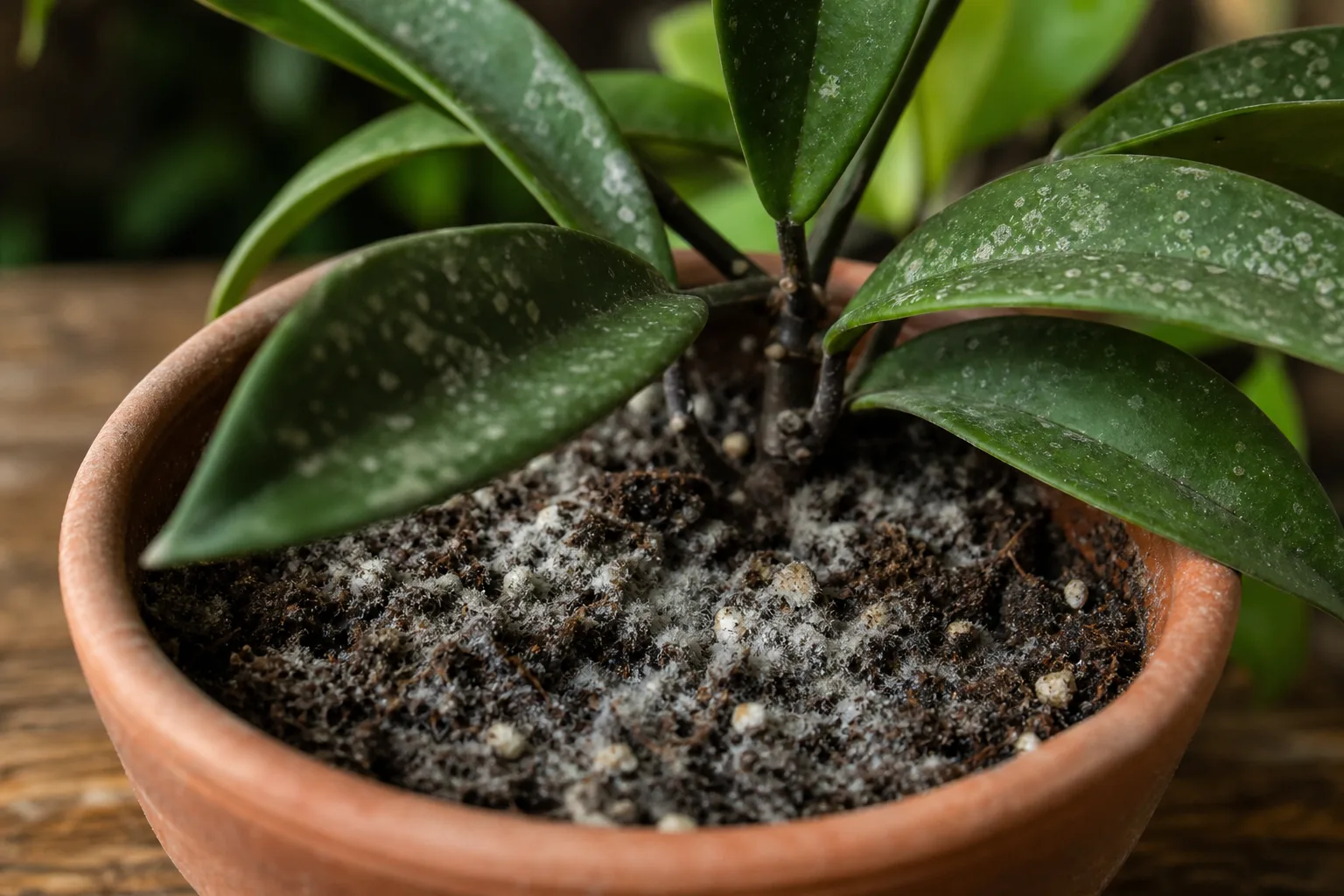
Mold on Soil on Hoya Pubicalyx: Causes, Checks & Fixes
This guide covers mold on soil on Hoya Pubicalyx. See also the general Mold on Soil guide, watering, and light pages for this plant.
Mold on Soil on Hoya Pubicalyx: Causes, Checks & Fixes
Quick answer
White or gray fuzz on your Hoya Pubicalyx potting mix is usually saprophytic surface mold-harmless fungi breaking down organic matter in soil that has stayed wet too long. It is alarming to see, but it is not the same as mildew on leaves or rot inside the roots.
First step: scrape off the top quarter-inch of moldy mix and stop watering until the top half of the soil is dry. Pubicalyx is an epiphytic vine with semi-succulent leaves; its roots need air between drinks, not a constantly damp surface. Fixing moisture comes before fungicide sprays, cinnamon dusting, or Hoya Pubicalyx repotting guide.
What mold on soil looks like on Hoya Pubicalyx
Surface mold appears as white, gray, or occasionally greenish fuzzy patches on the top of the potting mix. It may show up in one corner first, then spread across the surface after a heavy watering or a stretch of cool, low-light weather when the mix dries slowly.
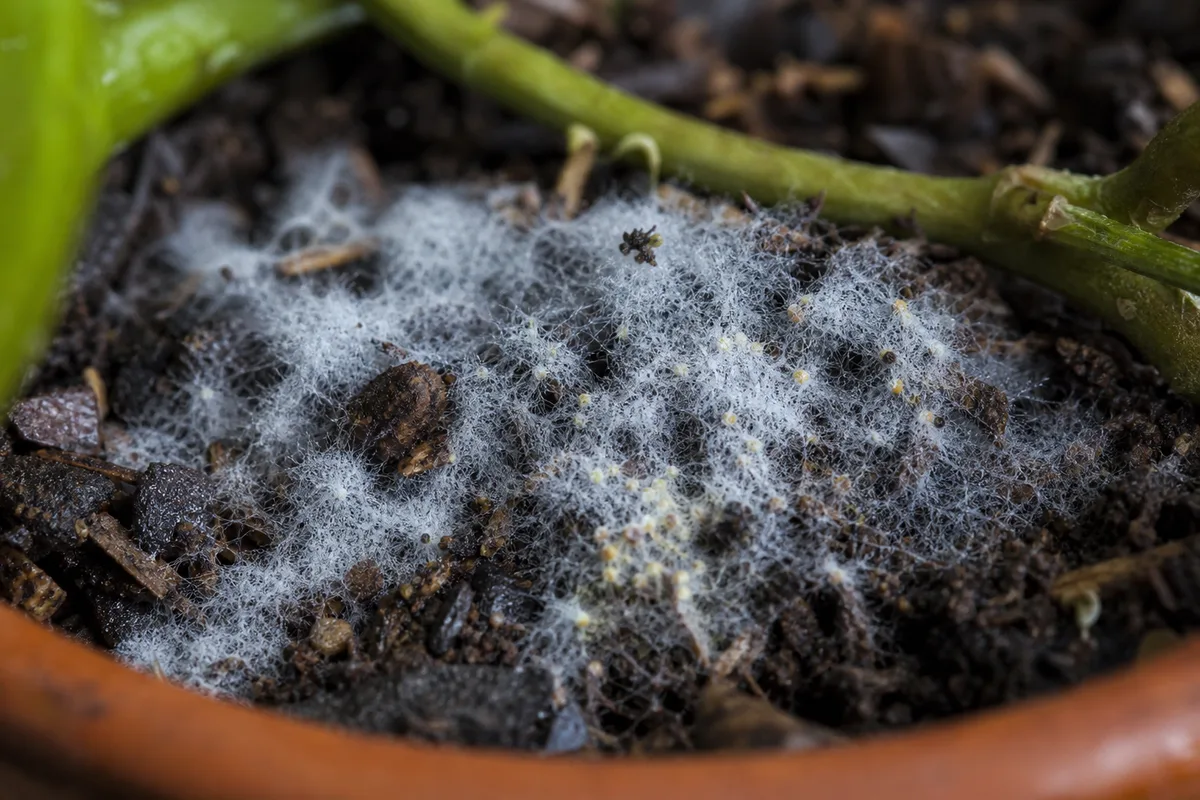
Mold on Soil symptoms on Hoya Pubicalyx - compare with healthy tissue on the same plant.
On a healthy Pubicalyx, the vines and leaves often look normal at first. Dark green or silver-speckled foliage stays firm, and new tendrils may still extend. That is why owners sometimes panic about the soil while the plant above it seems fine-surface mold feeds on dead organic matter, not living leaf tissue.
Common patterns on Hoya Pubicalyx overview:
- Fuzzy film appears days after watering while the top layer still feels cool and damp
- Fallen leaves or flower debris sit on the soil and mold grows around them
- A musty smell rises when you move the pot or slide a saucer
- Fungus gnats on Hoya Pubicalyx breed in moist potting soil and hover near the soil in the same week mold shows up
- Mold may also peek through drainage holes if the bottom of the mix never dries
What it is not: powdery white circles on leaf surfaces (that is foliar mildew, not soil mold), black mushy stems at the soil line (that is rot), or sticky residue with cottony clumps in leaf axils (that is mealybugs).
Why Hoya Pubicalyx gets mold on soil
Pubicalyx evolved as an epiphyte in the Philippines-its roots anchor to bark and dry out quickly between rain events. Indoors, mold appears when culture keeps the soil surface wet longer than this plant prefers.
overwatering on Hoya Pubicalyx on a calendar is the most common trigger. Pubicalyx should be watered when the top half of the mix is dry, roughly every 7–14 days in active growth and far less in winter. Watering because a week passed, not because the pot is light and dry, leaves unabsorbed moisture at the surface where fungi thrive.
Dense or peat-heavy mix compounds the problem. A chunky blend of potting mix, perlite, and orchid bark drains fast; straight bagged mix in a deep pot can hold surface moisture for days after one drink. Because Pubicalyx stores water in its leaves, it tolerates dry spells better than wet feet-so a wet surface is almost always excess water, not the plant demanding more.
Low light and poor airflow slow evaporation. A trailing vine crowded against a wall, sitting in a decorative cachepot, or parked in dim winter light will keep its topsoil damp even when you have cut back watering slightly. Cooler rooms make that worse.
Organic debris on the soil gives mold a food source. Pubicalyx sheds older leaves and drops spent peduncle bits; when those sit on a wet surface, saprophytic fungi colonize them quickly.
Oversized pots are a quiet cause. A small root ball in a large wet reservoir means the top may crust while the center stays damp-or the entire surface stays soggy for weeks. Either pattern invites mold and, on Pubicalyx, raises root-rot risk.
How to confirm the cause
Work through these checks before repotting or spraying:
- Surface moisture - Is the top inch cool and damp several days after watering? Hold a finger there. Persistent dampness confirms the environment mold needs.
- Depth dryness - Pubicalyx wants the top half dry before the next drink. If only the very top is dry but mold keeps returning, you may be watering too soon or using a mix that traps water.
- Plant firmness - Squeeze a mature leaf. Firm and slightly thick is normal. Widespread yellowing, limp vines, or soft stems at the soil line suggest root trouble beneath the mold, not harmless surface fungus alone.
- Pot weight and smell - A heavy pot days after watering, or a sour smell when you lift it, points to poor drainage or chronic wetness.
- Debris scan - Remove any fallen leaves on the soil. If mold was clustered around debris, hygiene plus drying may be enough.
- Pest check - Small flies near the pot mean fungus-gnat larvae feed in moist soil in the same wet top layer. Fix moisture for both problems together.
- Season - Winter rest should mean monthly or less frequent watering. Mold in December after a summer-style schedule is a clear overwatering signal.
Confirmed harmless surface mold when: only the topsoil is fuzzy, leaves are firm, stems are hard at the base, and the plant has no spreading yellow leaves or sour odor.
Suspect deeper trouble when: mold returns within 48 hours of scraping, soil never lightens between waterings, or foliage yellows while the mix stays wet.
First fix for Hoya Pubicalyx
Scrape off the top quarter-inch of moldy soil and hold all watering until the top half of the mix is dry.
Use a spoon or fork, discard the scraped material in the trash (not the compost pile indoors), and leave the surface open to air. Do not water to “rinse” the mold away-that deepens the wet conditions that caused it.
This single step addresses the immediate fungus and forces the drying cycle Pubicalyx needs. Everything else-fresh top dressing, airflow, saucer habits-comes after you have committed to letting the pot dry properly.
Step-by-step recovery
Once you have scraped and paused watering, continue in this order:
- Let the top half dry fully - Lift the pot. When it feels noticeably lighter and the top several centimeters are dry to the touch, you can plan the next watering. In winter, that pause may take two to three weeks.
- Remove surface debris - Pick off fallen leaves and old flower parts so fungi lose their food source.
- Refresh the top layer - Add a thin layer of dry, chunky mix (perlite and bark heavy) to replace what you removed. This improves surface drainage without a full repot.
- Improve airflow and light - Move the pot where it gets Hoya Pubicalyx light guide and air can move around it. Trailing vines look best hanging, which also keeps foliage off wet soil.
- Water correctly next time - When the top half is dry, water thoroughly until a little runs from drainage holes, then empty the saucer. Never let the pot sit in standing water.
- Address fungus gnats if present - Yellow sticky traps catch adults; drying the top layer targets the larvae habitat. Do not rely on traps alone while soil stays wet.
- Repot only if mold is chronic - If mold returns weekly despite dry-down watering, unpot and inspect roots. Replace dense, broken-down mix with fresh epiphytic blend and a right-sized pot. Firm white roots mean you caught it in time; mushy brown roots mean rot treatment, not just surface scraping.
Recovery timeline
Within 3–7 days of scraping and drying, visible mold should stop spreading. The surface may look bare or slightly dusty-that is normal.
One to two weeks without new fuzz means your Hoya Pubicalyx watering guide and airflow are working. Pubicalyx leaves should stay firm; any minor wilting from the dry spell should ease after the next proper watering.
If mold reappears within days, the mix is still staying wet too long. Shorten the watering interval further, brighten light slightly, or repot into chunkier media-surface scraping alone is not fixing the root cause.
Yellow leaves that continue spreading while soil smells sour may mean root rot on Hoya Pubicalyx has started under the cosmetic mold. Inspect roots within the first week of failed surface treatment rather than waiting for the vine to collapse.
Lookalike symptoms
- Fungus gnats only - Tiny flies without much visible mold still mean a wet top layer. Dry the soil; traps are secondary.
- Powdery mildew on leaves - White patches on foliage, not soil. Improve airflow and avoid wetting leaves at night; soil scraping does not fix it.
- Root rot - Yellowing and soft mushy roots with soft stems at the base and sour mix. Requires unpotting and trimming decay, not just drying the surface.
- Green algae on the pot rim - Constant surface moisture and low light. Related to mold; fix drainage and brightness together.
- Mealybugs - White cottony clumps in leaf axils with sticky residue, not a fuzzy soil mat.
What not to do
Do not drench the soil with fungicide for harmless saprophytic mold-the problem is moisture culture, not a missing chemical. Avoid watering on schedule when the top half is still damp. Do not mist the soil to “clean” it.
Skip full repotting on day one unless roots are mushy or mold has returned for weeks. Pubicalyx dislikes unnecessary root disturbance and often blooms better when slightly snug in its pot.
Do not assume the plant is fine forever just because leaves look healthy. Chronic wet soil can progress to root rot on this species; treat surface mold as an early warning.
Hoya Pubicalyx care cross-check
Mold is a moisture signal. Align these basics after the first fix:
- Watering - Top half dry before every drink; reduce sharply in winter dormancy.
- Mix - Epiphytic and chunky: potting mix plus generous perlite and orchid bark.
- Light - Bright indirect sun so the plant uses water at a predictable rate.
- Pot - Drainage holes required; empty saucers. Terra cotta can help surface drying.
- Debris - Brush fallen leaves off the soil line on vining stems.
How to prevent mold next time
Bottom-watering is optional but useful: set the pot in a bowl of water for a short soak, then remove it so the top layer stays drier while roots still drink. Many growers top-water successfully on Pubicalyx as long as they wait for the top half to dry and never leave saucers full.
Long-term prevention is letting the surface dry between waterings, keeping a fast-draining epiphytic mix, maintaining bright indirect light with airflow, and clearing organic debris before it molds. If you grow several plants together, space pots so humid air does not stagnate at soil level.
When mold has not appeared, you are on the right track: a firm vine, stable leaf color, and a pot that lightens noticeably before each watering.
When to use this page vs other Hoya Pubicalyx guides
- Hoya Pubicalyx watering guide - Use for routine moisture checks before assuming mold on soil is the main issue.
- Hoya Pubicalyx problems hub - Browse all 17 common issues on this species.
- Fungus Gnats on Hoya Pubicalyx - Different entry point when symptoms overlap with mold on soil.
- Overwatering on Hoya Pubicalyx - Different entry point when symptoms overlap with mold on soil.
- Root Rot on Hoya Pubicalyx - Different entry point when symptoms overlap with mold on soil.