Slow Growth on Hoya Pubicalyx: Causes, Checks & Fixes
Quick answer
Hoya Pubicalyx is a fast-growing hoya that normally pushes firm new leaves every one to three weeks in spring and summer. A true stall shows tiny dull new leaves, long bare internodes, or no new nodes for months outside winter rest. First step: inspect the newest leaf pair for size, splashing, and spacing-then check window placement before repotting or fertilizing.
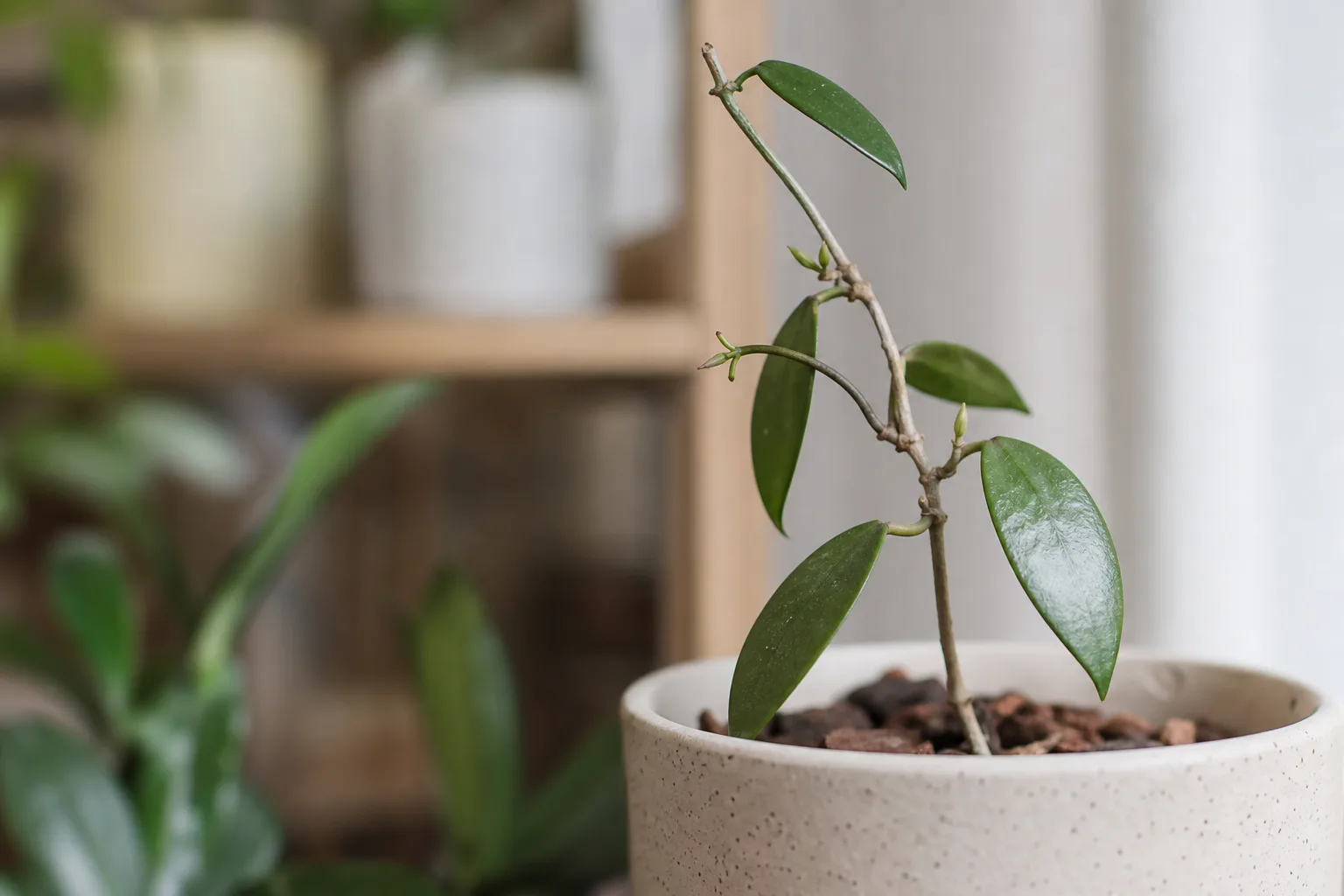
Slow Growth on Hoya Pubicalyx: Causes, Checks & Fixes
This guide covers slow growth on Hoya Pubicalyx. See also the general Slow Growth guide, watering, and light pages for this plant.
Slow Growth on Hoya Pubicalyx: Causes, Checks & Fixes
Quick answer
Hoya pubicalyx (Hoya pubicalyx) is marketed-and behaves-as one of the faster-growing hoyas in home cultivation. In bright indirect light during spring and summer, healthy vines commonly add a new leaf pair every one to three weeks and push several inches of tendril over a month. When growth flatlines outside a normal winter pause, the plant is telling you a care limiter-not species temperament-is holding it back.
First step: inspect the newest leaf pair. Check leaf size, firmness, silver-pink splashing intensity, and spacing to the previous node. Small dull leaves on long bare stems point to insufficient light. No new nodes for two months after an unnecessary repot suggests repot shock. Yellow lower leaves on wet mix signal root stress. Match the pattern, then apply one targeted fix-do not stack repotting, fertilizer, and pruning on the same day.
Is slow growth normal for Hoya Pubicalyx?
Yes, sometimes-and that distinction saves owners from panicking every December.
Healthy fast-grower pace indoors
Pubicalyx evolved as a Philippine forest epiphyte climbing toward filtered canopy light. Indoors, that translates to bright indirect light for much of the day. NC State Extension lists a rapid growth rate for this species and recommends about six hours of filtered sunlight daily.
During active months with adequate light and warmth, expect:
- Firm, glossy new leaves at the vine tip, often with visible silver or pink mottling when light is strong enough
- Moderately tight internodes on fresh growth-not the wide gaps of a starved vine
- Active tendrils that reach and eventually root or branch
- Faster pot dry-down than in dim corners, because the plant is transpiring at a normal rate
Pubicalyx responds quickly when conditions improve. That is useful diagnostically: a stall that persists through a full spring in a bright east window is abnormal; a six-week winter pause in a cool room often is not.
When slow growth is actually a problem
Treat growth as abnormally stalled when:
- No new nodes for eight or more weeks during spring or summer in unchanged care
- New leaves stay smaller and duller than older sections, with fading splashing on fresh foliage
- Internodes lengthen while overall extension feels sluggish-a light-starved vine still moves, but badly
- Peduncles never set buds on a plant old enough to bloom, year after year in the same spot
- Growth stopped immediately after repotting and has not resumed for six to ten weeks
- Lower leaves yellow while mix stays wet for days-roots may be suffocating even if the tip looks idle
Normal winter rest looks different: firm leaves, no spread of yellowing, cooler temps, reduced watering, and a timeline that tracks shorter days. Pubicalyx often needs less water in fall and winter while growth slows-NC State Extension notes the potting medium can dry out more between drinks during those months.
What slow growth looks like on Hoya Pubicalyx
Slow growth on this species is less about total vine length and more about newest-node quality.
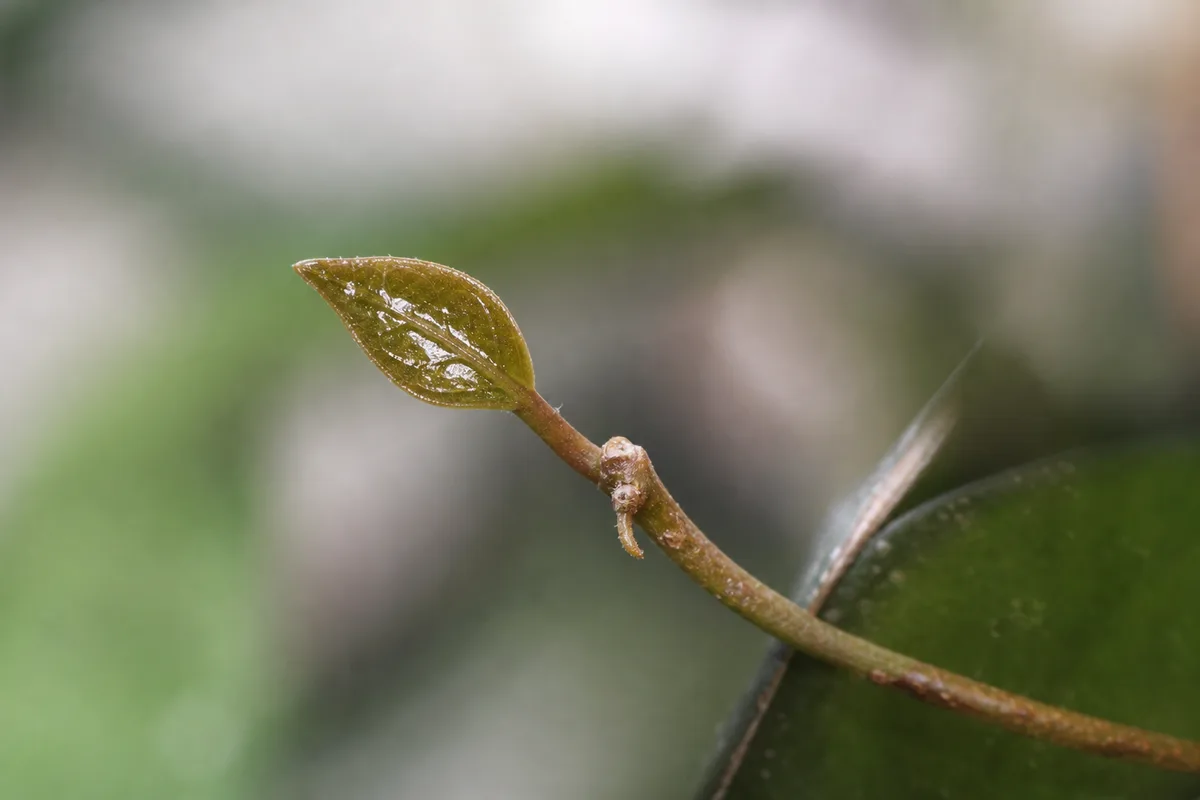
Slow Growth symptoms on Hoya Pubicalyx - compare with healthy tissue on the same plant.
Healthy compact growth in good light: thick lance-shaped leaves, vivid silver-pink flecking on fresh foliage, short gaps between leaf pairs, and tendrils that feel stiff rather than limp.
Light-limited stall: long bare stem sections, small pale new leaves, dull or dark green foliage with weak splashing, vines leaning hard toward the brightest window, and a pot that stays heavy for weeks because the plant uses less water. This overlaps heavily with not enough light-use that page if stretch and dull leaves are your primary symptoms.
Post-repot pause: firm older leaves but no new nodes for six to twelve weeks immediately after repotting, especially if roots were disturbed unnecessarily. Pubicalyx does not mind tightly confined roots and repots rarely-surprise disturbance is a common hidden stall cause.
Root-health stall: stalled tips plus yellowing lower leaves, mix that stays wet, sour smell, or soft stems at the base. Dim placement slows drying and can trigger the same wet-soil pattern-check both light and moisture.
Immature plant, slow extension only: young Pubicalyx may vine modestly for two or more years before reliable blooming. NC State Extension notes plants can be slow to mature and flower. Steady but unspectacular extension on a small plant is not always an emergency.
Slow growth vs. leggy growth vs. not enough light
These URLs overlap, but the entry point differs:
| Your main concern | Best starting page |
|---|---|
| Vine stopped entirely; unsure if pace is normal | This page - baseline and multi-cause checklist |
| Long internodes, small leaves, dull splashing, lean toward window | Not enough light |
| Elongated bare stems after months in same dim spot | Leggy growth (related symptom) |
| No blooms despite healthy-looking vine | No flowers |
| Yellow leaves on wet soil | Overwatering or root rot |
Leggy growth is often a symptom of low light. Slow growth is the broader question-“should this fast hoya be moving faster, and why isn’t it?”-covering winter rest, repot shock, root rot, cold, drought, pests, and wrong expectations versus slower hoyas like Hoya carnosa.
Why Hoya Pubicalyx growth stalls
Insufficient light (most common indoor limiter)
Iowa State Extension lists insufficient light as the top reason hoya growth stalls. Pubicalyx is a vigorous-growing vine with longer, silver-flecked leaves-it needs more brightness than “medium light” corners provide. Low light produces thin stretched stems, smaller leaves, and little or no flowering even when watering looks perfect.
Light also governs how fast the pot dries. A Pubicalyx in a dim hallway may stall from weak photosynthesis and sit in wet mix too long, mimicking overwatering stress.
Winter rest and cool temperatures
Growth naturally slows when days shorten and rooms cool. Pubicalyx prefers warm indoor conditions; temperatures below about 50°F (10°C) can damage foliage, and Iowa State Extension notes hoyas do not tolerate below about 55°F (13°C) well. A plant near a cold drafty window in January may look “stuck” while it rests-reduce water and wait for longer days before aggressive fixes.
Repot shock after unnecessary disturbance
Owners repot hoping to jump-start a slow vine. Pubicalyx often pauses for weeks to months after root disturbance it did not need. The species flowers well slightly root-bound; Iowa State Extension recommends conservative repotting and avoiding oversized containers that stay wet longer.
Overwatering and root decline in slow-drying mix
Epiphytic roots need oxygen. Chronic wet soil-especially in low light-stops new growth even before obvious collapse. Yellow lower leaves and a heavy pot that never dries point here. See watering and overwatering guidance before assuming the plant needs more food or sun alone.
Chronic underwatering on Hoya Pubicalyx
Semi-succulent leaves store water, but persistent drought stalls new nodes. Wrinkled or soft leaves on a very light pot suggest this branch-distinct from the firm leaves of winter rest.
Pests on new growth tips
Mealybugs and spider mites often hit tender new tissue first, causing distorted or aborted leaves that look like “slow growth.” Inspect leaf axils and undersides before fertilizing.
Extreme rootbound stall vs. beneficial snug pot
A lightly root-bound Pubicalyx often blooms better. Extreme rootbound-roots circling thickly, mix collapsed, pot drying in hours-can limit new growth. Repot timing matters; see repotting.
Wrong baseline expectations
Pubicalyx outpaces many hoyas but will not match pothos speed in the same conditions. Comparing to a slow species sets false alarms. Judge against this plant’s recent healthy nodes, not another genus.
How to confirm the cause
Work through this checklist in order:
- Season and temperature - Is it late fall or winter in a cool room? Reduced nodes with firm leaves may be normal rest.
- Newest-node quality - Size, splashing, firmness, and internode gap on the last two or three leaf pairs. Small dull leaves with long gaps = light suspect.
- Window placement - East or west within about one to three feet of glass is ideal for many homes. Farther than six feet, or north exposure without supplement, is often too dim for compact Pubicalyx growth. Full placement guidance lives on the light requirements page.
- Pot weight and moisture - Lift the pot. Heavy and wet for two or more weeks with yellow lower leaves → root stress. Very light with wrinkled leaves → drought. Heavy with dull spaced leaves in dim light → low light slowing water use.
- Repot history - Did growth stop within two weeks of a repot in the last three months? Suspect shock before repotting again.
- Rootbound check - Roots circling the pot exterior or mix drying within a day of watering → may need repot. Snug but healthy? Leave it.
- Pest scan - Sticky residue, cottony clumps, or fine webbing on new tips.
- Plant age - Under two years with slow but steady extension may be immaturity, not crisis.
Confirmed abnormal stall when: growth fails to match seasonal expectations, newest leaves look worse than older ones, or the pattern matches a specific cause above after honest comparison to this plant’s last good growth spurt.
First fix for Hoya Pubicalyx
Your first action depends on what the checklist shows-but one change at a time so you can read the plant’s response.
If newest leaves are small, dull, or widely spaced
Move the plant to bright indirect light within about one to three feet of an east- or west-facing window. This is the most common fix for a stalled fast-grower. Do not fertilize or repot first. Pubicalyx often shows tighter new nodes within two to four weeks after a meaningful light upgrade. If stretch is obvious, follow the dedicated not enough light recovery steps.
If the plant was recently repotted
Hold steady: same pot, stable light, careful watering after the top half of mix dries. Skip fertilizer for several weeks. Pubicalyx frequently resumes once roots re-establish-often six to ten weeks, sometimes longer after heavy disturbance.
If mix stays wet and lower leaves yellow
Stop watering until the top half of mix dries. Inspect drainage and root firmness if yellowing spreads. Fix moisture before any growth booster. A stressed wet plant is not a fertilizer problem.
If winter rest with cool temps and reduced watering
Wait. Firm leaves and intact peduncles without rot signs mean patience, not intervention. Resume normal spring watering and light as days lengthen.
If chronic dry mix and soft wrinkled leaves
Water thoroughly once, then establish a dry-down rhythm matched to current light. Brighter placement dries the pot faster-recalibrate after any move.
If pests coat new growth tips
Isolate and treat the infestation before optimizing fertilizer or repotting. New tips cannot resume normally while mealybugs or mites keep damaging them.
Step-by-step recovery by cause
After the first fix:
- Acclimate light changes over 7–10 days if moving from a very dim spot-semi-succulent leaves scorch in sudden hot afternoon sun.
- Recalibrate watering whenever light changes; faster growth uses water faster.
- Hold fertilizer until new growth looks firm and spacing improves-feed lightly in spring and summer only, not on a stressed stall.
- Leave peduncles intact-Pubicalyx reblooms from the same spurs; cutting them removes future flower sites.
- Repot only when confirmed necessary-broken-down mix, extreme root spiral, or daily dry-out in a too-small pot.
- Rotate the pot weekly in bright windows so new growth stays balanced.
Recovery timeline
Light correction: tighter new leaf spacing often appears within two to four weeks; several compact nodes by six to eight weeks confirm the fix. Old elongated sections do not shrink back-judge fresh growth only.
Repot shock: resume commonly takes six to twelve weeks with stable care; avoid second disturbance during this window.
Root rot recovery: timeline depends on damage extent-minor cases may push new nodes in four to eight weeks after drying and drainage fix; severe mushy root loss can take a season.
Winter rest: growth typically picks up within two to four weeks after temperatures and day length increase-no fertilizer needed during the pause.
If no improvement after eight weeks with confirmed good light, dry appropriate mix, and no active pests, inspect roots and consider whether mix has broken down or the plant is still colder than it prefers.
Lookalike symptoms to rule out
| What you see | More likely cause | Quick check |
|---|---|---|
| Long internodes, lean toward window | Low light | Shadow test at pot; compare to light guide |
| Yellow leaves, soggy mix | Overwatering / rot | Wet for days; smell roots if needed |
| Wrinkled leaves, light pot | Underwatering | Top half dry too long |
| No growth after spring repot | Repot shock | Timeline matches disturbance |
| No blooms only, compact vine | Immaturity, light, or cut peduncles | Age, spurs intact, brightness |
| Stippling, webbing on new tips | Spider mites | Underside inspection |
What not to do
Do not repot a stalled Pubicalyx hoping to wake it up without confirming root need-unnecessary repotting often extends the stall.
Do not fertilize a stressed or wet-soil plant to force growth. Without adequate light and healthy roots, nitrogen pushes soft weak tissue.
Do not confuse winter dormancy with failure and pile on water, heat, and feed in December- that invites rot.
Do not remove peduncles while diagnosing stall; blooms return from old spurs on this species.
Do not compare to pothos or slower hoyas and assume Pubicalyx is broken when your window is simply too dim.
Do not stack repotting, pruning, pesticide, and fertilizer on one day-Pubicalyx shows stress quickly, but also rewards one clear correction at a time.
How to prevent slow growth on Hoya Pubicalyx
Place Pubicalyx where bright indirect light is realistic year-round-not only where the hanging basket looks best. Supplement or move closer through short winter days.
Water after the top half of mix dries during active growth; reduce frequency in rest months. Match rhythm to how fast the pot actually dries in current light.
Repot conservatively every two to three years only when rootbound or mix fails-see repotting timing.
Feed lightly in spring and summer on healthy established plants; skip winter. Details on the fertilizer page.
Inspect new tips weekly for pests while growth is active.
When newest leaves stay firm, well-sized, and vividly splashed, Pubicalyx is growing at the pace this fast species expects.
When to worry
Treat as urgent if:
- Stems soften at the base while soil stays wet-possible root rot spreading
- Yellowing climbs rapidly from lower leaves toward the tip
- Crown collapses or new growth blackens and aborts repeatedly
- Pests coat every new tip and spread despite isolation
A firm plant with long internodes in a dim room is a fixable light problem, not an emergency-unless wet soil and yellow leaves overlap. Soft stems plus sour mix need root inspection, not just a brighter window.
Hoya Pubicalyx care cross-check
Growth stalls rarely happen in isolation. If new nodes stay poor after light correction, cross-check:
- Light - six to eight hours of bright indirect daily for vigorous growth
- Watering - dry-down between drinks; slower in winter
- Soil - airy, epiphyte-appropriate mix that drains fast
- Fertilizer - light feeding in active months only
- Overview - species baseline and cultivar notes (Silver Pink, Red Buttons)
Pubicalyx is non-toxic to cats and dogs per ASPCA guidance on related hoyas-still avoid foliar fertilizer on leaves pets chew.
When to use this page vs other Hoya Pubicalyx guides
- Hoya Pubicalyx watering guide - Use for routine moisture checks before assuming slow growth is the main issue.
- Hoya Pubicalyx problems hub - Browse all 17 common issues on this species.
- Not Enough Light on Hoya Pubicalyx - Different entry point when symptoms overlap with slow growth.
- Leggy Growth on Hoya Pubicalyx - Different entry point when symptoms overlap with slow growth.
- Yellow Leaves on Hoya Pubicalyx - Different entry point when symptoms overlap with slow growth.