Yellow Leaves on Hoya Pubicalyx: Causes, Checks & Fixes
Quick answer
Yellow leaves on Hoya Pubicalyx usually mean overwatering, low light, or one aging leaf at a base node-not a single diagnosis. First step: lift the pot and check whether mix is wet or dry before watering or fertilizing.
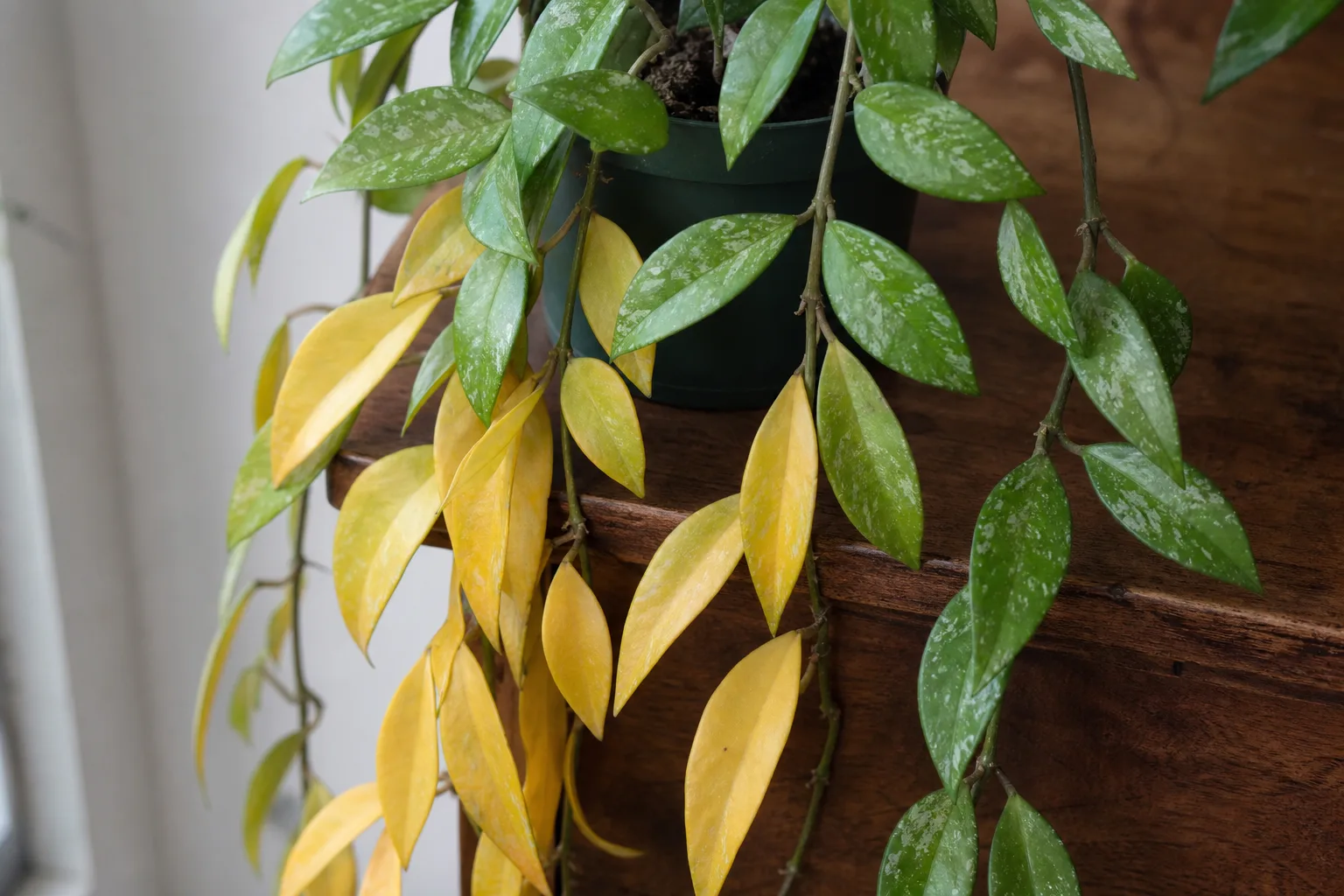
Yellow Leaves on Hoya Pubicalyx: Causes, Checks & Fixes
This guide covers yellow leaves on Hoya Pubicalyx. See also the general Yellow Leaves guide, watering, and light pages for this plant.
Yellow Leaves on Hoya Pubicalyx: Causes, Checks & Fixes
Quick answer
Yellow leaves on Hoya Pubicalyx are a symptom, not a diagnosis. This vining epiphyte is adapted to an airy wet-dry rhythm, so most indoor yellowing is tied to overwatering on damp mix, insufficient light, or normal aging of one older base-node leaf.
First step: confirm wet or dry at root depth before changing anything else. If mix is wet and leaves are limp, pause watering and let the top half dry. If the pot is very light and the center is dry, water deeply once. If upper growth is pale on stretched internodes, improve light before adjusting water.
For broader species care context, see the Hoya Pubicalyx overview. For full moisture workflows, use the watering guide, overwatering, and root rot pages.
Yellow leaves vs. drooping vs. wilting
These symptoms overlap, but they do not mean the same thing:
- Yellow leaves = color change that can come from aging, low light, or root stress.
- Drooping leaves = reduced leaf angle or soft posture, often from water stress.
- Wilting on wet soil = a red-flag pattern where roots are too damaged to move water.
On Hoya pubicalyx, the most misleading pattern is wilt on wet soil: foliage looks thirsty, but the pot is heavy and roots are oxygen-starved. Treat that as possible overwatering first, not underwatering on Hoya Pubicalyx.
What yellow leaves look like on Hoya Pubicalyx
Pubicalyx often signals stress through leaf color + leaf firmness + pot weight together. Silver-splash forms can look brighter overall, but stress patterns remain consistent.
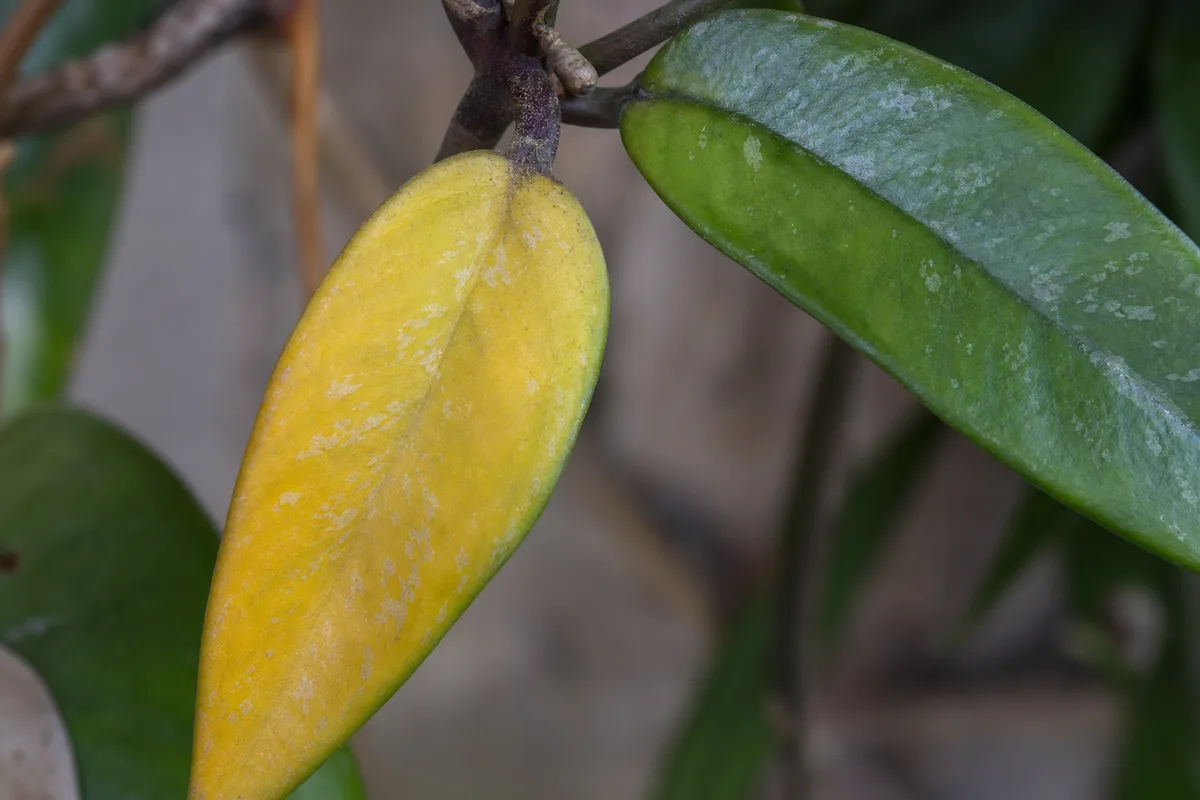
Yellow Leaves symptoms on Hoya Pubicalyx - compare with healthy tissue on the same plant.
Normal vine-node aging vs. stress yellowing
As vines lengthen, one older leaf at a basal node can yellow and drop while the rest of the vine keeps producing firm tip growth. That is normal aging.
Stress yellowing is usually different:
- Several leaves yellowing in a short window
- Soft or limp leaves on a heavy pot
- Stalled vine tips with no fresh firm leaves
- Repeating yellowing after each watering cycle
Why Hoya Pubicalyx gets yellow leaves
Epiphytic wet-dry cycle and root stress
In nature, many hoyas grow as epiphytes, so roots expect oxygen and periodic drying, not constant saturation. When potting mix stays wet too long, root function declines and leaves yellow even though water is present.
An oversized container worsens this because extra wet mix stays damp around a small root ball, a known setup for root rot risk. Pubicalyx can grow fast in bright conditions, but it still performs better when mix drains quickly and dries between drinks.
Light mismatch and winter slowdown
Pubicalyx needs Hoya Pubicalyx light guide to use water predictably and maintain stronger leaf color. In low light, vines stretch and uptake slows, so the same watering pattern that worked in summer can cause winter wetness and cluster yellowing.
This species is frost intolerant, and cooler periods reduce water use. In winter, intervals usually lengthen; rely on pot weight and depth checks, not fixed dates.
Less-common lookalikes
Two lookalikes can mimic early moisture problems:
- Mealybugs can trigger yellowing and decline through sap-feeding, often with cottony residue and honeydew.
- Chlorosis patterns can follow nutrient lockout or root stress; interveinal yellowing and context matter when checking causes (RHS chlorosis guidance).
How to confirm the cause
Work through these checks in order. Do not repot or fertilize before confirming wet vs. dry conditions at depth.
Top-half dry check, pot weight, and root inspection
- Lift the pot: heavy after several days usually means lingering moisture; very light suggests genuine drought.
- Probe at depth: wet, cool mix with limp yellow leaves points to overwatering; dry, crumbly mix with slight wrinkling points to thirst.
- Use a skewer to the bottom: especially in hanging pots where the center stays wet longer than the surface.
- Map yellowing distribution: one old base-node leaf is different from multi-leaf cluster yellowing.
- Check active growth tips: firm new leaves suggest partial function; halted tips on a wet pot suggest root stress.
- Inspect stem base and smell: sour odor or soft dark tissue raises urgency for immediate root inspection.
Confirmation decision table
| Your findings | Most likely cause | First action | Urgency |
|---|---|---|---|
| Heavy pot, wet at depth, soft yellow lower leaves | Overwatering stress | Pause watering until top half dries | High |
| Light pot, dry mix, slight wrinkling, firm stems | Underwatering | Deep soak once, then return to dry-between cycle | Medium |
| Pale upper leaves, long internodes, normal moisture | Light deficiency | Move to brighter indirect light | Medium |
| One old base-node leaf, firm vine, normal growth tips | Normal aging | Remove yellow leaf; no major care change | Low |
| Sour smell, soft stem base, ongoing yellow spread | Root rot progression | Unpot, inspect, trim rot, repot into airy mix | Urgent |
The first fix to try
Treat wet vs. dry status as the first decision.
If the pot is heavy and wet, stop watering and let oxygen return to the root zone before any fertilizer or repot decision. If the pot is light and dry, give one full soak and then wait for the next real dry point instead of topping up daily.
If upper leaves are pale and internodes are stretching, increase light first. Watering more will not correct low-light yellowing.
If only one old leaf yellows on a healthy vine, remove it and continue the normal watering rhythm.
Recovery timeline and what to watch
Fully yellow leaves do not return to green. Judge recovery by new growth quality, not old leaf color.
Mild overwatering (firm stems, yellowing halted):
- Turgor often improves within days to one week
- New yellowing should slow within two to three weeks
- Fresh, firm tip leaves usually appear within four to six weeks
After root trim and repot (moderate root loss):
- Stabilization often takes two to four weeks
- New extension growth may take one to two months
Dropped buds can take a full cycle to return. Keep conditions stable and avoid frequent corrective changes.
Worsening signs include daily new yellow leaves, sour odor, blackening at the stem base, or persistent limp tissue on wet mix.
Mistakes to avoid
- Watering again because leaves look thirsty while the pot is still wet
- Adding fertilizer before solving moisture or light mismatch
- Upsizing the pot immediately when roots are stressed
- Checking only surface dryness in bark-heavy or hanging setups
- Keeping a summer schedule through low-light winter conditions
- Removing peduncles when trimming yellow leaves (pubicalyx reblooms from spurs)
How to prevent yellow leaves next time
Build repeatable habits from the watering guide:
- Water when the top half is dry and the center is nearing dry
- Keep a chunky, airy hoya mix formula with reliable drainage
- Use pot-weight checks before each watering
- Maintain bright indirect light so moisture use stays predictable
- Extend intervals in slower winter growth periods
- Empty standing water from saucers and cachepots
- Follow Clemson’s watering guide to keep a wet-dry cycle instead of calendar watering
When to worry
Escalate quickly when any of these appear:
- Three or more leaves yellowing in a week on wet mix
- Softening stem base or sour pot odor
- Ongoing daily leaf drop from lower nodes
- No new tip growth for weeks while soil stays damp
- Black or mushy roots on inspection
A single aging base leaf on a firm, actively growing vine is not the same scenario.
If severe signs are present, move to overwatering and root rot recovery immediately.
When to use this page vs other Hoya Pubicalyx guides
- Hoya Pubicalyx watering guide - Use for routine moisture checks before assuming yellow leaves is the main issue.
- Hoya Pubicalyx problems hub - Browse all 17 common issues on this species.
- Overwatering on Hoya Pubicalyx - Different entry point when symptoms overlap with yellow leaves.
- Underwatering on Hoya Pubicalyx - Different entry point when symptoms overlap with yellow leaves.
- Not Enough Light on Hoya Pubicalyx - Different entry point when symptoms overlap with yellow leaves.