Not Enough Light on Hoya Pubicalyx: Causes, Checks & Fixes
Quick answer
Hoya Pubicalyx in dim corners stretches between leaves, blooms poorly, and dries its pot slowly. First step: move it within bright indirect light-about 1–3 feet from an east or west window-before changing fertilizer, repotting, or watering more.
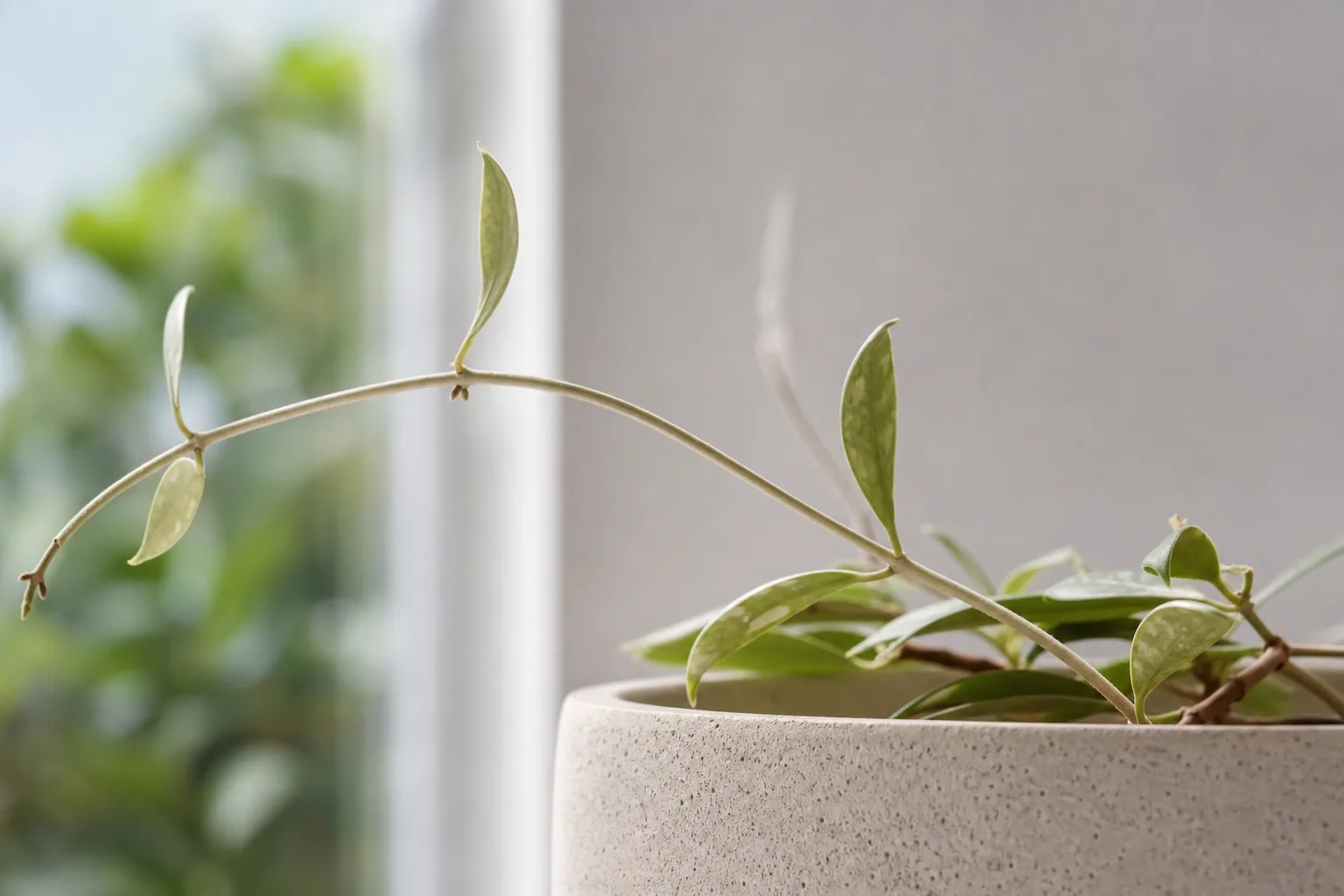
Not Enough Light on Hoya Pubicalyx: Causes, Checks & Fixes
This guide covers not enough light on Hoya Pubicalyx. See also the general Not Enough Light guide, watering, and light pages for this plant.
Not Enough Light on Hoya Pubicalyx: Causes, Checks & Fixes
Quick answer
Hoya Pubicalyx (Hoya pubicalyx) is a fast-growing Philippine epiphyte built for filtered canopy light, not a dim shelf. When photosynthesis drops, the vine stretches toward windows, leaves shrink, silver-pink splashing fades, and flowering stalls-even if watering and fertilizer look fine on paper.
First step: move the plant to Hoya Pubicalyx light guide within about 1–3 feet of an east- or west-facing window (or a filtered south window). Do not repot, fertilize, or water more in hopes of waking it up. Light governs how much water Hoya Pubicalyx overview can use; fix placement first, then adjust watering once the pot dries faster.
What not enough light looks like on Hoya Pubicalyx
Low light on Pubicalyx shows up as structure change, not always obvious yellowing. The most reliable sign is long internodes-wide gaps between pairs of thick, oval leaves along the same vine. Indoor plants stretch and become spindly when light is too low. New growth at the tip may look thin and reach sideways toward the brightest direction in the room.
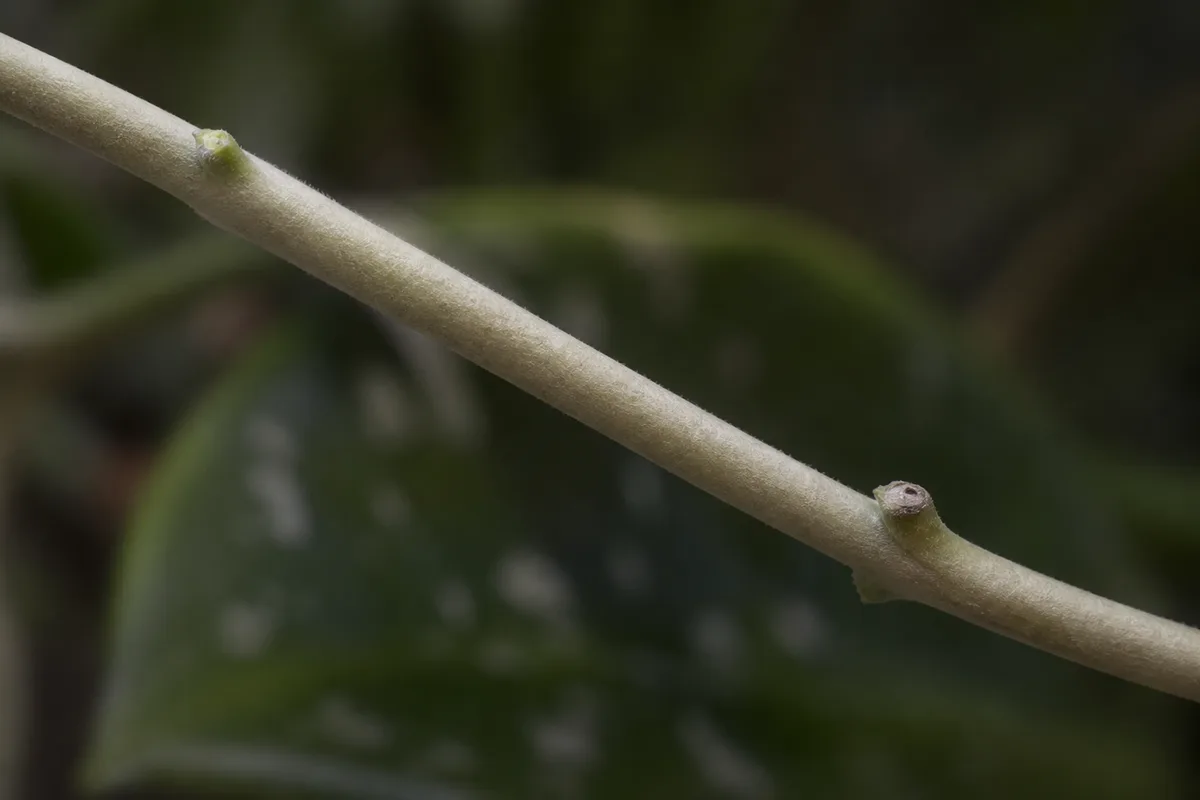
Not Enough Light symptoms on Hoya Pubicalyx - compare with healthy tissue on the same plant.
Typical patterns on this species:
- Elongated stems with leaves spaced farther apart than older, compact sections lower on the vine
- Smaller new leaves compared with leaves produced when the plant had better light
- Darker, duller green foliage with less visible silver or pink mottling on fresh leaves
- One-sided lean or asymmetric growth as the vine tracks a single light source
- Slow or stalled tendrils during months when Pubicalyx would normally push moderate to fast growth
- No flowers despite intact peduncles and a plant old enough to bloom-low light levels commonly prevent flowering on houseplants, and Pubicalyx is a reliable bloomer only when light and seasonal rest align
- Pot stays heavy between waterings because the plant is using less moisture than it would in brighter conditions
What it is not: crisp bleached patches on sun-facing leaves (that is sunburn from too much direct hot sun), widespread yellowing with soggy mix for days (overwatering on Hoya Pubicalyx or root stress), or thin wrinkled leaves on a very light dry pot (underwatering on Hoya Pubicalyx). Mealybugs in leaf axils leave sticky residue and cottony clumps-low light alone does not.
Why Hoya Pubicalyx runs out of light
Pubicalyx evolved climbing tree trunks in tropical forest canopy. It receives bright, filtered light for much of the day-not deep shade on the forest floor. Indoors, that translates to one of the brighter spots most homes can offer.
Distance from the window is the usual culprit. Light intensity decreases rapidly with distance from the source. A trailing Pubicalyx hung in a hallway, on a bookcase across the room, or more than about six feet from a window is often living in medium or low light even if the corner looks acceptable to you.
Seasonal daylight loss hits fast growers hard. Shorter winter days reduce the hours Pubicalyx can photosynthesize. A placement that worked in June may be marginal by December unless you supplement or move the pot closer to glass.
Blocked or filtered windows quietly cut intensity. Heavy sheers, tinted film, overhangs, neighboring buildings, and dirty panes all reduce usable light. Pubicalyx can take gentle morning or late-afternoon direct sun, but a north-facing room with no supplement rarely provides enough energy for compact growth or blooms.
Decor-first placement is a common trap. This vine looks striking in a hanging basket-which is fine if the basket hangs where light actually lands. Many owners sacrifice brightness for aesthetics and then wonder why a normally vigorous Pubicalyx grows thin.
Low light changes watering math. In dim conditions the plant transpires less, so the epiphytic mix dries slower. Owners who keep the same summer Hoya Pubicalyx watering guide in a dark corner can accidentally keep roots wet too long, producing yellow leaves that look like a water problem when light is the root cause.
How to confirm the cause
Work through these checks before Hoya Pubicalyx repotting guide or feeding:
- Internode length on new growth - Compare the gap between the last three leaf pairs with older sections from when the plant looked full. Stretching that worsens over weeks confirms insufficient light.
- Window direction and distance - East or west within a few feet of glass is ideal for many homes. Farther than about six feet, or a north window with no grow light, is usually too dim for compact Pubicalyx growth.
- Shadow test at the pot - At midday, hold your hand above the foliage. A faint, soft shadow suggests adequate brightness; if the plant casts little or no shadow, light is likely too low.
- Two-week trial move - Shift the pot to the brightest indirect location you can offer without hot midday sun on the leaves. If the next leaf sets arrive closer together, light was the limiter.
- Pot weight and soil moisture - Lift the pot. If it stays heavy for two or more weeks while leaves look dull and spaced out, low light may be slowing water use. If it is heavy with yellowing leaves and sour smell, inspect roots-rot can overlap with dim placement.
- Peduncle check - Pubicalyx reblooms from the same peduncles-Hoyas produce new flowers on old spurs rather than new ones each year. If spurs are present but no buds form year after year in the same dark spot, light is a stronger suspect than missing fertilizer.
- Season context - Winter stretch in an unchanged location often tracks shorter days. Supplement or move closer temporarily rather than assuming the plant is failing.
Confirmed low light when: internodes lengthen, new leaves shrink, the vine leans, flowering stalls, and a brighter trial produces tighter growth within two to four weeks.
Suspect a different problem when: leaves yellow while soil stays wet and stems soften at the base (overwatering or rot), leaves wrinkle on a light dry pot (underwatering), or sticky axils and webbing appear (pests).
First fix for Hoya Pubicalyx
Move the plant to bright indirect light within about 1–3 feet of an east- or west-facing window. Hoyas grow best in bright indirect light year-round.
If only a south exposure is available, set the pot back from the glass or behind a sheer curtain so hot midday sun does not scorch the semi-succulent leaves. Pubicalyx handles more light than many houseplants, but acclimation still matters-do not jump from a dark corner to a west sill in July without a gradual week-long shift.
This single placement change is the first fix. Brighter light lets Pubicalyx resume normal photosynthesis, tighten internodes on new growth, and use water at the rate its care routine expects.
Step-by-step recovery
After the move, continue in this order:
- Acclimate over 7–10 days - Increase light gradually if the old spot was very dim. Watch for pale or scorched patches; pull back slightly if direct sun is too strong.
- Hold fertilizer - Do not feed a light-stressed vine until new growth looks firm and spacing improves. Pubicalyx does not need extra nitrogen to compensate for dim corners.
- Recalibrate watering - When light increases, the top half of the mix will dry faster. Wait for that dryness before the next drink rather than keeping a calendar schedule from the dark location.
- Add a grow light if needed - In rooms without a suitable window, hang a full-spectrum LED 6–12 inches above the foliage for 12–14 hours daily. Most houseplants should receive no more than 16 hours of light per day. Timers keep duration consistent through winter.
- Rotate weekly - Even bright windows deliver light from one direction. A quarter turn each week keeps new stems from leaning hard to one side.
- Prune only after recovery signs - Once two or three compact leaf sets appear, you can cut back the most elongated bare stems to encourage bushier growth. Leave peduncles intact-Pubicalyx flowers from the same spurs repeatedly.
- Expect bloom delay - Better light is necessary but not instant magic. Mature plants still benefit from the cooler, drier winter rest Pubicalyx uses to set spring buds. Light fixes structure first; flowers often follow the next season if peduncles remain.
Recovery timeline
Within 2–3 weeks of improved light, new leaves should show tighter spacing and normal size. The vine may still lean until you rotate it; that is cosmetic.
By 4–8 weeks, several compact nodes usually confirm the fix. Old stretched sections will not shorten-stretched growth does not revert once light improves, though new leaves improve. Judge success on fresh growth, not on reshaping old stems.
Flowering may take one full growing season after light correction, especially if the plant also needs its winter dry rest. Do not cut peduncles out of impatience.
If new growth stays thin after eight weeks in what should be a bright spot, recheck whether hot direct sun is stressing the plant, or whether wet roots are limiting uptake despite better light.
Lookalike symptoms and causes to rule out
| What you see | More likely cause | Quick check |
|---|---|---|
| Yellow leaves, soggy mix, soft base | Overwatering / root rot on Hoya Pubicalyx | Soil wet for days; sour smell; mushy roots if unpotting |
| Wrinkled firm leaves, very light pot | Underwatering | Top half dry for too long; recovers after a thorough drink |
| Long stems but fast drying, firm leaves | May still be low light | Internode length confirms; watering is not the main story |
| White webbing, stippled leaves | Spider mites | Inspect undersides; mites favor stressed, dusty plants in dry air |
| No blooms only, compact growth | Immaturity, removed peduncles, or missing winter rest | Age, intact spurs, and seasonal dry/cool period |
Pubicalyx stores water in its leaves, so limp foliage in low light plus wet soil is a dangerous overlap-roots may be starving for oxygen while the owner assumes the plant needs more sun and more water. Fix light and let the pot dry properly together.
What not to do
Do not blast the vine with unfiltered south or west afternoon sun after months in shade-semi-succulent Pubicalyx leaves scorch quickly. Acclimate in steps.
Do not increase watering because the plant looks weak in a dim corner. Slower growth uses less water; extra drinks in low light invite yellow leaves and rot.
Do not apply full-strength fertilizer to force growth. Without adequate light, nitrogen pushes soft, stretched foliage rather than healthy structure.
Do not repot into a larger container hoping to jump-start vigor. Pubicalyx often blooms better slightly root-bound; repotting adds stress without fixing photons.
Do not remove peduncles when frustrated by lack of blooms. Cutting spurs removes future flower sites permanently on this species.
How to prevent low-light stress on Hoya Pubicalyx
Place Pubicalyx where bright indirect light is realistic for most of the day-hanging baskets work well when the hook sits near a window, not in a central room void.
Through short winter days, move closer to glass or run a 12–14 hour grow-light cycle. Pubicalyx is a faster grower than many Hoyas; it shows light deficits quickly and recovers quickly when you correct them.
Clean windows seasonally and avoid stacking sheer layers that cut intensity. When you rearrange furniture, re-check the vine’s beam.
After any light upgrade, relearn the pot’s dry-down speed before returning to a fixed watering calendar. Brighter Pubicalyx dries faster; the old dark-corner schedule will overwater in the new spot.
When internodes stay tight, splashing looks vivid on new leaves, and peduncles set buds on schedule, light is doing its job-even if older stems still show a stretch from an earlier placement.
When to use this page vs other Hoya Pubicalyx guides
- Hoya Pubicalyx watering guide - Use for routine moisture checks before assuming not enough light is the main issue.
- Hoya Pubicalyx problems hub - Browse all 17 common issues on this species.
- Leggy Growth on Hoya Pubicalyx - Different entry point when symptoms overlap with not enough light.
- Slow Growth on Hoya Pubicalyx - Different entry point when symptoms overlap with not enough light.
- Yellow Leaves on Hoya Pubicalyx - Different entry point when symptoms overlap with not enough light.