Hoya Pubicalyx Light Requirements: Bright Indirect Guide
Hoya Pubicalyx Light Requirements: Bright Indirect Guide
Hoya Pubicalyx Light Requirements: Bright Indirect Guide
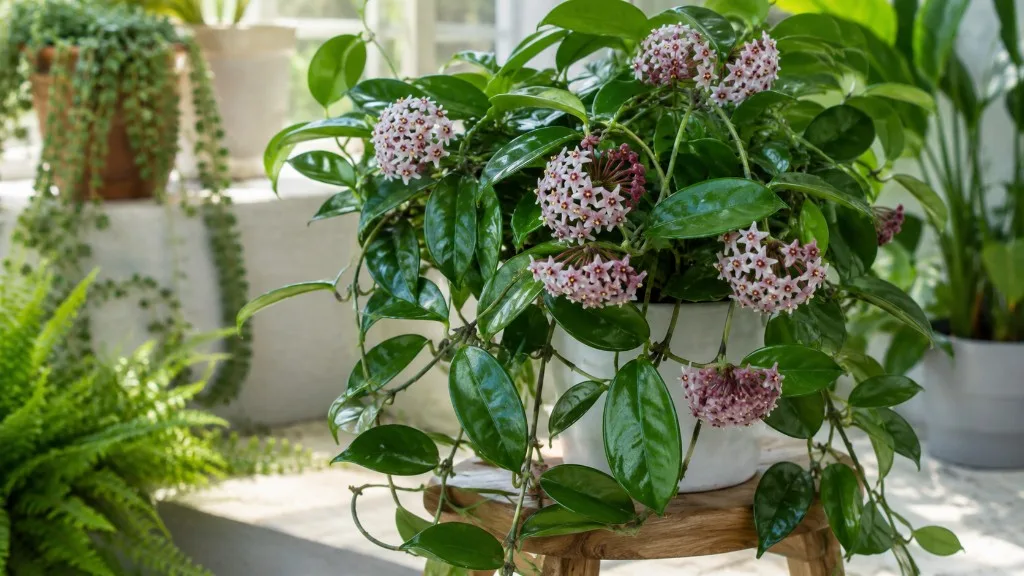
Hoya pubicalyx is one of the faster-growing hoyas in home cultivation, with glossy leaves splashed in silver and umbels of dark pink to purple-red flowers that smell sweet in the evening. It is also one of the more honest hoyas about light: give it a dim corner and it may hang on for months, but the vines stretch, the splash dulls, and flowering stops entirely. Put it in bright indirect light - the kind of strong, filtered brightness it would receive climbing through a Philippine forest canopy - and the response is usually quick. New stems firm up, leaf color sharpens, and peduncles start forming on mature plants.
That distinction matters because many houseplant guides treat “medium light” as a universal answer. For pubicalyx, medium is a survival setting, not a thriving one, and it is almost never a blooming one. The practical target is bright indirect light for most of the day, with optional one to three hours of gentle direct sun in the morning if you acclimate gradually. Blooming typically requires the upper end of that range: consistent brightness, not just a room that looks adequately lit to human eyes.
This guide covers what bright indirect actually means for an epiphytic wax plant, how to place pubicalyx by window direction, how much direct sun it tolerates, what light setup encourages flowers, when grow lights make sense, and how to read the plant when light is too weak or too harsh.
Why Light Comes First for Hoya Pubicalyx
Light is not one care factor among equals for Hoya Pubicalyx overview. It is the variable that sets how fast the pot dries, how compact new growth emerges, whether silver splash develops strongly, and whether the plant has enough energy to build flower buds on its peduncles. Watering, soil, and fertilizer all matter, but they cannot compensate for a plant parked ten feet from a window in a room that only looks bright because your eyes adjust to dim interiors.
Pubicalyx stores moisture in its semi-succulent leaves, which is why it tolerates missed waterings better than many tropical vines. That same leaf structure makes it vulnerable to photobleaching and scorch when harsh sun hits foliage that developed in softer light. The care goal is not maximum sun. It is maximum usable brightness without leaf damage - a balance that starts with understanding where this plant evolved.
Philippine Forest Canopy Light Indoors
Hoya pubicalyx is native to the Philippines, where it grows as a compact climbing epiphyte with leathery leaves. It anchors to bark with adventitious roots while its stems weave toward gaps in the canopy where light filters through leaves above. NC State Extension describes its optimal indoor placement as bright, indirect sunlight - roughly six hours of filtered light daily - rather than open, all-day exposure.
That ecology explains the indoor translation almost perfectly. Pubicalyx wants the brightest location you can offer without subjecting it to the hot, desiccating beam of midday sun on a south- or west-facing sill. Think of the soft glow behind a sheer curtain, the open sky view from an east window, or the bright ambient light one to two feet back from a large south window. You are mimicking canopy-filtered sun, not open-field direct rays.
It also explains why the plant reacts badly to sudden moves. In cultivation, pubicalyx is known to be sensitive to displacement when buds are forming - flowers can abort if you relocate the pot during that stage. Light changes should be gradual for the same reason: the plant is calibrated to stable environmental cues, not roller-coaster shifts.
Defining Bright Indirect Light for Wax Plants
Bright indirect light means the plant receives strong illumination for much of the day, but the leaves are not baking in unfiltered afternoon sun. A useful indoor test: hold your hand between the plant and the window at midday. If you see a sharp, dark shadow with defined edges, the direct beam is too strong for unacclimated pubicalyx. If the shadow is faint or diffuse, you are likely in lower light than this species prefers for vigorous growth.
For growth, aim for roughly six to eight hours of bright indirect exposure daily - aligning with NC State Extension guidance of about six hours of filtered sunlight indoors. For blooming on a mature plant, think closer to the upper end - consistent brightness across the growing season, supplemented in winter if your days are short. Pubicalyx is not a low-light hoya. It will survive reduced light for a while, but reduced light is exactly when collectors report slow vines, smaller new leaves, and years without flowers.
Judge success by new growth, not old leaves. A slightly faded older leaf from a nursery greenhouse does not tell you much about your window. The newest pair of leaves and the internode length on the freshest vine segment tell you whether the current placement is working. Firm, normally sized leaves with moderate spacing between nodes mean you are in range. Long, thin stems reaching toward the glass mean the plant wants more brightness.
Best Window Placement by Exposure
Window direction is a shorthand, not a guarantee. A “south window” in a deep apartment courtyard behaves differently from a south window on an open hilltop. Still, direction gives you a reliable starting map before you fine-tune with the new-growth test.
Pubicalyx is often hung in baskets or trained on a trellis, which adds one practical note: light falls off fast with distance. A basket at ceiling height near a bright window may receive excellent light while the same room’s floor shelf is too dim. Place the foliage canopy where it intercepts the window’s brightest zone, not where the pot looks best in the room layout.
East-Facing Windows and Morning Sun
An east-facing window is the easiest high-quality placement for pubicalyx in most homes. Morning sun is cooler and less intense than afternoon sun, and NC State Extension notes that direct morning sun is acceptable when acclimated, but should be limited to no more than two hours to avoid scorch. Many growers report that gentle morning sun deepens the silver splash pattern on new leaves, giving the foliage that speckled, almost metallic look the species is known for.
If you are new to the plant, start with the pubicalyx just back from the glass for the first week, then move closer if new growth looks firm and healthy. East light is forgiving enough that aggressive acclimation is rarely necessary, but plants shipped from low-light retail displays still need patience. Do not interpret a single good morning as permission to leap to a west-facing afternoon blast.
South and West Windows With Filtration
South- and west-facing windows can work very well if you manage intensity. Unfiltered west afternoon sun is the most common scorch scenario for hoyas: thick, glossy leaves heat up, lose water faster than roots can supply, and develop bleached or crisp patches. South windows vary by latitude and season; summer midday sun through clear glass is often too strong for pubicalyx sitting on the sill.
The fix is filtration or distance. A sheer curtain that softens the beam while keeping the room bright is ideal. Alternatively, place the plant one to three feet back from the glass so it sits in strong ambient light without sitting inside the direct cone. Hanging baskets can live closer to south glass in winter when the sun angle is lower and weaker, then move slightly back in summer - a seasonal adjustment many experienced hoya growers use.
North Windows and Low-Light Rooms
A north-facing window can support pubicalyx only if the view is open and the room receives reflected brightness from sky and nearby structures. Deep north light - the kind where you need to turn on lamps at noon to read comfortably - is not enough for long-term health. The plant may not die immediately, but internodes elongate, new leaves shrink, splash fades, and the soil stays wet too long because the plant is not transpiring at a normal rate.
If north exposure is your only option, plan on a grow light rather than hoping the plant adapts. Pubicalyx responds quickly when light improves, which is good news: leggy vines do not mean a permanent failure, just a placement problem you can fix.
Direct Sun Tolerance and Safe Acclimation
Pubicalyx is sometimes described as wanting “no direct sun,” which is only half true. It wants no harsh, unacclimated direct sun - especially hot afternoon rays on glass. Gentle direct light in the morning or late afternoon is a different category, and for many plants it is the difference between growing well and flowering.
Outdoor growers in warm climates can follow NC State Extension guidance and place pubicalyx outdoors in summer in the shade of a tree or patio - dappled shade that filters direct rays. Indoors, a sheer curtain approximates that shade layer without turning the room dim.
Morning Sun vs Harsh Afternoon Rays
Morning sun carries lower heat load and lower evaporative stress. Pubicalyx leaves are fleshy and glossy, which helps them handle brief direct exposure, but they are not cactus. Afternoon sun through west glass combines direct rays with accumulated heat at the window, and that combination produces the classic scorch signature: pale bleached spots on the sun-facing leaf surface, sometimes with dry crisping along margins.
If your brightest window is west-facing, prioritize filtered light or late-day sun only after the hottest hours pass. If blooms are your goal and morning sun is available elsewhere, favor the east exposure for direct tolerance and keep the west window as a bright indirect site behind diffusion.
How to Move Hoya Pubicalyx Without Shock
Sudden light jumps cause more problems than gradual ones. A plant grown under nursery shade cloth that lands on a south sill the day you bring it home may drop leaves, curl, or scorch within days - not because south windows are wrong, but because the leaf tissue was not built for that intensity.
Acclimate over one to two weeks. Move the plant closer to the target window in steps, or add filtration first and remove it slowly. Watch the newest leaves during this period; older leaves may not change color even when conditions improve. If you see bleaching or crisping, step back immediately and increase exposure more slowly.
Avoid stacking stress. Do not repot, fertilize heavily, and relocate to a brighter window in the same week. Change light first, let the plant show stable new growth, then address other care variables. This sequencing sounds conservative, but pubicalyx makes diagnostics much easier when only one variable shifts at a time.
Light and Blooming: What Pubicalyx Needs to Flower
Pubicalyx has a reputation as a relatively fast bloomer among hoyas, but fast is still measured in years, not weeks. Most plants need at least two years of stable care before they are mature enough to flower reliably indoors - NC State Extension notes that maturity may take up to two years or longer, and some indoor specimens need additional seasons. Light is the primary limiting factor once maturity is reached - more than fertilizer, more than humidity tricks, and far more than Hoya Pubicalyx repotting guide into a larger pot.
If your pubicalyx vines vigorously but never sets buds, insufficient light is the first suspect. The plant is spending its energy on extension, searching for a brighter canopy gap it cannot find in your home.
Peduncles, Maturity, and Root-Bound Stress
Hoya flowers emerge from peduncles - woody, specialized flowering spurs that form on the stems. In pubicalyx, peduncles are remontant, meaning the plant reuses the same spur for future bloom cycles. Cut them off after flowering and you remove the infrastructure for next year’s umbels. This is one of the most expensive pruning mistakes in hoya care, and it has nothing to do with light - but it is the second-most-common reason collectors report “no blooms” after light deficiency. Iowa State Extension is explicit: never cut off peduncles - the same spur reblooms repeatedly.
Light powers peduncle development. Bright, consistent exposure during the growing season encourages the plant to initiate and maintain those spurs. Many growers also report better flowering when the plant is slightly root-bound - not choked, but snug enough that energy shifts from root expansion to reproduction. That preference is secondary to light, however. A root-bound plant in a dim hallway still will not bloom.
Winter rest supports spring flowering. Cooler temperatures and reduced watering in winter - paired with still-adequate brightness - mirror seasonal rhythms and can improve bud set when warmth returns. Do not interpret winter rest as “dark dormancy.” Pubicalyx still needs bright indirect light in winter; shorter days may require moving the plant closer to the window or extending hours with a grow light.
Silver Splash Foliage and Sun Exposure
The silver speckling on pubicalyx leaves is one of the fastest indicators that light is in the right range. In too little light, splash fades toward plain green and new leaves look less defined. In appropriate bright indirect light with a touch of gentle morning sun, splash often intensifies on fresh growth. This is not a guarantee for every genetic line - pubicalyx is genetically variable, and two seedlings can show very different splash density - but the trend is consistent enough to use as a placement signal.
Treat splash response as a directional clue, not a scorecard. If you moved the plant brighter and the last two leaves show stronger speckling with shorter internodes, your change worked. If splash vanishes and stems lengthen, back up and reassess filtration or distance.
Growing Hoya Pubicalyx Under Artificial Light
Not every home offers a bright window. Apartments with tinted glass, deep floor plans, and winter-short days push pubicalyx below the bloom threshold even when summer placement is fine. Full-spectrum LED grow lights fill that gap well because they deliver intensity without the heat load of older HID fixtures.
Pubicalyx is responsive to supplemental light. Growers often see resumed vine extension within weeks and peduncle formation on mature plants in the next growing season after correcting chronic under-lighting.
Distance, Duration, and Full-Spectrum Setup
Position a full-spectrum LED fixture roughly 12 to 18 inches above the foliage canopy, then adjust by reading leaf temperature and color. If leaves feel warm to the touch at midday under the lamp, raise the fixture. If new growth stretches upward with wide internodes, lower it slightly or extend duration.
Run lights for about 12 to 14 hours daily during the main growing season. In fall and winter, 10 to 12 hours often suffices if the plant is growing slowly, but do not drop to short-day lengths that mimic deep shade. A timer keeps the schedule consistent, which matters because pubicalyx responds to stable photoperiod cues when building flowering tissue.
Choose full-spectrum or balanced white LEDs rather than purely red-blue “blurple” panels designed for lettuce production. Foliage color and overall plant structure develop more naturally under broad-spectrum light, and the visual assessment of splash and leaf health is easier when the plant looks normal to your eye.
Combine grow lights with a bright window when possible. A lamp alone can sustain pubicalyx; window plus lamp is often the bloom-friendly ceiling for indoor growers in northern latitudes.
Warning Signs Your Light Setup Is Wrong
Plants communicate light problems through growth habit more reliably than through any single leaf blemish. One yellow leaf might be old age or a watering misstep; repeated internode stretching is almost always light. Learn to read patterns over two weeks rather than panicking over one damaged leaf.
Because pubicalyx leaves are long-lived, old blemishes can linger while conditions are already fixed. Always prioritize the youngest vine tip when deciding whether to move the plant.
Too Little Light Symptoms
Chronic under-lighting produces a recognizable cluster of signs. Internodes stretch and vines lean hard toward the brightest source. New leaves emerge smaller and paler than older foliage, and silver splash looks muted or absent on fresh growth. Growth slows even when watering and fertilizer seem generous, because the plant lacks the photosynthetic output to use those inputs. Soil stays wet longer than you expect, which invites root stress if you keep watering on a summer schedule in a dim corner.
Flowering stalls in low light. Mature plants may keep their old peduncles but fail to initiate new ones, or buds abort if light drops after they form. If you suspect under-lighting, increase brightness gradually and watch whether the next two leaves improve before you change anything else.
Too Much Light and Leaf Scorch
Excess light damage looks different from drought stress, though both can cause curling. Photobleaching shows as pale, almost white patches on the sun-facing leaf surface, especially on thick glossy tissue that overheated. Crisp brown edges or sun-facing scorch spots appear after intense afternoon exposure or after a sudden move to unfiltered south glass. Leaf cupping or folding during the brightest hours can be a protective response before visible bleaching appears.
If scorch occurs, move the plant back from the direct beam or add filtration the same day. Do not prune every damaged leaf immediately; stabilize light first, then remove only tissue that is fully dead and unsightly once new growth confirms the fix. Pubicalyx typically outgrows moderate sun mistakes quickly when the next leaves form under better conditions.
One overlap worth noting: a bright plant uses water faster than a dim plant. Scorch from sun sometimes pairs with dry, slightly wrinkled leaves if roots cannot keep up with transpiration. Check moisture before you assume the problem is only light or only water - but fix the light exposure first so you are not chasing symptoms in a placement that will keep damaging new foliage.
Conclusion
Hoya pubicalyx rewards a simple light philosophy executed consistently: bright indirect light as your baseline, gentle morning sun if you acclimate, filtration or distance before harsh afternoon rays, and supplemental full-spectrum LEDs when windows fall short. The plant is not subtle about mistakes - leggy vines, faded splash, and absent blooms are its way of saying the canopy gap it wants is still out of reach.
Place the canopy where brightness is strongest, read new growth instead of old scars, increase light in steps, and keep peduncles intact once they form. Pair brighter light with adjusted watering because a well-lit pubicalyx dries its pot faster. If you do those things on a plant mature enough to flower, you give it the same advantage it would seek climbing toward filtered sun in a Philippine forest - and that is the difference between a surviving hoya and one that produces those dark, fragrant umbels indoors.
When to use this page vs other Hoya Pubicalyx guides
- Hoya Pubicalyx overview - Start here for whole-plant context before deep-diving this topic.
- Hoya Pubicalyx problems hub - Jump to symptom-specific fix guides when this care topic does not resolve the issue.
- Not Enough Light on Hoya Pubicalyx - Escalate here when light adjustments are not enough.
- Leggy Growth on Hoya Pubicalyx - Escalate here when light adjustments are not enough.
Related Hoya Pubicalyx guides
- Hoya Pubicalyx overview
- Hoya Pubicalyx watering
- Hoya Pubicalyx soil
- Hoya Pubicalyx propagation
- Hoya Pubicalyx fertilizer
- Hoya Pubicalyx repotting
- Not Enough Light on Hoya Pubicalyx
- Leggy Growth on Hoya Pubicalyx
- Hoya Pubicalyx problems
Related tool
Try the Plant Problem Diagnosis Tool with hoya-pubicalyx pre-selected to estimate needs for your setup.