Leggy Growth on Hoya Pubicalyx: Causes, Checks & Fixes
Quick answer
Leggy Hoya Pubicalyx vines mean long gaps between leaves and faded silver splashing from too little light—not disease. First step: move the plant within a foot of your brightest east or filtered south/west window before repotting or fertilizing.
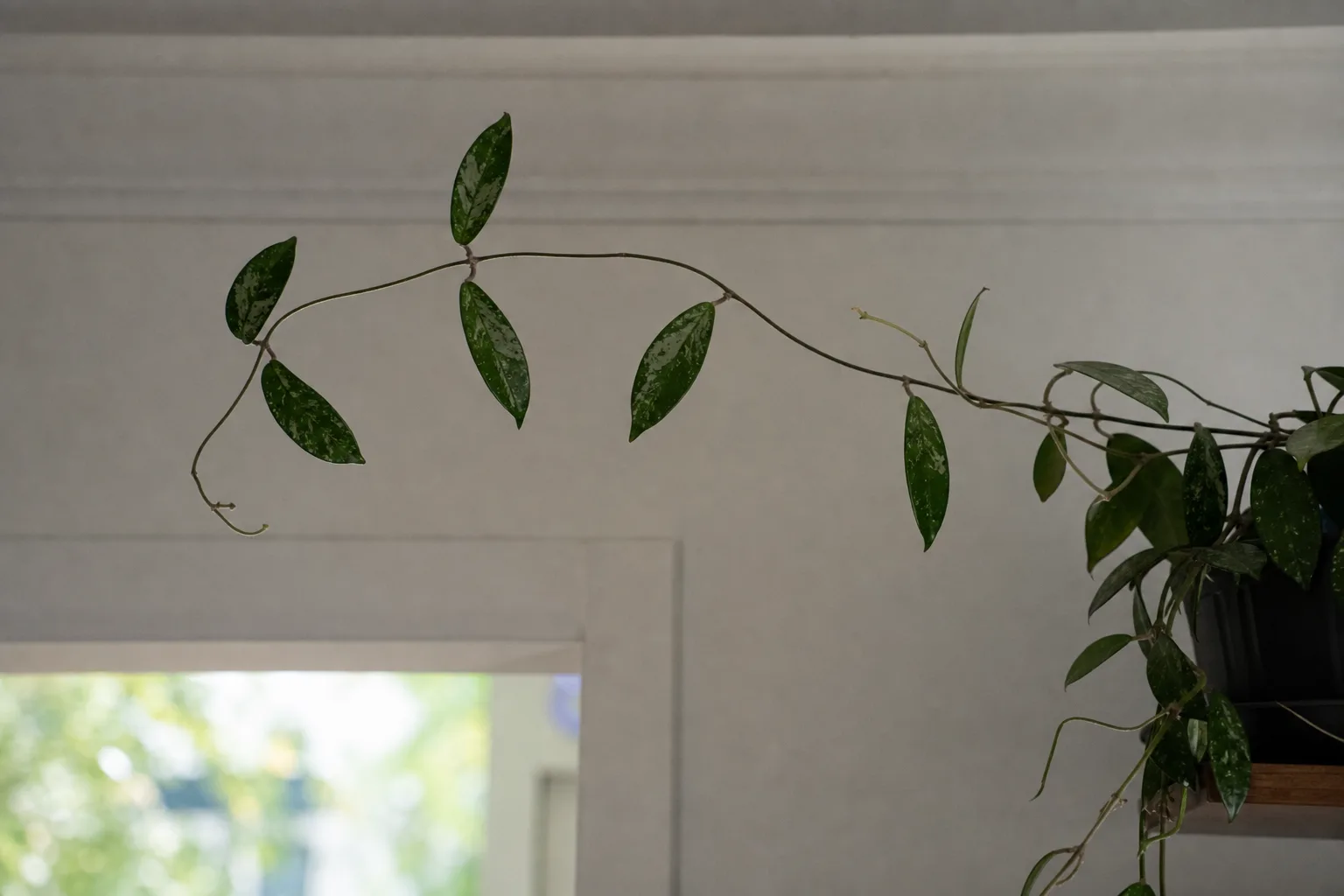
Leggy Growth on Hoya Pubicalyx: Causes, Checks & Fixes
This guide covers leggy growth on Hoya Pubicalyx. See also the general Leggy Growth guide, watering, and light pages for this plant.
Leggy Growth on Hoya Pubicalyx: Causes, Checks & Fixes
Quick answer
Leggy growth on Hoya Pubicalyx (Hoya pubicalyx) is etiolation—vines stretching toward light because this climbing epiphyte needs bright indirect light to build compact foliage and the peduncles that carry star-shaped blooms. In dim rooms, internodes lengthen, silver splashing fades on new leaves, vines lean toward windows, and blooms stop even when watering seems fine.
For how insufficient light causes stretch in general, see our not enough light guide and the global leggy growth hub. On pubicalyx, faded silver splashing on new leaves is the earliest light-stress signal before vines visibly lean.
First step: move the pot within about twelve inches of your brightest safe window before changing water, fertilizer, or pot size.
What leggy growth looks on Hoya Pubicalyx
- Long internodes - gaps between leaf pairs longer than the leaf itself on newest vine sections
- Faded splashing - new leaves lose the characteristic silver markings pubicalyx is grown for
- Smaller, duller new leaves compared with older sun-grown foliage
- Leaning vines - pot or basket tilts toward the brightest source
- No peduncles on mature vines year after year
- Slow dry-down - mix stays damp because the plant transpires little in dim light
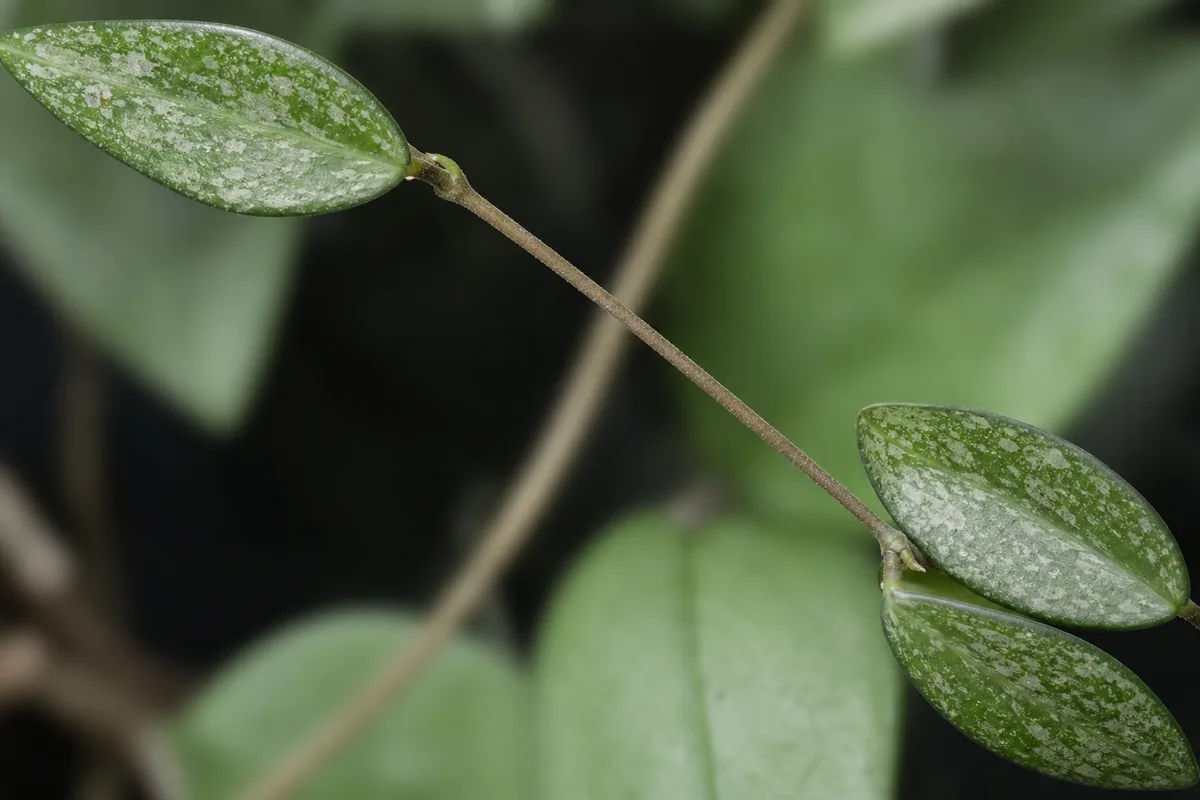
Leggy growth on Hoya Pubicalyx—compare long internode spacing and faded splashing with compact older nodes.
Differs from sunburn (bleached or crisp patches after sudden harsh sun) and underwatering (wrinkled thick leaves with very light pot).
Why Hoya Pubicalyx gets leggy
Hoyas evolved to climb toward filtered canopy light in tropical forests—Hoya carnosa and relatives need bright light indoors to stay compact. Indoors, decorative placement far from glass, north windows, winter daylight loss, and hanging baskets suspended below the sill all starve vines. Good light is necessary for flower production on hoyas.
Pubicalyx-specific factors:
- Silver splashing requires light - Variegation-like markings fade first on new leaves in dim corners before internodes visibly lengthen.
- Peduncle formation needs brightness - Mature vines without peduncles in a north room almost always need more light, not more fertilizer.
- Epiphyte watering rhythm in low light - Mix stays wet longer when transpiration drops, inviting fungus gnats and root rot—see NC State hoya guidance on wet mix in dim conditions.
- Hanging basket placement - Baskets hung below window height receive far less light than sill-level pots.
Peduncles: never prune when fixing legginess
Hoya pubicalyx reblooms from the same peduncle spurs year after year—unlike many flowering plants that bloom only on new wood. When trimming stretched vines after a light fix, never cut peduncles during cleanup.
Mark peduncle locations before any pruning pass. A leggy vine with an old peduncle is more valuable than a compact vine with no bloom history. Wait for compact new growth on a separate stem before trimming the most stretched sections above a node, leaving peduncles intact.
How to confirm the cause
- Leaf-level shadow test - faint hand shadow at midday near the glass suggests adequate brightness per houseplant light guidance
- Internode comparison on active vine tips vs older compact sections
- Splashing fade on newest leaves—the earliest pubicalyx-specific signal
- Peduncle history on mature plants—no peduncles in years points to light, not feed
- Pot weight and dry-down - damp mix for weeks with stalled growth suggests low-light overwatering overlap
- Two-week trial move to brightest sill without changing watering schedule
First fix for Hoya Pubicalyx
Move to bright indirect light near east or filtered south/west glass.
Acclimate gradually if shifting from deep shade—sudden harsh direct sun burns thick leaves. Do not fertilize until new nodes arrive closer together. Do not repot for legginess alone.
After compact new growth appears on at least one vine tip, trim only the most stretched sections above a node, leaving all peduncles intact. See the light guide and pruning guide.
Step-by-step recovery
- Relocate within twelve inches of brightest safe window or add a grow light twelve to fourteen hours daily in winter.
- Wait two to three weeks for tighter internodes on new growth before pruning anything.
- Adjust watering to actual dry-down in the new light level—do not keep the old schedule on wetter mix.
- Trim stretched sections only above nodes, preserving peduncles.
- Resume light feeding only after compact growth proves placement works.
Recovery timeline
Old gaps never shrink. Tighter nodes in two to three weeks after light fix; peduncles may take one to two growing seasons on mature vines. Splashing intensity returns on new leaves over several nodes.
What not to do
Do not fertilize in unchanged dim light—extra nitrogen produces soft stretchy growth. Do not repot for legginess. Do not remove peduncles during cleanup. Do not overwater because growth looks slow—check dry-down in new light level first.
Do not assume a grow light across the room is enough—pubicalyx needs bright intensity near the foliage, not ambient room brightness.
How to prevent leggy growth next time
Keep bright indirect light per the overview, supplement with grow lights in winter, and match watering to actual dry-down. Hang baskets at sill height or within a foot of glass, not in the center of a dim room.
Once peduncles form, avoid moving the plant until buds finish developing—hoyas drop buds after relocation stress.
When to worry
Stretch alone is gradual and reversible with light. Escalate when soggy soil, soft stems, or sour smell accompany dim placement—overwatering in low light damages roots and produces yellow leaves that mimic nutrient problems.
Conclusion
Leggy Hoya Pubicalyx is a light problem, not a disease—move the plant before repotting or feeding, preserve peduncles when pruning, and judge success by tighter new nodes with stronger silver splashing, not by old stretched stems shrinking.
When to use this page vs other Hoya Pubicalyx guides
- Not Enough Light - Comprehensive light diagnostics.
- Slow Growth - Stalled growth without visible stretch.
- No Flowers - Bloom failure on otherwise compact vines.