Brown Tips on Hoya Pubicalyx: Causes, Checks & Fixes
Quick answer
Brown tips on Hoya pubicalyx usually come from sun scorch after a sudden light jump, dry winter air below roughly 40% RH, fertilizer or tap-water salt burn, or repeated drought when the top half of the mix stays dry too long. First step: note whether damage is on sun-facing edges, leaf tips only, or older margins after a dry spell-then check light direction, pot weight, and half-pot moisture before changing anything.
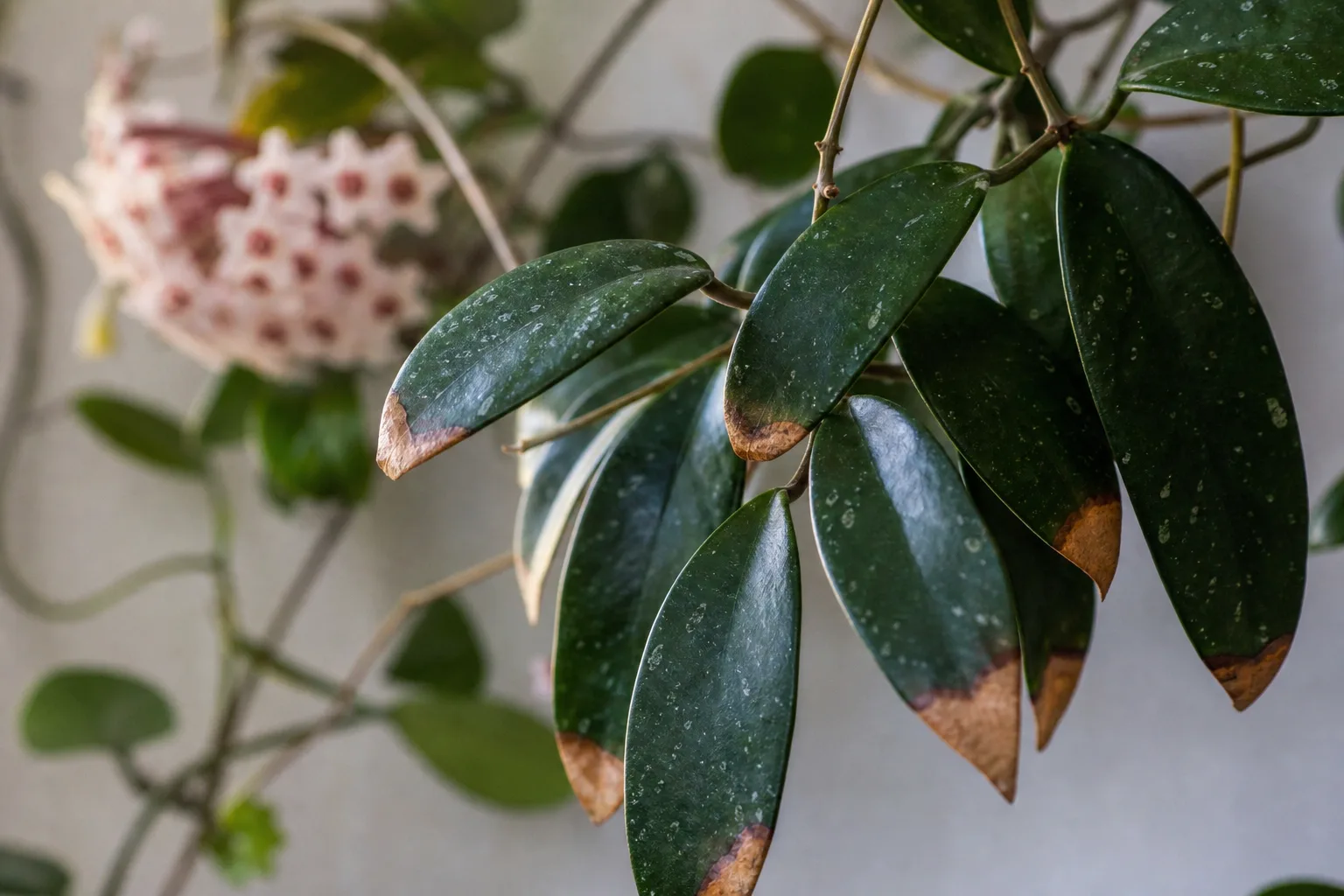
Brown Tips on Hoya Pubicalyx: Causes, Checks & Fixes
This guide covers brown tips on Hoya Pubicalyx. See also the general Brown Tips guide, watering, and light pages for this plant.
Brown Tips on Hoya Pubicalyx: Causes, Checks & Fixes
Quick answer
Brown tips on Hoya pubicalyx (Silver Pink Vine) almost always trace to environmental stress on thick, semi-succulent, silver-flecked leaves-not a mysterious disease. The five causes you will see most often indoors are sun scorch after a sudden move to harsh afternoon sun, low winter humidity near heaters, fertilizer or tap-water salt accumulation at leaf tips, repeated drought when the epiphytic root zone dries too far, and spider mite stippling on margins in very dry air.
First step: look at where the brown tissue sits and what changed recently. Sun-facing crispy edges with bleached patches nearby point to light. Tip-only burn with white crust on the soil surface points to salts. Even margin crisping on firm leaves with normal soil moisture points to dry air. Crisp tips on older leaves plus a light pot and dry mix halfway down point to underwatering on Hoya Pubicalyx. Do not water automatically-pubicalyx stores water in its leaves and punishes soggy mix more than brief dryness.
What brown tips look like on Hoya Pubicalyx
Pubicalyx leaves are lance-shaped, leathery, and semi-succulent, with dull gray-silver flecks on dark green tissue. Healthy foliage feels firm when you press it. Brown-tip problems change texture and pattern before they spread:
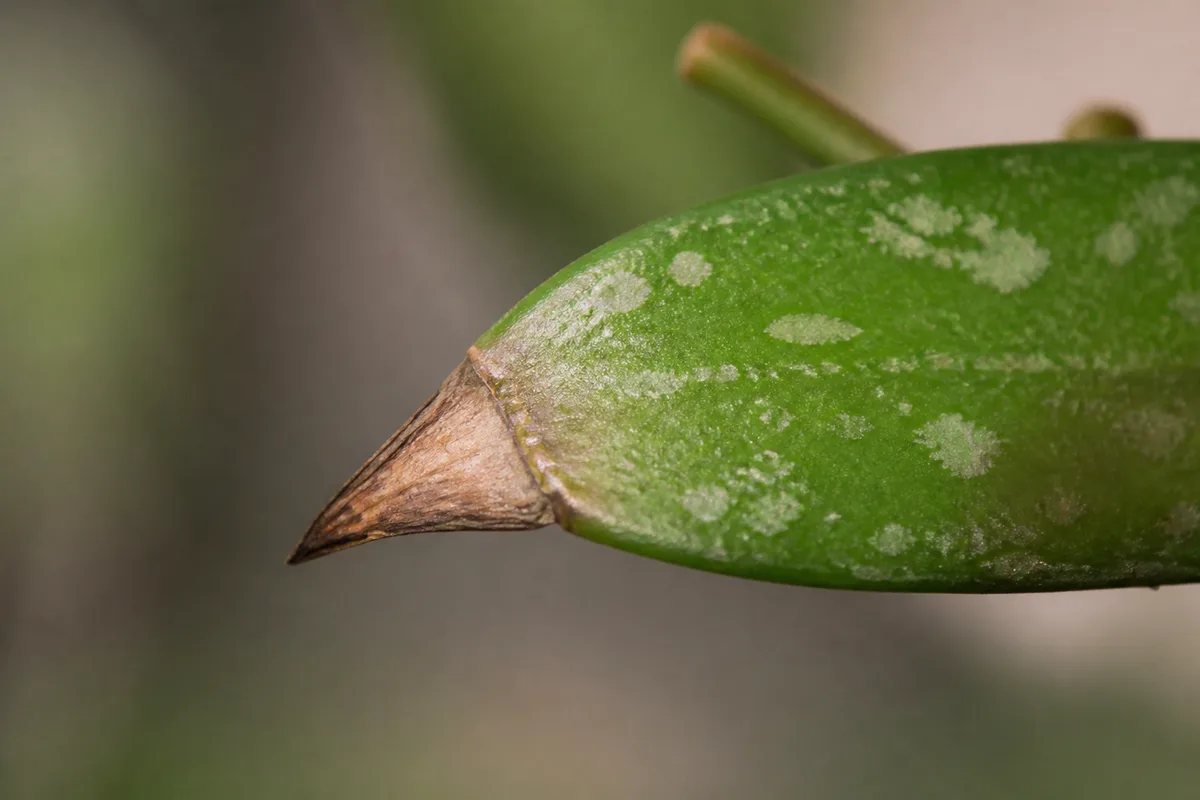
Brown Tips symptoms on Hoya Pubicalyx - compare with healthy tissue on the same plant.
Sun scorch - Bleached or silvery patches on the sun-exposed side, progressing to brown crispy edges and slight leaf curling during peak afternoon hours. Damage appears on the outer leaves or vine sections closest to an unfiltered south or west window, often within days of a sudden light increase.
Low-humidity crisping - Even brown margins on the oldest or outermost leaves, sometimes with fine stippling on the leaf surface. The vine section above a radiator or beside a hot window browns first while shaded inner growth stays greener. Soil moisture is usually normal. See the dedicated low-humidity guide when stippling and vent-side damage dominate.
Salt or tap-water burn - Brown tips only, occasionally a thin yellow band above the dead tissue. You may see white crust on the mix surface or pot rim after heavy feeding or repeated hard tap water. Most of the leaf stays firm and green; damage is concentrated at the apex.
Drought scars - Crisp brown tips or margins on older leaves after the plant rode out several dry cycles. The pot feels light, mix is dry well into the top half, and leaves may feel slightly soft or thin before you water. New growth at the vine tips often stays turgid once hydration returns. Overlaps with underwatering when wrinkling appears too.
Spider mite damage - Fine stippling with bronze or brown specks near margins, sometimes webbing at leaf bases in very dry winter rooms. Mites exploit stressed pubicalyx faster than many hoyas when RH drops below roughly 30%-dry indoor air favors spider mite outbreaks.
Cosmetic brown tissue does not turn green again. Recovery means new leaves emerge without fresh burn and existing damage stops spreading.
Why Hoya Pubicalyx gets brown tips
Pubicalyx is a fast-growing Philippine epiphyte with leaves that store water and silver patterning that can bleach under excess direct sun. That biology explains why tip burn shows up here differently than on thin-leaved tropicals.
Fast growth, bright light, and dry-down speed
Pubicalyx grows more vigorously than many common hoyas in bright indirect light. More transpiration and faster pot dry-down mean summer drought can crisp margins on older leaves even when new tips look fine-especially in small pots or hanging baskets with chunky bark mix. The correct response is matching watering checks to dry-down, not misting leaves daily.
Epiphytic watering rhythm vs. surface-dry guesswork
“Water when the surface looks dry” fails on pubicalyx. Hoya Pubicalyx overview wants the top half of the mix dry before the next soak. Surface dustiness with a still-damp core leads to underwatering scars; watering because tips browned while the mix is wet leads to root stress. Always pair leaf symptoms with half-pot moisture and pot weight.
Sun, humidity, salts, and winter heat
NC State Extension recommends bright indirect light and notes that direct sunlight can scorch leaves-limit unacclimated direct exposure, especially harsh afternoon sun. The same source lists 60–70% humidity as optimal and warns to avoid vents and heaters that dry foliage. Pubicalyx also benefits from filtered or rainwater when minerals accumulate. Iowa State Extension notes hoyas generally tolerate 40–60% indoor humidity but still need alternating wet and dry cycles with good drainage-conditions that make both drought scars and salt buildup possible when care drifts off rhythm.
Brown tips vs. yellow leaves vs. full leaf browning
| Symptom pattern | Likely cause | Key check |
|---|---|---|
| Brown crispy tips/edges only; most leaf green | Sun scorch, low humidity, salts, old drought scars | Light direction, RH, crust on soil, pot weight |
| Yellow lower leaves spreading upward | overwatering on Hoya Pubicalyx, root stress | Wet heavy pot; soft stems at base |
| Wrinkled soft leaves + light dry pot | Active underwatering | Dry half-depth; firm stems |
| Bleached patches then brown edges on sun side | Sun scorch | Recent window move or removed sheer |
| Fine stippling + webbing at leaf joints | Spider mites in dry air | Tap test; see spider mites |
| Whole leaf brown and mushy on wet soil | Advanced rot | Sour smell; inspect roots |
Brown tips alone rarely mean emergency rot. Yellow leaves on wet soil are the pubicalyx branch for root problems-see yellow leaves and overwatering before you soak a tip-burned plant.
How to confirm the cause
Work through these checks in order so you apply one fix, not five:
- Light direction and history - Did you move the plant closer to a south or west window in the last two weeks? Are outer leaves on the window side bleached or curled? Compare with the light guide placement standards.
- Pot weight and half-pot moisture - Lift the pot. Light + dry halfway down supports drought. Heavy + cool + damp days after watering rules out thirst and points to root issues.
- Leaf firmness - Press a mature leaf. Firm with crispy tips only fits sun, salts, or humidity. Soft or wrinkled with dry soil fits underwatering.
- Room humidity and placement - Hold a hygrometer beside foliage for a day. Winter readings below roughly 30–40% RH with vent-side crisping support low humidity. Normal RH with stippling may mean mites.
- Feeding and water chemistry - Recent heavy fertilizer, white crust on soil, or exclusive hard tap water support salt or fluoride tip burn.
- Pest scan - White paper tap test under a leaf; moving specks and webbing at stem joints need pest treatment alongside environment fixes.
- Yellowing pattern - If lower leaves yellow while tips brown and soil stays wet, inspect roots before any other fix.
Confirmation decision table
| If you confirm… | First fix (one action) |
|---|---|
| Sun scorch on sun-facing leaves | Move back to bright indirect light or add sheer; acclimate over 7–14 days |
| Low humidity crisping | Relocate off heat vents; raise RH with humidifier or grouped plants |
| Salt or tap-water tip burn | Flush pot with plain water until runoff runs clear; pause fertilizer |
| Drought scars + dry half-pot | One thorough soak, drain fully, then resume top-half dry-down rhythm |
| Mite stippling in dry room | Rinse undersides; stabilize humidity; escalate per spider mite guide |
First fix for Hoya Pubicalyx (by likely cause)
Apply one correction and wait seven to ten days before stacking changes.
Sun scorch: Move the vine to bright indirect light-east window, filtered south/west, or pulled back three to six feet from harsh glass. Hang a sheer curtain if direct afternoon sun hits leaves. Do not increase watering; scorched leaves will not heal, but new growth should emerge clean.
Low humidity: Move the pot away from radiators and heat registers. Add a humidifier or group plants to raise local RH toward 40–60% (optimal 60–70% per NC State). Do not respond with extra watering when the mix is already on schedule.
Salt or tap-water burn: Flush the pot with plain lukewarm water until excess runs freely from drainage holes three times in one session, emptying the saucer each time. Pause fertilizer for four to six weeks. Switch toward filtered or rainwater if tips reappear after every tap-water drink.
Drought-related crisping: When the top half of the mix is dry and the pot is light, water thoroughly once until a little runs from drainage holes-or bottom-water twenty to thirty minutes-then drain completely. Follow the underwatering recovery steps if leaves were wrinkled too.
Spider mites: Rinse leaf undersides with lukewarm water and isolate the plant. Fix dry air first; chemical treatment is secondary if populations are small. See the spider mites page if stippling spreads within a week.
Recovery timeline
Brown tip damage is mostly cosmetic once the cause is corrected:
- 3–7 days: New burn stops spreading; sun-exposed leaves no longer bleach further after light adjustment
- 1–2 weeks: Humidity or salt fixes show in firm, glossy new leaves at vine tips
- 24–48 hours: Drought-related softness firms after one proper soak when roots are healthy
- Permanent: Crisp brown tips on older leaves-dead tissue does not re-green
Judge success by clean new growth, not by old blemishes. If tips keep browning on fresh leaves after one targeted fix, re-run the confirmation checklist-overlapping causes (dry air plus drought, or sun plus salt) are common in winter.
What not to do
- Do not water more because tips are brown when the mix is still damp or the plant was recently sun-scorched-wet roots will not fix light or humidity burn.
- Do not fertilize a stressed pubicalyx to “green up” tips; salts on dry or damaged roots worsen tip burn.
- Do not move a blooming or budding vine aggressively while fixing light-bud blast is common after sudden shifts.
- Do not cut peduncles when trimming dead tissue; pubicalyx flowers repeat from the same spurs.
- Do not stack Hoya Pubicalyx repotting guide, heavy pruning, pesticide, and fertilizer in the same week-one care change at a time.
- Do not assume brown tips always mean underwatering-overwatering shows yellow leaves first, but chronic wet soil can still kill roots while old tips stay crisp.
How to prevent brown tips next time
Prevention on pubicalyx is mostly stable light, humidity, and dry-down rhythm:
- Acclimate light increases over one to two weeks when moving toward a brighter window or adding grow lights.
- Water when the top half of the mix is dry-typically every seven to fourteen days in active growth and every three to four weeks in winter rest per the watering guide.
- Keep winter RH above roughly 40% and away from heat vents; optimal range is 60–70% when practical.
- Fertilize modestly on moist soil during active growth only; flush salts every few months if you feed regularly.
- Use filtered or rainwater if your tap is very hard and tip burn recurs without other symptoms.
- Lift the pot weekly until dry weight feels familiar-fast summer growth dries small pots quickly.
- Inspect leaf undersides in heated winter rooms before mite stippling spreads.
The overview care guide ties light, humidity, watering, and troubleshooting together if you want one hub reference.
When to worry - wet mix with yellow lower leaves or soft stem base
Escalate beyond cosmetic tip burn if:
- Lower leaves yellow rapidly while the pot stays heavy and cool for many days
- Stems soften at the soil line or smell sour from the drain holes
- Brown spreads into living green tissue on multiple new leaves within a week despite fixing light and water
- Wrinkled leaves persist more than seven days after a confirmed full soak on wet soil-roots may be damaged
Those patterns fit root rot on Hoya Pubicalyx or chronic overwatering, not simple tip burn. Stop watering, inspect roots, and see root rot guidance. A pubicalyx with only firm leaves and isolated brown tips on older foliage is rarely an emergency.
Related Hoya pubicalyx problems
- Underwatering - wrinkled leaves, light pot, drought scars
- Low humidity - stippling, vent-side crisping, winter RH
- Yellow leaves - wet-soil stress vs. drought
- Not enough light - stretch and pale growth vs. sunburn
- Spider mites - stippling and webbing in dry air
- Watering - top-half dry-down and pot-weight checks
- Light - filtered bright indirect placement
Conclusion
Brown tips on Hoya pubicalyx are a pattern-recognition problem, not a single diagnosis. Sun scorch bleaches and crisps the sun-facing side; dry winter air browns margins on firm leaves with normal soil; salts crisp tips after heavy feeding; drought scars older leaves when the top half of the mix stayed dry too long. Read the damage location, check light and RH, lift the pot, and apply one matching fix. Old brown edges may stay forever, but new silver-flecked leaves should emerge clean once care matches this fast epiphyte’s rhythm.
When to use this page vs other Hoya Pubicalyx guides
- Hoya Pubicalyx watering guide - Use for routine moisture checks before assuming brown tips is the main issue.
- Hoya Pubicalyx problems hub - Browse all 17 common issues on this species.
- Low Humidity on Hoya Pubicalyx - Different entry point when symptoms overlap with brown tips.
- Underwatering on Hoya Pubicalyx - Different entry point when symptoms overlap with brown tips.
- Overwatering on Hoya Pubicalyx - Different entry point when symptoms overlap with brown tips.