No Flowers on Hoya Pubicalyx: Causes, Checks & Fixes
Quick answer
Healthy Hoya Pubicalyx vines that never set umbels usually need more bright indirect light-not fertilizer or a bigger pot. First step: move the plant within about one to three feet of an east or filtered south window, or add a grow light, before changing anything else.
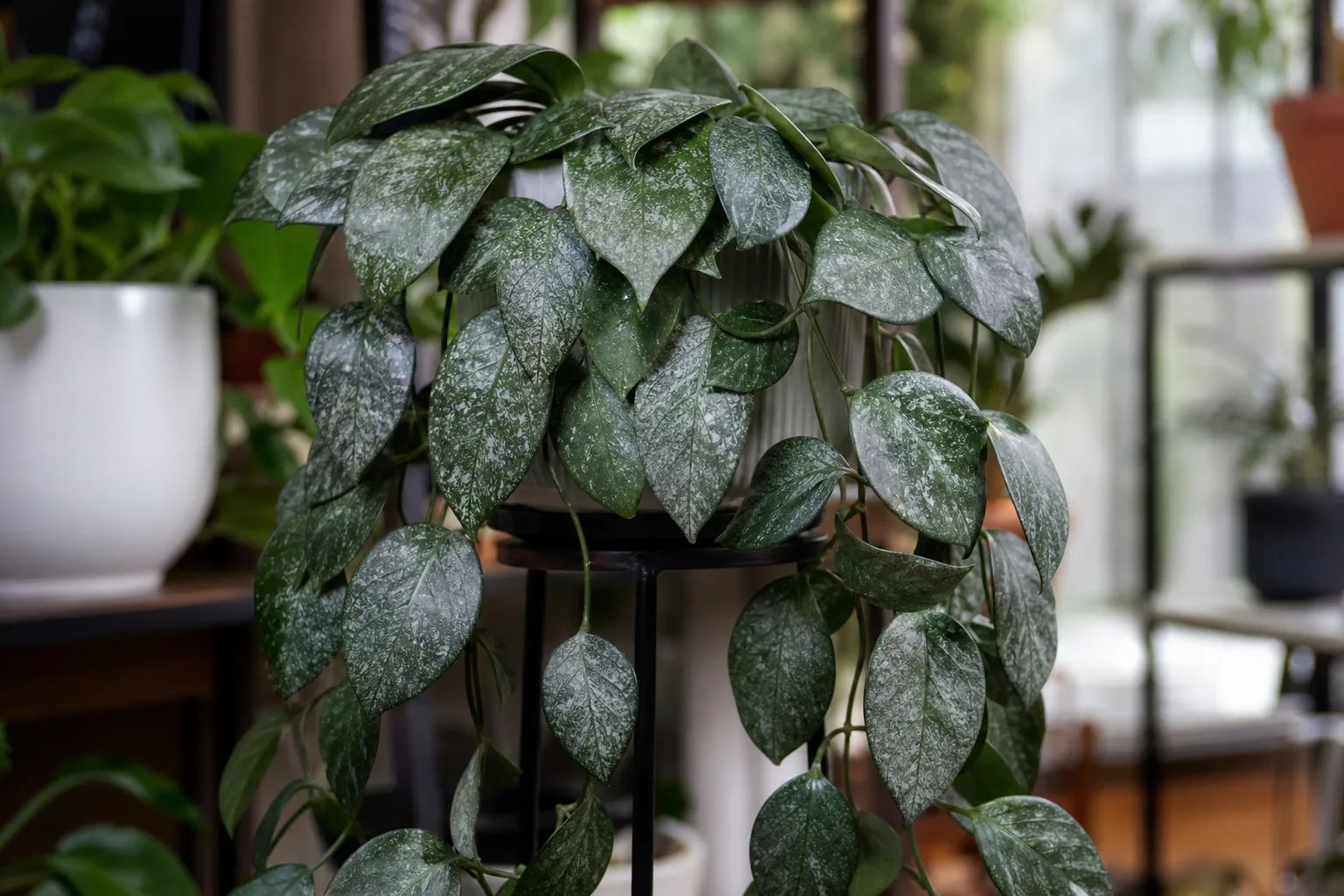
No Flowers on Hoya Pubicalyx: Causes, Checks & Fixes
This guide covers no flowers on Hoya Pubicalyx. See also the general No Flowers guide, watering, and light pages for this plant.
No Flowers on Hoya Pubicalyx: Causes, Checks & Fixes
Quick answer
Hoya pubicalyx (Silver Pink Vine) is one of the faster-blooming hoyas indoors, but it still will not flower in a dim corner no matter how faithfully you water. When a mature vine pushes glossy, splashed leaves yet produces no peduncles or dark pink umbels, insufficient bright indirect light is the usual cause-not missing fertilizer, humidity tricks, or a larger pot.
First step: move the plant to bright indirect light within about one to three feet of an east- or west-facing window (or behind a sheer curtain on south glass). Do not repot, fertilize heavily, or prune woody spurs while troubleshooting. Light governs whether Pubicalyx has enough energy to build and maintain the peduncles it blooms from year after year.
This page is a bloom-failure triage guide. For ongoing window placement, grow-light setup, and acclimation detail, see the light requirements guide. For stretch, dull splashing, and low-light diagnostics, see not enough light.
What no flowers looks like on Hoya Pubicalyx
“No flowers” on Pubicalyx rarely means a sick plant. More often it means healthy-looking foliage with zero bloom infrastructure-no woody peduncle spurs, no swelling buds, and no clusters of star-shaped pink to purple-red flowers that smell sweet in the evening.
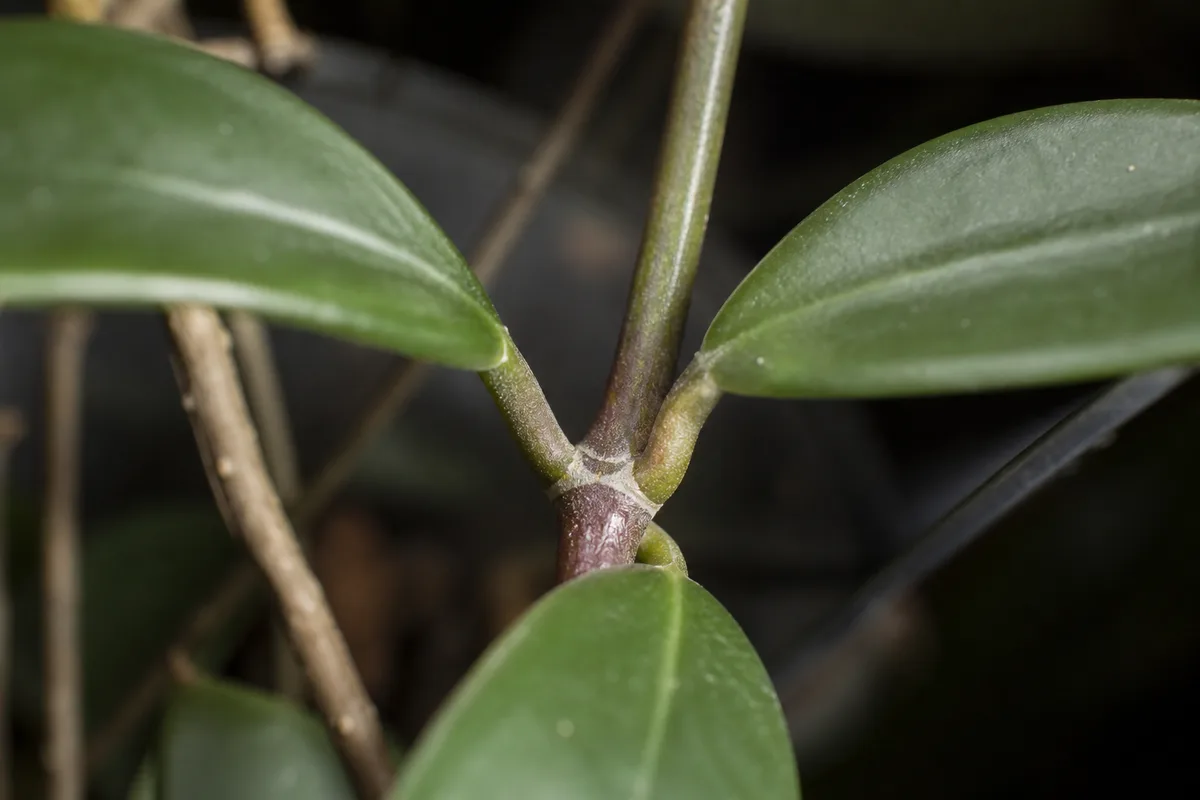
No Flowers symptoms on Hoya Pubicalyx - compare with healthy tissue on the same plant.
Healthy foliage but no peduncles or umbels
A typical no-bloom Pubicalyx has firm, thick, oval leaves on actively extending vines, but no short woody spurs jutting from the stems. You may see tendrils searching for support while the plant ignores reproduction entirely. Soil moisture and leaf color can look fine; the failure is invisible until you realize seasons have passed without a single umbel.
On a mature plant-usually at least two years old, often longer-this pattern points away from simple youth and toward light, removed peduncles, or recent disturbance.
Low-light signs: long internodes and faded silver-pink splashing
Before flowers fail entirely, Pubicalyx often advertises low light through growth habit. Watch for:
- Long internodes-wide gaps between leaf pairs along the same vine
- Smaller new leaves compared with older compact sections
- Duller green foliage with less visible silver or pink mottling on fresh leaves
- Vines leaning hard toward the brightest window or lamp
- Intact old peduncles that never swell year after year in the same dark placement
These overlap heavily with the dedicated not enough light page. If stretch and faded splashing are your main symptoms, start there-but return here if the plant looks structurally fine yet still will not bloom after light improves.
Lookalikes at a glance
| What you see | More likely cause | Quick check |
|---|---|---|
| Long internodes, faded splashing, lean toward window | Insufficient light | Shadow test at foliage; move trial for two to four weeks |
| Vigorous young vine, no woody spurs at all | Immaturity | Age under two to three years; peduncles form later on mature wood |
| Clean stems where spurs were cut or snapped | Pruned peduncles | Woody stubs missing; owner deadheaded old blooms |
| Healthy leaves, huge new pot, wet soil for days | Oversized container | Roots exploring fresh mix instead of flowering |
| Buds formed then dropped after relocation | Displacement during bud set | Timeline matches move, repot, or window change |
| No blooms only in December–February | Seasonal short days | Placement unchanged; supplement or move closer temporarily |
Why Hoya Pubicalyx stops flowering
Pubicalyx evolved as a Philippine forest epiphyte climbing toward filtered canopy gaps. Indoors, flowering is the payoff for recreating that brightness-not for surviving on “medium” shelf light.
Insufficient light (primary indoor cause)
Light is the primary driver of hoya flowering indoors. A plant that never receives bright enough exposure may vine for years without initiating peduncles, or it may form spurs that never swell into buds.
Pubicalyx wants roughly six to eight hours of bright indirect light daily for vigorous growth, with blooming more likely at the upper end of that range. A hallway basket, bookcase six feet from glass, or north room without supplement is usually below the bloom threshold even when the plant looks “fine.”
Plant immaturity (two to five years)
Pubicalyx has a reputation as a relatively fast bloomer among hoyas, but fast still means years. Most specimens need at least two years of stable care before flowering reliably; some indoor plants need three to five seasons.
A small nursery pot with thin vines and no woody stems is often simply not old enough. Patience plus consistent bright light is the fix-not repotting or bloom booster fertilizer on a juvenile plant.
Pruned or missing peduncles
Hoya flowers emerge from peduncles-persistent woody spurs on the stems. Pubicalyx reblooms from the same spur repeatedly. Cut a spur after flowering-or snap one off while pruning-and you remove that flower site for a long time, sometimes permanently on that section of vine.
This is the second-most-common “no blooms” story after low light, and it has nothing to do with feeding schedules.
Oversized pot and high-nitrogen feeding
Pubicalyx tolerates-and often prefers-slightly root-bound conditions. A recent jump to a much larger pot shifts energy into root exploration instead of reproduction. Chronic high-nitrogen fertilizer pushes leafy extension at the expense of buds even when light is borderline.
Oversized containers also keep epiphytic mix wet longer, which slows growth and compounds bloom failure in dim corners.
Recent move or repot after bud set
Once peduncles show swelling buds, sudden changes in light, temperature, or watering rhythm can trigger bud blast-buds abort before opening. Moving the pot to “give it more sun” mid-bud is a classic way to lose the flowers you were trying to encourage.
Stacking stress makes this worse: do not repot, fertilize heavily, and relocate in the same week.
Seasonal slowdown and winter light
Pubicalyx often sets its best buds as days lengthen in spring and summer. Short winter days can pause peduncle development even when summer placement was adequate. Cooler, drier winter rest supports spring flowering-but rest is not dark dormancy. The plant still needs bright indirect light through winter; otherwise spring arrives with weak spurs and no bud swell.
How to confirm the cause
Work through this checklist before repotting, feeding, or pruning:
- Plant age and vine wood - Are stems developing woody sections with nodes old enough to support peduncles? Under two years, immaturity may explain everything.
- Peduncle inventory - Scan stems for short woody spurs. None at all on a mature vine suggests light or youth; missing spurs where you remember cutting suggests pruning damage.
- Internode length on newest growth - Compare the last three leaf gaps with older compact sections. Stretching confirms insufficient light.
- Silver splash on fresh leaves - Vivid mottling on tight new growth means light is improving or adequate; dull plain green on elongated stems means not yet enough.
- Window direction and distance - East or west within a few feet of glass is ideal for many homes. Farther than about six feet, or north exposure without a grow light, is usually too dim for blooms.
- Shadow test at the foliage - At midday, hold your hand above the leaves. A sharp dark shadow means direct sun-filter or move back. A faint soft shadow suggests bright indirect. Little or no shadow means light is likely too low for flowering.
- Pot size vs. root mass - Did you repot into a much larger container in the last six months? Roots still circling a snug pot often bloom better when slightly pot-bound than roots swimming in fresh mix.
- Fertilizer history - Full-strength nitrogen-heavy feed every watering pushes leaves, not buds. Light spring-summer feeding on healthy plants is enough.
- Recent moves - Did buds swell and abort after relocation, repotting, or a heating vent blast? Displacement during bud set is a distinct cause.
- Season - If everything else checks out in March but failed in January, short days may be the limiter-supplement before assuming the plant is broken.
Confirmed light-limited no-bloom when: mature wood present, peduncles absent or inactive, internodes stretch, splashing fades, and a brighter two-to-four-week trial produces tighter growth or new spur initiation.
Confirmed immaturity when: young thin vines, no woody stems, good light by shadow test, and no history of spur removal.
Confirmed pruned-peduncle failure when: owner removed old flower stalks or cleaned “bare wood” spurs, and no replacement spurs formed elsewhere.
First fix for Hoya Pubicalyx
Move the plant to bright indirect light within about one to three feet of an east- or west-facing window-or add a full-spectrum grow light 12 to 18 inches above the foliage for 12 to 14 hours daily if windows fall short.
This single placement change is the first fix. Brighter light lets Pubicalyx resume the photosynthetic output it needs to initiate and maintain peduncles. Do not repot, do not apply bloom booster, and do not prune spurs while testing light.
If only south or west exposure is available, set the pot back from the glass or behind a sheer curtain so hot midday sun does not scorch semi-succulent leaves. Acclimate over seven to ten days if the old spot was very dim.
Step-by-step bloom recovery
After the light move, continue in this order:
- Acclimate gradually - Increase exposure in steps if coming from a dark corner. Watch for bleached or crisp patches; filter afternoon sun.
- Hold fertilizer - Do not feed a light-limited vine until new growth looks firm with tighter internodes. Pubicalyx does not need extra nitrogen to compensate for dim corners.
- Leave every peduncle intact - Let spent umbels fall naturally. Never cut woody spurs.
- Keep the pot stable once buds appear - No moves, repots, or radical watering changes during bud swell.
- Recalibrate watering - Brighter light dries the mix faster. Wait for the top half to dry before the next drink rather than keeping a dark-corner calendar.
- Add winter grow light if needed - Through short days, extend photoperiod with a timer. Pubicalyx still benefits from reduced winter watering, but not from living in shade.
- Allow seasonal rest - Slightly cooler nights and drier soil in late fall can support spring bud set when light returns. Avoid cold drafts below about 55°F (13°C).
- Repot only when necessary - Broken-down mix or extreme rootbound stress-not as a bloom hack. See repotting guidance.
- Feed lightly in spring and summer - After growth looks healthy, use diluted all-purpose fertilizer at quarter to half strength on some waterings. Details on the fertilizer page.
Recovery timeline and realistic expectations
Immature plants may need two to five years before the first umbel regardless of how quickly you fix light. That is normal-not a care failure.
After a meaningful light upgrade on a mature plant with intact peduncles, tighter internodes and stronger splashing often appear within two to four weeks. New peduncle initiation may take one full growing season-spring through summer-not the next weekend.
First buds on existing spurs after light correction commonly swell during the next warm bright period, often eight to sixteen weeks after placement stabilizes, assuming no spur removal and no mid-cycle moves.
If peduncles were cut, recovery is measured in years, not weeks. New spurs must form on mature wood elsewhere on the vine.
Bud blast from a recent move resets the clock for that peduncle until the next cycle-often the following season.
Judge progress by new growth and peduncle activity, not by forcing old stretched stems to bloom.
What not to do
Do not repot into a larger pot hoping to trigger blooms. Pubicalyx often flowers better slightly root-bound.
Do not deadhead or prune peduncles because bare woody spurs look untidy. Avoid deadheading old blooms-those spurs are the flower infrastructure.
Do not move the plant once buds are swelling-finish the bloom cycle in place.
Do not apply full-strength fertilizer or high-nitrogen feed to force flowers. Without adequate light, nitrogen produces more stretch, not umbels.
Do not blast with unfiltered west afternoon sun after months in shade. Acclimate in steps to avoid scorch.
Do not assume a young plant is broken. Under two years, no blooms may simply mean wait.
Do not compare to Hoya carnosa on the same sill and conclude Pubicalyx is defective-check this plant’s internodes, splashing, and spur status instead.
How to prevent repeat bloom failure
Place Pubicalyx where bright indirect light is realistic year-round-hanging baskets work when the hook sits near a window, not in a central room void.
Protect peduncles for life. Let flowers fall naturally; train yourself to see spurs as assets, not clutter.
Supplement or move closer through winter when days shorten. A 12-to-14-hour grow-light cycle prevents the slow fade into another bloomless spring.
Repot conservatively every two to three years only when roots demand it-see repotting.
Feed lightly in active months on established plants; skip winter. Overfeeding is not a bloom substitute for photons.
Recheck placement when you rearrange furniture, add window film, or hang holiday curtains-light at the foliage canopy changes fast.
When internodes stay tight, silver-pink splashing looks vivid on new leaves, peduncles swell on schedule, and umbels open without aborting, Pubicalyx is doing what this species was built for in filtered Philippine canopy light.
When to worry
Treat as urgent if:
- Stems soften at the base while soil stays wet-possible root rot on Hoya Pubicalyx, not a bloom issue
- Yellowing climbs rapidly on a heavy wet pot in a dim corner-light and watering overlap dangerously
- All peduncles were removed across the entire vine and no new wood has formed spurs in over a year-recovery may require years of patience or accepting a foliage-only specimen
A firm mature vine with long internodes and no flowers is a fixable light problem, not an emergency-unless chronic wet soil and decline accompany the bloom failure. Soft stems plus sour mix need root inspection on the overwatering or root rot pages before you chase flowers.
Hoya Pubicalyx care cross-check
Bloom failure rarely happens in isolation. If peduncles still will not form after a confirmed light upgrade, cross-check:
- Light - placement, acclimation, grow lights, and peduncle rules
- Not enough light - stretch, splashing fade, and low-light recovery steps
- Fertilizer - seasonal feeding without bloom-forcing errors
- Watering - dry-down rhythm that shifts when light improves
- Overview - species baseline, cultivar notes, and growth expectations
Pubicalyx is listed as non-toxic to cats and dogs in ASPCA guidance on related hoyas-still avoid foliar products on leaves pets chew.
When to use this page vs other Hoya Pubicalyx guides
- Hoya Pubicalyx watering guide - Use for routine moisture checks before assuming no flowers is the main issue.
- Hoya Pubicalyx problems hub - Browse all 17 common issues on this species.