Mealybugs on Hoya Pubicalyx: Causes, Checks & Fixes
Quick answer
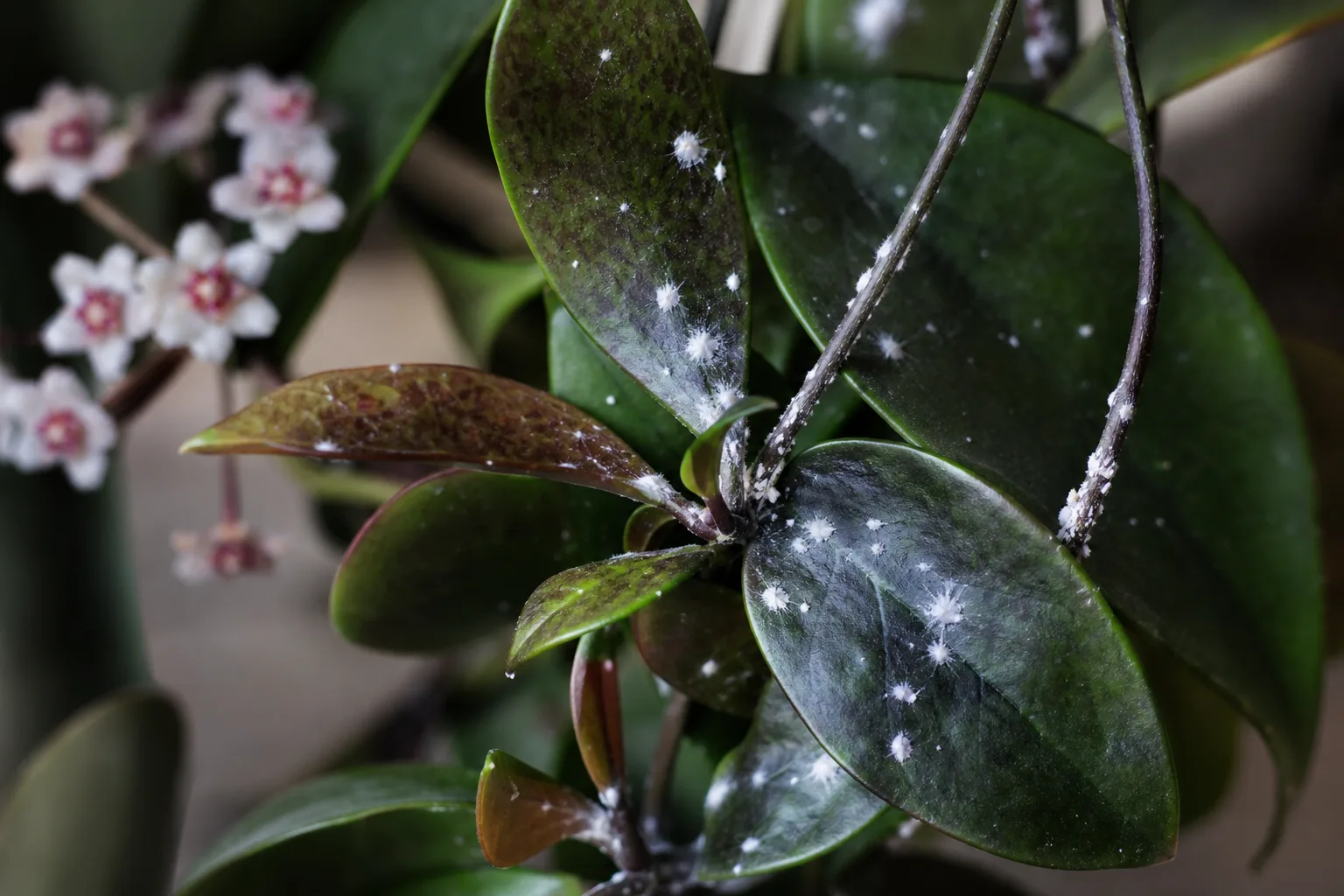
Mealybugs on Hoya Pubicalyx hide in leaf axils and new stem joints along fast-growing vines. First step: isolate the plant and dab every visible cluster with 70% isopropyl alcohol on a cotton swab before adding sprays.
Mealybugs on Hoya Pubicalyx: Causes, Checks & Fixes
This guide covers mealybugs on Hoya Pubicalyx. See also the general Mealybugs guide, watering, and light pages for this plant.
Mealybugs on Hoya Pubicalyx: Causes, Checks & Fixes
Quick answer
Mealybugs on Hoya Pubicalyx (Hoya pubicalyx) show up as white, cottony clusters tucked into leaf axils-the tight pockets where each semi-succulent leaf meets the vine. This species grows faster than many hoyas, so new stem joints form often; each fresh angle is another hiding spot mealybugs exploit.
First step: isolate the plant and dab every visible cluster with 70% isopropyl alcohol on a cotton swab. Work slowly into axils, peduncle bases, and the undersides of leaves along the midrib. Do not start with a whole-plant spray until you have confirmed live insects and removed what you can see by hand-blind spraying misses the wax-covered adults wedged in crevices.
What mealybugs look like on Hoya Pubicalyx
On pubicalyx, mealybugs rarely announce themselves on open leaf faces. They settle in protected joints along the trailing vine:
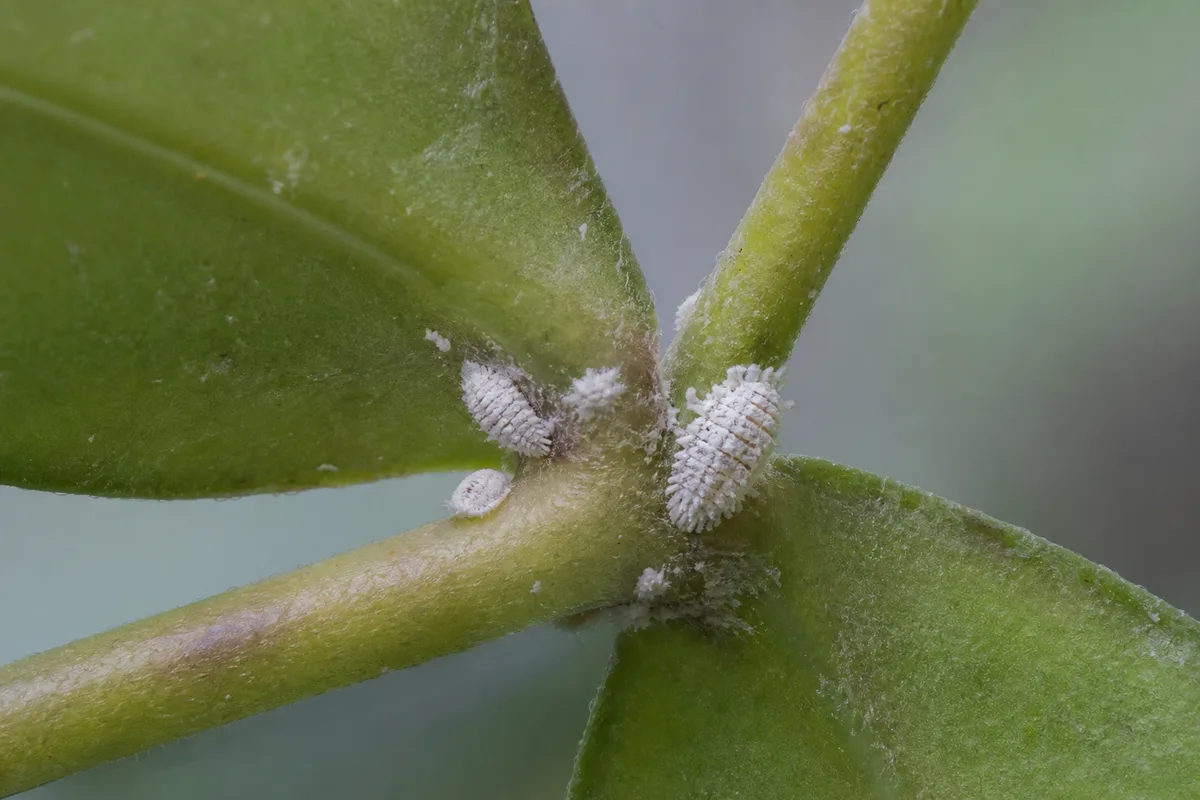
Mealybugs symptoms on Hoya Pubicalyx - compare with healthy tissue on the same plant.
- White, lint-like or cottony masses at leaf bases and stem nodes
- Waxy filaments around larger colonies
- Sticky honeydew on leaves, pots, or surfaces below the plant
- Yellowing, stunted new leaves, or occasional leaf drop on heavy infestations
- Black sooty mold growing on dried honeydew in advanced cases
Pubicalyx leaves are firm and often splashed with silver or purple markings-do not confuse natural leaf patterning with pests. Mealybugs cluster and grow; splash marks do not move, smear pink when crushed, or produce honeydew.
Because this hoya vines actively, check the full length of each stem, not only the crown. Colonies often start on soft new growth at the tip while older leaves still look fine.
Why Hoya Pubicalyx gets mealybugs
Mealybugs are piercing-sucking insects in the family Pseudococcidae. They feed on phloem sap, weaken the vine, and excrete honeydew that can support sooty mold. Indoors, warm, stable temperatures let populations persist year-round on houseplants, including hoya.
Pubicalyx-specific risk factors:
- Leaf axil architecture - Mealybugs favor branch crotches, crowns, and places where leaves touch stems. Pubicalyx produces frequent new nodes along fast runners; those axils stay narrow and are easy to skip during a quick watering pass.
- New plant introduction - Mealybugs commonly hitchhike on nursery stock. Skipping quarantine is the most common way they enter a collection.
- Crowded shelves - Crawlers walk short distances and can move on tools, hands, or touching foliage between pots.
- Soft, nitrogen-rich new growth - Over-fertilizing a vine in low light pushes tender shoots that are easier for pests to colonize and for females to lay eggs on.
- Stress - A pubicalyx kept in dim light, chronically wet mix, or poor airflow is slower to outgrow damage and harder to inspect thoroughly.
Hoya is listed among houseplant species that commonly host aboveground mealybugs. That does not mean every pubicalyx will get them-but it does mean axils deserve routine checks.
How to confirm the cause
Work through these checks before committing to sprays or Hoya Pubicalyx repotting guide:
- Location pattern - Mealybugs cluster in axils, nodes, and leaf undersides along veins. Mineral deposits or dried water spots sit on the leaf surface and wipe away dry.
- Crush test - Touch a cotton swab to a white mass. Mealybugs leave a pink or reddish smear and a waxy residue. Scale is harder and more dome-shaped; powdery mildew wipes off as a powder film without insects underneath.
- Movement - Young crawlers are tiny and slow. Tap a suspect stem over white paper and watch for pale moving specks.
- Honeydew - Shiny, sticky patches under the vine or on the pot rim point to sap feeders (mealybugs, scale, or aphids), not drought stress alone.
- Ant activity - Ants on the pot or trellis often farm honeydew producers and shield mealybugs from predators.
- Nearby plants - If one pubicalyx has axil clusters, inspect other hoyas and succulents on the same stand.
Confirmed diagnosis requires live insects or fresh cottony egg masses, not yellow leaves alone. Yellowing on pubicalyx can also mean overwatering on Hoya Pubicalyx-press the mix and check caudex firmness before assuming pests caused every leaf problem.
First fix for Hoya Pubicalyx
Isolate the plant and treat every visible mealybug with 70% isopropyl alcohol on a cotton swab.
Move the vine away from other houseplants. Support each leaf from underneath with your free hand-pubicalyx leaves are semi-succulent but can snap at the joint if you twist hard. Dip a swab in alcohol and press it directly onto each white cluster in axils, along stems, and under leaves. Hold contact a few seconds so the alcohol dissolves the waxy coating. Wipe the insect away rather than smearing it across clean tissue.
Why alcohol first on Hoya Pubicalyx overview:
- Contact kill works on exposed adults without coating the entire vine on day one
- You see immediately how large the infestation is
- Pubicalyx has many joints; spot treatment reaches places a single spray shot misses
After the alcohol pass, set the plant in Hoya Pubicalyx light guide and recheck in five to seven days. Eggs and crawlers hatch on overlapping cycles indoors, so one treatment rarely clears a vine.
Step-by-step recovery
Once isolation and alcohol dabbing are underway, continue in this order based on severity:
- Manual removal round - Repeat the alcohol swab every five to seven days for at least three to four weeks. Follow new growth tips each time; pubicalyx may add fresh joints between treatments.
- Shower rinse (optional) - For sturdy stems without open flowers, rinse the vine with lukewarm water in a sink or shower to knock off honeydew and crawlers. Let leaves dry in good airflow before evening; do not leave the plant wet in a dark corner.
- Insecticidal soap or horticultural oil - If colonies persist after two alcohol rounds, spray leaf undersides, stems, and axils until runoff. Soaps and oils work best on younger nymphs with less wax. Test one leaf first and wait 24–48 hours-some hoyas tolerate oils well; others show spotting if sprayed in hot sun.
- Prune only isolated hotspots - If a single leaf or short stem section is heavily encrusted and the rest of the vine is clean, cut it off with sterile shears. Do not cut peduncles (flower spurs) unless they are completely dead; pubicalyx reblooms from the same peduncle year after year.
- Soil-line check - Some mealybugs feed near the soil surface or on roots. If stems look clean but the population rebounds, inspect the base of the stem and root zone. Repot into fresh epiphytic mix only if you find pests in the root ball or old mix is staying soggy-repotting alone does not replace axil treatment.
- Monitor the collection - Inspect neighboring plants weekly for six weeks. Mealybugs spread slowly but steadily indoors.
Hold fertilizer until new growth looks clean for two weeks. Feeding a stressed, sap-drained vine produces soft shoots that attract another wave of crawlers.
Recovery timeline
Week 1–2: Visible cottony masses should shrink with consistent alcohol dabbing. Honeydew may dry up on leaves that were not heavily coated.
Week 3–4: You are catching newly hatched crawlers before they wax over. Expect to still find occasional singles in tight axils- that is normal, not failure.
Week 4–6: Call the plant clear only after two consecutive weekly inspections find zero live mealybugs and no new honeydew. Pubicalyx can look stable while a few egg sacs remain hidden in old leaf sheaths.
Longer term: Damaged leaves stay blemished; judge success by firm stems, active new nodes, and clean peduncles, not by old yellow foliage greening up.
Worsening signs: Colonies multiply on new growth despite weekly treatment, sooty mold spreads, stems soften (unlikely from mealybugs alone-check for root rot on Hoya Pubicalyx), or ants intensify around the pot.
Lookalike symptoms
- Natural leaf splashes - Pubicalyx cultivars show silver, pink, or purple flecking that is part of the leaf, flat and immobile.
- Mineral or water spots - White crust from hard water or fertilizer splash on leaf faces; no cottony texture in axils.
- Powdery mildew - Fine white film on leaf surfaces in humid, stagnant air; no segmented insects underneath.
- Scale insects - Brown or tan domes glued to stems; harder to flick than mealybugs and less cottony.
- Aphids - Pear-shaped green or orange insects on tender tips; less wax, more visible legs.
- Fungal leaf spot - Brown or black lesions with yellow halos; no honeydew or wax clusters in joints.
- Overwatering yellow leaves on Hoya Pubicalyx - Lower leaves yellow while axils stay clean and soil stays wet; fix drainage and dry-down before pest sprays.
What not to do
Do not return the plant to the main collection after a single alcohol session-crawlers hatch for weeks indoors.
Avoid undiluted alcohol sprays on the entire vine without a leaf test; pubicalyx leaves can burn if alcohol pools on tissue in bright sun or on heat-stressed plants.
Do not cut peduncles to “reset” the plant-those spurs store future bloom cycles.
Skip heavy nitrogen fertilizer during active infestation; tender growth invites more egg laying.
Do not compost infested cuttings indoors or leave prunings on a kitchen counter where crawlers walk to other pots.
Avoid broad-spectrum pyrethroid sprays as a first move-they often miss hidden mealybugs and stress the vine without clearing axils.
Do not repot on day one unless you have confirmed root-zone mealybugs or failing, sour mix. Repotting a healthy root ball without treating stems leaves the real population untouched.
Hoya Pubicalyx care cross-check
While treating pests, keep baseline care steady-big swings in light or watering make recovery harder to read.
- Light - Bright indirect light keeps pubicalyx growing evenly so you can spot new axil colonies early.
- Water - Let the top half of the epiphytic mix dry before watering. Soggy mix weakens roots and mimics pest stress with yellow leaves.
- Airflow - Gentle air between leaves dries honeydew and makes inspections easier; avoid stuffing the vine against a wall.
- Humidity - 40–60% is adequate; mealybugs are not cured by misting alone.
Pet-aware homes can treat pubicalyx with alcohol and labeled soaps, but keep pets away until sprays are fully dry.
How to prevent mealybugs next time
- Quarantine new plants for at least two weeks before placing them beside your pubicalyx. Isolate infested plants so crawlers do not reach the rest of the collection.
- Inspect axils every time you water-fast growth means new joints appear weekly in summer.
- Wipe firm leaves with a damp cloth occasionally; dust hides early colonies on undersides.
- Buy clean stock - Reject vines with white wax in stem joints, sticky shelves, or ants on the pot.
- Feed modestly - Use low-nitrogen fertilizer during the growing season; avoid pushing lush shoots on a vine already in dim light.
- Isolate at first sign - One swab today prevents a shelf-wide outbreak in a month.
When to worry
Escalate if cottony masses cover multiple stems, honeydew drips persist after three weekly treatments, or sooty mold coats large sections of the vine. Consider discarding only when the plant is mostly wax-encrusted, stems are declining from combined pest and root stress, and you cannot physically reach all colonies on a long, tangled hanger.
A single cluster on one new node is manageable with isolation and alcohol-act the same day, but you do not need to panic-trash a large pubicalyx.
If ants are present, treat the mealybugs and block ant access to the pot; otherwise populations rebound quickly.
Conclusion
Mealybugs on Hoya Pubicalyx are an axil-hiding sap pest, not a mystery disease. Confirm cottony clusters in leaf joints, isolate the vine, and dab alcohol on every insect you can see before layering soaps or oils. Repeat weekly until two clean inspections pass, protect peduncles, and inspect fast-growing new joints each round. Prevention is quarantine, bright light, and axil checks during every watering-on pubicalyx, the next stem joint is never far away.
When to use this page vs other Hoya Pubicalyx guides
- Hoya Pubicalyx watering guide - Use for routine moisture checks before assuming mealybugs is the main issue.
- Hoya Pubicalyx problems hub - Browse all 17 common issues on this species.
- Yellow Leaves on Hoya Pubicalyx - Different entry point when symptoms overlap with mealybugs.
- Slow Growth on Hoya Pubicalyx - Different entry point when symptoms overlap with mealybugs.
- Spider Mites on Hoya Pubicalyx - Different entry point when symptoms overlap with mealybugs.