Spider Mites on Hoya Pubicalyx: Causes, Checks & Fixes
Quick answer
Spider mites on Hoya pubicalyx usually show up as fine pale stippling and light webbing in leaf axils, especially in warm dry indoor air. First step: isolate the plant and rinse the full vine thoroughly while keeping the potting mix from staying soggy afterward.
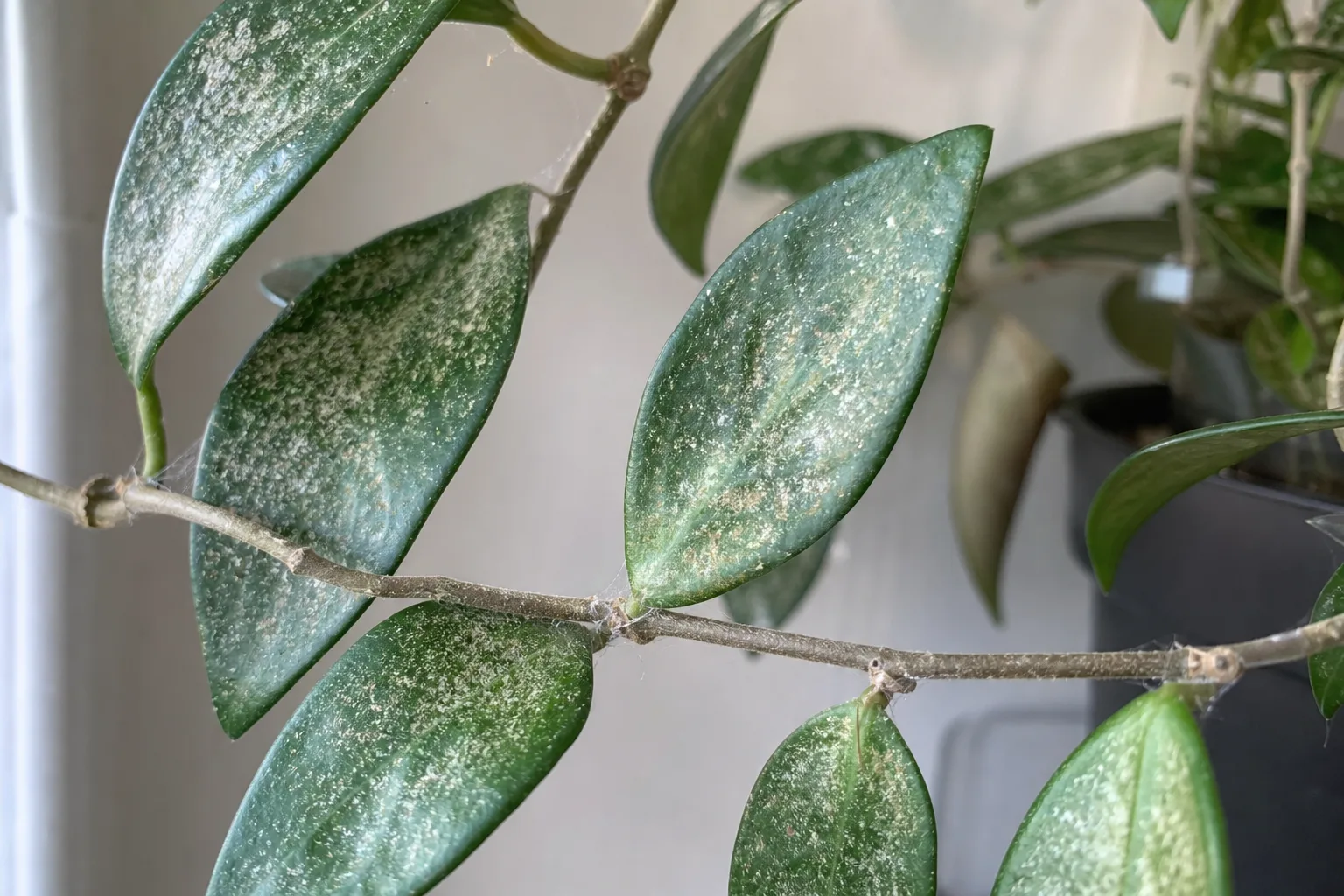
Spider Mites on Hoya Pubicalyx: Causes, Checks & Fixes
This guide covers spider mites on Hoya Pubicalyx. See also the general Spider Mites guide, watering, and light pages for this plant.
Spider Mites on Hoya Pubicalyx: Causes, Checks & Fixes
Quick answer
Spider mites on Hoya pubicalyx usually show up as fine pale stippling, a duller leaf surface, and light silk in leaf axils. Because this species already has waxy foliage and silver splashing, early damage can hide longer than growers expect.
First step: isolate the plant and rinse the full vine carefully. Spider mites multiply fast indoors, especially in warm dry air, and early physical knockdown is often the fastest way to stop a small problem becoming a shelf-wide one.
Why this plant can hide mites so well
Hoya pubicalyx has several traits that make early infestations easy to miss:
- waxy foliage that masks subtle stippling
- silver flecking that can disguise pale feeding marks
- long vines with tight leaf joints where mites hide
- hanging or trailing growth that makes the back side harder to inspect
That means owners often notice the pest late, after the colony is already established.
What spider mites usually look like on Hoya pubicalyx
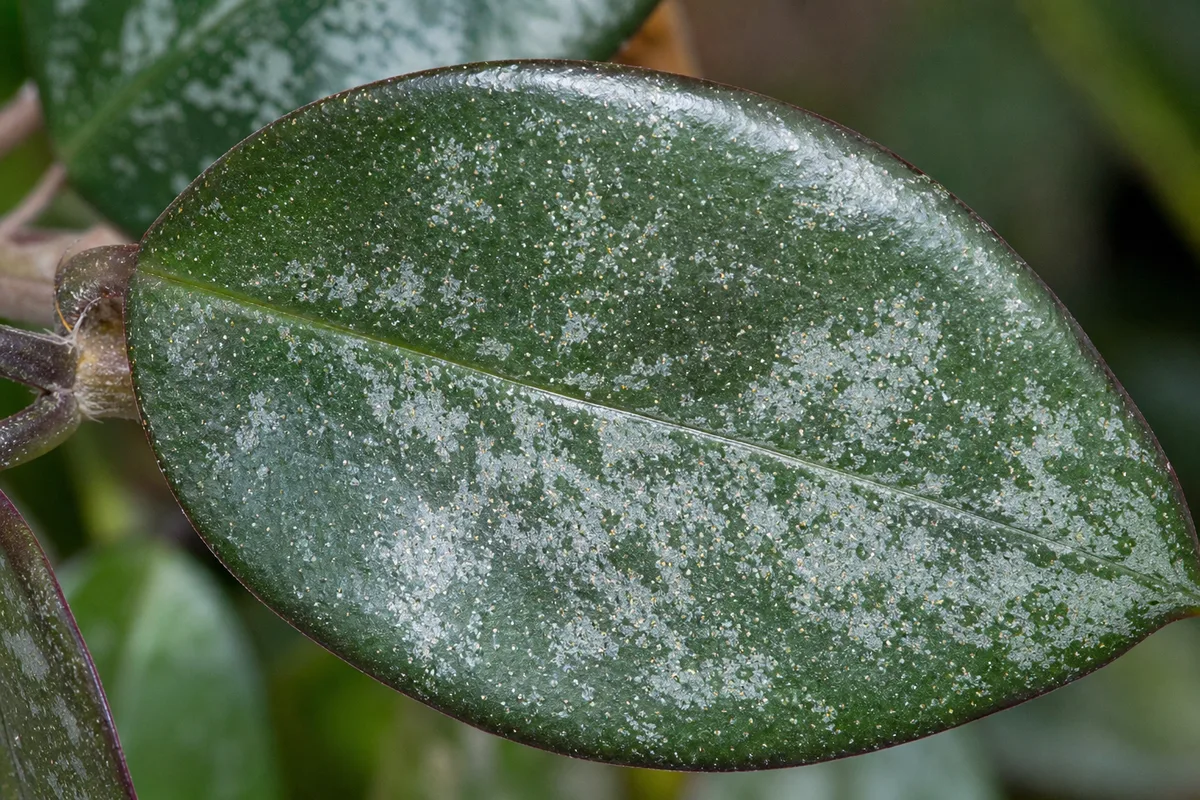
Early mite damage can look like a dull dusty patch before obvious webbing appears.
Common signs include:
- tiny pale dots scattered across the leaf surface
- fine webbing in axils or between overlapping leaves
- leaves losing their normal gloss
- bronzing or bleaching on more advanced damage
- distorted or undersized new leaves when the infestation gets heavy
UC IPM describes spider mites as tiny sap-feeding arachnids, and the University of Minnesota notes that they thrive in warm dry indoor conditions. That fits the typical Hoya pubicalyx outbreak pattern very well.
Lookalikes to rule out
Not every pale mark on a pubicalyx leaf is a mite.
Low humidity alone
Dry air can cause crisp edges or stress without producing the fine stippling pattern and webbing mites leave behind.
Thrips
Thrips usually create more silvery streaking or scarring and do not make the same fine silk webbing.
Mealybugs
Mealybugs leave cottony clusters rather than dotted stippling.
Residue or dust
Dust and mineral film can dull the surface, but they do not create moving specks on a tap test.
How to confirm the cause
Use this order:
- Tap test: hold white paper under a suspect leaf and tap firmly.
- Axil check: inspect tight leaf joints and the undersides of leaves.
- Webbing check: look for fine silk, not thick dramatic webs.
- Pattern check: confirm that the leaf has scattered feeding dots rather than just edge browning.
If you find moving specks plus stippling, treat it as a live mite problem.
First fix
The first move is not oil, not fertilizer, and not repotting.
The first move is physical knockdown:
- isolate the plant from nearby vines and shelf-mates
- rinse the whole plant, especially undersides and axils
- let the foliage dry with good airflow
That step lowers the active population immediately and buys you visibility for the follow-up inspections.
Because Hoya pubicalyx is an epiphytic hoya, be careful not to turn the rinse into a root-rot setup. Get the foliage clean, but do not leave the potting mix waterlogged afterward.
How to treat light infestations
When the problem is still small:
- rinse thoroughly
- recheck in a few days
- apply an appropriate insecticidal soap or horticultural oil only to dry foliage if mites remain
UC IPM emphasizes repeated treatment intervals because mites overlap generations indoors. One spray is rarely enough if a colony is already reproducing.
How to treat heavier infestations
When webbing spans several leaf joints or new growth is being damaged:
- inspect every vine, not just the most visible one
- remove the worst leaves only if they block access or are fully ruined
- repeat treatment on schedule rather than improvising
- inspect nearby plants on the same shelf
This is also the point where environmental corrections matter more:
- reduce hot dry drafts
- improve air circulation
- keep stress from low light or drought from stacking on top of the pest problem
What not to do
- Do not treat only the top surface of the leaves.
- Do not spray once and assume the problem is solved.
- Do not keep the root ball wet because the plant looks stressed.
- Do not soak developing peduncles and new flower structures with heavy product repeatedly if you can avoid it.
- Do not ignore neighboring plants.
Recovery timeline
The damage on old leaves does not reverse. Recovery should be judged by:
- fewer moving specks on repeat tap tests
- no fresh webbing
- clean new growth
If new leaves keep emerging damaged after repeated treatment, either the mites are still active or the broader setup is too favorable to them.
Pet and handling note
ASPCA lists silver pink vine as non-toxic for pets, but treatment products are a separate issue. Even if the plant itself is not considered toxic, rinse residues as directed and keep pets from chewing recently treated foliage.
When to worry
Escalate the problem if:
- multiple plants in the area show stippling
- webbing returns quickly after treatment
- new leaves are twisting or failing
- the plant is declining from both mites and root stress at the same time
At that stage, a casual rinse-and-watch approach is usually not enough.
Conclusion
Spider mites on Hoya pubicalyx are easy to miss early because the plant’s waxy silver-splashed foliage hides subtle feeding damage. The most reliable response is still simple: confirm the pest with a tap test, isolate the vine, knock the population down physically, and follow up consistently until no fresh webbing or stippling appears. Good inspection habits matter more than dramatic one-day treatment.
Related Hoya Pubicalyx guides
- Hoya Pubicalyx overview for the plant’s normal growth habit and care baseline
- Hoya Pubicalyx watering to avoid turning pest stress into root stress
- Hoya Pubicalyx light when weak or stressed growth is making pest recovery slower
- Low Humidity on Hoya Pubicalyx when dry air is part of the setup problem
- Mealybugs on Hoya Pubicalyx when the symptom pattern is not actually mites
- Hoya Pubicalyx problems for the wider symptom cluster
Related tool
Use the Pest Identifier Tool to narrow causes for spider mites on this plant before changing multiple variables at once.