Brown Tips on Zebra Plant: Causes, Checks & Fixes
Quick answer
Brown tips on Zebra Plant usually mean low humidity or uneven watering-not a disease on the striped foliage. Measure humidity at the pot, target 60–70% RH, keep soil evenly moist, and trim only fully dead tip tissue. Do not overwater to compensate for dry air.
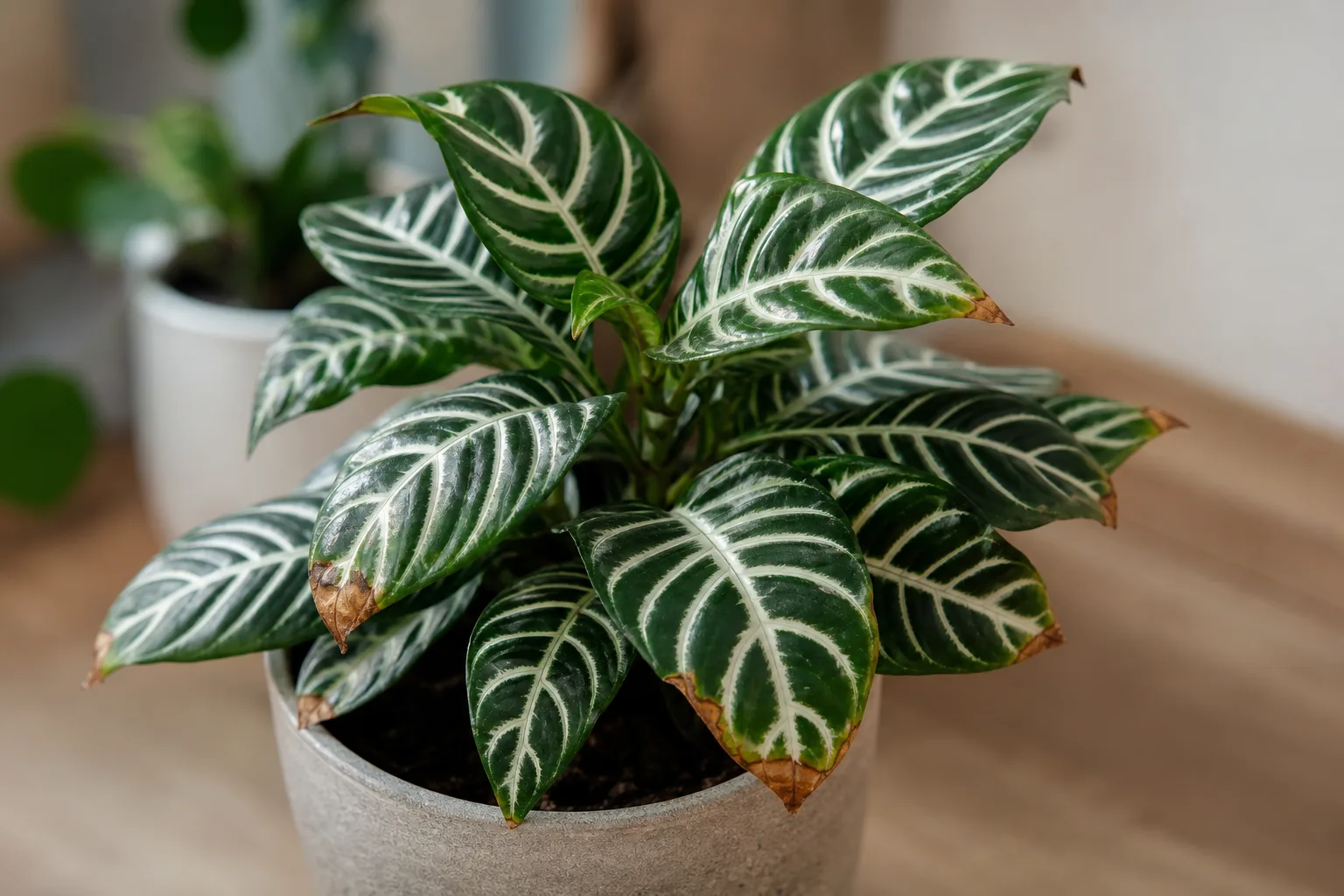
Brown Tips on Zebra Plant: Causes, Checks & Fixes
This guide covers brown tips on Zebra Plant. See also the general Brown Tips guide, watering, and light pages for this plant.
Brown Tips on Zebra Plant: Causes, Checks & Fixes
Quick answer
Brown tips on Zebra Plant (Aphelandra squarrosa) are a classic humidity and watering signal on this tropical foliage plant-not a fungal disease on the bold white-veined leaves. Brown leaf tips can be caused by low humidity, and foliage may scorch in dry or drafty locations. When indoor air drops below what this Brazilian forest species expects, the leaf point dries first because that tissue has the least moisture reserve.
First step: measure humidity at canopy height and move the pot away from heating vents. Target 60–70% relative humidity and steady, even soil moisture before trimming, Zebra Plant repotting guide, or fertilizing. Do not flood the pot to fight dry tips-soggy roots cause different damage.
Reviewed by the LeafyPixels Review Board against NC State Extension, Missouri Botanical Garden, and UC IPM references (June 2026).
Where this page fits in the Zebra Plant cluster
This guide is for tip-only browning-dry tan points while most of the striped blade stays green and firm. Use it when you want to confirm whether the damage is early dry-air stress before margins spread.
| Your main symptom | Best page to open |
|---|---|
| Only leaf points are tan and papery; margins still green | This page - brown tips |
| Brown creeping along whole margins, papery edges | Crispy leaves |
| Room feels dry, buds aborting, curling leaves | Low humidity |
| Wet soil, yellow lower leaves, soft stems | Overwatering or root rot |
| Stippling and fine webbing on undersides | Spider mites |
If tips and margins are both crisp, start here for the checklist, then follow the crispy leaves recovery path when margin damage dominates.
What brown tips look like on Zebra Plant
Healthy zebra plant leaves are glossy dark green with bold white zebra striping and slightly wavy margins. Brown tips show up as localized damage at the leaf point while most of the blade stays green.
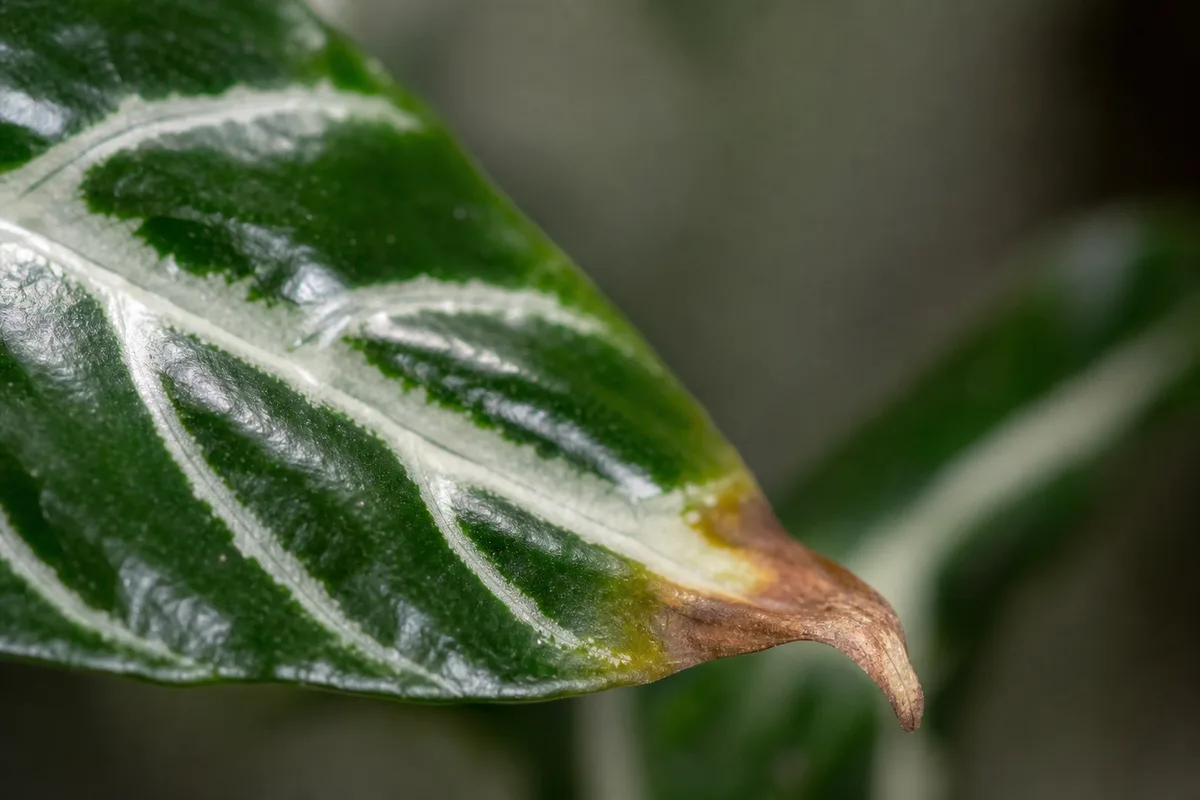
Brown Tips symptoms on Zebra Plant - compare with healthy tissue on the same plant.
Photo callout: Compare a striped leaf with a dry tan triangle only at the pointed tip-margins still glossy green and firm when bent-against a leaf where brown has crept along both side margins into papery crisp tissue. Tip-only damage with green margins points here; margin-first damage belongs on the crispy leaves page.
Tip vs. margin vs. whole-leaf patterns
- Tip-only burn - Tan to brown, dry and papery at the point; margins and midrib still green and firm
- Tip plus creeping margins - Same dryness spreading along edges; often the next stage of humidity stress-see crispy leaves when margins dominate
- Whole-leaf tan patches - Usually sun scorch or cold injury, not tip burn alone-check brown leaves and light guide
- Soft brown with yellow halos - Wet soil, sour smell, or mushy stems point to rot-not this page’s dry-tip pattern
Unlike spider mite damage, early tip burn does not show fine stippling or webbing on undersides. Unlike fertilizer burn alone, you will usually see humidity below 50% or uneven soil moisture at the same time.
Newest vs. oldest leaf clues
Lower leaves with worn tips while new striped foliage stays clean often means older tissue plus seasonal dry air. Newest leaves emerging with tip burn already present mean current conditions are still wrong-humidity, watering, or placement needs correction now, not later.
Yellow bract buds forming then aborting at the stem tip can signal humidity stress overlapping with tip burn. If buds drop is your main complaint, see bud drop.
Lookalike differential: tip burn vs. other causes
Work through this table before you change watering, feed, or repot. One row should match your plant closely.
| What you see | Most likely cause | Key differentiator | Route to |
|---|---|---|---|
| Dry tan tip only; margins green; RH below 50% | Low humidity | Papery point, firm green blade; worsens in heating season | Fix air moisture first (this page) |
| Tips brown; top inch dusty dry; pot light | Underwatering contributing | Crisp tips plus limp newer leaves on dry mix | Watering guide + humidity |
| Tips crisp; soil wet days; soft lower stems | Overwatering / root stress | Sour smell, yellow lower leaves-not dry papery tips alone | Overwatering |
| Tan tips; white soil crust; recent heavy feed | Salt / fertilizer burn | Crust on surface; tips after feeding spike | Fertilizer burn |
| Tips + stippling + fine webbing undersides | Spider mites in dry room | Dull stippled patches; mites love dusty dry air | Spider mites |
| Tips after cold night below ~65°F | Cold draft injury | Sudden browning near drafty glass; firm stems | Cold damage |
| Bleached tan patches on leaf face after sun move | Light scorch | Damage on sun-exposed blade, not tip point alone | Light guide |
Confirmed tip burn requires dry papery points, reasonable exclusion of wet-soil rot, and no mite webbing-not color change alone on one old lower leaf.
Why Zebra Plant gets brown tips
Zebra Plant evolved in warm, humid Brazilian forests. Indoors, winter heating and air conditioning drop humidity far below what the plant prefers. Plants require high humidity and temperatures that do not dip below 65º F, which makes tip burn common in average households.
Low humidity and winter heating - When relative humidity falls, leaf tips lose water first. Forced-air heat can push rooms to 20–35% RH while Aphelandra wants roughly 60–70%. Leaves nearest vents or sunny glass show damage before inner foliage.
Uneven watering and drought-flood cycles - Zebra Plant likes even moisture. Letting the mix dry out completely, then flooding, stresses leaf edges. Excessive water or extremely dry conditions will cause bottom leaves to brown and drop-the same species reacts badly to both extremes.
The humidity–watering compensation trap - Dry air makes soil surface dry faster, which pushes many growers to water more. If tips stay crisp while soil stays wet, you are treating the wrong variable. Match even moisture rhythm with higher air humidity together.
Salt and hard tap water - Mineral buildup from hard tap water or heavy feeding can crisp tips on sensitive tropical leaves, sometimes with white crust on the soil surface. This lookalike is easy to miss when humidity is also low.
Heat vents and drafty placement - Hot drafts from radiators and cold drafts from frequently opened doors both increase water loss through broad striped leaves. Foliage may scorch in dry or drafty locations starting as tip and margin browning.
Spider mites in dry rooms - Plants under water stress are highly susceptible to spider mites, which thrive in hot, dusty, dry conditions. Tip burn plus stippling means dual stress-see spider mites while you raise humidity.
How to confirm the cause: six-point checklist
Work through these checks in order before you change multiple variables at once:
- Humidity at the pot - Hold a hygrometer beside the top leaves, not across the room. Below 50% with dry papery tips strongly points to dry air. Target 60–70% for this species.
- Soil moisture - Stick your finger into the top inch. Dusty dry mix plus crisp tips means underwatering is contributing. Wet, heavy mix with soft stems points away from simple tip burn-check overwatering.
- Placement audit - Note distance to heating vents, radiators, fireplaces, and sunny south or west windows. Tips on the exposed side browning first implicates local dry air or light scorch.
- Damage texture - Dry, papery, tan tips = humidity or water stress. Soft brown with sour smell = rot. Stippling plus fine webbing on undersides = spider mites.
- Salt check - White crust on soil surface with tip-focused burn after heavy feeding or hard tap water suggests salt stress-flush the pot and compare new growth.
- New growth check - If only oldest lower tips are brown while new striped leaves are clean, you may be seeing aging plus dry air. Brown tips on newest leaves mean current care is still off.
If humidity reads low, placement is dry, soil moisture is reasonable, and no mites are present, you have enough to fix air moisture first.
Editorial observation (January 2026, heated apartment): A 6-inch zebra plant on a west windowsill above a radiator showed tan papery tips only on the two outermost striped leaves facing the glass-hygrometer at canopy height read 38% RH while the room center read 52%. After moving the pot 60 cm from the vent lip and running a cool-mist humidifier for one week at 65–68% RH, the next emerging leaf opened with a clean tip; older damaged points remained tan. The lesson: measure at the pot, not the room average, and judge recovery by new growth within 10–14 days, not old tissue re-greening.
First fix for Zebra Plant
Raise humidity at the plant and water if the top inch of soil is dry.
Move the pot away from heating vents and drafty windows. Run a cool-mist humidifier within a few feet of the foliage, or set the pot on a pebble tray with water below pot level so roots never sit submerged. Grow in humidified rooms or on wet pebbles to meet this species’ needs-a humidifier is more reliable than misting in dry winter rooms.
If the top inch of mix feels dry and the pot is light, water thoroughly until excess drains, then empty the saucer. Soils must not be allowed to dry out completely during active growth-but do not compensate for dry air by keeping soil soggy.
Trim only fully dead tip tissue with clean scissors. Hold off on repotting, heavy pruning, and fertilizer until new leaves emerge without fresh burn.
Seven-day stabilization plan
Once humidity and placement are corrected, use this sequence instead of changing everything at once:
| Day | Action | What to watch |
|---|---|---|
| 1 | Move off vent path; start humidifier; measure RH at canopy | Baseline hygrometer reading at pot level |
| 2 | Water only if top inch is dry; empty saucer after soak | Pot weight; no standing water |
| 3 | Inspect leaf undersides for stippling or webbing | Mite signs on newest growth |
| 4 | Trim one or two fully dead tips if appearance bothers you | Do not cut into green tissue |
| 5 | Re-check humidity holds 60–70% through a full day | Drop below 50% means humidifier placement or runtime needs adjustment |
| 6 | Compare newest leaf tip to leaves from day 1 | Fresh burn on new tissue = conditions still off |
| 7 | Decide next step: hold course, flush for salt, or route to lookalike page | Clean new tip = success; wet soil + soft stem = root rot path |
Do not add fertilizer, repot, or pesticide sprays during this week unless mites or rot are confirmed.
Step-by-step recovery
Once humidity and moisture are addressed:
- Stabilize placement - Keep bright indirect light without direct midday sun on the leaves.
- Run humidity daily - Maintain 60–70% through heating season. A pebble tray supplements a humidifier but rarely reaches canopy level in very dry rooms alone.
- Water on soil dryness - Follow the watering guide rhythm: check the top inch every few days and water when it dries, not on a calendar.
- Trim only dead tissue - Snip fully brown tips for appearance. Partial green tissue will not refill.
- Inspect for mites weekly - If stippling appears, rinse undersides in the morning and treat per the spider mite page while keeping humidity high.
- Hold fertilizer - Wait until two to three weeks of healthy new growth before resuming light feeding.
Recovery timeline
Dead tip tissue will not re-green. Expect one to three weeks before new growth looks cleaner if humidity and watering stay steady. Older damaged tips remain until you trim them or the plant sheds those leaves.
Signs recovery is working:
- New striped leaves open with smooth, clean edges
- Tip burn stops spreading to fresh growth
- Soil dries at a predictable rate between waterings
- Bract buds hold if humidity was causing bud abort
Signs the problem is worsening:
- New tips brown despite higher humidity
- Leaves yellow and drop in clusters on wet soil
- Stems soften at the soil line
- Stippling and webbing increase on undersides
Flowering bracts may be delayed until the plant stabilizes-judge success by new foliage quality, not old tips.
What not to do
Do not mist once and assume humidity is fixed-surface mist evaporates in minutes and can encourage fungal spots on dense Aphelandra foliage. Do not keep soil constantly soggy to compensate for dry air. Do not fertilize a stressed plant hoping tips will green up. Do not strip every tipped leaf before conditions improve-you need healthy foliage to photosynthesize.
Zebra Plant is non-toxic to cats and dogs, so humidifiers and pebble trays are safe household fixes near pets-keep cords and standing water out of reach.
When to worry
Brown tips alone on a few leaves are common and reversible. Escalate if:
- More than a third of leaves show new tip burn within a week despite corrected humidity
- Stems turn soft or black at the base while soil is wet
- Webbing and stippling spread after you raised moisture
- Yellow bract buds abort repeatedly-see bud drop
Those patterns suggest root rot, advanced mites, or stacked stresses-not simple winter dryness.
How to prevent brown tips next time
Treat Zebra Plant as a houseplant for bright, humid areas. Run a humidifier through heating season, keep the pot off vent paths, and match the overview culture guide watering and light expectations.
Monitor with a hygrometer at canopy height-not across the room. Flush the pot occasionally in spring to reduce salt buildup from hard water. Inspect weekly during heating season for early tip burn on newest leaves before damage spreads to margins.
Judge long-term success by the next clean striped leaf, not by old tips that will never heal.
Related Zebra Plant issues
If tip burn was a clue rather than the whole story, these cluster pages complete the picture:
- Water stress - when drought-flood swings repeat
- Draft stress - vent and window placement
- Underwatering - when dry mix drives crisp tips
- Drooping leaves - limp stems with wet or dry soil
- Yellow leaves - lower-leaf loss on wet mix
Conclusion
Brown tips on Zebra Plant are an environment signal on a species that never adapted to dry indoor winters. Measure air moisture at the pot, raise humidity first, and water when the top inch of soil dries without drought-flood swings. Use the lookalike table and six-point checklist to rule out rot, mites, salt, and cold before you repot or feed. New growth with clean white-veined edges tells you the fix worked-old tan tips are permanent until trimmed.
When to use this page vs other Zebra Plant guides
- Zebra Plant watering guide - Use for routine moisture checks before assuming brown tips is the main issue.
- Zebra Plant problems hub - Browse all 32 common issues on this species.
- Low Humidity on Zebra Plant - Different entry point when symptoms overlap with brown tips.
- Underwatering on Zebra Plant - Different entry point when symptoms overlap with brown tips.
- Overwatering on Zebra Plant - Different entry point when symptoms overlap with brown tips.