Bud Drop on Zebra Plant: Causes, Checks & Fixes
Quick answer
Bud drop on Zebra Plant aborts developing yellow bracts when humidity falls, soil dries out, or cold drafts hit the growing tips. First step: check humidity at the pot and water when the top inch dries-do not move or repot while buds are forming.
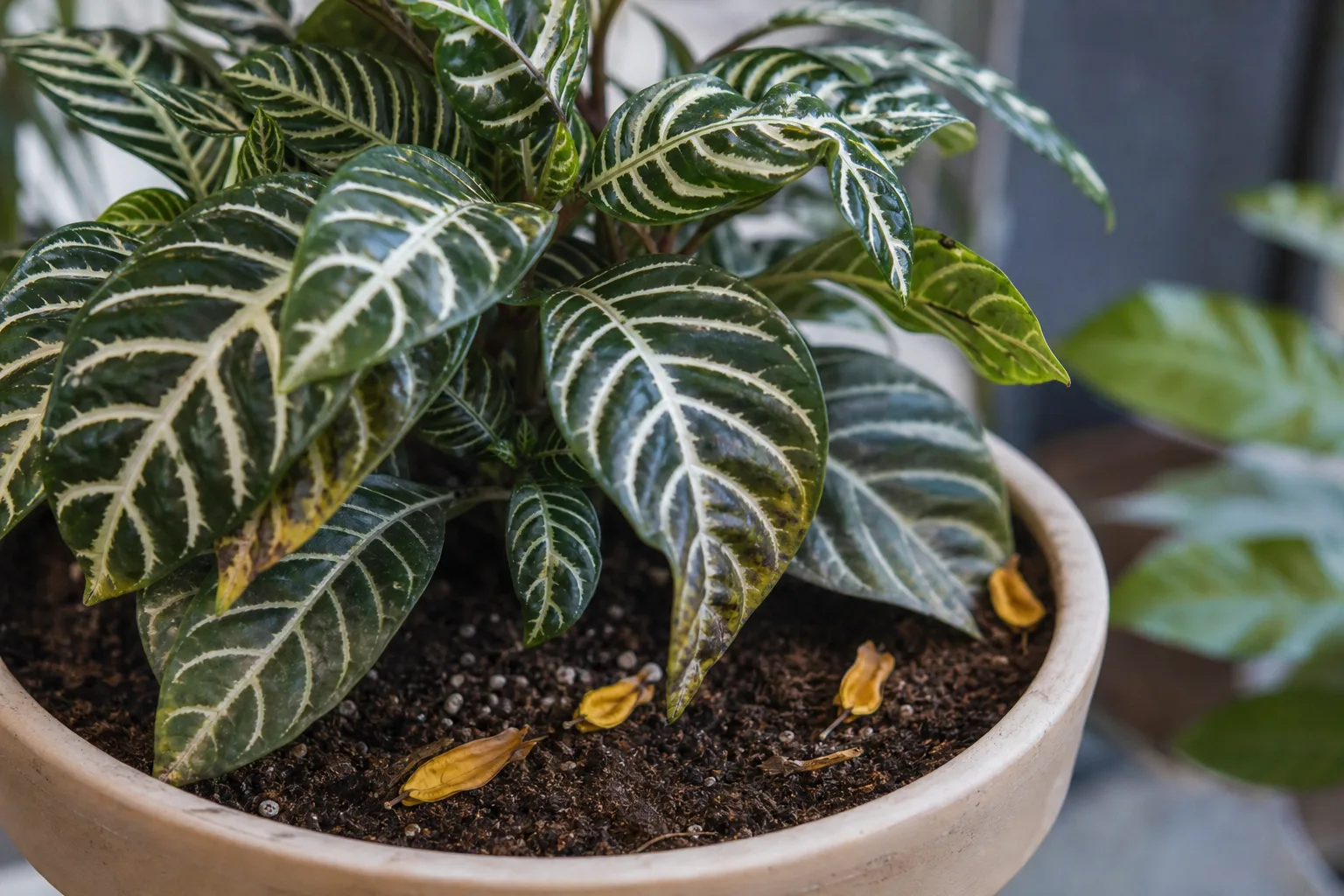
Bud Drop on Zebra Plant: Causes, Checks & Fixes
This guide covers bud drop on Zebra Plant. See also the general Bud Drop guide, watering, and light pages for this plant.
Bud Drop on Zebra Plant: Causes, Checks & Fixes
Quick answer
Bud drop on Zebra Plant (Aphelandra squarrosa) means the bright yellow bracts at each stem tip abort before the small tubular flowers inside them open. This species is sold for that golden bract spike, so losing buds mid-development is one of the most frustrating problems on an otherwise healthy-looking plant.
The usual trigger is environmental stress during bud set-especially low humidity, cool drafts, or soil that dries too far. Zebra plants evolved in Brazilian tropical forest understory and react fast when indoor air turns dry in winter or after a missed watering week.
First step: check humidity at the pot and water when the top inch of soil feels dry. Do not repot, relocate, or prune while bracts are still developing. Stabilize moisture and air moisture around the plant before trying anything else.
| Trigger | What you see | First fix |
|---|---|---|
| Low humidity | Papery bracts, crisp leaf edges | Humidifier or pebble tray; target 60–70% at foliage |
| Dry soil during bud swell | Bracts brown and detach after a dry spell | Water when top inch dries; never let mix go bone dry |
| Cold draft or AC blast | Sudden abortion after a cold night | Move inward from glass; hold above 65°F at night |
| Repot or room change | Loss within 48–72 hours of disruption | Leave pot in place; stabilize humidity and moisture |
What bud drop looks like on Zebra Plant
Zebra plant bloom is bract-driven. Each stem tip produces a thick vertical spike of yellow bracts with small yellow flowers emerging from each bract. What owners call “buds” are usually those developing bracts, not single flower buttons like on an orchid.
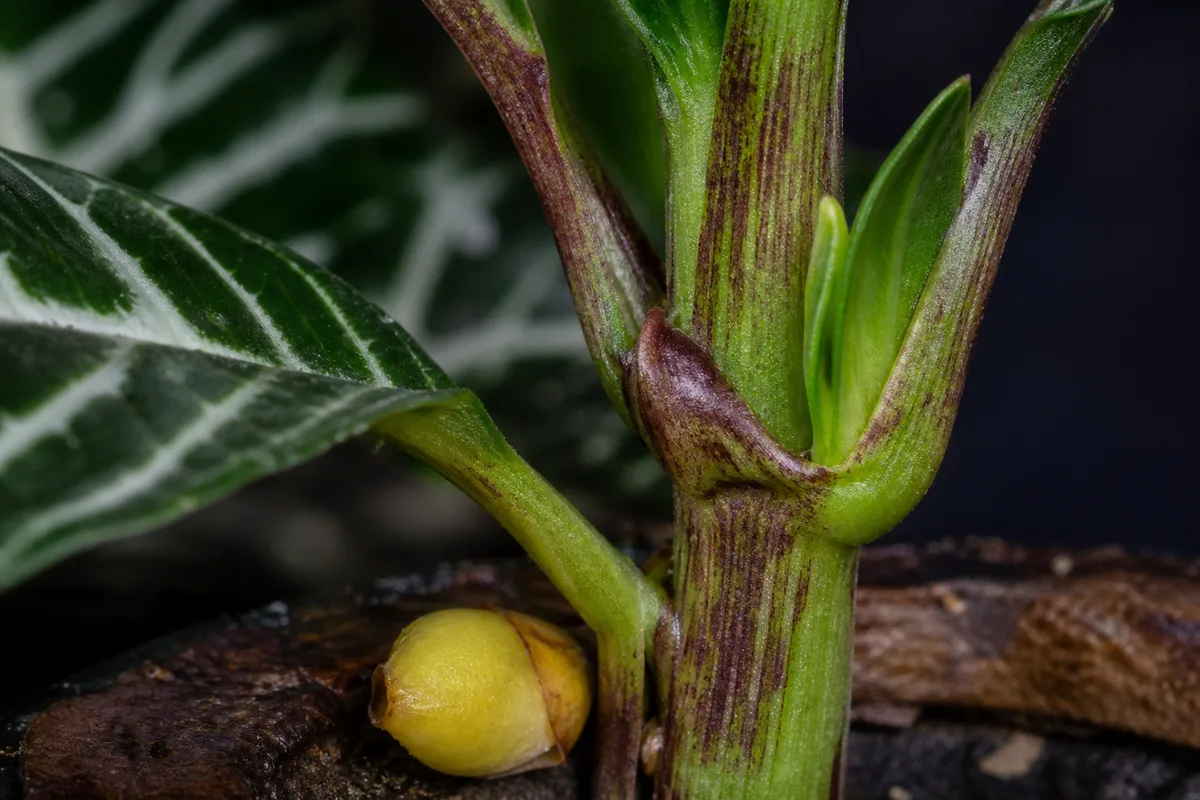
Bud Drop symptoms on Zebra Plant - compare with healthy tissue on the same plant.
Typical bud-drop signs:
- Small yellow bracts shrivel, brown at the edges, and detach before fully opening
- The entire spike collapses or sheds bracts one by one over a few days
- Bracts feel dry or papery and fall with a light touch
- The event often follows an identifiable stress-dry vacation week, move to a new room, repot, or cold window draft
What bud drop is not:
- Post-bloom decline - Open bracts that have shown color for several weeks naturally fade after peak display; that is normal senescence, not premature abortion. See faded flowers when bracts have already opened.
- No buds ever forming - That points to insufficient light or immaturity, not bud drop. See no flowers when no spike ever appeared.
- Leaf drop alone - Leaves can fall from overlapping causes, but bud drop specifically targets the terminal bract spike. See leaf drop when foliage-not just bracts-is shedding.
Because zebra plants are often sold already in bud at the garden center, many owners see bud loss within the first two weeks at home. That timing strongly suggests the plant could not hold tropical humidity and stable moisture through the transition-not that the plant is “done” blooming forever.
Editorial note (March 2026): A budded nursery plant moved from a humid greenhouse to a 38% RH living room lost half its yellow bract spike within 72 hours. After a humidifier held 65% at canopy level and watering resumed on a top-inch-dry schedule, bract loss stopped in four days. New striped leaves appeared six weeks later; the next bloom spike formed the following fall once light and warmth stayed steady through summer.
Why Zebra Plant gets bud drop
Aphelandra squarrosa is a houseplant for bright, humid areas. Bract development is metabolically expensive. When conditions slip, the plant sheds reproductive tissue first to protect roots and existing foliage.
Low humidity
Winter heating and air conditioning routinely drop indoor humidity to 30–40%. Zebra plants need high humidity and temperatures that do not dip below 65°F. Dry air pulls moisture from tender bract tissue faster than the plant can replace it. Brown leaf tips from low humidity often appear alongside bud loss-the same stress is hitting two tissues at once. Our low humidity guide covers the full dry-air diagnostic path when margins crisp before bracts abort.
Inconsistent watering during bud set
This plant wants consistent moisture year-round-the potting medium must never be allowed to dry out completely during active growth. Letting the top several inches go bone dry while bracts are swelling aborts the spike. Ironically, excessive water or extremely dry conditions both stress the plant; soggy soil causes different symptoms (yellow lower leaves, soft stems), but alternating wet-dry cycles during bud formation are a common bud-drop trigger.
Cold drafts and temperature swings
Foliage may scorch in dry or drafty locations. Bracts at the stem apex are the first tissue to feel a chill from winter windows, AC vents, or entry doors. Leaves dropping can indicate temperatures are too cool-bud drop often arrives in the same cold event. See draft stress and cold damage when bract loss follows a temperature swing.
Repotting, relocation, and handling stress
Moving a budded zebra plant to a new room, turning it for “even growth,” or repotting mid-spike disrupts the stable microclimate bracts need. Retail plants are especially vulnerable right after purchase because humidity and light change abruptly even when care seems correct.
Less common causes
Spider mites thrive in the same dry air that causes bud drop. Inspect bract bases and leaf undersides for stippling or fine webbing. Heavy pest pressure can abort buds, but environmental stress is the more frequent explanation on zebra plants that recently moved indoors.
How to confirm the cause
Work through these checks in order. You are looking for the stress event that preceded bract loss, not guessing from a single wilted leaf.
- Timeline - Note when bracts started falling. Within 48–72 hours of a move, dry spell, or cold night strongly points to environmental bud drop.
- Humidity at pot level - Use a hygrometer near the leaves, not across the room. Below 50% with crisp leaf edges confirms dry-air stress.
- Soil moisture - Press a finger into the top inch. Dusty dry soil during bud swell means underwatering likely aborted the spike. Wet, heavy soil with soft lower stems suggests overwatering-a different problem path.
- Temperature scan - Feel air at the bract tips overnight. Cold glass, AC blasts, or sub-65°F pockets explain sudden abortion.
- Recent changes - Repot, fertilizer spike, new grow light, or room swap in the past week? Bud drop after disruption is expected until conditions restabilize.
- Pest check - Examine bract bases and new growth with a hand lens. No insects plus dry air and dry soil confirms environmental cause.
If stems are firm, roots are not sour-smelling, and only bracts dropped without mass leaf loss, the diagnosis is almost certainly cultural-not disease.
The first fix to try
Raise humidity around the plant and restore even soil moisture-without moving the pot.
Place a humidifier within a few feet of the plant or set the pot on a pebble tray with water below pot level. Water thoroughly when the top inch dries, letting excess drain fully. Do not let the pot sit in a full saucer.
This single stabilization step addresses the two most common bud-drop drivers on Aphelandra squarrosa. Hold off on repotting, pruning the spike, or relocating until humidity stays above 55% for several days and soil moisture is steady.
If the plant sits on a cold windowsill or in an AC draft, slide it a few feet inward after humidity is addressed-one environmental change at a time, not three in one afternoon.
Step-by-step recovery
Once the first fix is in place, follow this sequence based on what you confirmed:
After dry-air or dry-soil bud drop:
- Run the humidifier daily targeting 60–70% near the foliage
- Water on a consistent schedule when the top inch dries-never let the pot go fully desiccated during active growth
- Mist briefly only if you lack a humidifier; misting alone rarely sustains bract-stage humidity
- Remove fallen bracts from the soil surface to reduce fungus gnat attraction
After cold-draft bud drop:
- Move to a stable 65–75°F zone with bright indirect light
- Keep humidity elevated while the plant recovers from chill stress
- Do not fertilize until new growth looks normal for two weeks
After repot or move shock:
- Leave the plant in its current spot for at least two weeks
- Maintain humidity and even moisture; skip further changes
- Accept that the current spike may be lost-focus on keeping striped leaves healthy for the next cycle
If pests are present:
- Rinse leaf undersides and bract bases with lukewarm water
- Treat confirmed mites or aphids with insecticidal soap on a test leaf first
- Do not spray stressed, budless plants repeatedly in one week
Do not apply bloom fertilizer immediately after bud drop. Stressed plants need stable culture first. A weak, balanced feed can wait until new healthy leaves unfurl.
Recovery timeline
Lost bracts do not reopen. Recovery is judged by the rest of the plant, not the failed spike.
- Days 1–7 - Bract drop should stop once humidity and moisture stabilize. No new abortions is the first good sign.
- Weeks 2–4 - New striped leaves at stem tips mean the plant is rebuilding energy. Existing crisp leaf edges will not fully heal.
- Months 2–6 - Aphelandras usually flower in the fall when they accumulate enough bright light and warm nights above 65°F; with corrected culture, they should bloom again come fall rather than on a fixed calendar date. Mature, well-grown specimens rebloom more reliably than stressed recent purchases.
- After flowering - Cut plants back after flowering to control growth. Pruning spent bracts after a successful bloom prepares the plant for the next cycle.
If stems soften, lower leaves yellow en masse on wet soil, or new growth stalls for more than a month despite corrected humidity, inspect roots for rot-a separate escalation path.
Lookalike symptoms
| What you see | Likely cause | How to tell apart |
|---|---|---|
| Bracts fall before opening | Humidity, drought, drafts, move stress | Follows recent environmental change; stems stay firm |
| Bracts fade after weeks of color | Normal post-bloom senescence | Bracts opened fully and persisted; timing is months after purchase |
| No bracts ever appear | Low light or young plant | Vegetative growth only; no spike formed |
| Bracts plus many leaves drop | Cold shock or severe drought | Whole-plant response, not terminal spike alone |
| Bracts brown while soil stays wet | Root stress from overwatering | Yellow lower leaves, soft base, sour soil smell |
Bud drop is specifically premature abortion of a developing spike-not the slow fade of a finished bloom and not the absence of flowering altogether.
Mistakes to avoid
- Repotting when buds appear hoping extra root room will “save” the bloom-it usually aborts the spike
- Moving the plant for better light mid-bud; change light before bracts form or wait until after bloom
- Misting once daily instead of sustained humidity; bracts need hours of elevated air moisture
- Flooding after a dry spell to compensate; soak-and-dry swings stress roots as much as drought
- Fertilizing heavily after bud loss; salts on dry roots worsen tip burn without producing new bracts
- Discarding the plant after one failed spike; Aphelandra squarrosa often reblooms once culture matches its tropical needs
How to prevent bud drop next time
Prevention on zebra plant is about holding stable tropical conditions through the vulnerable bract-swelling phase.
- Humidity 60–70% - Grow in humidified rooms, on wet pebbles, or in bathrooms with adequate bright indirect light
- Even moisture - Water when the top inch dries; never let soil go fully dry during spring-through-fall growth
- Temperature floor 65°F - Keep plants off cold glass and away from heating or AC vents
- Bright indirect light - Plants need bright indirect light, but avoid direct sun that can scorch foliage and stress buds
- No moves during bud set - Pick placement before bracts swell; quarantine new purchases in their final humid spot from day one
- Post-bloom pruning - Remove spent bracts after a successful cycle to redirect energy; wait until after bloom to repot
Monitor with a hygrometer through winter heating season-that is when most indoor zebra plants lose their second flush of buds.
When to worry
Bud drop alone is discouraging but usually recoverable when stems remain firm and striped leaves persist. Escalate when:
- Mass leaf drop follows bract loss within the same week-multiple stresses or cold shock may be overwhelming the plant
- Stems soften at the base while soil stays wet-suspect root rot, not humidity alone
- Pests coat growing tips and new leaves curl or stipple-treat insects before expecting rebloom
- No new growth for six weeks after corrections-roots or chronic low light may need inspection
The plant is unlikely to be saveable if the base goes mushy, the soil smells sour, and leaves continue dropping despite dry corrected watering. That pattern is rot, not bud drop.
Before you close this tab
Use this checklist when bracts start falling:
- Hygrometer reading at canopy height (target 60–70%)
- Top inch of soil checked-water if dry, hold if wet
- Pot left in place; no repot or room swap during active bud loss
- Draft sources identified (vents, glass, doors)
- Fallen bracts cleared from soil surface
- Related guides bookmarked: overview, watering, low humidity