Low Humidity on Zebra Plant: Causes, Checks & Fixes
Quick answer
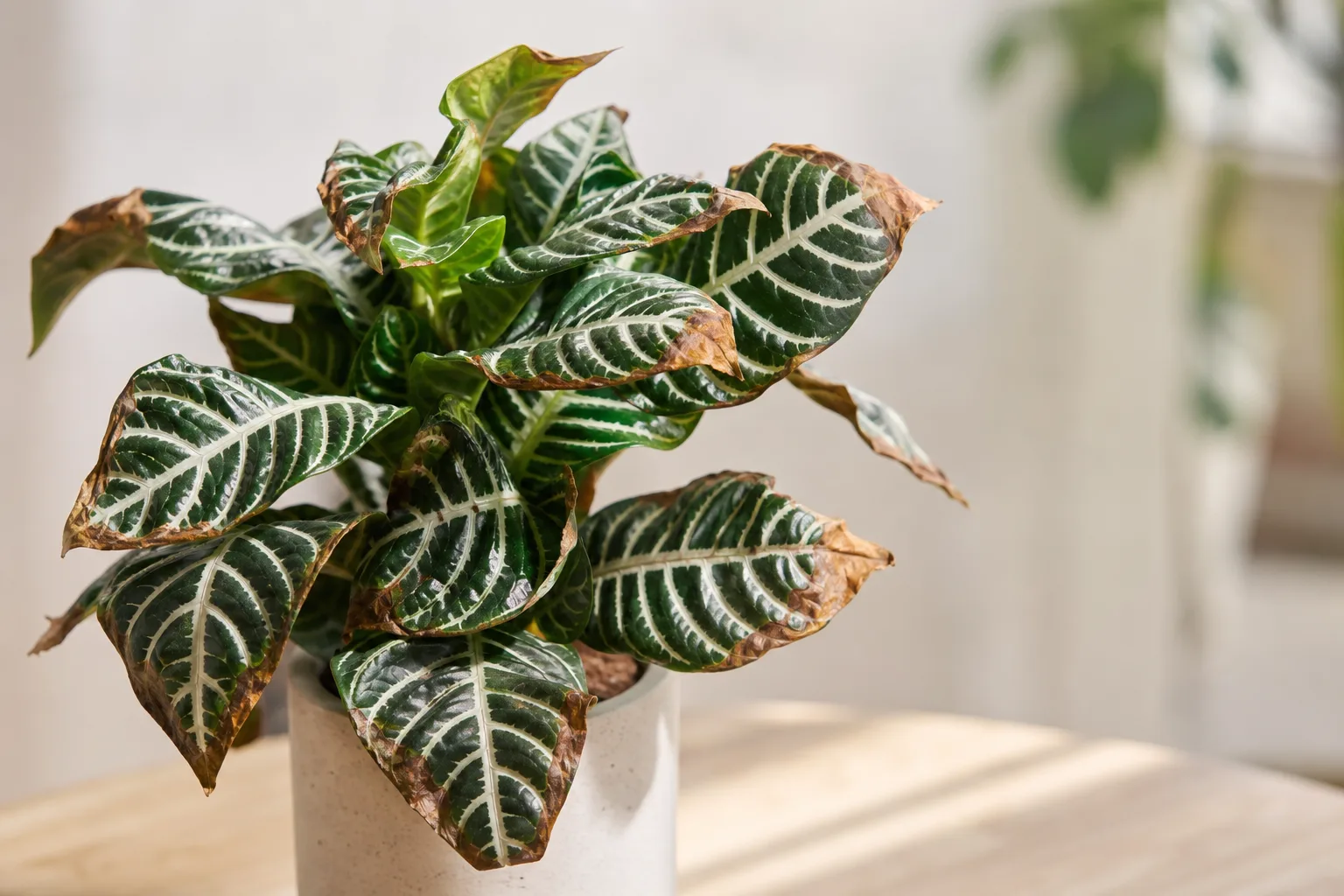
Zebra Plant needs roughly 60–70% humidity-far above most heated homes. Brown tips on glossy striped leaves, inward curling, and dropped yellow bract buds in winter usually mean dry air. First step: measure humidity at the pot and run a humidifier nearby before changing watering or fertilizer.
Low Humidity on Zebra Plant: Causes, Checks & Fixes
This guide covers low humidity on Zebra Plant. See also the general Low Humidity guide, watering, and light pages for this plant.
Low Humidity on Zebra Plant: Causes, Checks & Fixes
Quick answer
Zebra Plant (Aphelandra squarrosa) evolved in the humid understory of Brazil’s Atlantic Forest. Indoors, its large glossy leaves lose water quickly when relative humidity drops below what the species expects. Brown leaf tips can be caused by low humidity, and the plant requires high humidity and temperatures that do not dip below 65º F-a combination that makes dry winter rooms a common failure point.
First step: measure humidity at canopy height with a hygrometer, then run a humidifier within a few feet of the pot. Most heated homes sit near 20–35% RH in winter. Zebra Plant does best around 60–70%. If your gauge reads below 50% and you see brown margins on striped leaves without waterlogged soil, dry air is the most likely culprit-not a mystery disease.
What low humidity looks like on Zebra Plant
Low humidity stress on Aphelandra squarrosa shows up on the foliage and flowers you bought the plant for:
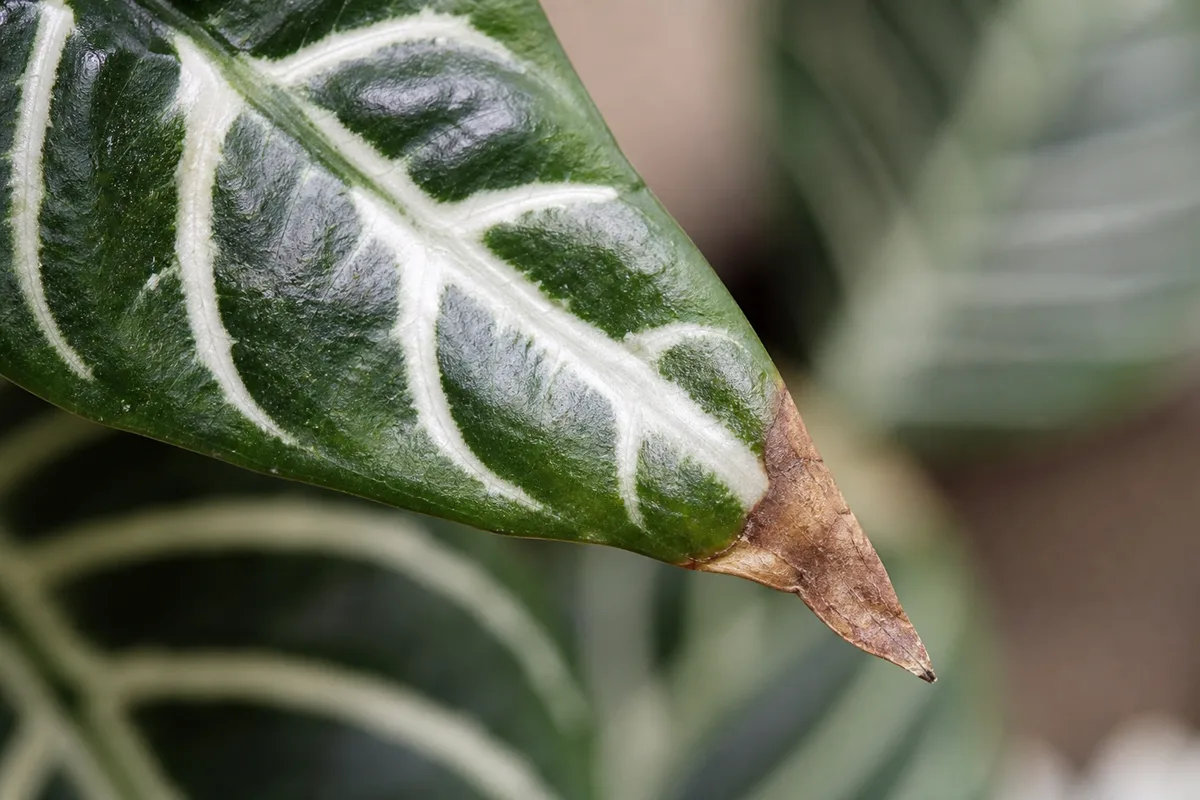
Low Humidity symptoms on Zebra Plant - compare with healthy tissue on the same plant.
Leaf symptoms:
- Brown or tan crisping at leaf tips and along margins, often starting on the oldest lower leaves closest to heating vents
- Papery, dry edges that break when bent-distinct from soft yellowing from overwatering on Zebra Plant
- Inward curling of the glossy dark green leaves, making white zebra striping look tighter and less flat
- Slow emergence of new leaves with already-browned tips
Flower and bud symptoms:
- Yellow bract buds forming at stem tips, then aborting before the spike opens
- Short-lived blooms when the plant finally flowers in dry air
- General stall in growth during winter even when soil moisture seems fine
Pattern clues:
- Damage appears or worsens after you turn on central heat or move the pot near a window with a radiator below
- Only the plant on the dry windowsill shows symptoms while grouped tropicals in a humid bathroom look fine
- Symptoms develop gradually over weeks rather than overnight collapse
Foliage may scorch in dry or drafty locations, which on Zebra Plant often means heated air is pulling moisture from those broad leaves faster than roots can replace it.
Why Zebra Plant struggles in dry air
Zebra Plant is not a forgiving succulent. It is a broadleaf evergreen houseplant for bright, humid areas with thick, ovate leaves that transpire heavily. Each leaf can reach 9 inches long with an entire to slightly wavy margin-lots of surface area losing water when indoor air is desert-dry.
Several home conditions stack against it:
Winter heating. Forced-air heat can drop room humidity into the 20–30% range. The plant may sit in acceptable temperature but still fail because vapor pressure deficit is too high for tropical foliage.
AC and dehumidified summers. Air conditioning removes moisture as effectively as heat. A Zebra Plant near a cold-air return can show summer tip burn that mimics winter damage.
Drafty placement. Hot drafts from radiators and cold drafts from frequently opened doors both increase water loss through leaves. MOBG notes scorch risk in dry or drafty spots-on Zebra Plant overview that often starts as margin browning, not full-leaf death.
Dry air invites spider mites. Plants under water stress are highly susceptible to spider mites, and mites thrive in hot, dusty, dry conditions. A Zebra Plant already stressed by low humidity can develop stippling and webbing on leaf undersides, compounding the crisp edge damage.
Humidity and watering interact. Aphelandra squarrosa wants consistent moisture in the soil and high air humidity together. Dry air accelerates soil drying, which can push you toward underwatering on Zebra Plant-or toward overcompensating with extra water that keeps roots wet while leaves still crisp from dry air.
How to confirm low humidity is the cause
Work through these checks before Zebra Plant repotting guide, fertilizing, or spraying pesticides:
- Hygrometer reading - Place a digital hygrometer at the same height as the top leaves, within 30 cm of the pot. Below 50% with browning margins strongly suggests dry air. Above 60% points you toward other causes.
- Soil moisture - Stick a finger into the top inch of mix. Evenly moist soil with crisp leaf edges fits humidity stress. Bone-dry soil with limp stems suggests underwatering. Wet, sour-smelling mix suggests overwatering-yellow lower leaves are more common there.
- Location audit - Note distance to heating vents, radiators, fireplace, open windows, and AC blowers. Zebra Plant within 1 meter of a heat source almost always sees winter tip burn.
- Seasonal timing - Did symptoms start within weeks of turning on heat or moving the plant for winter? Seasonal correlation supports humidity over sudden pest or disease onset.
- Leaf underside inspection - Use a hand lens on the backs of striped leaves. Fine stippling, bronze discoloration, or silk webbing means spider mites exploiting dry conditions-not humidity acting alone.
- Water quality check - Brown tips only on oldest leaves with white crust on soil surface may indicate salt or fluoride burn rather than humidity. If you use hard tap water, flush the pot and compare new growth after switching to filtered water.
If humidity reads low, placement is dry, soil moisture is reasonable, and no mites are present, you have enough to treat air moisture first.
First fix for Zebra Plant
Run a cool-mist or evaporative humidifier within 1–2 meters of the plant and aim for 60–70% relative humidity at canopy height.
This single step addresses the root environmental gap. Grow in humidified rooms, place pots on a bed of wet pebbles, or grow in bathrooms to meet humidity needs-but a humidifier is the most reliable way to hit a stable target in a dry living room. NC State likewise recommends placing pots on a bed of wet pebbles or growing in bathrooms when natural humidity falls short.
Do not start with heavy misting, repotting, or fertilizer. Misting raises humidity for minutes, then leaves dry faster as water evaporates off glossy foliage. Repotting adds root stress without fixing air moisture. Fertilizer on a humidity-stressed Aphelandra can scorch margins further.
Move the pot away from heating vents the same day you start the humidifier. Humidity and placement work together-running a humidifier while the plant sits in a radiator’s dry blast wastes effort.
Step-by-step recovery
After the humidifier is running and placement is corrected:
- Monitor daily for one week - Track hygrometer readings at canopy height. Adjust humidifier output until you hold 60–70% consistently, not just for an hour after filling the tank.
- Maintain even soil moisture - Water when the top inch of peat-based mix feels dry, then let excess drain fully. Do not let the pot go bone dry while fixing humidity; dry roots plus dry air accelerates leaf drop.
- Trim only fully dead tissue - Snip leaves that are mostly brown if they look unsightly. Leave partially damaged leaves in place-they still photosynthesize while new growth develops.
- Inspect for spider mites every three days - Check leaf undersides with a lens. If you find stippling or webbing, rinse undersides with plain water in the morning and keep humidity high-mites reproduce quickly in dry air.
- Add a pebble tray as backup - Set the pot on stones in a tray of water with the pot bottom above the waterline. This supplements the humidifier near the foliage zone.
- Group with other tropicals - Clustering plants raises local humidity a few percentage points through shared transpiration. Do not overcrowd to the point airflow stops-that invites fungal issues on dense Aphelandra foliage.
Hold off on repotting and fertilizer until new leaves emerge without fresh tip burn for at least two weeks.
Recovery timeline
Humidity correction is slow but steady. Within three to seven days of stable 60%+ RH, you should see no new browning on expanding leaves. Existing crisp margins remain permanent.
New leaves with clean white veining typically appear within two to four weeks during active growth seasons (spring through early fall). Winter recovery may take longer if the plant is in semi-dormancy with reduced watering.
Bud formation on Zebra Plant is humidity-sensitive. If bracts dropped from dry air, expect the next bloom attempt only after several weeks of stable conditions-often the following summer if winter stress was severe.
Judge success by new growth quality, not old leaf appearance. One clean new leaf is a better sign than a fully green older leaf that continues to crisp at its tip.
Lookalike symptoms to rule out
Underwatering - Soil pulls away from the pot sides, feels dust-dry deep down, and leaves go limp before edges crisp. Rehydrate the root zone; humidity fixes alone will not revive a dehydrated plant.
Overwatering and root rot on Zebra Plant - Yellowing lower leaves, soft stems at the base, and sour-smelling soil despite wet mix. Drooping leaves or stems can also mean too much water. Unpot only if roots feel mushy-do not repot on day one for humidity symptoms.
Fluoride and salt burn - Brown tips on oldest leaves only, often with white mineral crust on soil. Common when watering Aphelandra with unfiltered tap water. Switch to filtered or rainwater and flush the pot; if new growth stays clean at 60% humidity, water quality was the driver.
Fertilizer burn - Crispy margins after a recent heavy feed, sometimes with white salt crust. Flush soil and pause feeding until humidity and new growth stabilize.
Cold damage - Temperatures that dip below 65º F cause leaf drop and bud loss that mimics humidity stress. Check thermostat and window proximity; cold-damaged leaves often drop whole rather than tip-crisp gradually.
Spider mites alone - Bronze stippling concentrated on undersides with fine webbing, sometimes without obvious margin burn first. Raise humidity and rinse leaves; mites in dry air can look like humidity damage until you inspect closely.
Mistakes to avoid
Do not rely on occasional misting as your only humidity strategy. It provides a brief spike and can leave glossy leaves wet overnight if done late in the day.
Do not place the humidifier on the opposite side of a large room and assume the plant benefits. Measure at the canopy, not at the humidifier vent.
Do not crank heat without adding moisture. Warm air holds more water vapor in theory, but active heating usually lowers relative humidity where the plant sits.
Do not overwater to compensate for dry leaves. Soggy peat while air stays dry rots roots without fixing tip burn.
Do not fertilize a stressed Zebra Plant hoping to push new growth. Feed only after humidity stabilizes and new leaves look healthy.
Do not discard the plant because old tips stay brown. Aphelandra is considered short-lived but easily propagated from stem cuttings-recovery through new growth is realistic if roots are sound.
Zebra Plant care cross-check
Low humidity rarely exists in isolation on this species. Confirm the rest of the care baseline while you raise moisture:
- Light - Zebra Plant light guide, no direct hot sun through glass. Too much sun plus dry air scorches striped leaves faster.
- Temperature - Keep above 65º F year-round; avoid cold window sills in winter.
- Watering - Even moisture; top inch dry before rewatering. Reduce slightly in winter semi-dormancy but never let the pot go completely dry for days.
- Soil - Well-drained, acidic, peat-based mix with perlite. Dense soggy mix worsens any stress.
- Airflow - Gentle circulation prevents fungal issues but avoid constant hot or cold drafts.
When humidity, light, moisture, and temperature align, Zebra Plant produces the bold striped foliage and yellow bracts it is grown for.
How to prevent low humidity next time
Run a humidifier from the first day you turn on central heat-not after tips already browned. Prevention is easier than reversing weeks of marginal damage on slow-growing Aphelandra.
Choose placement before purchase: if your home stays below 40% RH all winter and you will not use a humidifier, Zebra Plant will struggle no matter how carefully you water.
Group tropical houseplants to share transpired moisture, and use pebble trays under humidity-sensitive pots as a supplement, not a substitute, for a humidifier in very dry rooms.
Monitor with a hygrometer seasonally. Humidity crashes are predictable when heating or AC cycles change.
Quarantine new Zebra Plants for two weeks and confirm humidity at their new spot before expecting bract formation. Retail greenhouse humidity does not survive a dry living room without help.
When to worry
Low humidity alone is a chronic stress problem, not an overnight killer. Escalate when:
- More than half the leaves drop within a week despite corrected watering-check roots for rot and temperature for cold exposure
- Spider mite webbing covers multiple stems and stippling spreads daily-dry air plus mite feeding can defoliate Aphelandra quickly
- Every new leaf emerges already browned after four weeks of humidifier use-reassess water quality, fertilizer history, and light intensity
- Stems go soft at the base with foul-smelling soil-this is rot, not humidity, and needs root inspection
If only older tips are crisp, the humidifier is new, and one or two new leaves look clean, you are on track. Patience matters on a plant with a slow growth rate.
Conclusion
Dry indoor air is one of the most common reasons Zebra Plant disappoints growers who otherwise water and light it correctly. Measure humidity at the foliage, run a humidifier as your first fix, and move the pot away from heating vents. Old crisp tissue will not heal, but new striped leaves tell you whether the environment finally matches what Aphelandra squarrosa expects. Get air moisture right before you change pots, fertilizer, or watering habits-and inspect for spider mites if dry conditions persisted long enough for pests to move in.
When to use this page vs other Zebra Plant guides
- Zebra Plant watering guide - Use for routine moisture checks before assuming low humidity is the main issue.
- Zebra Plant problems hub - Browse all 32 common issues on this species.
- Brown Tips on Zebra Plant - Different entry point when symptoms overlap with low humidity.
- Curling Leaves on Zebra Plant - Different entry point when symptoms overlap with low humidity.
- Leaf Drop on Zebra Plant - Different entry point when symptoms overlap with low humidity.