Root Rot on Zebra Plant: Causes, Checks & Fixes
Quick answer
Root rot on Aphelandra squarrosa follows chronic wet soil-usually after overwatering, poor drainage, or cool dim rooms below 65°F. Stop watering, unpot to inspect roots and crown tissue, trim mushy roots, air-dry briefly, and repot into fresh peat-perlite mix in a same-size or smaller pot.
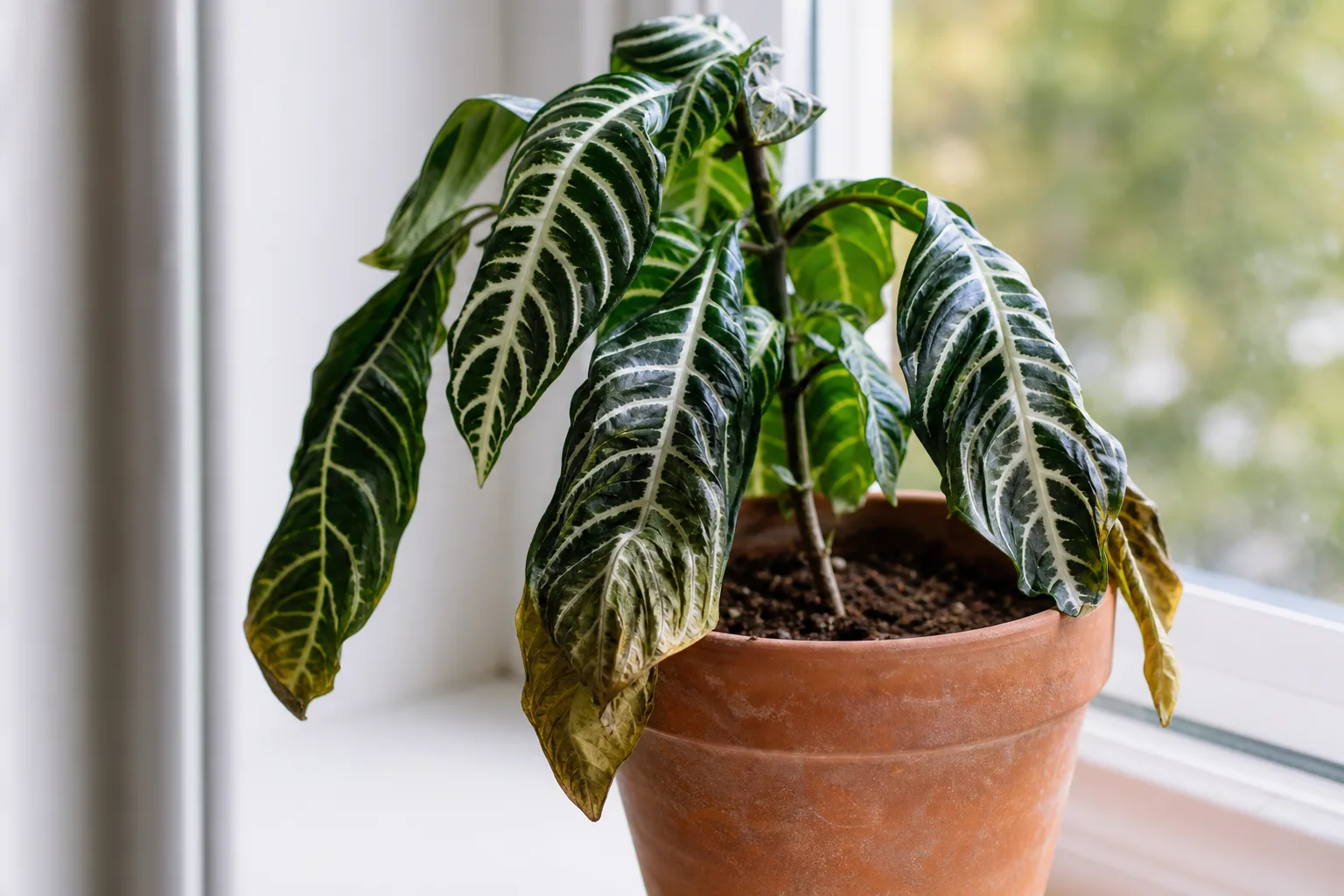
Root Rot on Zebra Plant: Causes, Checks & Fixes
This guide covers root rot on Zebra Plant. See also the general Root Rot guide, watering, and light pages for this plant.
Root Rot on Zebra Plant: Causes, Checks & Fixes
Quick answer
Root rot on Zebra Plant (Aphelandra squarrosa) is confirmed tissue damage-not a vague “sick plant” label. By the time roots turn mushy, chronic overwatering or poor drainage has usually been underway for weeks. This page is for confirmed rot rescue after inspection: stop water, trim bad roots, repot, and monitor recovery. If you have wet soil and drooping leaves but have not unpot yet, start with the overwatering guide for early triage.
First action: stop watering and unpot today. Aphelandra needs consistent moisture year around yet does not like wet feet. When peaty mix stays saturated in dim, cool rooms, roots suffocate and crown rot may occur. Inspect the root ball and crown before the stem base softens beyond recovery.
What root rot looks like on Zebra Plant
Root rot on Aphelandra rarely announces itself with a single obvious sign. Growers often notice a combination of wet-soil symptoms that look like thirst-until inspection reveals destroyed roots.
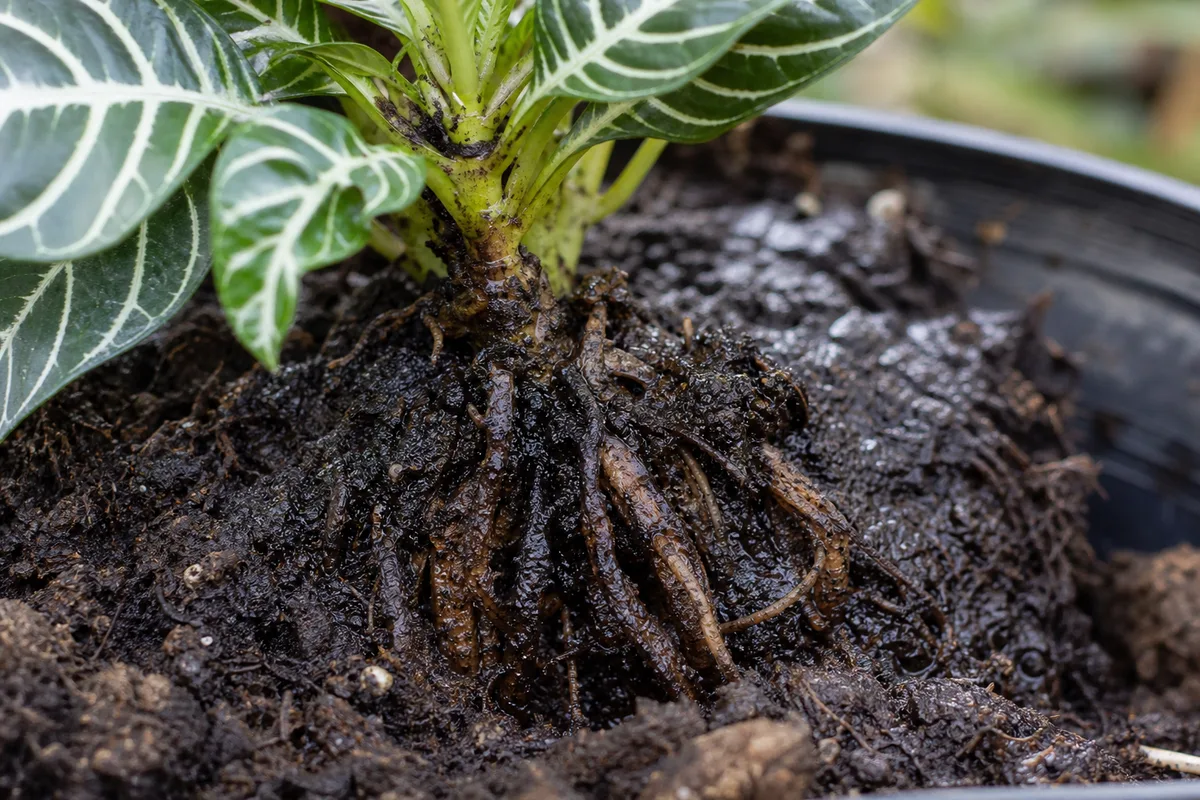
Root Rot symptoms on Zebra Plant - compare with healthy tissue on the same plant.
Striped lower leaves yellowing on wet soil
Lower opposite leaves turn yellow and drop while the top inch of mix stays damp or soggy for days. The bold white veining on dark green foliage makes bottom-up yellowing easy to spot-unlike crisp brown tips from low humidity, overwatering and rot yellow whole lower leaves that may feel soft rather than papery. Upper striped foliage can still look green while roots fail underneath.
The wet-wilt trap
Stems and leaves droop even though the pot feels heavy and cool. Wilted leaves with wet soil mean rotting roots cannot take up water-the classic wet-wilt paradox. Many growers see limp striped leaves and pour more water, which accelerates anaerobic conditions in the root zone. If wilting worsens daily on wet mix, rot is advancing.
Soft crown tissue and sour-smelling mix
Crown tissue at the soil line can soften-a serious signal on Zebra Plant overview. Crown rot and leaf spots may occur when stagnant wet peat surrounds the stem base. A sour or rotten odor from drainage holes, white mold on the soil surface, or fungus gnats hovering near the pot often accompany advanced rot. Healthy Aphelandra roots are pale tan or white and firm; brown, slimy roots that fall apart when touched confirm damage.
Why Zebra Plant gets root rot
Root rot is the end stage of roots sitting in oxygen-starved, waterlogged soil-not a random fungal attack on an otherwise healthy plant.
Moisture tension: even moisture vs. wet feet
Zebra Plant evolved in northeast and southeast Brazil as a tropical broadleaf that prefers moist conditions along with tropical heat. Indoors, “keep it moist” gets misread as frequent heavy soaking. NC State advises to water frequently, not thoroughly-smaller drinks that maintain even moisture, not flooding. When that rhythm breaks and soil stays saturated, roots in waterlogged soil cannot absorb the oxygen they need and begin to decay.
Winter semi-dormancy and post-bloom rest mismatch
The plant experiences semi-dormancy in winter with reduced but not stopped watering. MOBOT notes a resting period with slightly reduced watering after flowering. Continuing summer-frequency watering during rest floods roots that are barely growing-a common post-bloom rot trigger growers miss.
Oversized pots, heavy peat mix, and low light
MOBOT recommends a well-drained, peaty potting mixture. Peat retains moisture, which helps meet the do not dry out rule, but in dim corners or oversized pots it stays wet long after the plant stops using water. Zebra Plant needs bright indirect light; weak light slows transpiration so the same watering routine keeps soil wetter than roots tolerate. Cool rooms below the 65º F minimum compound the problem.
Misreading striped-leaf droop as thirst
Drooping leaves or stems can also mean too much water on Aphelandra-not only drought. Sympathy watering after a droop episode is one of the fastest routes from early overwatering to confirmed rot.
How to confirm root rot
Work through this checklist before you trim or repot. Each item builds evidence; you need several aligned signals-not one yellow leaf alone.
- Top-inch moisture - Soggy or cold wet surface mix three or more days after watering supports rot risk. Bone-dry surface with limp leaves points to underwatering instead.
- Pot weight - A heavy, cool pot usually means wet mix throughout. Compare to how the pot felt when you last watered correctly.
- Smell - Sour or rotten odor from drainage holes strongly confirms anaerobic root-zone conditions.
- Stem firmness at soil line - Press the base gently. Soft, mushy tissue at the crown escalates urgency; firm green stem above the soil is salvageable.
- Root inspection - Unpot and brush away mix. Pale firm roots mean look elsewhere; brown slimy roots confirm rot.
- Light and temperature context - Dim placement below 65º F with chronic wet soil is a common hidden setup for rot on this species.
If roots are still mostly firm when you unpot, you may be at early overwatering-not full rot. Route to the overwatering guide and pause watering until the top inch dries.
Lookalikes: how to tell rot apart
| Pattern | Soil / pot | Roots (if inspected) | Likely cause |
|---|---|---|---|
| Limp striped leaves, lower yellow drop | Wet, heavy, sour smell possible | Brown, mushy, slimy | Root rot (this page) |
| Wilting, brown lower leaves | Dry throughout, light pot | Firm, pale | Underwatering |
| Crisp brown tips, firm stems | Variable; often dry surface | Firm | Low humidity |
| Sudden leaf drop | Any; check thermometer | Often firm unless double-stressed | Cold below 65º F |
| Yellow lower leaves, heavy pot | Wet top inch for days | Still firm, no sour smell | Early overwatering - act before rot |
First fix for Zebra Plant
Stop watering and unpot the same day you suspect rot. Delay lets crown tissue fail beyond recovery.
Assess severity before you cut
- Mild - Mostly firm roots with scattered mushy tips; crown solid at soil line
- Moderate - 30–50% root mass brown and slimy; crown still firm
- Severe - Majority mushy roots, sour smell, or softening at stem base
Mild and moderate cases can recover after trim and repot. Severe crown involvement may require stem-cutting propagation as the only salvage path.
Numbered trim, air-dry, and repot workflow
- Unpot carefully - Slide the plant out over newspaper or a sink. Shake away wet old mix without tearing remaining healthy roots.
- Inspect crown and roots - Healthy Aphelandra roots are firm and pale. Cut away all brown, mushy roots and any soft crown tissue with clean scissors until you reach firm material.
- Air-dry briefly - Let trimmed roots sit in shade with good airflow for two to four hours so cut surfaces callous slightly. Do not leave roots baking in direct sun.
- Repot in fresh mix - Use peat-based potting soil with extra perlite per the soil guide. Choose a pot with drainage holes sized to the remaining root mass-same size or smaller, never dramatically oversized. See the repotting guide for technique.
- Hold water initially - Wait until the top inch of fresh mix dries before the first cautious drink. Then follow the watering guide rhythm: frequently, not thoroughly.
- Bright indirect light and humidity - Move to the brightest indirect spot available. Maintain high humidity around foliage with wet pebbles or a humidifier without soaking the crown or keeping root-zone mix saturated.
When stem-cutting propagation is the only salvage path
If the crown at soil level is fully mushy with no firm green stem above it, saving the root ball is unlikely. Before discarding the plant, check for firm stem sections above the damage. Aphelandra propagates easily from stem cuttings obtained during pruning. Take tip cuttings with at least two nodes, root under a humidity dome, and follow the full propagation guide. This species is listed as non-toxic to cats and dogs, but handle rotted tissue with clean tools.
Recovery timeline
Mild rot (firm crown, under 30% root loss): Expect stabilization within one to two weeks after repot. Yellow lower leaves will not re-green, but new tip growth and firmer stems confirm progress. Soil should dry at the top inch within three to five days in your home conditions.
Moderate rot (30–50% root loss): Recovery takes several weeks to a few months. Continued leaf drop while new roots form is normal. Do not fertilize until new growth looks normal-MOBOT suggests a weak fertilizer solution every few weeks only after new growth appears in late winter, not while roots are rebuilding.
Severe crown involvement: May take a full growing season to assess-or fail despite surgery. Worsening signs include spreading soft tissue at the base, collapse of multiple stems, or sour smell returning after you corrected watering. At that point, propagation cuttings or disposal are the realistic options.
Improvement signs: Lighter pot between waterings, new leaves opening at stem tips, firm crown tissue, soil drying predictably at the surface.
Worsening signs: Daily collapse despite dry surface, blackening tissue climbing the stem, foul odor returning within a week of repot.
What not to do
- Water because striped leaves look wilted when soil is already wet-the wet-wilt trap worsens rot
- Repot into a much larger container “to help drying”-extra soil holds more water around slow-growing roots
- Fertilize a stressed rotting plant to “boost” it-salts in wet mix add root stress
- Soak the crown while boosting humidity-keep moisture in the air, not stagnant water at the stem base
- Wait a week to inspect when stems soften at the soil line-crown rot on Aphelandra moves fast
- Assume all droop means drought without checking whether the pot is heavy and wet
How to prevent root rot next time
Build prevention around the Zebra Plant watering guide triangle-moisture rhythm, drainage, and light-not calendar autopilot:
- Check the top inch before every watering; moist below but dry at the surface is the usual trigger
- Use well-drained acidic potting soil with enough perlite for airflow
- Keep pots on wet pebbles or use a humidifier for high humidity needs without saturating the root zone
- Place in bright indirect light so the plant uses water steadily
- Maintain temperatures that do not dip below 65º F
- Reduce watering slightly after flowering and through winter semi-dormancy
- Empty saucers within 30 minutes of every watering
- Size pots to root mass, not canopy spread
Catch early overwatering before roots decay-see the overwatering guide when soil stays wet but roots are still firm.
When root rot is urgent
Treat these as same-day escalation:
- Stems softening at the soil line
- Sudden collapse of the whole plant with wet mix and foul odor
- Blackening tissue spreading up from the base
- Wilting that worsens daily despite wet soil
- More than half the root mass mushy on inspection
At this stage, stop watering, unpot, trim rot, and repot-or take propagation cuttings-the same day. Delay lets crown tissue fail beyond recovery.
Closing summary
| Situation | Action |
|---|---|
| Wet soil, droop, roots not yet checked | Overwatering guide - pause water, confirm wet soil |
| Mushy roots, firm crown | This page - trim, air-dry, repot same-size pot, wait to water |
| Soft crown, firm stem above | Aggressive trim; if crown gone, propagate from healthy tips |
| Roots firm, soil drying normally | Rot unlikely - check light, humidity, or yellow leaves causes |
Root rot on Zebra Plant is survivable when you catch it while crown tissue stays firm. The rescue workflow is inspect, trim, repot small, wait to water, and watch new tip growth-not another soak for sad-looking leaves.
When to use this page vs other Zebra Plant guides
- Zebra Plant watering guide - Use for routine moisture checks before assuming root rot is the main issue.
- Zebra Plant problems hub - Browse all 32 common issues on this species.
- Overwatering on Zebra Plant - Different entry point when symptoms overlap with root rot.
- Yellow Leaves on Zebra Plant - Different entry point when symptoms overlap with root rot.
- Wilting on Zebra Plant - Different entry point when symptoms overlap with root rot.