Overwatering on Zebra Plant: Causes, Checks & Fixes
Quick answer
Stop watering and check the top inch of soil. If it stays wet for days while stems droop or lower leaves yellow, overwatering is likely-not a need for more water. Let the surface dry before the next drink and empty saucers after every watering.
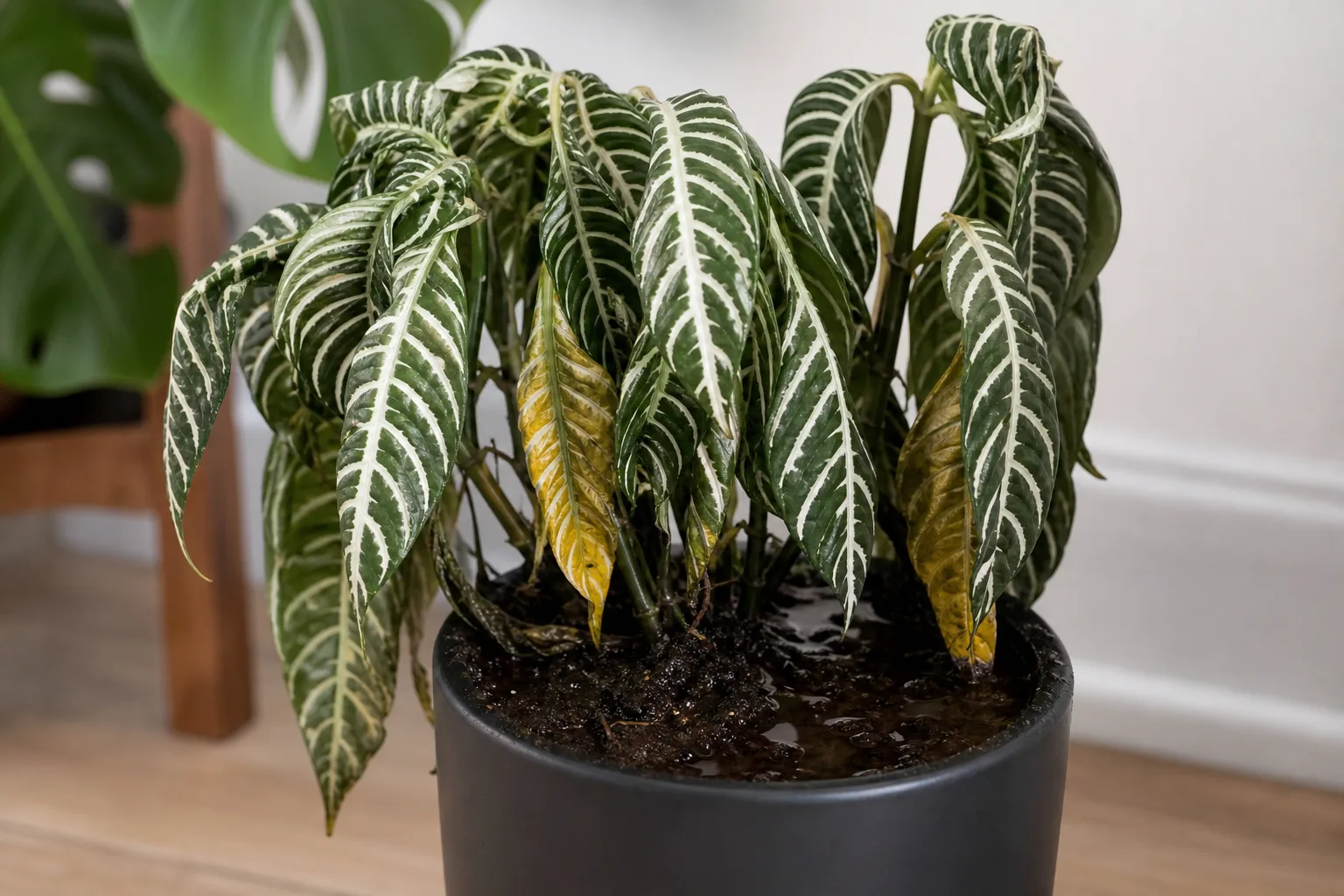
Overwatering on Zebra Plant: Causes, Checks & Fixes
This guide covers overwatering on Zebra Plant. See also the general Overwatering guide, watering, and light pages for this plant.
Overwatering on Zebra Plant: Causes, Checks & Fixes
Quick answer
If your Zebra Plant looks wilted but the pot feels heavy, stop watering-that is the first and most important step. Aphelandra squarrosa needs consistent moisture year around, yet this plant does not like wet feet. Those two facts sit in tension: the mix should stay evenly moist without becoming waterlogged. Wet soil for days while stems droop or lower leaves yellow means you have crossed from “even moisture” into overwatering-not a signal to add more water.
What overwatering looks like on Zebra Plant
Overwatering on Zebra Plant often shows up before roots are fully destroyed, but the signs are easy to misread because drooping also appears when the plant is too dry.
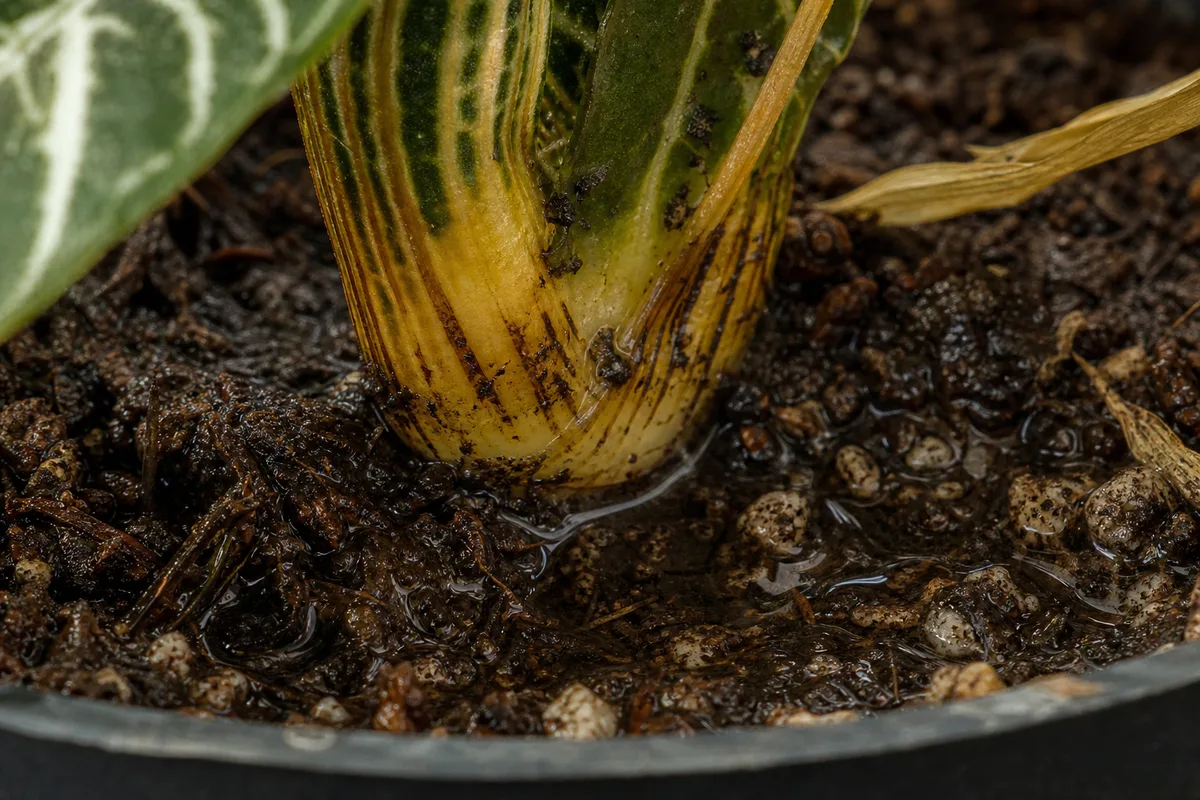
Overwatering symptoms on Zebra Plant - compare with healthy tissue on the same plant.
Early overwatering patterns:
- Top inch of soil stays damp or soggy several days after watering
- Pot feels heavy and cool when lifted
- Lower leaves turn yellow and drop while upper striped foliage still looks green
- Stems and leaves droop even though the mix is wet
- White mold or algae on the soil surface
- Small flies hovering near the pot-fungus gnats breed in constantly wet peat
Progressive damage:
- Leaf margins brown from the bottom up, sometimes with edema-like blistering on glossy dark green tissue
- Stems soften at the base near the soil line-crown rot risk
- Sour or rotten smell from the potting mix
- New growth stalls or aborts while old leaves continue dropping
The striped foliage makes yellowing easy to spot against the white veining. Unlike crisp brown tips from low humidity, overwatering yellows whole lower leaves that may feel soft rather than papery. A healthy Zebra Plant holds its opposite leaves fairly upright on erect stems; chronic wet soil produces a limp, collapsed look with wet mix-a combination that underwatering rarely produces.
Why Zebra Plant gets overwatering
Zebra Plant evolved in northeast and southeast Brazil as a tropical broadleaf evergreen that prefers moist conditions along with tropical heat. Indoors, growers hear “keep it moist” and interpret that as frequent heavy soaking. NC State’s guidance to water frequently, not thoroughly describes smaller regular drinks that maintain even moisture-not flooding the pot on a fixed schedule.
Several habits push Aphelandra squarrosa into saturated soil:
Calendar watering without checking soil. Watering every few days regardless of season ignores how fast the pot dries. Cool rooms below the 65º F minimum, short winter days, and post-bloom rest slow water uptake dramatically.
Peaty mix holding water too long. MOBOT recommends a well-drained, peaty potting mixture. Peat retains moisture-which helps meet the “do not dry out” rule-but in dim corners or oversized pots it stays wet long after the plant has stopped using water. Without enough perlite, roots sit in stagnant mix.
Low light slowing dry-down. Zebra Plant needs bright indirect light. In weak light, photosynthesis and transpiration drop, so the same watering routine keeps soil wetter than the roots can handle.
Poor drainage setup. Pots without holes, saucers left full after watering, or decorative cache pots trap runoff. Even a correct watering amount becomes overwatering when water cannot escape.
Misreading droop as thirst. Drooping leaves or stems can also mean too much water. Many growers see limp striped leaves and pour more water, accelerating root damage.
Winter and post-bloom rest mismatch. The plant experiences semi-dormancy in winter with reduced but not stopped watering. MOBOT notes a resting period with slightly reduced watering after flowering. Continuing summer-frequency watering during rest floods roots that are barely growing.
How to confirm the cause
Work through these checks in order before repotting or trimming:
- Soil moisture at the top inch - Stick a finger into the surface layer. Soggy or cold wet mix for three or more days after your last watering supports overwatering. Dry, dusty surface with limp leaves points to underwatering instead.
- Pot weight - Lift the container. A heavy, cool pot usually means wet mix throughout. A light pot with drooping leaves suggests dryness.
- Drainage test - Water until runoff appears, then check that the saucer can be emptied within 30 minutes. Standing water confirms a drainage problem feeding overwatering.
- Light and temperature - Is the plant in bright indirect light above 65º F? Dim, cool placement slows drying and is a common hidden cause of chronic wet soil.
- Leaf pattern - Yellowing from the bottom up with wet soil fits overwatering. Crisp brown tips on otherwise firm leaves with dry soil fit low humidity or fluoride stress-not excess water.
- Smell and surface growth - Sour odor, white mold on soil, or fungus gnats strongly confirm waterlogged conditions.
If the top inch is dry, the pot is light, and leaves are drooping, underwatering is more likely. Do not assume overwatering without confirming wet soil.
Lookalike symptoms
Underwatering also causes wilt, leaf drop, and brown lower leaves on Zebra Plant. The difference is soil texture: underwatered plants have dry mix deep in the pot, and leaves dropping can indicate soil is too dry. Overwatered plants wilt with wet mix and often smell sour.
Low humidity produces brown leaf tips and crispy margins while the caudex and stems stay firm-unlike the soft limp collapse of chronic wet roots. Humidity problems rarely make the pot heavy.
Cold damage below 65º F can drop leaves suddenly. Check the thermometer before blaming watering; cold-stressed plants in wet soil face double injury.
Root rot is often the end stage of chronic overwatering. If stems blacken at the base with mushy roots, see the root rot guide for trimming and repotting steps after you stabilize moisture.
The first fix to try
Stop watering until the top inch of soil dries.
Do not give another drink until you can feel dry or barely damp surface mix-not bone dry throughout the pot, because soils must not be allowed to dry out completely, but the saturated layer at the top needs to recover. Empty any water sitting in the saucer now.
Move the pot to the brightest indirect light available so remaining moisture evaporates faster. Increase gentle airflow around the plant, but do not stack repotting, heavy pruning, fertilizer, or pesticide sprays on the same day. One correction at a time shows what actually helped.
When the top inch dries, resume with a modest drink-enough to moisten the mix without flooding-and pour off excess from the saucer within 30 minutes.
Step-by-step recovery when roots may be damaged
If stopping water and improving light do not stabilize the plant within a week, or stems soften at the base, inspect roots:
- Unpot carefully - Slide the plant out and brush away mix. Healthy Aphelandra roots are firm and pale tan or white. Mushy brown roots are rot.
- Trim only rotten tissue - Cut away soft roots and any mushy crown tissue with clean scissors until you reach firm material. Leave as much healthy root mass as possible.
- Air-dry briefly - Let trimmed roots sit in shade with good airflow for a few hours so cuts callous slightly.
- Repot in fresh mix - Use peat-based potting soil with extra perlite in a pot with drainage holes sized to the root mass-not dramatically oversized.
- Hold water initially - Wait until the top inch dries before the first post-repot drink. Then follow the “frequently, not thoroughly” rhythm rather than deep soaking.
If the crown at soil level is fully mushy with no firm tissue above it, saving the plant is unlikely. Take firm stem cuttings above healthy nodes only if green tissue remains-Aphelandra propagates easily from stem cuttings obtained during pruning.
Recovery timeline and what to watch
Minor overwatering caught while stems are still firm often stabilizes within one to two weeks once watering pauses and the top inch dries predictably. Yellow lower leaves will not green up again, but new tip growth and firmer stems confirm recovery.
Moderate root loss takes several weeks. Expect continued leaf drop while the plant rebuilds roots. Do not fertilize until new growth looks normal-MOBOT suggests a weak fertilizer solution every few weeks only after new growth appears in late winter, not while roots are stressed.
Severe crown involvement may take a full growing season to assess. Improvement signs include a lighter pot between waterings, new leaves opening at stem tips, and soil that dries at the top inch within three to five days in your home conditions. Worsening signs-spreading soft tissue at the base, collapse of multiple stems, or sour smell returning after you corrected watering-mean rot is advancing and more aggressive trimming or disposal may be necessary.
Mistakes to avoid
- Watering because leaves look sad without checking whether soil is wet or dry
- Soaking the pot when the problem is already stagnant wet peat
- Repotting into a much larger container “to help drainage”-extra soil holds more water around slow-growing roots
- Misting leaves instead of fixing soil moisture and drainage
- Feeding a stressed plant to “boost” it-salt buildup in wet mix worsens root stress
- Keeping winter watering at summer frequency during semi-dormancy or post-bloom rest
How to prevent overwatering next time
Build a rhythm around soil dryness, not the calendar:
- Check the top inch before every watering; moist below but dry at the surface is the usual trigger
- Use well-drained acidic potting soil with enough perlite for airflow
- Keep pots on wet pebbles or use a humidifier for high humidity needs without letting the root zone stay saturated
- Place in bright indirect light so the plant uses water steadily
- Maintain temperatures that do not dip below 65º F
- Reduce watering slightly after flowering and through winter semi-dormancy
- Empty saucers within 30 minutes of every watering
Zebra Plant is considered short-lived as a houseplant, but steady moisture management-not constant sogginess-extends the healthy years and keeps the bold striped foliage and yellow bracts worth the effort.
When overwatering is urgent
Treat these as immediate escalation:
- Stems softening at the soil line
- Sudden collapse of the whole plant with wet mix and foul odor
- Blackening tissue spreading up from the base
- Wilting that worsens daily despite wet soil-classic sign roots can no longer absorb water
At this stage, stop watering, unpot, and trim rot the same day. Delay lets crown tissue fail beyond recovery. If firm roots and green stems remain after trimming, repot and resume conservative watering. If the crown is gone, propagation from healthy cuttings is the only salvage path.
Related Zebra Plant guides
- Zebra Plant overview
- Zebra Plant watering
- Zebra Plant light
- Root Rot on Zebra Plant
- Underwatering on Zebra Plant
- Yellow Leaves on Zebra Plant
- Fungus Gnats on Zebra Plant
- All Zebra Plant problems
Conclusion
Use this page to confirm overwatering on Zebra Plant by pattern and pot checks-not by treating every houseplant the same. When symptoms overlap with sibling pages, follow the linked guide for the matching cause before stacking fertilizer, repotting, or pesticide.