Underwatering on Zebra Plant: Causes, Checks & Fixes
Quick answer
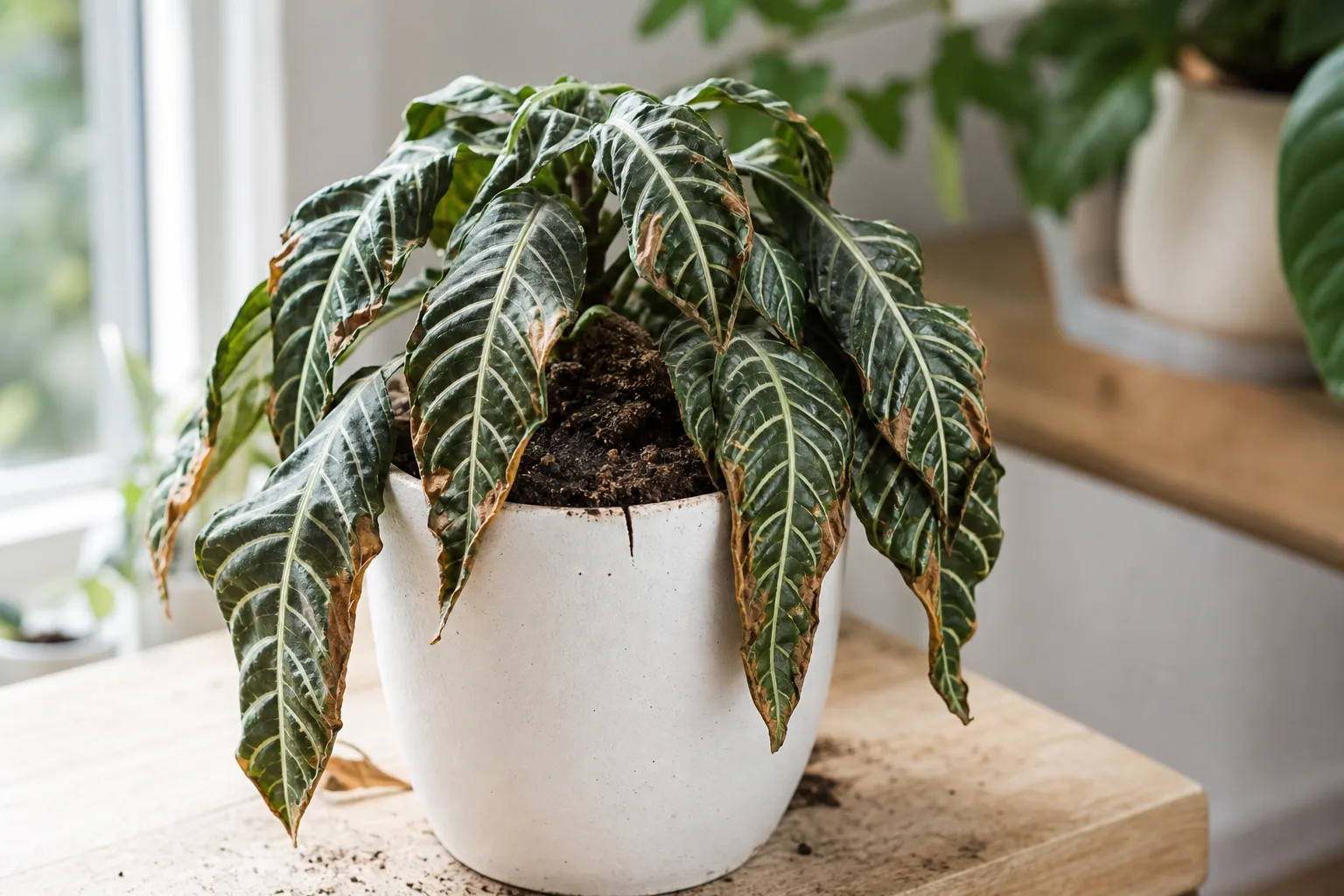
Zebra Plant cannot tolerate dry soil. When the top inch stays dry too long, large striped leaves wilt, edges crisp, and lower foliage drops. First step: water thoroughly until excess drains from the pot, then adjust your schedule to match how fast the mix dries in your home.
Underwatering on Zebra Plant: Causes, Checks & Fixes
This guide covers underwatering on Zebra Plant. See also the general Underwatering guide, watering, and light pages for this plant.
Underwatering on Zebra Plant: Causes, Checks & Fixes
Quick answer
Zebra Plant (Aphelandra squarrosa) is a tropical broadleaf evergreen that expects consistent root-zone moisture, not the dry cycles that suit succulents or cacti. When the top inch of mix stays dry too long, the plant loses turgor fast-large dark green leaves with white zebra stripes go limp, margins turn crispy, and lower leaves drop.
First step: water thoroughly until excess runs from the drainage holes. Use a slow pour or bottom-water for 30 minutes if dry peat repels water on the surface. That single rehydration tells you whether wilt is simple drought or something else, like root rot on Zebra Plant or cold stress.
What underwatering looks like on Zebra Plant
Dry stress on Aphelandra squarrosa shows up in a recognizable pattern:
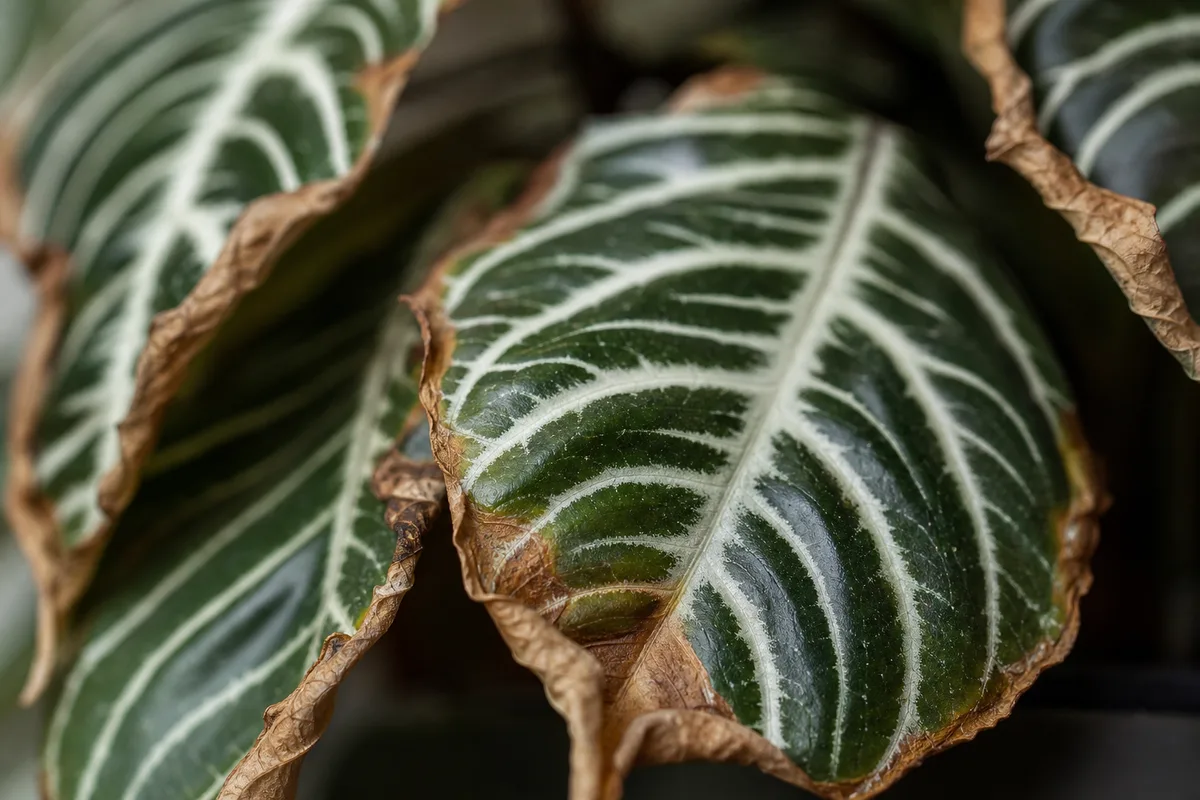
Underwatering symptoms on Zebra Plant - compare with healthy tissue on the same plant.
- Limp, drooping leaves on Zebra Plant on thin upright stems-the glossy striped foliage loses its firm hold and hangs downward
- Dry, crispy brown edges or scorched-looking margins, especially on older lower leaves
- Sudden leaf drop, often starting from the bottom of the plant upward
- Dull, less glossy foliage before full collapse
- Shriveled or dry yellow bracts if the plant was blooming when drought hit
- Very light pot weight and dusty, pale dry mix visible through the top inch
The striped leaves are large-often 6 inches or more-and transpire heavily in warm bright rooms. That size makes Zebra Plant wilt visibly within a day or two of missed water, faster than smaller-leaved houseplants.
Underwatering differs from overwatering on Zebra Plant, where soil stays wet and heavy, lower leaves may yellow while still attached, and roots smell sour or feel mushy on inspection. It also differs from low humidity alone, which typically browns tips without full stem collapse when soil moisture is adequate.
Why Zebra Plant gets underwatered
Aphelandra squarrosa evolved in moist tropical conditions in Brazil. It is grown indoors for its showy veined foliage and yellow-bracted flower spikes, but its water needs are strict year-round.
Treating it like a drought-tolerant plant is the most common mistake. Zebra Plant is not a succulent. Its peat-based mix should stay evenly moist, with watering triggered when the top inch dries-not when the entire pot is bone dry.
Calendar watering causes problems because drying speed changes with season, light, pot size, and room humidity. A weekly schedule that worked in summer may leave the mix parched in winter when heating runs, or in a bright south window where the plant drinks faster.
Hydrophobic old peat creates a hidden drought. When mix dries completely, it can repel water so liquid runs down the pot sides while the root ball inside stays dry. Surface dust looks briefly damp after a quick pour, but the plant keeps wilting.
Small pots in hot, bright spots dry out in one to two days. Zebra Plant wants bright indirect light, which increases water use. A crowded root ball in a tiny container cannot store moisture through a long weekend away.
Winter neglect is risky. The plant enters a semi-dormant rest after flowering, and watering frequency drops-but stopping entirely dries roots during months when indoor heating also lowers humidity. Growth resumes in late winter; dry roots then delay new leaves and bracts.
Travel and inconsistent care hit Zebra Plant overview hard because it lacks the water-storage adaptations of succulents. Even a few days of complete dryness can trigger leaf drop that takes weeks to recover from visually.
How to confirm the cause
Work through these checks before changing your whole care routine:
- Top-inch moisture - Insert a finger or skewer into the top 2.5 cm of mix. Dusty, crumbly, and pale means dry. Cool and slightly damp means wait.
- Pot weight - Lift the container. A light pot with wilted leaves strongly suggests underwatering. A heavy pot with wilt points to root problems or overwatering.
- Water absorption test - Pour slowly. If water pools on top and runs straight through in seconds, the mix may be hydrophobic-not fully wet inside.
- Perk test - After a thorough soak, wait 4–12 hours. Drought-stressed leaves usually firm up. Leaves that stay limp with wet soil need root inspection.
- Draft and temperature check - Cold air below 65°F or hot dry vents can mimic drought symptoms through rapid transpiration and stress leaf drop. Note placement near AC, radiators, or winter window glass.
- Pest scan - Inspect leaf undersides for fine webbing or stippling. Spider mites thrive when Zebra Plant is kept too dry; their damage adds curling and speckling beyond simple wilt.
If the top inch is dry, the pot is light, and leaves perk after watering, underwatering is confirmed. If soil is wet throughout and the base is soft, pivot to an overwatering or root rot diagnosis instead.
First fix for Zebra Plant
Water thoroughly until the entire root zone rewets and excess drains from the bottom holes.
Place the pot in a sink or saucer. Water slowly in stages-pour, wait 30 seconds, pour again-until water runs freely from drainage holes. Discard any standing water in the saucer within 30 minutes. Do not leave the pot sitting in a full tray; Zebra Plant needs moisture, not waterlogged roots.
If water runs off the surface without soaking in, bottom-water for 30–45 minutes: set the pot in a basin of room-temperature water up to the soil line, let the mix wick upward, then drain fully.
Move the plant away from hot dry drafts while it recovers. Raising humidity toward 60–70% reduces further edge crisping while leaves rehydrate.
Do not fertilize, repot, or prune heavily on day one. Rehydration comes first.
Step-by-step recovery
Once the first soak is done, follow this sequence based on severity:
- Mild wilt, dry top inch only - Resume normal watering when the top inch dries again. Expect leaves to firm within hours to one day.
- Hydrophobic mix - Repeat slow top-watering or bottom-watering until the root ball feels evenly moist, not just the surface. Consider top-dressing with fresh moist peat or Zebra Plant repotting guide if water still channels around the edges after two attempts.
- Crispy margins and dropped lower leaves - Trim fully brown dead tissue with clean scissors for appearance only; it will not green up. Keep humidity steady so new growth emerges clean.
- Bud or bract loss - Lost flower bracts will not return on the same spike. Focus on stable moisture and bright indirect light; new bracts form on future growth after the plant stabilizes.
- Repeated dry cycles - If the plant wilted multiple times, expect slower recovery and thinner foliage until new leaves expand. Hold fertilizer until you see healthy new growth for two weeks.
Avoid compensating for drought with daily heavy soaking-that swings into overwatering and invites root rot on a plant that already dislikes wet feet.
Recovery timeline
Hours to 1 day: Limp leaves regain turgor after proper watering if roots are still healthy.
1–2 weeks: New leaf tips emerge; remaining damaged margins stay brown but should not spread.
Several weeks to months: Full visual recovery depends on how much foliage dropped. A lightly stressed plant fills back in quickly. A plant that lost most lower leaves looks sparse until new stems and leaves develop.
Signs recovery is working: Firm upright leaves, glossy striped foliage, stable pot weight between waterings, and new growth at stem tips.
Signs the problem is worsening: Continued leaf drop after rehydration, stems shriveling at the base, mushy roots when unpotted, or wilt that persists with wet soil.
Lookalike symptoms to rule out
Overwatering and root rot - Soil wet for days, sour smell, yellow lower leaves, and mushy brown roots. Wilt with wet mix is not underwatering.
Low humidity - Brown tips and edges without full stem collapse when soil moisture is fine. Often worse near heating vents in winter.
Cold damage - Leaf drop and bud loss when temperatures dip below 65°F or cold drafts hit the plant. Soil may be adequately moist.
Too much direct sun - Scorching and leaf drop on foliage exposed to harsh rays. Zebra Plant wants bright indirect light, not hot midday sun through glass.
Spider mites - Fine stippling, webbing on undersides, and curling in dry air. Mites often follow or accompany underwatering stress.
Mistakes to avoid
Do not wait for the entire pot to go bone dry before watering. The top-inch-dry rule prevents the deep drought cycles that trigger leaf drop.
Do not mist leaves instead of soaking the root zone. Surface misting does not replace soil moisture for a wilted Zebra Plant.
Do not assume drooping always means overwatering-drooping can also signal too much water. Check soil first-dry mix with a light pot means drink, not drain.
Do not drown the plant after drought. One thorough soak, then return to even moisture-not days of sitting in soggy soil.
Do not repot immediately unless mix is permanently hydrophobic or root-bound and drying in hours. Repotting a stressed plant without fixing water rhythm adds shock.
Do not feed a drought-stressed plant. Fertilizer on dry roots can burn tissue.
How to prevent underwatering next time
Check the top inch of mix every few days rather than following a fixed calendar. Water when that layer dries, before leaves wilt.
Keep the plant in bright indirect light with 60–70% humidity-a pebble tray, humidifier, or grouped tropical plants help. Higher humidity slows edge crisping but does not replace soil watering.
Use a well-draining, moisture-retentive peat-based mix with perlite. Refresh or repot when old peat becomes hydrophobic or the root ball outgrows the pot.
In winter, reduce watering frequency during semi-dormancy but do not stop entirely. Resume slightly more frequent checks when new growth appears in late winter.
Learn your pot’s dry-down speed in its actual spot. A plant near a heating vent or in a warm bright window may need water twice as often as one in a cooler room.
When to worry
Treat as urgent when the entire plant is collapsed, soil is dry throughout the root ball, and bracts or buds are shriveling. Rehydrate immediately using bottom-watering if top water runs off.
Worry if leaves stay limp 24 hours after a confirmed thorough soak-unpot and inspect roots for rot or severe dieback.
A plant that has dropped most foliage can recover if stems remain firm and roots are white or tan and firm, not mushy. If stems shrivel at the base or roots are mostly brown and soft, recovery is unlikely and propagation from healthy stem cuttings may be the backup plan.
Repeated underwatering weakens Zebra Plant over time and invites spider mites in dry air. Chronic stress on a short-lived species may not be worth endless rescue if the plant no longer produces healthy new growth.
Conclusion
Underwatering on Zebra Plant is a moisture-rhythm problem, not a mystery disease. Dry top inch, light pot, limp striped leaves, and perk-up after a deep soak confirm the diagnosis. Water thoroughly when that top inch dries, keep humidity high, and avoid treating this tropical like a drought-tolerant succulent. That steady even moisture is what keeps the bold foliage and yellow bracts looking their best.
When to use this page vs other Zebra Plant guides
- Zebra Plant watering guide - Use for routine moisture checks before assuming underwatering is the main issue.
- Zebra Plant problems hub - Browse all 32 common issues on this species.
- Wilting on Zebra Plant - Different entry point when symptoms overlap with underwatering.
- Brown Tips on Zebra Plant - Different entry point when symptoms overlap with underwatering.
- Yellow Leaves on Zebra Plant - Different entry point when symptoms overlap with underwatering.