Wilting on Zebra Plant: Causes, Checks & Fixes
Quick answer
Wilting on Zebra Plant is misleading-both dry and soggy roots fail to supply water. Lift the pot and check the top inch of soil before you water. Light dry mix needs a deep soak; heavy wet mix needs drying and possible root inspection.
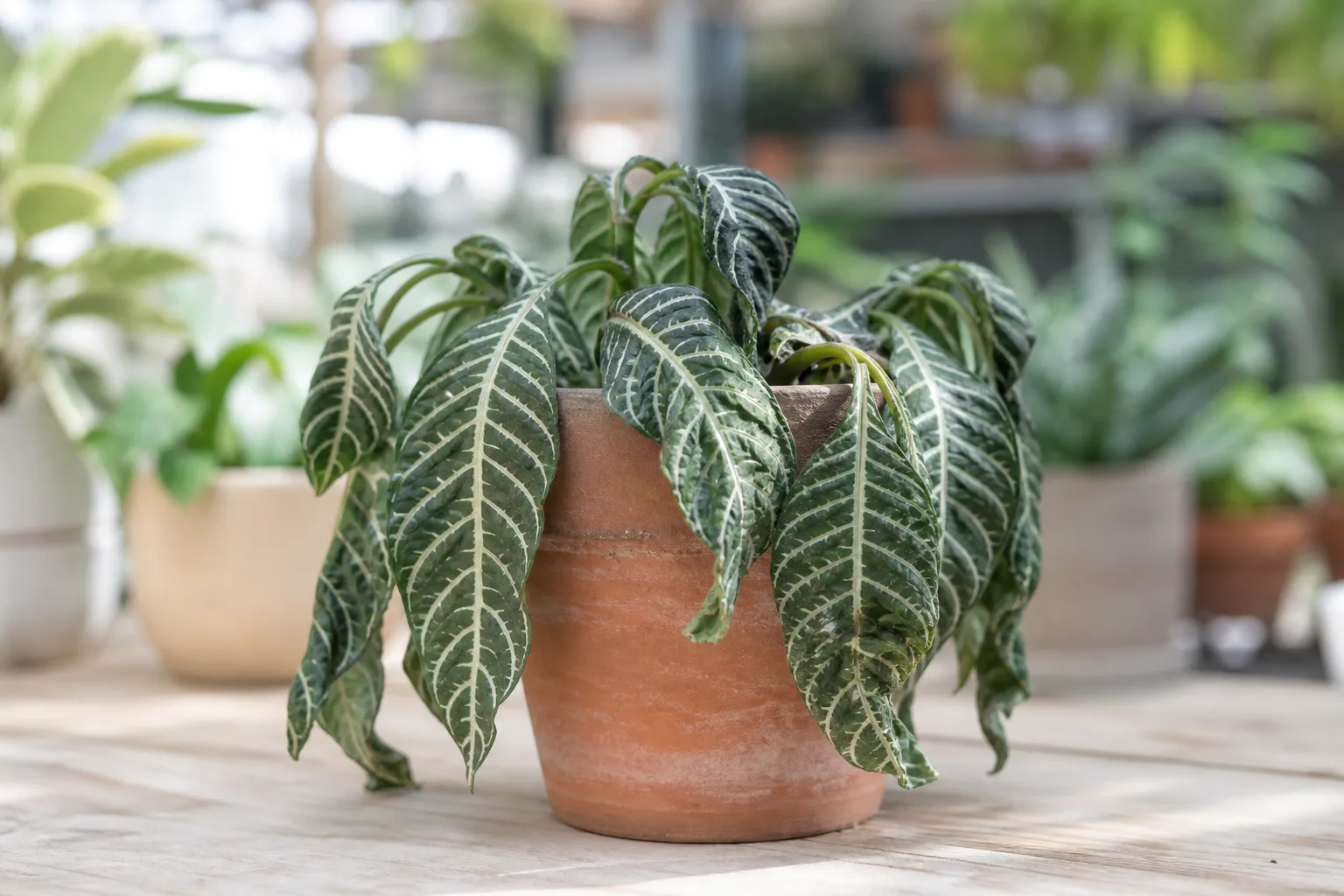
Wilting on Zebra Plant: Causes, Checks & Fixes
This guide covers wilting on Zebra Plant. See also the general Wilting guide, watering, and light pages for this plant.
Wilting on Zebra Plant: Causes, Checks & Fixes
Quick answer
Wilting on Zebra Plant is one of the most confusing houseplant symptoms because opposite root problems look the same. Large, glossy Aphelandra squarrosa leaves collapse when roots cannot move water-whether the mix is bone dry or waterlogged. Wilted leaves may indicate the soil is too dry or too wet, and rotting roots cannot take up water even when soil feels saturated.
First step: lift the pot and check the top inch of soil before you water. A light, dry pot needs a deep soak. A heavy, wet pot needs you to stop watering and investigate roots-not add more moisture.
What wilting looks like on Zebra Plant
On Aphelandra squarrosa, wilt shows up as limp, hanging leaves on upright stems. The bold white-veined foliage loses its crisp texture and may curl at the margins. Stems that normally hold leaves at a slight angle may flop toward the pot rim. Yellow flower bracts, if present, can dry and collapse alongside the foliage.
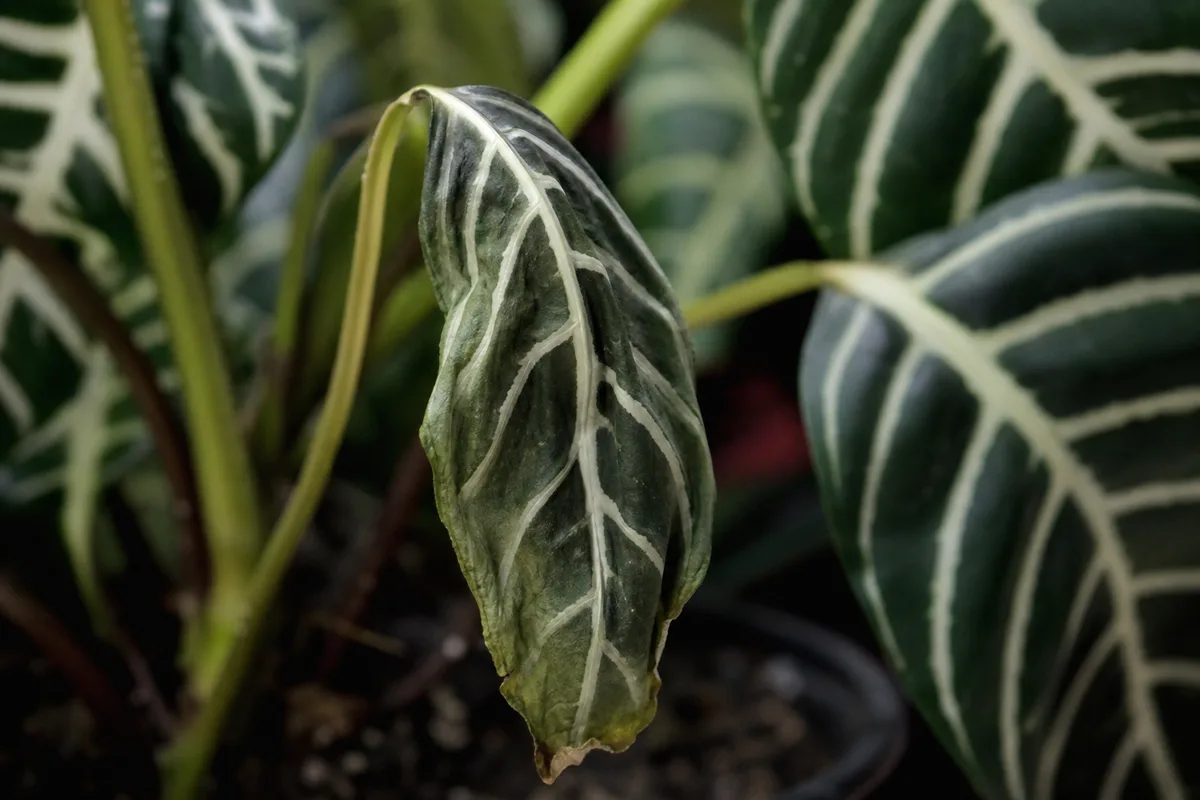
Wilting symptoms on Zebra Plant - compare with healthy tissue on the same plant.
The pattern matters. Whole-plant wilt with uniformly limp leaves usually points to a root-zone or environmental problem. Partial wilt on one side often follows a draft, a heat blast from a vent, or uneven drying in a large pot. Lower leaves yellow and drop in advanced wet-soil cases, while dry wilt tends to hit the entire canopy at once because large tropical leaves lose turgor quickly.
Unlike succulents, Zebra Plant cannot store much water in its stems. Do not allow the soil to dry out completely, so even a short dry spell can produce dramatic collapse in a plant that otherwise looks healthy.
Why Zebra Plant gets wilting
underwatering on Zebra Plant and dry root zones
Zebra Plant needs consistent moisture year around in a well-drained, peaty potting mixture. When the top inch-or the whole root ball-dries too long, fine roots stop absorbing and leaves lose internal water pressure. Leaves dropping or scorching can indicate that the soil is too dry.
This happens easily in bright windows where small pots dry fast, during winter when heating lowers humidity, or when old peat turns hydrophobic and repels water even though the surface looks damp.
overwatering on Zebra Plant and root failure
The same species that hates drought also does not like wet feet. Chronic soggy soil in dim, cool rooms suffocates roots. Roots growing in waterlogged soil may die because they cannot absorb the oxygen needed. Drooping leaves or stems can also mean too much water-the classic wet wilt where stems collapse despite wet mix.
Low light slows water use, oversized pots hold moisture too long, and saucers left full keep roots stagnant. Zebra Plant is not forgiving of alternating flood and drought; both extremes produce wilt.
Low humidity and spider mites
Aphelandra squarrosa is a houseplant for bright, humid areas. Dry indoor air below 60–70% humidity increases transpiration from large leaves. Spider mites thrive in the dry conditions that stress Zebra Plant overview, piercing foliage and weakening water regulation. Mite damage can look like general wilt with stippled yellow patches between veins and fine webbing at growing tips.
Cold and draft stress
Temperatures below minimum 65º F in winter slow root activity and water uptake. Leaves dropping or scorching can indicate that temperatures are too cool. A plant on a cold windowsill or in an AC draft may wilt even when soil moisture looks correct because roots cannot keep pace with leaf water loss.
How to confirm the cause
Work through these checks in order before you change anything:
- Pot weight - Lift the container. Light means dry; heavy and soggy means wet.
- Top-inch moisture - Stick a finger into the surface. Dusty dry confirms underwatering. Wet, cool, clinging mix suggests overwatering.
- Stem base - Soft, dark tissue at the soil line on wet mix is a crown-rot warning. Firm green stems are reassuring.
- Odor - Sour smell from the mix points to anaerobic root damage.
- Temperature - Measure near the plant. Below 65°F with firm soil suggests cold stress, not thirst.
- Leaf undersides - Stippling, webbing, or moving specks suggest spider mites rather than pure watering error.
- Recent care - Heavy watering after a dry spell, a recent move to shade, or Zebra Plant repotting guide can explain temporary wilt without rot.
If soil is dry and the pot is light, treat as underwatering. If soil is wet and stems are limp, treat as root stress-do not add water.
First fix for Zebra Plant
Lift the pot, check the top inch of soil, and act on what you find-do not water on autopilot.
For dry wilt: Water slowly until excess drains from the bottom, then discard saucer water. If water runs off dry peat without soaking in, bottom-water for 30 minutes so the root ball rewets evenly. Move the plant away from hot dry drafts and raise humidity toward the high humidity this species needs.
For wet wilt: Stop watering immediately. Move to Zebra Plant light guide and improve airflow so the mix dries. If wilt persists more than 48 hours on wet soil, unpot and inspect roots-trim brown mushy tissue and repot into fresh well-drained, peaty potting mixture only if rot is confirmed.
For cold wilt: Relocate away from windows, vents, and exterior doors. Keep temperatures above 65°F before reassessing water needs.
Do not fertilize, repot, or prune heavily on day one unless root rot on Zebra Plant is confirmed and mushy tissue must be removed.
Step-by-step recovery
After the first fix:
- Re-check in 24 hours - Dry-wilt leaves should show improved firmness. No change on wet soil means root inspection is next.
- Adjust Zebra Plant watering guide - Water when the top inch dries, not on a calendar. Soils must not be allowed to dry out, but good drainage must prevent stagnant wet roots.
- Raise humidity - Use a humidifier, pebble tray, or grouped plants. Dry air prolongs recovery and invites mites.
- Treat mites if confirmed - Rinse foliage, increase humidity, and apply a product labeled for spider mites per label directions. Wilt from mite feeding clears only after pest pressure drops.
- Trim only dead tissue - Remove leaves that stay brown and collapsed after the root zone stabilizes. Do not cut healthy green tissue hoping to force recovery.
- Repot only when necessary - Root rot, sour mix, or severe compaction justify repotting. A mildly wilted plant in adequate mix recovers faster without disturbance.
Recovery timeline
Mild dry wilt often improves within hours to one day after a thorough soak. Moderate underwatering may take two to three days for full turgor return. Wet-soil wilt tied to early root damage can take one to three weeks once drainage and light improve-judge progress by firm new growth, not old limp leaves.
Advanced crown rot with soft stem bases is often fatal on Aphelandra squarrosa. If no new growth appears after two weeks of corrected care and root inspection, the plant may not recover.
Lookalike symptoms to rule out
Drooping from low light alone produces weak pale stems without the dramatic overnight collapse of dry wilt. Soil moisture is usually even; moving to brighter indirect light helps over days, not hours.
Yellow leaves from overwatering often precede full wilt. Lower leaves yellow while soil stays wet-overlap with wet wilt but the yellowing pattern is the earlier clue.
Brown tips from low humidity crisp leaf edges without whole-leaf collapse. Humidity correction fixes tips; wilt needs root-zone or temperature correction first.
Leggy stretched growth means insufficient light, not failed water uptake. Stems are thin and reaching; leaves are not uniformly limp.
Mistakes to avoid
Do not water every wilted Zebra Plant without checking soil-wet wilt worsens with more water.
Do not leave the pot in a saucer of standing water after trying to fix dry wilt.
Do not move a wilted plant into direct sun to “perk it up.” Harsh sun scorches striped foliage.
Do not repot on day one unless roots are clearly rotting-unnecessary repotting adds shock.
Do not assume wilting means the plant needs fertilizer. Stressed roots cannot use nutrients safely.
How to prevent wilting next time
Match watering to how fast your pot dries in its actual light. Bright indirect placement helps the plant use water steadily. Use a well-drained, peaty potting mixture with open drainage holes and empty saucers after every watering.
Maintain 60–70% humidity and temperatures above 65°F year-round. Scout leaf undersides weekly in winter when heating dries the air-catching spider mites early prevents wilt-like collapse.
During winter semi-dormancy, reduce watering but do not stop entirely. Resume steady moisture as new growth appears in late winter.
When to worry
Treat wilt as urgent when the stem base softens, soil smells sour, or most leaves collapse within days on wet mix-possible crown rot. Unpot, trim rot, and repot only if firm crown tissue remains.
Also act quickly when wilt follows bone-dry soil throughout the root ball and bracts have dried completely-the plant can lose leaves rapidly if rehydration is delayed.
Routine dry wilt on an otherwise healthy plant in correct care is reversible. Persistent wilt after proper dry or wet correction, with declining new growth, suggests root loss that may not be saveable.
Conclusion
Wilting on Zebra Plant always starts with the same question: is the root zone too dry or too wet? Lift the pot, read the top inch of soil, and fix the actual pathway before you add water, repot, or fertilize. Dry wilt rewards a deep soak and humidity; wet wilt demands drainage and root honesty. That single diagnostic step prevents the most common mistake-watering a drowning plant-and gets striped foliage standing again when the cause is still reversible.
When to use this page vs other Zebra Plant guides
- Zebra Plant watering guide - Use for routine moisture checks before assuming wilting is the main issue.
- Zebra Plant problems hub - Browse all 32 common issues on this species.
- Underwatering on Zebra Plant - Different entry point when symptoms overlap with wilting.
- Overwatering on Zebra Plant - Different entry point when symptoms overlap with wilting.
- Root Rot on Zebra Plant - Different entry point when symptoms overlap with wilting.