Leaf Drop on Zebra Plant: Causes, Checks & Fixes
Quick answer
Mass leaf drop on Zebra Plant is a stress response, not normal aging. First step: move the pot to a stable, draft-free spot at 65–75°F with bright indirect light-then check whether the top inch of soil is bone dry or soggy before changing your watering.
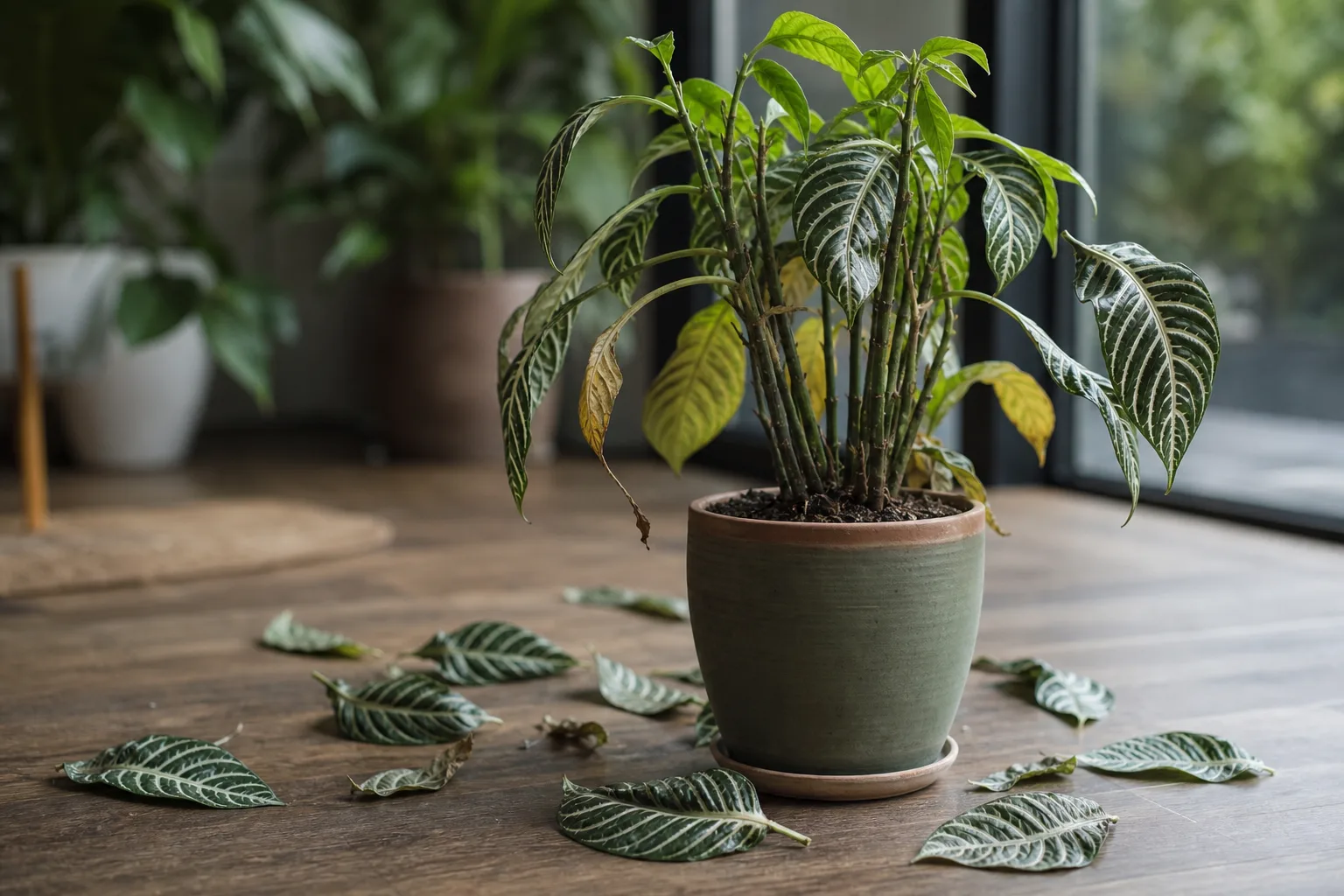
Leaf Drop on Zebra Plant: Causes, Checks & Fixes
This guide covers leaf drop on Zebra Plant. See also the general Leaf Drop guide, watering, and light pages for this plant.
Leaf Drop on Zebra Plant: Causes, Checks & Fixes
Quick answer
Leaf drop on Zebra Plant (Aphelandra squarrosa) is alarming but often reversible when stems stay firm. Unlike a slow lower-leaf shed from age, shock drop hits fast-multiple glossy striped leaves detach within days after a draft, dry spell, soggy soil episode, or sudden move. Leaves dropping or scorching can indicate that the soil is too dry, temperatures are too cool, or the plant is receiving too much sunlight. Excessive amounts of water, or extremely dry conditions, will cause the bottom leaves to brown and drop on this moisture-sensitive tropical.
First step: move the pot to a stable, draft-free location at 65–75°F with Zebra Plant light guide. Hold fertilizer, Zebra Plant repotting guide, and major pruning for at least one week while you diagnose. Zebra plants punish stacked care changes more than they forgive a single bad watering day.
What leaf drop looks like on Zebra Plant
Healthy Aphelandra squarrosa holds pairs of dark green leaves with bold white veining on upright purple-tinged stems. Problematic drop looks different from one aging leaf at the base:
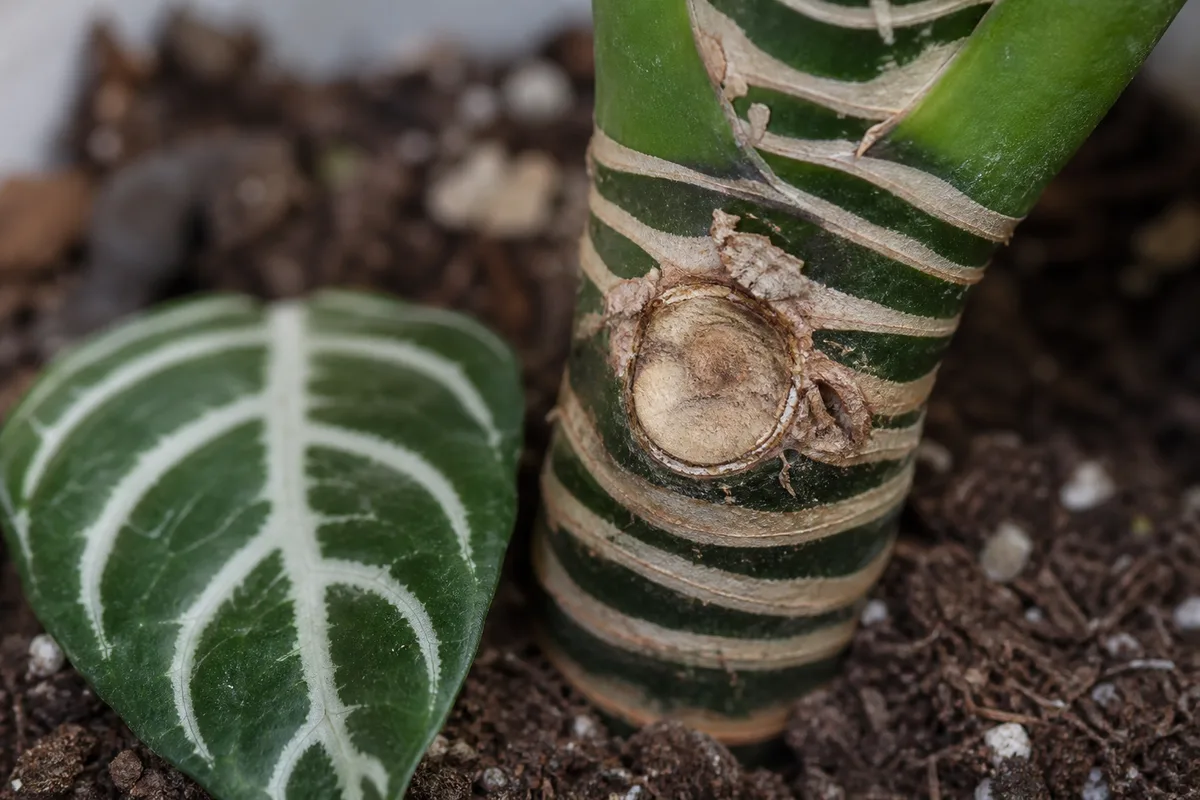
Leaf Drop symptoms on Zebra Plant - compare with healthy tissue on the same plant.
Shock leaf drop:
- Several leaves fall within days, often starting lower on the stem and moving upward
- Leaves may detach while still green or partly green, not only fully yellow
- Stems can look bare below while the growing tip still has smaller leaves
- Drop follows a clear trigger-move near a vent, missed watering, cold window night, or post-bloom relocation
- Buds or yellow bracts may abort at the same time if humidity or temperature slipped
Normal or low-priority shedding:
- One lower leaf yellows and falls over weeks on an otherwise full plant
- Occurs after flowering when the plant is cut back intentionally
- Winter semi-dormancy with slightly reduced watering and no mass canopy loss
Those that have allowed their zebra plants to wilt a time or two know the results: the lower leaves fall off and the plant takes the shape of a miniature palm tree-a distinctive silhouette after repeated drought stress.
Why Zebra Plant drops leaves
Zebra plant evolved in warm, humid Brazilian forest understory. Indoors it has a narrow comfort band. When conditions swing outside that band, it sheds foliage to reduce water loss-a defensive response, not random failure.
Cold drafts and temperature swings
Plants require high humidity and temperatures that do not dip below 65º F, which makes them sensitive in many households. Winter window glass, AC vents, and frequently opened doors create microclimates far colder than the room thermometer suggests. Repeated chilling triggers sudden drop before tips brown.
underwatering on Zebra Plant and dry soil
Soils must not be allowed to dry out on zebra plant. Large leaves transpire heavily in bright light. When the top inch-or more-goes dry too long, leaves lose turgor, edges crisp, and lower pairs detach. This pattern is common after travel, treating the plant like a succulent, or hydrophobic old peat that repels water.
overwatering on Zebra Plant and root stress
Drooping leaves or stems can also mean too much water. Soggy peat suffocates roots even though the species wants even moisture. Root damage reduces uptake; the plant sheds leaves it can no longer support while soil stays wet. Soft stems at the base and sour-smelling mix confirm this path.
Low humidity and dry air
Brown leaf tips can be caused by low humidity, and prolonged dry air stresses the whole leaf. Heating-season rooms without humidification push zebra plants toward curl, tip burn, and eventual drop-especially on new growth near blooming shoots.
Relocation and post-bloom stress
Moving between rooms, repotting during bloom, or shifting to a dim corner after flowering all disrupt the stable conditions zebra plants need. After the bloom fades, the spike should be removed and the plant relocated to a warm, bright location-handlers who skip that transition or move too abruptly often see leaf loss.
Pests that weaken foliage
Watch for aphids, white fly or scale on zebra plant. Sap-sucking pests on new shoots and leaf axils drain energy; heavy infestations coincide with yellowing, sticky residue, and drop. Spider mites thrive when humidity is low and air is dry.
How to confirm the cause
Work through these checks in order before you change multiple variables:
- Recent history - Did drop start within 48–72 hours of a move, repot, heat wave, or missed watering? Timing often points to shock.
- Air movement and temperature - Hold your hand at leaf level near the pot. Moving cold or hot air from vents confirms draft stress. Room below 65°F near the plant fits cold damage.
- Soil moisture at the top inch - Bone dry and light pot weight suggest underwatering. Wet, heavy mix that has not dried in a week suggests overwatering or poor drainage.
- Stem and root clues - Firm stems with dry soil mean drought. Soft base on wet soil means inspect roots-do not keep watering on schedule.
- Pest inspection - Check leaf axils, stem joints, and undersides with a hand lens. Scale looks like brown bumps; mealybugs like cotton; mites leave stippling and fine webbing.
- Light exposure - Avoid direct sun on zebra plant. Scorched patches on the window side plus drop suggest too much direct light, not too little.
Match pattern to cause: sudden drop after AC placement = draft; drop after vacation dry-down = underwatering; yellow lower leaves on constantly wet soil = root stress; sticky tips with insects = pests first.
First fix for Zebra Plant
Move the plant to a stable, draft-free spot at 65–75°F with bright indirect light-away from AC vents, cold windows, and heating blasts.
Leave it there for at least a week. This single step stops ongoing shock while you read soil moisture daily without repotting or feeding. Once placement is stable:
- If the top inch is bone dry, water thoroughly until excess drains, then discard saucer water.
- If the top inch is wet for days, skip watering and verify drainage holes are open before the next drink.
- If pests are confirmed, isolate and treat that issue next-environment alone will not stop sap-feeder damage.
Do not repot on day one unless roots are clearly rotting and mushy on inspection. Do not fertilize a leaf-shedding plant hoping to force regrowth.
Step-by-step recovery
After stabilizing placement:
- Set a moisture rhythm - Water when the top inch dries during active growth; watering should be reduced but not stopped in winter semi-dormancy.
- Raise humidity toward 60–70% - Use a humidifier, pebble tray, or grow in humidified rooms or bathrooms if your home air is dry.
- Remove only fully spent leaves - Clear fallen debris from the pot surface. Keep any partially green leaves that still photosynthesize.
- Treat pests if found - Wipe scale and mealybugs with alcohol on a cotton swab; rinse mites and follow with insecticidal soap on label intervals. Isolate until colonies clear.
- Address root rot on Zebra Plant only if confirmed - Unpot, trim mushy roots, repot into fresh perlite-heavy mix, and hold water briefly until the plant stabilizes.
- Deadhead spent bloom spikes - Remove faded yellow bracts so energy shifts to new foliage.
- Track weekly - Count how many leaves drop each week. Improvement means the rate slows before new paired leaves appear at tips.
Recovery timeline
Environmental shock often slows within one to two weeks once temperature and moisture stabilize. New leaf pairs may take three to six weeks to emerge from firm stem tips-zebra plant is a slow grower compared with pothos or philodendron.
Fallen leaves never reattach. A plant stripped to a few top leaves can look sparse for months while it rebuilds. Root rot recovery takes longer and depends on how much firm tissue remains.
Signs of improvement: drop rate falls, stem tips stay green, new paired leaves unfurl, soil moisture becomes predictable between waterings.
Signs of worsening: daily leaf loss continues, stems soften upward, sour smell intensifies, or pests spread despite treatment.
Lookalike symptoms to rule out
Normal post-bloom cutback - Cut plants back after flowering to control growth. Planned pruning differs from shock drop because you chose the timing and stems stay firm.
Single lower yellow leaf - Often overwatering or natural senescence of one old pair, not mass shed. Check whether only the lowest pair is affected.
Wilting without drop - Drooping on dry soil may be underwatering alone; leaves still cling until drought is severe. Wilting on wet soil points to root rot-inspect before watering again.
Bud drop without leaf drop - Low humidity or drafts abort yellow bracts first. Fix humidity and placement; leaves may stay attached.
Mistakes to avoid
Do not repot, fertilize, and move all in the same week during active drop-that stacks stress on a plant already in shock.
Do not soak a drooping plant without checking soil first; overwatering makes rot worse when roots are already damaged.
Do not place zebra plant in direct sun to “help recovery”-foliage may scorch in dry or drafty locations and bright hot windows accelerate water loss.
Do not assume all leaf drop is normal winter rest. Semi-dormancy reduces watering need but should not strip the canopy.
Do not ignore pests because leaves are falling-treat insects before tweaking humidity alone.
How to prevent leaf drop next time
Keep the pot in a houseplant for bright, humid areas-bright indirect light, stable warmth, and consistent moisture. Buffer from HVAC drafts year-round, not only in winter.
Water when the top inch dries; never let the pot go completely dry during active growth. Use well-drained peat-perlite mix in a pot with drainage holes so “even moisture” does not mean soggy roots.
Maintain humidity with a humidifier in dry seasons. Scout new growth weekly for scale and mealybugs before colonies weaken foliage.
When blooming finishes, remove the spike and shift to a warm bright spot gradually-not a cold dim corner. Accept that zebra plant is somewhat difficult to grow in many households; prevention is easier than reviving a bare stem.
When to worry
Treat as urgent when leaf drop is continuous for more than two weeks, green leaves detach daily, stems soften at the base on wet soil, or pests coat growing tips. Those patterns suggest rot or heavy infestation, not a single bad night by a window.
A sparse but firm plant with slowing drop rate can recover over months. A softening stem spreading upward despite corrected care rarely fully heals without aggressive root trimming-and sometimes not at all. Propagate firm stem cuttings if the main plant keeps declining but tips remain healthy.
When to use this page vs other Zebra Plant guides
- Zebra Plant watering guide - Use for routine moisture checks before assuming leaf drop is the main issue.
- Zebra Plant problems hub - Browse all 32 common issues on this species.
- Yellow Leaves on Zebra Plant - Different entry point when symptoms overlap with leaf drop.
- Drooping Leaves on Zebra Plant - Different entry point when symptoms overlap with leaf drop.
- Root Rot on Zebra Plant - Different entry point when symptoms overlap with leaf drop.