Not Enough Light on Zebra Plant: Causes, Checks & Fixes
Quick answer
Zebra Plant needs bright indirect light-not a dim corner. Leggy growth, washed-out white veins, and soil that stays wet too long together point to insufficient light. First step: move the pot to the brightest filtered spot you have, within a few feet of an east or sheer-curtained south window.
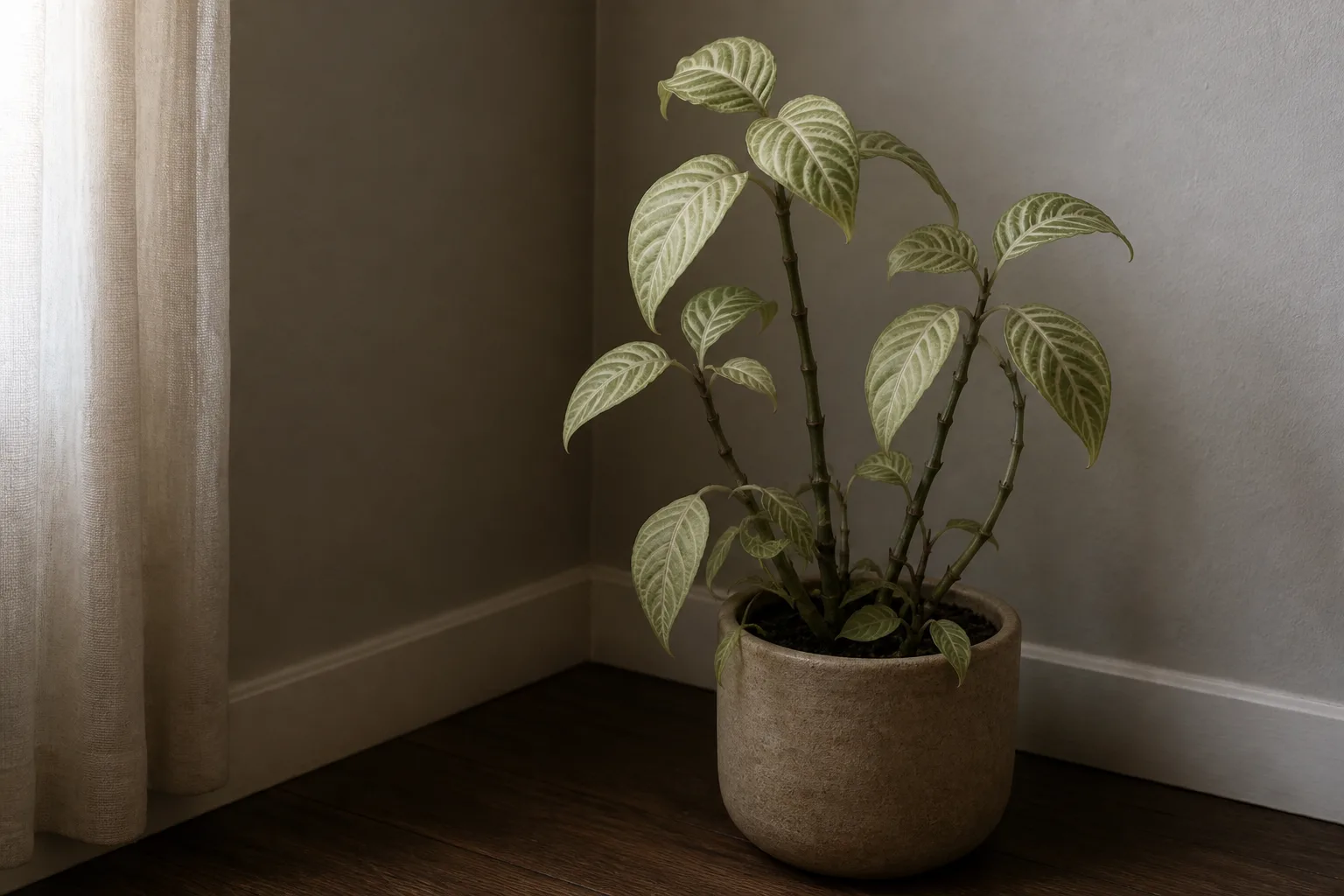
Not Enough Light on Zebra Plant: Causes, Checks & Fixes
This guide covers not enough light on Zebra Plant. See also the general Not Enough Light guide, watering, and light pages for this plant.
Not Enough Light on Zebra Plant: Causes, Checks & Fixes
Quick answer
Zebra Plant (Aphelandra squarrosa) is built for filtered tropical light-not the deep shade of a north-facing alcove or a shelf six feet from any window. It needs bright indirect light to keep its dark green leaves and bold white veins sharp, and it uses that same energy to form the yellow bract spikes that make the plant worth growing indoors.
When light is too weak, stems stretch, new leaves shrink, striping fades, and the pot dries slowly because the plant is not photosynthesizing fast enough to pull water through its roots. That slow-drying pattern is easy to miss because zebra plants already like evenly moist soil-but in dim light, “even moisture” can slide toward soggy roots.
First step: move the pot to the brightest filtered location available-typically within a few feet of an east window or a south window behind sheer curtain. Do not jump straight into harsh direct afternoon sun; acclimate over a week. Better light is the one fix everything else depends on before you adjust watering, humidity, or fertilizer.
What not enough light looks like on Zebra Plant
Low light on Aphelandra squarrosa shows up in the growth pattern before it looks like a generic “sad houseplant.”
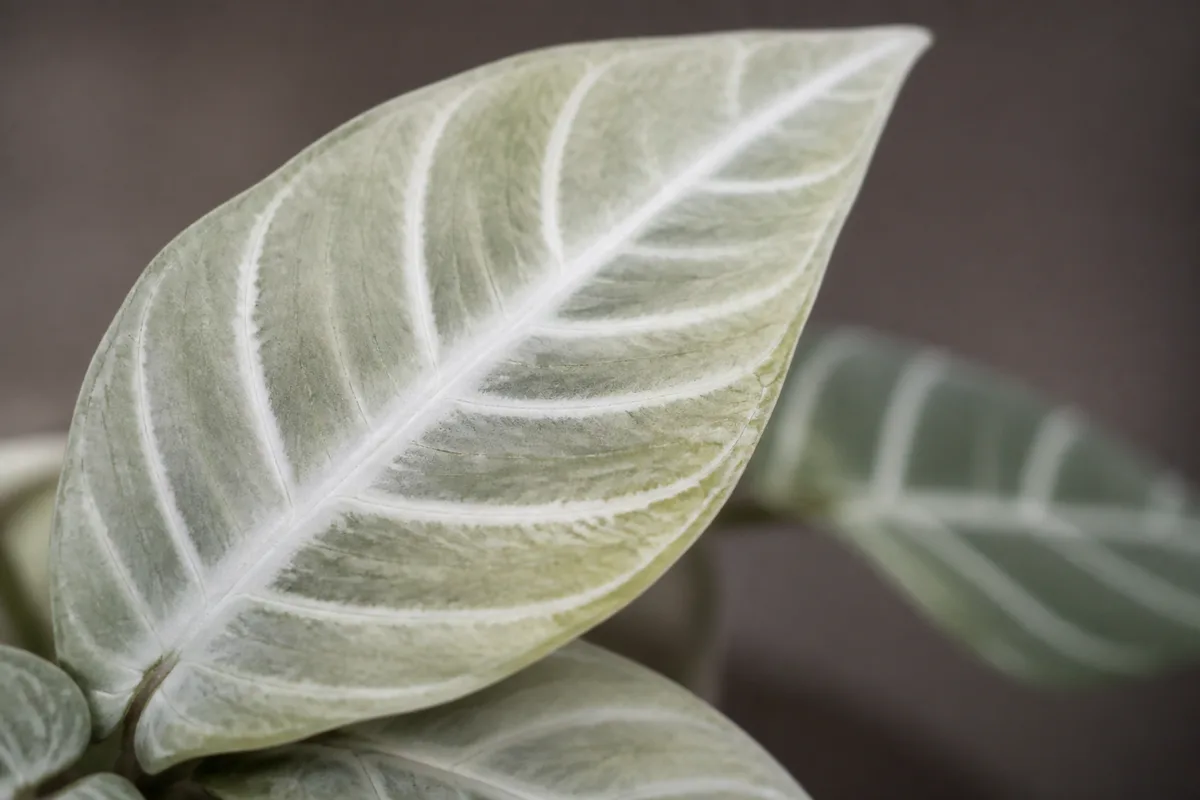
Not Enough Light symptoms on Zebra Plant - compare with healthy tissue on the same plant.
Stem and leaf pattern:
- Leggy, stretched stems with unusually long spaces between opposite leaf pairs-the plant reaches toward the window instead of staying compact
- Smaller new leaves compared with older ones lower on the stem
- Washed-out or dull white veins on fresh growth; the zebra contrast weakens before leaves turn fully yellow
- One-sided lean or uneven fullness when light comes from a single direction
- Loss of lower leaves as the plant sheds foliage it can no longer support-often leaving a tuft of leaves at the top like a miniature palm
Bloom and vigor:
- No yellow bract spikes on an otherwise mature plant, even through summer and fall when conditions should support flowering
- Slow or stalled new growth while temperature and humidity seem acceptable
- Soil that stays wet for many days after watering because transpiration has dropped
These signs differ from underwatering on Zebra Plant, which wilts leaves on thin stems while soil is bone dry. They also differ from overwatering on Zebra Plant yellowing, which often hits lower leaves first on wet, sour-smelling mix. Low light frequently overlaps with overwatering because the same dim spot keeps roots idle-watch for both.
Why Zebra Plant struggles in low light
Aphelandra squarrosa evolved under rainforest canopy in Brazil. In homes it is grown for foliage and bracted flowers, but it is not a low-light tolerant species like a cast iron plant or snake plant. Missouri Botanical Garden recommends bright indirect light and warns that direct sun should be avoided-complete shade is equally wrong for a plant that needs energy to maintain thick, veined leaves.
Zebra plants are also photo-accumulators. University of Arkansas Extension notes they need roughly twelve weeks of bright light-around 650 foot-candles-along with warm nights above 65°F before flower bracts form. When light is too dim, you get leaves only: stretched, pale, and slow.
That physiology explains three common indoor failure modes:
- Decor placement - The pot looks good on a bookshelf or interior wall where human eyes read “bright room” but leaves receive under 100 foot-candles.
- Winter daylight drop - The same east window that worked in June may not deliver enough duration or intensity in December without a grow light.
- Post-purchase decline - Nursery zebra plants often bloom under greenhouse intensity. After sale, they move to dim shops, then dimmer homes, and lose lower leaves within weeks unless light improves.
Low light also slows water use. Zebra plants prefer consistent moisture and should not dry out completely-but when photosynthesis drops, the same Zebra Plant watering guide leaves roots sitting in wet peat longer, which invites root problems on a species that already dislikes cold, wet feet.
How to confirm insufficient light
Work through these checks before Zebra Plant repotting guide, fertilizing, or pruning hard:
- Distance from window - Within about two to four feet of an unobstructed east or filtered south window counts as bright indirect for most tropical foliage plants. Farther than six feet into a room is usually medium to low light-often insufficient for Aphelandra.
- Direction and obstruction - North windows rarely deliver enough intensity alone. Sheers, tinted glass, overhangs, and neighboring buildings cut foot-candles sharply.
- Growth direction - A clear lean toward one light source confirms the plant is actively seeking more.
- New vs. old leaves - Compare the size and vein contrast on the top two leaf pairs with leaves from six months ago. Fading striping on new growth while old leaves still look bold points to recent light decline.
- Soil dry-down speed - Press a finger into the mix two inches down four days after watering. Still wet in a warm room with no recent rain of mist suggests slow uptake-often linked to low light, not just “heavy soil.”
- Season check - If symptoms appeared after daylight shortened, suspect seasonal intensity before disease.
- Rule out pests and drafts - Spider mites and cold AC blasts also cause leaf drop and pale foliage. Inspect undersides for stippling or webbing; feel for cold air near the pot. Low light remains likely if stretch and lean are present without pests.
If the plant sits in what you now recognize as a low-light spot and shows two or more stretch or fade symptoms, treat light as the primary cause until proven otherwise.
First fix for Zebra Plant
Move the pot to the brightest filtered spot in your home-within a few feet of an east window or a south window with sheer curtain-and leave it there for two weeks before changing anything else.
That single relocation addresses the root problem. Zebra plants recover structure through new growth, not by reversing old stretched internodes, so the sooner light improves, the sooner the next leaf pair emerges tight and vividly striped.
Acclimate gradually if the new spot is much brighter than the old one:
- Days 1–3: Place where the plant receives bright indirect light but no direct sun beams
- Days 4–7: Allow soft morning sun if east-facing; keep afternoon sun filtered
- Week 2: Leave in the final bright indirect position and rotate a quarter turn every few days
Do not fertilize, repot, or heavily prune on day one. Stressed Aphelandra in dim conditions needs stable roots and a light upgrade-not a stack of interventions.
Step-by-step recovery
After the move, support recovery in this order:
- Adjust watering to match new light - Brighter light increases transpiration. Check the top inch of soil every few days instead of watering on autopilot. Moist but not soggy is the target; let the surface begin to dry slightly before the next drink.
- Maintain humidity - Zebra plants want high humidity and warm temperatures. A humidifier, pebble tray, or grouped plants helps prevent crispy edges while new leaves expand in stronger light.
- Rotate weekly - Even light prevents one-sided lean and encourages symmetrical branching.
- Pinch or cut back after stabilization - Once you see two or three new leaf pairs with good spacing and color, prune leggy tops above a leaf node to encourage bushier growth. Old stretched stems will not compact on their own.
- Add supplemental light if windows are insufficient - Full-spectrum LED grow lights twelve to fourteen inches above foliage for twelve to fourteen hours daily can replace weak winter sun. Do not exceed sixteen total hours of light per day.
- Hold fertilizer briefly, then feed lightly - Wait until new growth looks healthy for two weeks, then use a balanced or high-potassium fertilizer at half strength every two weeks during active growth if you are chasing blooms.
Skip repotting unless roots are rotting or mix is clearly failing. Light correction comes first.
Recovery timeline
Expect gradual improvement, not overnight transformation:
- Week 1–2: Lean may stop worsening; soil should dry slightly faster; no new stretch on the newest node
- Week 3–4: New leaves emerge closer together with stronger white veining
- Month 2–3: Plant looks fuller after a light prune; lower bare stem remains unless you cut back
- Months 3+: Flowering may begin if light intensity and duration meet photo-accumulator needs-often twelve or more weeks of adequate brightness plus warmth
Old pale leaves and elongated stem sections do not revert. Judge success by new growth, not by old tissue.
Lookalike symptoms
Overwatering / root rot on Zebra Plant - Yellow lower leaves, sour soil smell, and mushy roots on wet mix. Can coexist with low light. Unpot if yellowing continues after a light move and watering adjustment.
Underwatering - Wilting on dry soil, crispy leaf edges, dropped buds. Soil is light and pulls away from the pot-not waterlogged.
Low humidity - Brown crisp tips and margins with otherwise normal spacing. Often hits in winter with heating vents, not only in dark corners.
Cold draft stress - Sudden leaf drop when placed near AC or a cold window; temperature, not light, is the trigger.
Normal post-bloom decline - After yellow bracts fade, zebra plants often shed lower leaves and look leggy even in good light. If this follows flowering and the window spot is bright, a cutback and rest period may be normal-not insufficient light.
Mistakes to avoid
- Placing in direct south sun immediately to “fix” legginess-filtered light is the goal; scorched leaves do not recover
- Assuming a north window is enough without a grow light-Aphelandra is not a low-light plant
- Watering on the old schedule after moving to brighter light-roots can suffocate if mix stays wet too long in the dim spot, then stay wet too long after the move until you recheck
- Fertilizing heavily to force blooms in a dark spot-salts stress weak roots and will not replace light accumulation
- Discarding the plant when only lower leaves drop-cut back and improve light; many shop plants are salvageable
Zebra Plant care cross-check
Light sits at the center of zebra plant care. Even moisture, high humidity, and warm stable temperatures only work when leaves receive enough brightness to use water and nutrients.
Cross-check these basics while correcting light:
- Water: Top inch dries slightly between waterings; never bone dry, never waterlogged
- Humidity: Target roughly 60–70% where possible
- Temperature: Avoid sustained exposure below about 65°F
- Soil: Peaty, well-drained mix that holds moisture without staying stale for a week
Fix light first, then tune watering to the new dry-down rate.
How to prevent low light problems
- Place new purchases within two to four feet of an east or filtered south window from day one-not in a dim “quarantine corner” for weeks
- Rotate the pot weekly
- Clean windows seasonally; dust on glass cuts intensity
- Use grow lights from October through March in northern latitudes if foliage fades or stretch returns each winter
- Before buying, confirm you have a bright spot free of cold drafts; zebra plants are poor fits for low-light rooms long term
When to worry
Escalate care if:
- Yellowing spreads on multiple leaves while soil stays wet more than seven days-inspect roots for rot
- More than half the leaves drop within two weeks despite a light move-check for drafts, mites, and root health
- New growth is still pale and sparse after six weeks in what should be bright indirect light-verify actual foot-candles or add a grow light
- Stems soften at the base-that suggests rot or crown issues beyond light alone
A zebra plant that keeps producing tight, dark new leaves after relocation is on track. One that continues to stretch after a confirmed bright spot likely needs artificial light, not another window shuffle.
Conclusion
Not enough light on Zebra Plant is one of the most common-and most fixable-reasons Aphelandra squarrosa loses its signature stripes and never blooms indoors. Stretched stems, faded veining, and slow-drying soil in a dim spot tell the story clearly once you know what to look for.
Move to bright filtered light first, acclimate carefully, then match watering to the faster growth that follows. Old leggy tissue will not shrink backward, but new leaves can look as bold as the day you bought the plant-and with enough accumulated light, yellow bracts may follow.
When to use this page vs other Zebra Plant guides
- Zebra Plant watering guide - Use for routine moisture checks before assuming not enough light is the main issue.
- Zebra Plant problems hub - Browse all 32 common issues on this species.
- Leggy Growth on Zebra Plant - Different entry point when symptoms overlap with not enough light.
- Slow Growth on Zebra Plant - Different entry point when symptoms overlap with not enough light.
- Yellow Leaves on Zebra Plant - Different entry point when symptoms overlap with not enough light.